




Clearing the Air in St. Louis
St. Louis Clean Cities is cutting emissions on the banks of the Mississippi.
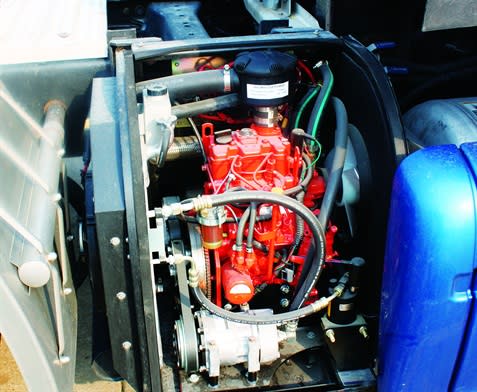
APUs allow truckers to power appliances and climate-control systems without idling the engine.
Boats, trains, and automobiles in the St. Louis region are running a lot cleaner these days, thanks in part to the tireless work of Kevin Herdler, executive director of St. Louis Clean Cities (SLCC).
With Herdler at the helm, the organization fosters deployment of a broad range of alternative fuels and fuel-saving technologies. In 2011 alone, SLCC’s efforts averted more than 76,000 tons of transportation-related emissions and saved 8.5 million gallons of petroleum.
“As a military veteran, I see the impacts of our dependence on foreign oil,” Herdler said. “I like the idea of using American fuel and supporting American jobs. And, on top of that, there’s the benefit of cleaner air.”
Located at the intersection of several railroads, four interstate highways, and the mighty Mississippi, SLCC is well positioned to take on high-impact transportation projects on road, rail, and river.
Herdler has worked with eight school districts in the St. Louis area to install fuel-fired heaters in more than 700 school buses. The heaters use a very small quantity of fuel to warm up bus engines and heat their interiors, eliminating the need for drivers to idle before they set off on routes.
“The heaters have been a blessing for these school districts — they’re yielding huge savings,” Herdler said.
Herdler has also worked with hundreds of long-haul truckers to cut idling through the installation of auxiliary power units (APUs) that heat cabs and power appliances, allowing truckers to turn engines off and maintain cabin comfort.
With funding assistance from the State of Missouri, SLCC is helping an agricultural company upgrade a 1953 railroad locomotive with a modern, efficient engine that will use B-20 and is expected to cut overall fuel use by 50-80 percent
In another state-funded project, Herdler is helping a barge cleaning and repair company replace old diesel engines on five of its boats. As of March, three of the boats had been fitted with more fuel-efficient engines and saved 85,000 gallons of diesel fuel in their first six months of operation.
“I try to expand our work out into all sectors,” Herdler said. “And, our stakeholders are working hard together to make St. Louis a real green city.”
Get Involved With Clean Cities
Through the work of nearly 100 local coalitions, Clean Cities advances the nation’s economic, environmental and energy security by reducing petroleum use in transportation. Clean Cities is an initiative of the U.S. Department of Energy. Find out more at www.cleancities.energy.gov.
For more information about St. Louis Clean Cities, visit www.stlcleancities.org.
More Green Fleet

EV Charging Use Is Outpacing Infrastructure Growth
ChargePoint’s 2026 Charging Forward Report points to rising charger use, higher-powered charging, commercial vehicle electrification, and energy-management technology. Here’s what fleets should know.
Read More →
Merchants Fleet Reports 290M EV Miles as Fleets Navigate Changing Electrification Market
From millions in operating savings to hundreds of millions of EV miles, Merchants Fleet’s latest report reveals what’s working and what’s changing in fleet electrification.
Read More →
The EV Breakdown Nobody's Talking About: Why Most Electric Vehicle Roadside Calls Aren't Mechanical Failures
Here's why EV breakdowns are widely misunderstood.
Read More →
ChargePoint Now Available in Energy Pass
ChargePoint and additional planned charging network integrations were added to GM's Energy Pass.
Read More →

First Look: Slate Auto's Electric Fleet Pickup
Could an affordable, modular EV pickup make electrification more practical for fleets?
Read More →
Slate Debuts Colorful, Unique EV Models
A recent media and client event, studded with electric vehicles dressed up on platforms, planted a new position for the manufacturer in the wider EV market. Fleets will find cost-saving advantages.
Read More →
Slate Electric SUV, Pickup Switchable Model Aims For Light-Duty Fleets
Everything about this EV is counterintuitive and understated, making it stand out from the crowd.
Read More →
Inspiration Mobility Acquires Key Electrada Assets
Inspiration Mobility Group has acquired select assets of Electrada, adding the fleet electrification provider's team, technology, and charging infrastructure development capabilities to its energy management business.
Read More →
Turning Connected Vehicle Data Into Decisions That Matter
Fleet leaders have more data than ever, but turning that data into clear, actionable decisions remains a challenge. This white paper shows how leading organizations are using connected vehicle data to improve safety, reduce costs, and optimize fleet performance. Learn how to turn insight into action across your fleet.
Read More →