




Clarifying NHTSA's Updated 5-Star Safety Rating Program
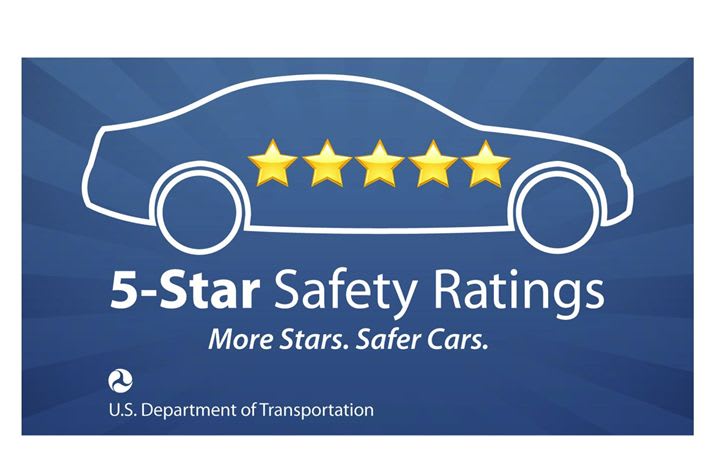
NHTSA’s updated safety rating program could result in lower ratings for 2011-MY vehicles, even though vehicles are no less safe than those of the previous model-year.

Click here for a PDF of the full article, including tables.
The updated five-star government safety rating program from the National Highway Traffic Safety Administration (NHTSA) includes enhanced crash tests and provides customers with an Overall Vehicle Score for the first time. According to NHTSA, this makes it easier to compare the relative safety performance of vehicles in crash survivability as well as crash avoidance. The new program is set to take effect for select 2011-MY vehicles.
Fifty-five 2011-MY passenger vehicles will be evaluated to receive the new safety ratings, according to NHTSA. The vehicles include 24 passenger cars, 20 sport/utility vehicles, two vans, and nine pickups. These ratings will be available on NHTSA's Safercar.gov Web site.
What Fleet Managers Should Know
More stringent criteria for rating vehicles means vehicles rated under the previous program cannot be compared to vehicles rated under the new rating program. It will be more difficult to receive a four- or five-star rating, and a vehicle given a five-star safety rating under the old system may, if reevaluated under the new system, receive less stars. It is important to note the same vehicle is no less safe just because it appears to receive less stars under the new rating system than the previous model-year.
Consequently, a 2011-MY vehicle that receives a five-star rating under the new program provides more overall protection than a vehicle receiving a five-star rating under the old program.
Fleet managers should be aware of potential confusion as a result of the change. Some manufacturers are working to communicate this information to consumers. Audi of America, for example, is keeping its field and dealership teams informed of the updated criteria. The luxury vehicle manufacturer breaks down the changes and lists and answers potential questions. The communication emphasizes that vehicles currently holding high ratings can be downgraded under the new rating system, which doesn't mean they are less safe. In addition, it states it is not possible to compare an old rating with the new rating.
Changes to Safety Ratings
Changes to the safety ratings are:
Front crash. NHTSA will maintain the 35-mph full frontal barrier test protocol, but will replace the mid-size male dummy in the right front passenger seat with a smaller female dummy.
Side impact. NHTSA will maintain the current moving deformable barrier test at 38.5 mph, but will update the test to include new side-impact test dummies and new injury criteria used to assign a vehicle's side impact barrier rating. There will be a side barrier rating and pole side-impact rating, and these will be combined for an overall side impact rating.
Rollover. The agency will continue to rate vehicles for rollover propensity, but will wait to update its rollover risk model to allow for more real-world crash data of vehicles equipped with electronic stability control (ESC).
The updated testing program will also provide consumers with new information about advanced crash avoidance technologies: ESC, forward collision warning (FCW) systems, and lane departure warning (LDW) systems. NHTSA will not rate the performance of these crash avoidance technologies, but will only note whether the vehicles come equipped with these technologies and whether they meet standards.
NHTSA will also establish a new Overall Vehicle Score, combining star ratings from the front, side, and rollover programs. The ratings are also compared to a baseline risk of injury, which tells consumers if the vehicle is above or below the average amount of injury risk.
NHTSA Ensures Clear Communications
NHTSA is working to ensure the dissemination of accurate and standardized information regarding the new five-star safety ratings, releasing a usage guideline for manufacturers and all consumer-based communications.
The guidelines define correct use of terms, as well as suggest phrases to be used for individual or combined safety ratings. The guidelines also discourage use of misleading terminology such as "perfect," "safest," "flawless," or "best-in-class" to describe the star ratings received by the vehicle.
For frontal- and side-crash safety ratings, the guidelines state that individual ratings (e.g., driver seating position and passenger seating position) should be kept separate and not added to form a new, higher star rating or a "double" star rating. Instead, NHTSA will provide an overall frontal-crash safety rating and overall side-crash safety rating, which also includes the baseline risk, for communications.
In addition, guidelines encourage disclosure of associated crash rating information if related information is noted. For example, if the side barrier star rating for the front seating position is publicized, results for the rear seating position should also be shown, and vice versa.
The guidelines further state that comparison of frontal crash ratings or overall vehicle scores should only occur if vehicles are in the same vehicle class and within 250 lbs. of each other. However, these comparisons can be made across weight categories as long as vehicles do not exceed the 250-lb. comparison limit.
More Safety

Fleet Manager’s Ultimate Playbook: Navigating the New Standard in OEM Connectivity
Rising operating costs, driver safety concerns, and unplanned downtime are putting unprecedented pressure on modern fleets. Discover how fleet managers use embedded OEM connectivity and real-time vehicle data to cut TCO, prevent downtime, and protect drivers without aftermarket telematics hardware.
Read More →
From Driver Well-Being to EV Charging | AF News Recap
Mental health belongs in the fleet safety conversation. This week, we’re looking at five ways fleets can support employee well-being before a crisis, plus Holman’s expansion in Mexico, new one-day Fleet Forward passes, and why EV charging demand is outpacing infrastructure growth.
Read More →
Nexar-Nauto Merger Aims to Give Fleets Better Safety Intelligence Through Larger Driving Dataset
Stefan Heck tells Automotive Fleet that combining more than 10 billion miles of driving history with Nexar's AI models will give fleets deeper insights into driver risk and roadway conditions than either company could provide independently.
Read More →
Don't Wait for a Crisis: 5 Ways to Build Mental Health Into Your Fleet Safety Program
For Suicide Prevention Month, fleet and safety leaders have an opportunity to put mental health where it belongs: at the center of workplace safety.
Read More →
How Camera Data Can Strengthen a Fleet’s Insurance Renewal
Insights from a commercial insurance carrier and a broker show how fleets can turn video telematic data, driver coaching, and improved claims results into a stronger case at insurance renewal.
Read More →
The Safest Fleets Aren’t the Ones with the Most Technology
You’ve made the telematics investment. Here’s how to capture the other half of its value and build the safest fleet on the road.
Read More →
Hidden in Plain Sight: Fleet Compliance Risks
Fleet compliance isn't just about having policies — it's about consistently enforcing them. This practical guide reveals six hidden compliance risks common in public sector and shared fleet operations and outlines proven strategies to improve visibility, accountability, and audit readiness
Read More →
NETS Sets 2026 Fleet Safety Benchmark Conference for Indianapolis
The Sept. 15–17 program will feature fleet benchmarking data, case studies, emerging technologies, and implementation strategies while running alongside the NSC Safety Congress & Expo.
Read More →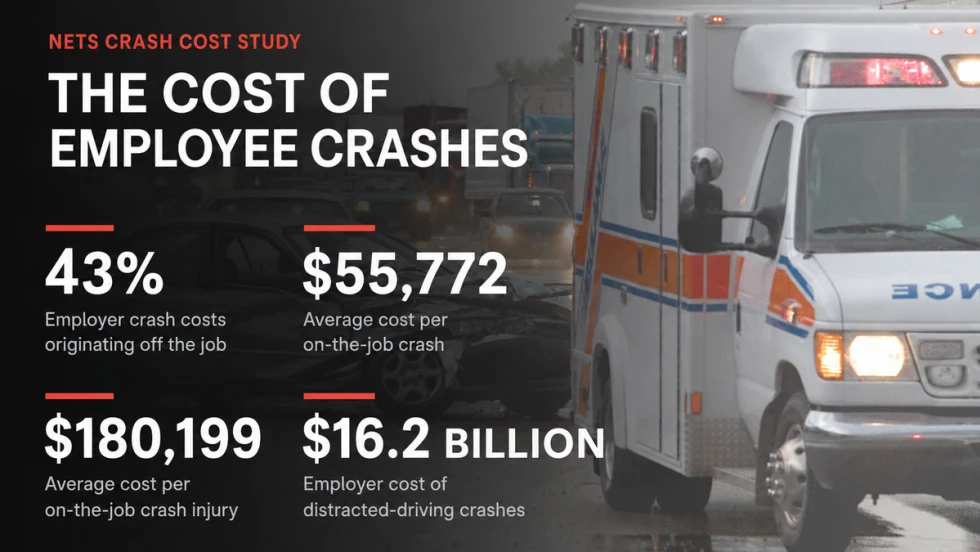
Off-the-Job Crashes Account for 43% of Employers’ $61.7 Billion Crash Burden
NETS quantifies costs dispersed across fleet, risk, HR, and other departments while providing new per-crash benchmarks for employers.
Read More →
Ram Recalls More Than 1.27 Million 1500 Pickups for Seat Belt Anchor Issue
The recall affects certain 2019-2026 Ram 1500 pickups that may have improperly attached second-row seat belt buckle anchors.
Read More →