




Chevrolet Re-enters Mid-Size Pickup Market with Colorado
There will be three configurations of the 2015 Colorado — an extended-cab model with a 6-foot bed, a crew cab with a 5-foot bed, and a crew cab with a 6-foot bed. For fleet and commercial customers, Chevrolet is also planning to offer a rear-seat delete and box-delete version.

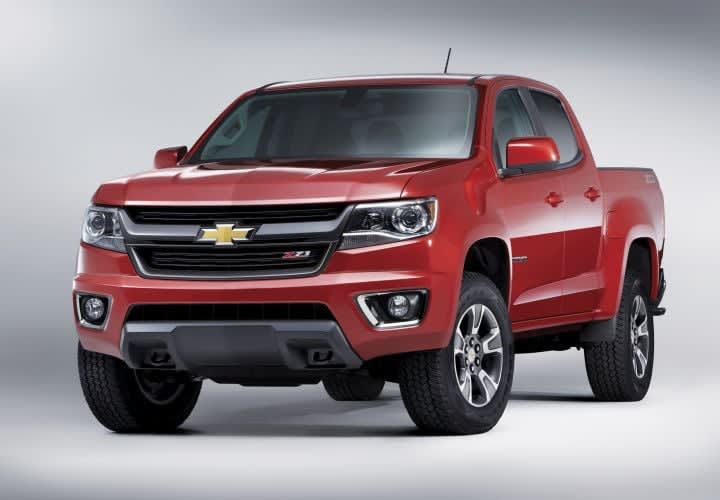
Photo courtesy of GM.
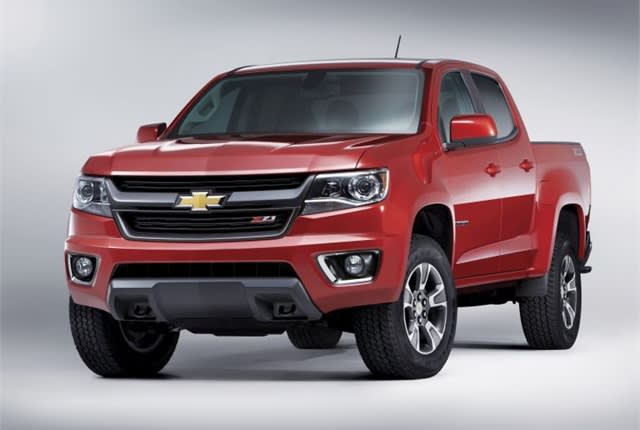
Photo courtesy of GM.
Editor's note: View our "Chevrolet Colorado '15 Mid-Size Truck" photo gallery for detailed photos of the vehicle.
Chevrolet has re-entered the mid-size truck market in the U.S. with the debut of the all-new 2015 Chevrolet Colorado.
There will be three configurations of the 2015 Colorado — an extended-cab model with a 6-foot bed, a crew cab with a 5-foot bed, and a crew cab with a 6-foot bed. With the tailgate down, the 6-foot bed allows 8-foot-long items to be hauled within the vehicle.
For fleet and commercial customers, Chevrolet is also planning to offer a rear-seat delete and box-delete version of the Colorado, according to Joyce Mattman, director, commercial product and specialty vehicles at General Motors.
Mattman noted the automaker is currently working with upfitters who are developing fleet options for the Colorado. She added that the mid-size pickup will be ideal for several fleet-specific functions, including auto parts and light delivery, pest control, and light service operations.
Fleets will work with their upfitters of choice to develop the best configurations to meet their missions.
The Colorado will be available in three trim levels — the WT, LT, and Z71 — that will all be available in either 2WD or 4WD.
The Colorado will be outfitted with a 2.5L I-4 engine as standard, which produces 193 hp at 184 lb.-ft. of torque. A 3.6L V-6, which produces 302 hp at 270 lb.-ft. of torque, will also be available. For the 2016 model-year, Chevrolet expects to make a Duramax 2.8L I-4 turbodiesel available for the Colorado.
When properly equipped, the Colorado is expected to have a trailering capacity of more than 6,700 pounds. All capacities, including fuel efficiency, are currently pending.
To help keep overall mass down and improve front-to-rear weight balance, the Colorado features a segment-first aluminum hood. It also features the mid-size segment's only active aero grille shutters, which close at certain highway speeds to enhance aerodynamics, according to Chevrolet.
The North American version of the Colorado is 900-pounds lighter, 16-inches shorter, 5-inches narrower, and 3-inches lower than the Silverado full-size pickup. Overall, the North American version of the Colorado's chassis will be 40-percent lighter than the Global Colorado's.
"We believe that we have set the bar for the global mid-size segment with the Colorado," said Jeff Luke, chief engineer for the Colorado, during a press debut in early November.
The Colorado features a number of solutions for hauling and accessing cargo:
Standard CornerStep rear bumper design, introduced on the 2014 Silverado.
Available EZ Lift-and-Lower tailgate that uses an internal torsion bar to make raising the tailgate easier with one hand, and a damper for more-controlled lowering.
Standard two-tier loading that allows a platform to effectively split the bed into upper and lower sections, making it easier to haul, store and conceal items such as tools.
Thirteen standard tie-down locations throughout the bed for use with available, movable cargo tie-down rings.
Standard bed rail and tailgate protectors.
Available factory-installed spray-in bed liner.
The 2015-MY Colorado has a number of standard safety features including a rear-view camera. "The rear safety technology was what mattered most to the fleet managers we surveyed," said Mike Jones, commercial product & sales support manager.
Standard safety features include:
Six standard air bags, including head side curtain air bags designed for occupant ejection mitigation.
Large rearview mirrors and standard rear-vision camera system for greater visibility.
A forward collision alert system is also available.
In addition, as with the Silverado, the Colorado will come standard with the automaker's StabiliTrack towing technology.
The 2015-MY Colorado will be available in the fourth quarter 2014.
More Operations

How Fleets Can Recruit and Train Veterans for Technician Roles
Here's how the technician shortage has affected uptime for fleets, and what to do about it.
Read More →
Avis Budget Group Deploys Neology Toll Management Technology Across Major Brands
Neology’s neoFleet platform will manage toll transactions and toll-authority operations for vehicles across Avis, Budget, Payless, Budget Truck and Zipcar.
Read More →
Fleet Personal-Use Charges Edge Higher in 2026
Nearly eight in 10 surveyed fleets allow personal use of company vehicles, while just over half of respondents report charging employees for the privilege.
Read More →
The Future of Fleet + What’s Changing Right Now | AF News Recap
Could developments overseas offer a preview of what’s coming for U.S. fleets? This week, we’re looking at the future of AI, autonomy, and electrification, plus Ford Pro’s new certified pre-owned program, smarter vehicle offboarding, and a new way for fleets to manage toll expenses.
Read More →
How to Handle Vehicle Offboarding
What do fleet managers need to do when a driver leaves?
Read More →
Fleet Manager’s Ultimate Playbook: Navigating the New Standard in OEM Connectivity
Rising operating costs, driver safety concerns, and unplanned downtime are putting unprecedented pressure on modern fleets. Discover how fleet managers use embedded OEM connectivity and real-time vehicle data to cut TCO, prevent downtime, and protect drivers without aftermarket telematics hardware.
Read More →
U.S. Bank Adds Verra Mobility Toll Management to Voyager Fleet Platform
The integration allows U.S. Bank Voyager fleet customers to manage toll payments and violations alongside fuel, EV charging and maintenance expenses.
Read More →
ADAS Prevents Crashes. But Repairs Cost More | AF News Recap
ADAS-equipped vehicles may crash less often, but they can cost more when they do. This week, we’re breaking down what that tradeoff means for fleets, plus Subaru’s first Forester Wilderness Hybrid, Nissan’s new e-POWER Rogue, and why Calstart has become Catalyst Mobility.
Read More →
Moventum Fleet Management Names Mark Iorillo Head of Sales
Iorillo brings nearly 20 years of fleet management and sales experience to the role, including previous positions at Element Fleet Management, CEI, Donlen and Ryder.
Read More →
Fleet Has a Talent Pipeline Problem. What Comes Next? | AF News Recap
Where will fleet’s next generation of leaders come from? This week, we’re looking at the industry’s talent pipeline, what certification can add to a fleet career, how to build an award-worthy track record, and the return of Automotive Fleet’s Personal Use Survey.
Read More →