



Average MPG, U.S. EPA Data
2008 – 21.0
2013 – 24.2
2018 – 25.1
2022 – 26.4
 MENU
MENU SEARCH
How much does fuel economy improve when analyzing specific models over time?
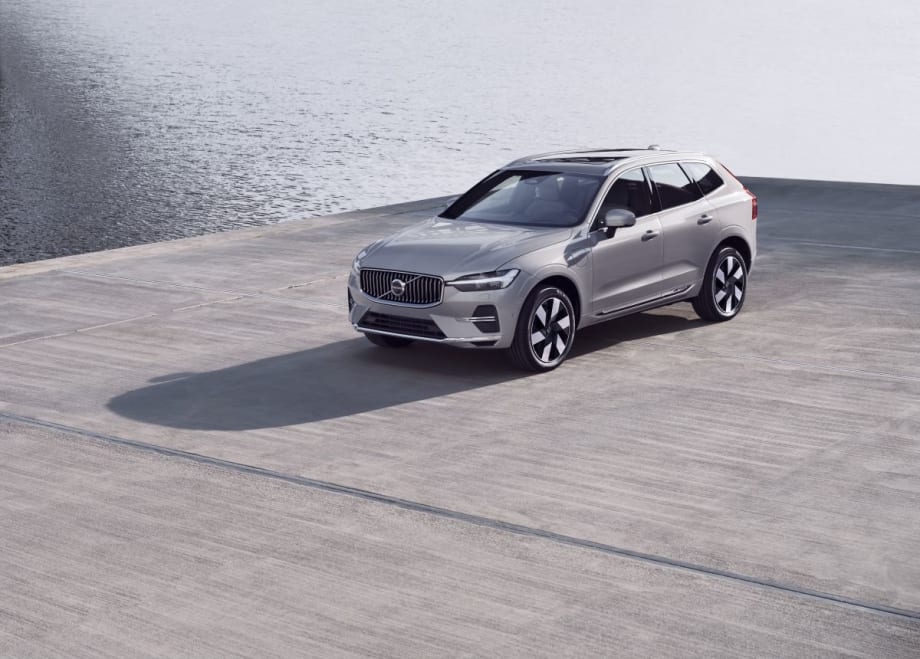
The Volvo XC60's fuel economy increased from 20 mpg city and 27 mpg highway in MY 2019 to 22/28 in MY 2024. Driving 15,000 miles per year, the fuel savings is $545 over a three-year period. (2024 Volvo XC60 shown).
Photo: Volvo Car USA
"Fuel economy improves with subsequent vehicle generations." This assumption proves true with a glance at the U.S. EPA's light-duty average fuel economy over the years.
Of course, fleets don't put fleet drivers in vehicles on averages; they spec specific models. How much does their fuel economy improve over time?
To find out, Automotive Fleet asked the lifecycle cost experts at Vincentric to calculate the fuel expenses of popular fleet models for the 2019 and 2024 model years. We kept this analysis to internal combustion engine (ICE) models.
We only chose vehicles that existed in both model years for an apples-to-apples comparison. Though vehicle options and trim level designations change between model years, we chose the closest matches.
Vincentric calculated fuel at three years, 15,000 miles per year, $4.09 for vehicles requiring premium fuel (BMW 3-Series, Mercedes C-Class, Cadillac Escalade, and Volvo XC-60) and $3.31 for regular (the rest).
Our comparison shows an improvement in overall MPG, but not by a significant amount. Average MPG improved from 23 city and 31 highway in 2019 to 24/32 in 2024. From the 2019 to the 2024 model year, total average fuel expense decreased by 2.7%, from $6,243 to $6,077.
Six models saw their fuel economy worsen. Six stayed the same, and 11 improved.
The big winners were Ford Explorer, with a 16.5% decrease in fuel expense, Mazda CX-5 with a 14.2% decrease, and Kia Sportage with a 12.1% decrease.
In the case of Ford Explorer, the vehicle entered a new generation between those model years and offers a broader range of engine choices.
First, a caveat: This is only a snapshot of a small subset of models and does not represent the breadth of engine choices for each model.
In this admittedly narrow analysis, subsequent vehicle generations don't always show meaningful improvements in fuel economy.
Manufacturers engineer vehicles not just for improvements in fuel economy but also for vehicle functionality, safety, and driver comfort. Fleets spec holistically too.
In this case, revising their selector lists is a more productive path for fleets that have improving fuel economy higher on the priority list. A more comprehensive initiative to move toward more fuel-efficient models, including hybrids, plug-in hybrids, and pure electric models where applicable, will result in a quicker path to lowering fuel expense and carbon emissions.
2019-MY Vechicles | ||||||
|---|---|---|---|---|---|---|
Make | Model | Series | Engine | City MPG | Highway MPG | Fuel Total |
BMW | 3-Series | 330i | 2.0L Inline 4-cyl Direct injection DOHC 16-valve Twin turbo | 26 | 36 | 6,355 |
Honda | Accord | EX | 1.5L Inline 4-cyl Direct injection DOHC 16-valve Turbocharged | 30 | 38 | 4,665 |
Nissan | Altima | S | 2.5L transverse Inline 4-cyl Direct injection DOHC | 28 | 39 | 4,756 |
Mercedes | C Class | C300 | 2.0L Inline 4-cyl Direct injection DOHC 16-valve Turbocharged | 23 | 34 | 6,936 |
Toyota | Camry | LE | 2.5L Inline 4-cyl Direct injection DOHC | 28 | 39 | 4,756 |
Mazda | CX-5 | Signature | 2.5L Inline 4-cyl Direct injection DOHC Turbocharged | 22 | 27 | 6,462 |
Ford | Edge | SE | 2.0L Inline 4-cyl Direct injection DOHC Turbocharged EcoBoost | 21 | 28 | 6,490 |
Buick | Enclave | Essence | 3.6L V6 SIDI DOHC | 18 | 26 | 7,254 |
Chevrolet | Equinox | LS | 1.5L Inline 4-cyl SIDI DOHC Turbocharged | 24 | 30 | 5,868 |
Cadillac | Escalade | Luxury | 6.2L V8 SIDI | 14 | 23 | 10,738 |
Ford | Escape | SE | 1.5L Inline 4-cyl Direct injection DOHC Turbocharged EcoBoost | 23 | 30 | 5,991 |
Ford | Explorer | Base | 3.5L V6 SMPI DOHC Naturally Aspirated | 17 | 24 | 7,776 |
Jeep | Grand Cherokee | Laredo | 3.6L V6 SMPI DOHC Pentastar | 19 | 26 | 7,074 |
Chevrolet | Malibu | LS | 1.5L Inline 4-cyl DOHC Turbocharged ECOTEC | 29 | 36 | 4,874 |
Subaru | Outback | Limited | 2.5L Horizontally opposed 4-cyl SMPI DOHC | 25 | 32 | 5,568 |
Toyota | RAV4 | LE | 2.5L Inline 4-cyl Direct injection DOHC | 26 | 35 | 5,214 |
Nissan | Rogue | SL | 2.5L transverse Inline 4-cyl SMPI DOHC | 26 | 33 | 5,376 |
Hyundai | Sonata | SEL | 2.4L Inline 4-cyl GDI DOHC | 25 | 33 | 5,480 |
Kia | Sportage | EX | 2.4L Inline 4-cyl GDI DOHC | 22 | 29 | 6,231 |
GMC | Terrain | SLE | 1.5L Inline 4-cyl SIDI DOHC Turbocharged | 26 | 30 | 5,637 |
Volkswagen | Tiguan | S | 2.0L transverse Inline 4-cyl Direct injection DOHC Turbocharged | 22 | 29 | 6,231 |
Chevrolet | Trax | LS | 1.4L Inline 4-cyl SMPI DOHC Turbocharged | 25 | 33 | 5,480 |
Volvo | XC60 | T5 - Inscription | 2.0L transverse Inline 4-cyl Direct injection DOHC Turbocharged | 20 | 27 | 8,373 |
2019-MY mpg & fuel expense averages | 23 | 31 | 6,243 | |||
2024-MY Vehicles | ||||||
|---|---|---|---|---|---|---|
Make | Model | Series | Engine | City MPG | Highway MPG | Fuel Total |
BMW | 3-Series | 330i | 2.0L Inline 4-cyl Direct injection Turbocharged | 25 | 34 | 6,674 |
Honda | Accord | EX 1.5L | 1.5L Inline 4-cyl Direct injection DOHC Turbocharged | 29 | 37 | 4,808 |
Nissan | Altima | S | 2.5L Inline 4-cyl Direct injection DOHC Naturally Aspirated | 27 | 39 | 4,835 |
Mercedes | C Class | C300 | 2.0L Inline 4-cyl Direct injection DOHC Turbocharged | 26 | 36 | 6,355 |
Toyota | Camry | LE | 2.5L Inline 4-cyl Direct injection DOHC | 28 | 39 | 4,756 |
Mazda | CX-5 | S Preferred | 2.5L Inline 4-cyl Direct injection DOHC | 26 | 31 | 5,546 |
Ford | Edge | ST-Line | 2.0L Inline 4-cyl Direct injection DOHC Turbocharged | 21 | 28 | 6,490 |
Buick | Enclave | Essence | 3.6L V6 SIDI DOHC | 18 | 26 | 7,254 |
Chevrolet | Equinox | LS | 1.5L Inline 4-cyl SIDI DOHC Turbocharged | 24 | 30 | 5,868 |
Cadillac | Escalade | ESV Premium Luxury | 6.2L V8 Direct injection OHV | 14 | 18 | 12,267 |
Ford | Escape | Base 1.5L | 1.5L Inline 3-cyl GDI DOHC Turbocharged | 27 | 34 | 5,199 |
Ford | Explorer | Base | 2.3L Inline 4-cyl Direct injection Turbocharged | 21 | 28 | 6,490 |
Jeep | Grand Cherokee | Laredo | 3.6L V6 SMPI DOHC | 19 | 26 | 7,074 |
Chevrolet | Malibu | LS | 1.5L Inline 4-cyl Direct injection DOHC Turbocharged | 27 | 35 | 5,123 |
Subaru | Outback | Limited | 2.5L Horizontally opposed 4-cyl Direct injection DOHC | 26 | 32 | 5,460 |
Toyota | RAV4 | LE | 2.5L Inline 4-cyl Direct injection DOHC | 27 | 35 | 5,123 |
Nissan | Rogue | SL | 1.5L Inline 3-cyl Direct injection DOHC Turbocharged | 29 | 36 | 4,874 |
Hyundai | Sonata | SEL | 2.5L Inline 4-cyl GDI DOHC | 25 | 36 | 5,234 |
Kia | Sportage | EX | 2.5L Inline 4-cyl GDI DOHC | 25 | 33 | 5,480 |
GMC | Terrain | SLE | 1.5L Inline 4-cyl SIDI DOHC Turbocharged | 24 | 29 | 5,970 |
Volkswagen | Tiguan | S | 2.0L Inline 4-cyl Direct injection DOHC Turbocharged | 24 | 31 | 5,774 |
Chevrolet | Trax | 1LS | 1.2L Inline 3-cyl Direct injection DOHC Turbocharged | 28 | 32 | 5,258 |
Volvo | XC60 | B5 - Core | 2.0L Inline 4-cyl Direct injection DOHC Turbocharged | 22 | 28 | 7,848 |
2024-MY mpg & fuel expense averages | 24 | 32 | 6,077 | |||
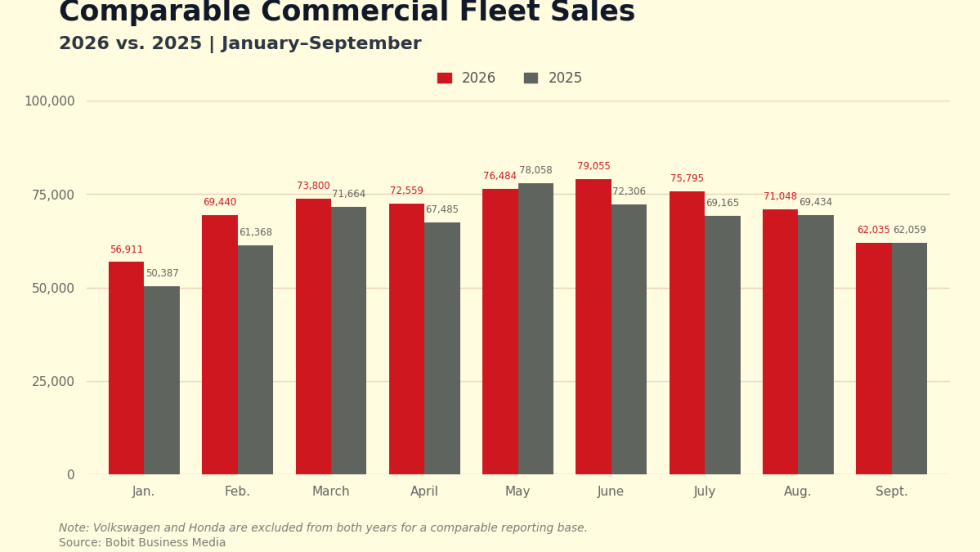
September commercial fleet sales were essentially unchanged from a year earlier, slowing year-to-date growth while keeping volume ahead of 2025.
Read More →
The longtime Mondelēz International fleet executive joins the Automotive Fleet Hall of Fame.
Read More →
After more than four decades at Boehringer Ingelheim, Lee Miller leaves a legacy built on fleet expertise.
Read More →
From managing fleets of thousands of vehicles to advancing safety and mentoring fellow professionals, Mark F. Petersen made his mark across both the corporate and supplier sides of fleet.
Read More →
As EV deployments move beyond pilot programs, charger reliability can directly affect vehicle readiness, driver productivity and route scheduling.
Read More →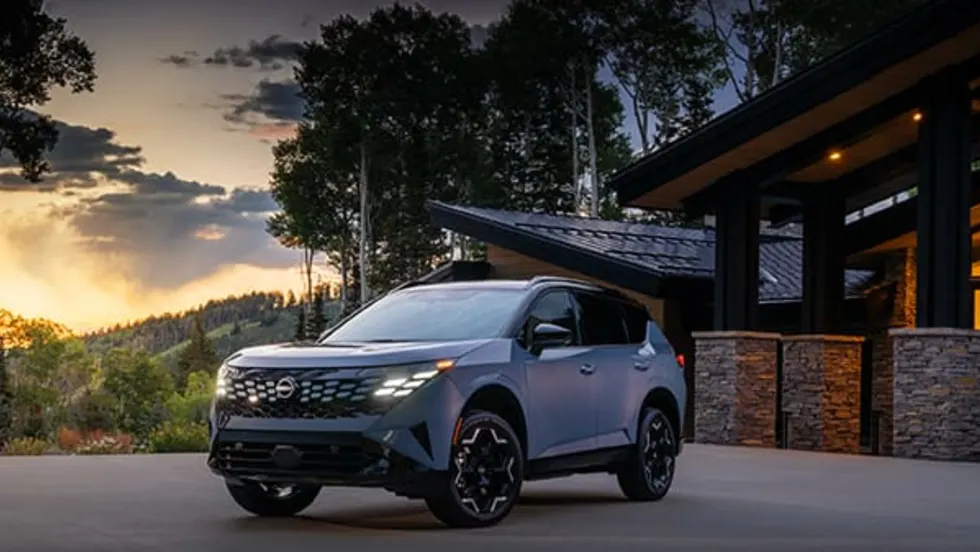
The new Rogue Hybrid uses Nissan’s e-POWER system with dual electric motors, offers an estimated 40 mpg and starts at $35,490.
Read More →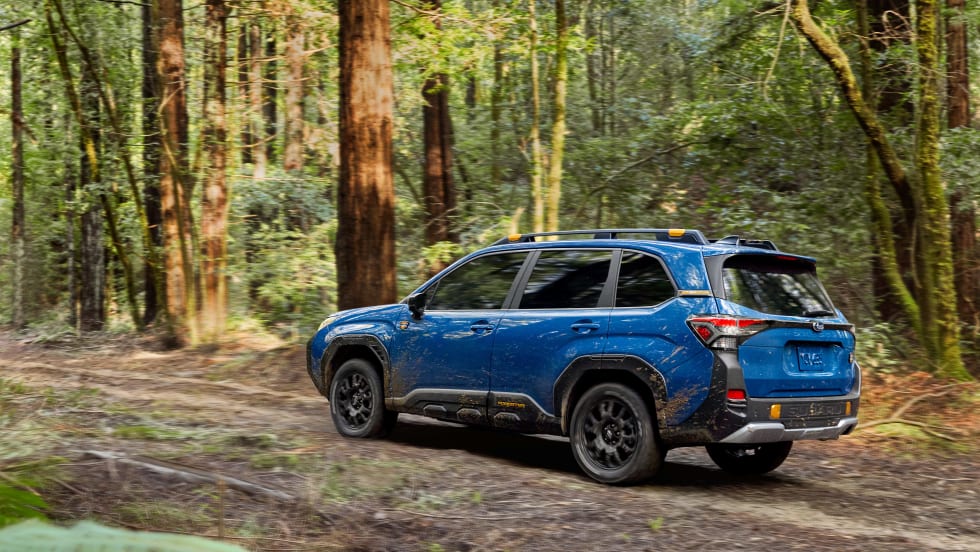
The 2027 Forester lineup starts at $29,995 and adds a Wilderness Hybrid with 194 combined horsepower and 9.3 inches of ground clearance.
Read More →
The former Prologis Mobility and Shell executive will help expand EV Realty’s truck charging business and move its power-first infrastructure model into autonomous vehicle depots and other fleet sectors.
Read More →
The GLC 400 4MATIC Electric features an 800-volt architecture, 330-kW DC fast charging and a 94-kWh battery, along with Mercedes-Benz's new MB.OS operating system.
Read More →
Where will the next generation of fleet leaders come from, and what does the industry need to do differently to find them?
Read More →