Automotive Fleet
MenuMENU
SearchSEARCH

Carsharing: Overview of the Independent Market

By finding a specific niche in their respective markets, these independent carsharing companies are surviving against the big guys in the expanding carsharing market.

Amy Hercher
Amy HercherFormer Senior Editor
Read Amy's Posts
March 13, 2015
Carsharing: Overview of the Independent Market


1 min to read


Despite the majority of the carsharing market BEING ruled by the major car rental companies and automakers (Avis Budget’s Zipcar, Daimler’s Car2go, Enterprise CarShare and Hertz 24/7), there is still room for small independent carsharing companies to make their presence in their markets — or in the case of overseas operators, expand in a market all by themselves.

For the independents, it’s more about finding a consumer niche. Here are examples of independent carsharing companies in the U.S., Canada, Mexico and Russia that target specific markets and audiences, including local neighborhood service, point-to-point, peer-to-peer, all-electric and student carsharing.

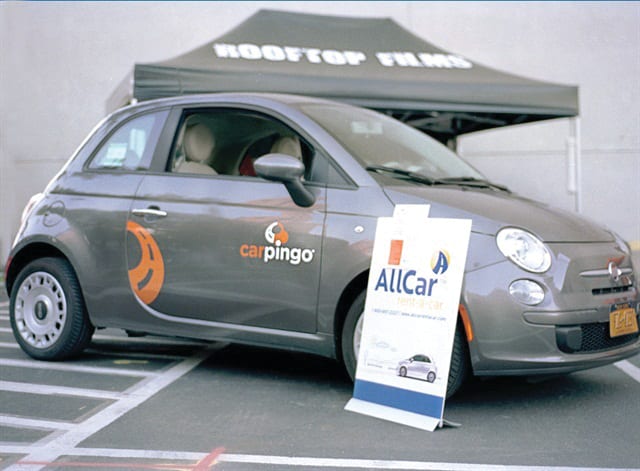
CARPINGO

Coverage area: Brooklyn and Queens, N.Y.
Proprietor: Gil Cygler
Business model: Local carshare company; traditional model, station-based, roundtrip. Owned by AllCar Rent-A-Car.
Fleet size: 78 vehicles
Car models: Various makes and models, including Fiat 500, Toyota Prius, Ford E-250 cargo vans.
Membership: Local residents and local businesses. Renters must be 21.
Parking/access: Local parking lots, strip malls, business parks and gas stations.
Niche/audience: “Our typical member is the local resident who has given up his or car and prefers the convenience of dealing with a local company,” Cygler says. “With a smaller company, a customer can speak with a decision maker rather than being one of thousands of customers at a larger carshare company.”
Growth opportunities: “We see car ownership being less of a goal of New Yorkers,” Cygler says, adding that many New Yorkers prefer to spend on other expenses rather than the cost to own a car. “Uber and other carshare companies are changing the landscape. Residents are looking for the convenience that carsharing provides.”
Competition: “Our competition ranges from Uber and car2go, which offer complementary services, and Zipcar and Enterprise CarShare, which offer a similar service.”
Biggest challenges: “The challenges are member acquisition as well as parking acquisitions, since many of the local parking garages have exclusive parking deals with one particular carshare company."


FLIGHTCAR

Coverage area: San Francisco International Airport (SFO), Los Angeles International Airport (LAX), Boston Logan International Airport (BOS), Seattle-Tacoma International Airport (SEA), Washington Dulles International Airport (IAD), Philadelphia International Airport (PHL), Dallas Love Field Airport (DAL), Austin-Bergstrom International Airport (AUS) and Oakland International Airport (OAK).
Business model: Peer-to-peer
Proprietors: Rujul Zaparde, Shri Ganesham, Kevin Petrovic
Fleet size: N/A
Car models: Various; non-owned fleet
Membership: More than 50,000
Parking/access: Off-airport locations
Niche/audience: “FlightCar is geared toward the airport traveler,” Zaparde says. “Our largest demographic is young professionals in their late 20s or 30s and also, surprisingly, seniors. We target the leisure market at the airport; we’re not targeting the local city markets.”
Growth opportunities: “We’ve recently launched many locations,” he says. “This summer, we were in three markets and now we are in nine. I think the growth opportunity is really in expanding to the large airports. There are a lot of network effects we can capitalize on; we will start to see more and more owners becoming renters on our platform and vice versa. We’re already seeing strong indications of this trend.”
Biggest challenges: “This is a very operationally complex business to run,” Zaparde says. “Not only do we have to deal with the renter side of the equation, but we also have to handle the expectations of owners who drop their cars off with us. I also think working within the constraints of airports can be a challenge due to their heavy regulations.”
Competition: “We really consider our competition to be the large car rental companies. They’re the ones who compete at airports — the market we’re going after. There are huge inefficiencies out there in the airport car rental market, and that’s our leverage.”

BLUEINDY (Planning to launch in 2015)

Coverage area: Indianapolis
Proprietor: Bolloré Group
Business model: Point-to-point, plug-in electric carsharing.
Fleet size: Estimated 500 vehicles
Car models: Bluecar, all-electric vehicle manufactured by French conglomerate Bolloré Group, 150 miles per charge.
Membership: BlueIndy will charge by the minute. Estimated fees are $5 for the first 20 minutes and 25 cents a minute thereafter.
Parking/access: Up to 200 parking/charging stations are expected to be completed by the end of 2016 (each station will have five parking spaces and five charging stations). Parking fees are included in the membership fees.
Niche/audience: “We think there are two main groups: millennials living in downtown Indianapolis and university students,” says Bob Briggs, BlueIndy’s director of business development. “We are also going to talk to major employers to see if they want to complement their fleets with BlueIndy cars; they may be able to have fewer fleet vehicles by utilizing BlueIndy.”
Growth opportunities: “It makes sense for Chicago, New York City — any high density population city where owning a vehicle is difficult and cost prohibitive.”
Biggest challenges: “I think the challenge is getting the people into the vehicle to try it,” says Briggs. “It’s all about getting them comfortable with the electric vehicle. Also, it has to be politically embraced in a city in order for this program to be successful. If you have all the regulations and rules against you, it’s difficult to implement.”
Competition: “There is not a lot of competition out there. You don’t have to pick up the vehicle and drop it off at the same location like car rental. BlueIndy is not car rental; it’s carsharing. It’s a service that enables you to have a vehicle to drive to your next location, park it and then someone else can take it. We expect those trips to be 30 minutes on average.” 

STREETCAR LLC

Coverage area: City of St. Petersburg, Russia
Proprietor: Anton Postlnikov
Business model: Traditional carsharing
Fleet size: 70 vehicles
Car models: BMW 3 Series
Membership: More than 2,600 members
Parking/access: Fixed parking spots
General member demographics: 90-95% between 21-45 years old
Niche/audience: “Our customers include people who want to use carsharing as a replacement of their own vehicle and those who already have a car but want to drive a premium model for some type of event,” says Postlnikov.
Growth opportunities: “The market is new, so opportunities are everywhere,” says Postlnikov. “We will be expanding into major cities and also launching a cargo carsharing model soon.”
Biggest challenges: “Drunken drivers are our biggest challenge. Most of our big accidents have involved drunken drivers who are not covered by our insurance. We have implemented a fix by controlling vapors of alcohol in the car.”
Competition: “Currently, we don’t have competition with the same carsharing model. There is only one other company in Moscow doing carsharing. It’s called AnytimeCar and uses a point-to-point model.”

STUDENT CARSHARE

Coverage area: Across Canada
Proprietor: Michael Lende
Business model: Traditional carshare model. Fleet provided by Discount Car and Truck Rentals
Fleet size: 80 vehicles
Car models: Kia
Membership: One minor violation allowed in last three years. 
Parking/access: On-campus, student neighborhoods and where students socialize, such as Starbucks. 
General member demographics: students ages 18-26
Growth opportunities: “We see growth in the existing schools where we operate and hope to expand to additional universities,” Lende says.
Biggest challenges: “Educating people that carshare is cheap, convenient and sustainable.”
Competition: “Our company owns 100% market share in most of our school markets. And even where we don’t, we are the only student-centric carsharing company with a national footprint in Canada. We are also the only carshare and car rental company to outfit our fleet with winter tires. 

CARROT

Coverage area: Mexico City, Monterrey, Guadalajara, Puebla and major university campuses in Mexico. Estimated 800,000 people within walking distance of a Carrot vehicle.
Proprietor: Diego Solórzano
Business model: Point-to-point carsharing
Fleet size: 70 vehicles
Car model: Nissan March, Nissan Xtrail, Nissan Leaf, Toyota Prius, Toyota Hiace, Audi A1
Membership: More than 6,200 members 
Parking/access: “We are the first carsharing company in Latin America to have on-street parking permits,” Solórzano says. “In addition, we park our vehicles in public and private parking lots, shopping malls and university campuses.” 
General member demographics: Mid to high income, most 30-40 years old.
Niche/audience: “We have three niches,” Solórzano says. “One, people with no car at home and use public transit on a daily basis; two, people who already own a vehicle but choose to use our service instead of acquiring a second car; three, business owners who use our service instead of purchasing a fleet.”
Growth opportunities: “We believe the biggest growth will come from business users and people, literally, walking away from vehicle ownership.”  
Biggest challenges: “[Having potential users make the] cultural switch is our biggest challenge. Owning a vehicle is still seen as an important milestone in people’s lives. We believe this will be overcome by the fact that Mexico City is one of the worst cities for commute time and traffic in the world. And at the same time, it has one of the biggest and busiest public transit infrastructures.” 
Competition: “Our biggest competitor is vehicle ownership. We also face competition from traditional car rental companies.”

CAPITAL CARSHARE

Coverage area: Albany, N.Y.
Proprietor: Creighton Randall
Business model: Nonprofit, traditional carshare
Fleet size: 6 vehicles (launched in August 2014)
Car models: Compact vehicles such as Hyundai Accent and Toyota Prius
Membership: Currently, Capital CarShare has 82 accounts and 93 drivers (certain plans offer multiple drivers).
Parking/access: “Our cars are located at six different parking lots within the city of Albany,” says Nnenna Ferguson, communications director. “Members make a reservation online or by phone as soon as 15 minutes before they need a car. Members pick up and return the vehicle to the same location for every reservation.”
General member demographics: “Our members are primarily urban dwellers (ages 25-50) who are choosing to use carsharing for the economic and/or environmental benefits.”
Niche/Audience: “Capital CarShare bridges the gap between public transit and private car ownership in Albany,” says Ferguson. “We serve a diverse community of families and individuals who desire the flexibility to choose their vehicle or have no vehicle — when walking, biking or using public transit makes more sense.”
Growth opportunities: “Capital CarShare envisions itself growing as an extension of transit throughout the entire capital region. Our nonprofit business model works for individuals, families and businesses, and we plan to broaden the scope of our membership in the coming years. Capital CarShare also has plans to advance sustainable transportation options in the region via electric and/or hybrid vehicles.”
Biggest challenges: “One of the biggest hurdles for most carsharing organizations is educating the market on the benefits of sharing versus renting and owning. Vehicles are not only a tool for mobility, but they can also be viewed as a reflection of self.”
Competition: “Capital CarShare only directly competes with traditional and for-profit rental car services. We’ve successfully reached community members in search of more independence for quick — and often habitual — errands that don’t require 24-hour usage.”

SHARE'NGO

Coverage area: Europe
Proprietor: CS Group SRL
Business model: Free-floating electric carsharing
Fleet size: Between 50 and 500 vehicles at each location
Car models: Greengo iCAR0 electric vehicles
Membership: Thousands of members; 1% of city population is the target market size
Parking/access: Public parking is near downtown. Renters access the vehicles through RFID card and mobile apps.
General member demographics: Male, 30-40 years old.
Niche/audience: “Share’Ngo is a new brand born in Italy to develop ‘electric tourist carsharing’ in addition to traditional rental and carsharing services,” says Matteo Gandolfi, chief technology officer of CS Group. “The idea is to give to tourists a fun and easy solution to visit our country.”
Growth opportunities: “With more than 46 million tourists a year, Italy is the fifth highest tourist earner and fifth most visited country in the world. Tourism is one of Italy’s fastest growing and most profitable industrial sectors, with an estimated revenue of 136.1 billion euros. We want to attract tourists in strategic areas [such as] airports, rail stations, naval ports and the metro. With shared electric vehicles, we offer a tourist ‘offer pack,’ including a navigation system integrated with local tourist guide.”

GSA Offers Carsharing to Government Agencies

As part of a one-year pilot program in Boston, Chicago, New York City and Washington, D.C., the General Services Administration will provide government employees access to carsharing vehicles. The four carsharing providers include Enterprise CarShare, Zipcar, Carpingo and Hertz 24/7. Carpingo and Hertz 24/7 will only participate in New York City’s program.

“In these cities, we assess federal buildings, availability of carsharing services and the best practices that the carsharing companies have to offer the federal government, including paper confirmations, keyless entry and total vehicles in fleet,” says Jerry Bristow, program manager carshare, FAS Office of Travel and Transportation. “As we evaluated the companies, we found that these four carsharing companies could meet these types of requirements and provide this type of service.”

Offering mainly economy, compact and SUV models, each of the carsharing locations must be within five minutes of a government building, says Bristow.

“Carsharing will fill that short-term transportation need for our government agencies,” says Bristow. “These pilot programs will tell us whether carsharing is more cost-effective and beneficial in lieu of taxi cabs or leasing or purchasing a vehicle.”

Since the program is still in its first quarter, government agencies are just signing up and getting familiar with it. Each quarter, the agencies will report how many are using the program and the costs involved, according to Bristow.

Originally posted on Auto Rental News

Subscribe to Our Newsletter

More Global Fleet

SponsoredMarch 1, 2026

One University Cut Motor Pool Costs by $45K. Here's the Playbook.

Still managing your motor pool with spreadsheets and manual approvals? Loyola University replaced outdated processes with automated fleet management, eliminating overtime and saving up to $50,000 annually. See how they did it.

Read More →
A world graphic of workers holding hands surrounds a globe with a line of cars on top, representing Global Fleets.
Global Fleetby News/Media ReleaseOctober 30, 2025

Enterprise Fleet Management Surpasses 900,000 Vehicles in U.S. & Canada

Enterprise Mobility connects with mobility solutions around the globe

Read More →
Two people pose with a sign symbolizing Viaduct's partnership with SRI.
Global Fleetby Chris BrownSeptember 8, 2025

Sumitomo Rubber Industries to Acquire Viaduct

Viaduct will join Sumitomo as an independent subsidiary. Partnership strengthens global reach and accelerates AI-driven innovation for fleets and manufacturing.

Read More →
Ad Loading...
A presenter speaks on stage at a conference, addressing an audience seated at round tables, with large screens displaying presentation slides in the background.
Global FleetAugust 11, 2025

AfMA’s 2025 Education & Leadership Summit: 26 Years of Impactful Connection

Held in Sydney, the Australasian Fleet Management Association’s 2025 Summit marked ten years of growth as the event expanded its global reach and doubled down on practical, non-commercial fleet leadership programming.

Read More →
Graphic of awards announcement
Global Fleetby StaffJune 6, 2025

Closing Soon! Nominate a 2025 Global Fleet Team of the Year

Submit your nomination for the award that honors outstanding multinational fleet teams. Nominations close Aug. 15.

Read More →
A graphic with cars driving past in the background with motion blur. Text reads "Reducing Preventable Accidents".
Global FleetNovember 26, 2024

Seven Strategies to Reduce Preventable Accidents

“Accidents” suggest inevitability, but most crashes are preventable — caused by driver actions and behaviors. Here’s why shifting the narrative can improve road safety.

Read More →
Ad Loading...
Four people sitting on stage doing presentation.
Global Fleetby Chris BrownNovember 6, 2024

2024 Global Fleet Conference in Photos

Check out photos from the first two days of the 2024 Global Fleet Conference, which convened for the first time in San Diego Nov. 4-6 as part of the new Fleet Week series of conferences.

Read More →
A black and blue graphic with a business portrait of Colin Sutherland, with text detailing his interview with Chris Brown.
Global Fleetby StaffOctober 17, 2024

Inside the 2024 Global Fleet Conference: Insights from Bobit CEO Colin Sutherland

With GFC joining Fleet Forward and Fleet Safety Conferences, attendees can engage in essential discussions on procurement, ESG goals, and safety.

Read More →
A sky blue and lime green graphic detailing the Global Fleet Conference seminar "Strategies to Reduce Fleet C02 Emissions on a Journey to Achieve Net-Zero."
Global Fleetby StaffOctober 11, 2024

Global Fleet Conference: Achieving Net-Zero Goals

On Nov. 5 in San Diego, join industry leaders from Schindler Elevator and Geotab as they share ideas and approaches to reaching emissions goals in global fleet operations.

Read More →
Ad Loading...
A blue and gold graphic detailing open nominations for the 2024 Global Fleet Manager of the Year.
Global Fleetby StaffJuly 23, 2024

Call for Nominations: 2024 Global Fleet Manager of the Year

Nominate a fleet manager or team today and recognize some of the best and brightest in the global fleet industry.

Read More →