




Breaking the News: How to Give Management Bad News
It is likely the one scenario fleet managers dread most: there is bad news, and management needs to know. Are there ways to soften the blow? Being the bearer of bad news isn’t fun, but it’s a part of doing business.
"Give me the bad news first" is the usual answer to the announcement, "There's good news and bad news." Nobody likes it, but unwelcome messages are an unfortunate part of every businessperson's life. It's something good managers can handle.
How so? How does a fleet manager survive the unpleasant task of telling management that, for example, the fleet budget has been exceeded? That a necessary fleet-wide recall will cost the company thousands of downtime hours? That used-vehicle values tanked and depreciation has skyrocketed?
Like most other tasks, with good communication, proper planning, and an eye on detail, bad news, while not welcome, won't linger like a bad odor, and the fleet manager can survive the ordeal.
Which News is Bad News?
Bad news comes in varying levels of intensity, depending on the people involved. What is bad news to a fleet manager isn't always something management will dislike or even understand.
A senior manager is usually concerned about the costs in company operations. Most senior managers view fleet as a cost of doing business. Consider this scenario: A manufacturer notifies a fleet manager the remaining model-year orders will not be built and are being pushed to the new model-year. Bad news? For a fleet manager, it is. Is the VP of operations concerned? Not really; it isn't likely he or she understands the implications of the delay, nor does the VP need to know. It's just one of those day-to-day fleet management issues fleet managers deal with. Extend a few replacements, a handful of out-of-stock purchases, and the setback is resolved.
Another scenario: the fleet consists of 500 of one particular model pickup truck. The manufacturer has issued a recall, which requires returning all 500 vehicles to a dealer for repairs, triggering replacement rentals and downtime costing tens of thousands of dollars. Bad news? Yes, indeed — for both the fleet manager and the director of services whose budget will be hit with the unanticipated charges. The essential point is that fleet managers need to differentiate between news of resolvable inconvenient events and news of situations with serious consequences to costs, operations, etc.
Categorizing and defining these important issues goes a long way toward holding instances of delivering bad news to management to a minimum. Asking the following questions will help:
■ Is the news "big?" Are the numbers, if cost issues are involved, relevant enough to notify a senior manager? A budget overrun of $5,000 in a multimillion-dollar budget is hardly of interest to senior management. An overrun of 20 percent is.
■ Is it relevant to the executive's interests? Fleet managers deal with bad news every day. A branch manager's registration expires, and e-mails fly. Know the executive's stakeholder relationship with fleet and deal with the unwelcome issue accordingly. A lawsuit arising out of an accident might be important to a VP/treasurer, but not to the director of sales. Break the news only to individuals who need to know.
■ Is it personal? Every fleet manager has dealt with a senior executive on a personal level — getting an executive car repaired or delivered — and problems arise. Deal with these issues immediately and frankly.
[PAGEBREAK]
Know the Answer
Lawyers have a courtroom saying: never ask a question unless you know the answer. Fleet managers would do well to remember this adage when breaking bad news to management.
When an incident of bad news (as defined previously) arises, make certain you are thoroughly prepared before saying anything to anyone. That preparation takes a different form depending upon the issue.
For example, one issue bedeviling fleet managers in recent times is fuel expense. Fuel prices have been on a roller coaster, skyrocketing to more than $4 a gallon last summer and hovering around $2 today. The spike during the summer consumed most fleets' fuel budgets and the overruns were likely substantial.
This bit of news is certainly of interest to senior management; however, it may be expected and not surprising news — high fuel prices are not unique to fleets. What is important, however, is to prepare for reporting the news by demonstrating exactly what the company is doing to minimize the effects of fluctuating fuel costs.
Whether downsizing fleet vehicles or the fleet itself, renegotiating discounts with a fuel vendor, implementing driver training, or some combination thereof, no executive wants to receive bad news without facts on how it happened, its potential and actual effect, and the fleet manager's response plan. If the news is that fuel prices have doubled, knowledge that the company has taken steps to limit the corresponding rise in fleet fuel expense will go a long way toward softening the blow.
With proper preparation a fleet manager can actually use bad news to good effect. For example, the financial meltdown has placed a stranglehold on credit, and much economic activity has come to a screeching halt. One consequence (in the fleet world) has been dropping used-vehicle pricing and sales. Coupled with volatile fuel prices, some used-vehicle markets (SUVs and light trucks in particular) have plummeted. The result: fleet depreciation numbers are creeping upwards, another hit on fleet budgets.
Again, merely notifying management that depreciation costs have increased is a road to trouble for a fleet manager. While management knows and understands $4 per gallon gasoline is a problem, depreciation is less understood.
Developing a response to bad depreciation news might include expanding employee sales programs, altering replacement scheduling, downsizing vehicles and/or powertrains, or even reviewing the lessor's service level agreement. The news must be communicated, but if it involves an issue senior managers are not personally familiar with (such as depreciation), the fleet manager has an opportunity to "strut his or her stuff."
[PAGEBREAK]
Nobody Likes Surprises
Preparation for breaking unwelcome news doesn't, or shouldn't, begin when the event or situation has already happened. If there is one thing an executive dislikes, it is an "ambush" — hearing bad news out of the blue. It isn't often such news suddenly appears; there are exceptions, of course — a vehicle build-out example is one - but in general, a good fleet manager sees such issues coming.
Communication is critical here. Building relationships over time with executives, primarily stakeholders in the fleet process, but also with others, is an excellent first step. Those who have a stake in the fleet, from the driver function to treasury, risk management, or human resources, should be on the distribution list for reporting purposes, above and beyond the fleet manager's direct supervisor.
Since most bad news is, in one way or another, about fleet cost, regular communication helps extend the time over which the news is broken, while at the same time allowing the fleet manager time to develop a response plan.
Use again, for example, a fleet-wide vehicle recall. A homogenous fleet of 500 light-duty pickup trucks is hit with a recall that will cost thousands of hours of downtime and perhaps the cost of replacement rentals as well. Often, clues appear that warn such a recall may be looming.
Tracking repair transactions may indicate a particular part or system has been vulnerable to failure, at a rate far beyond the norm. A best practice in this case is a simple note in a regular monthly or quarterly report indicating so and telling management that in light of the failures, the company is in touch with the manufacturer and a recall is possible.
Naturally, the issue may not be noticeable; an obscure part in the ignition system or a seatbelt buckle may go unnoticed until the recall is made. However, there is often a record of problems a fleet manager can track and thus communicate before the issue arises.
Even unforeseeable issues can be managed beforehand, particularly when dealing with executives on a personal level. Think about this scenario: An executive orders his or her new company vehicle. While the ordering and delivery process is fairly routine, sometimes things go wrong. An order is misplaced, equipment chosen isn't installed, the color is wrong.
First, the fleet manager should always involve the manufacturer's representative when ordering for an executive. Second, the executive should be informed up-front, again, that errors in the process may occur, but you've already discussed what steps can be taken with the manufacturer should something unforeseen happen. In this way, if you get the dreaded call ("We lost the order" or "The silver car ordered came in blue"), the bad news can be softened with proactive steps already taken to correct the problem. The advisability of this approach is particularly relevant when the executive in question is not a fleet stakeholder; relationships, no matter how casual, count.
[PAGEBREAK]
Not a Good Idea
Sometimes, bad news can take a different form, one that has little to do with cost or personal issues. Most fleet managers, at one time or another, have dealt with a manager or executive, perhaps new to the position, who is determined to "clean up Dodge City" by altering accepted practices with an idea that is simply off the wall, e.g., "We should keep all our vehicles for 10 years" or "Why don't we use subcompacts?" — something that just won't work. It certainly comes under the heading of breaking bad news to tell an executive his or her brilliant idea is really not feasible.
How does a fleet manager break the news in a way that doesn't insult the executive, but clarifies his or her idea simply will not work?
Again, preparation, relationship-building, and some advanced communications skills can save the day. First: even if the exec's idea is offered in what seems an offhanded comment, take it seriously. Put simply, the executive really isn't expecting an answer, but providing a well-documented answer is a good way to establish a relationship. If suggestion or question was serious and no follow-up is provided, trouble will no doubt arise. Take all comments and questions seriously, and assume the executive expects an answer.
Keep one thing paramount in mind: as ridiculous a professional fleet manager might find the suggestion, the executive no doubt believes it is a stroke of genius and something no one has ever thought of before. Treat it as such. The bad news you're communicating is that what they've suggested won't work, which, coming from a subordinate, is sometimes the worst news an executive can get. Being a proficient wordsmith can help immensely:
"Regarding your suggestion the company use only subcompact cars, with no air conditioning and no radios, and keep them for 10 years: while it may seem at first blush this action will provide the company substantial savings, there is a downside to taking such action. Here are the numbers."
Bad news is part of business; handling it is as well. Good managers don't prove their mettle when things are going smoothly; they do when bad things happen. Indeed, having to break the bad news to senior management should be considered as a challenge and an opportunity to display expertise, experience, and coolness under fire.
■ Understand which bad news must be communicated up the chain of command and which doesn't.
■ Identify recipients appropriate to the bad news issue.
■ Never break bad news without providing an action plan or solution.
■ Avoid surprises.
■ Take seriously everything senior management suggests and provide a serious response, whether expected or not.
More Operations
What Fleet Managers Really Want From Vendors
From customer service frustrations and technology breakdowns to RFQs, change management, and the growing impact of turnover across the industry, this conversation pulls back the curtain on the real operational challenges fleet managers are navigating every day.
Read More →
Fleet Safety Masterclass: Industry Leaders on Storytelling, Strategy & Innovation
In this special masterclass episode, industry leaders break down what it really takes to build safer fleets in today’s increasingly distracted and data-driven world.
Read More →
Integrating Legacy Fleet Systems and Historical Data
In this episode, we bring together fleet and technology leaders to unpack the realities of data integration, system migrations, and the evolving role of AI in fleet management.
Read More →


From Resistance to Results: Change Management Strategies for Fleets
From new technologies and safety programs to evolving regulations, fleets are under constant pressure to adapt. But as Dr. Betz explains, success isn’t about the system you implement—it’s about whether your people actually use it.
Read More →
Where We're Headed: A Practical Look at AI in Fleet
Discover how AI is actually being deployed in fleets, not just marketed, including practical use cases and emerging risks.
Read More →
How Coca-Cola United Protects Its Fleet from Growing Legal Risk
Growing legal exposure can put fleets at risk. Here's one company's approach.
Read More →
Fleet Managers Think They Understand Their Costs. The Data Says Otherwise.
Most fleet managers say they have a strong handle on their costs, but new research from Bobit Business Media tells a different story. A 2026 survey of 190 fleet professionals reveals a widespread "confidence gap" where fragmented systems, disconnected data, and delayed reporting are leaving major blind spots hidden beneath the surface. Find out what the data actually shows.
Read More →
Cameras, Safety and Insurance: From Reactive Claims to Real-Time Prevention (Part 2 of 2)
Part Two: Commercial auto remains one of the most challenging and costly lines of coverage for fleet operators and insurers alike. Continue learning more about how to effectively address these issues from Onur Aksan, Enterprise Business Development Executive, Geotab
Read More →
New Trucks, AI & Summer Downtime | AF News Recap
From new truck updates to AI-powered driver coaching and summer maintenance tips, this week's fleet headlines are all about keeping things moving.
Read More →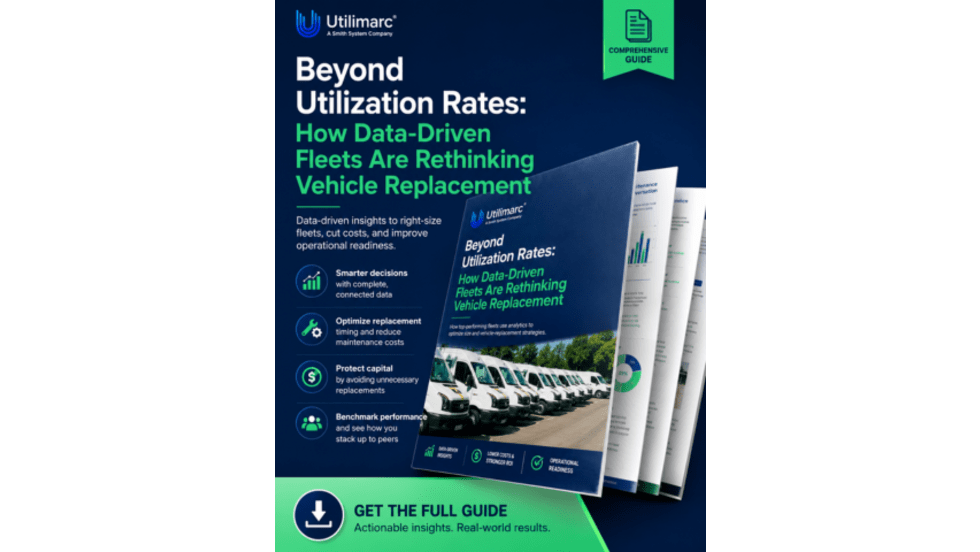
Beyond Utilization Rates: Smarter Fleet Replacement Decisions
Vehicle replacement decisions affect every aspect of fleet performance, from operating costs to asset availability. This guide explores how fleet leaders use integrated data, benchmarking, and lifecycle analytics to determine the right fleet size and optimize replacement timing with greater confidence.
Read More →