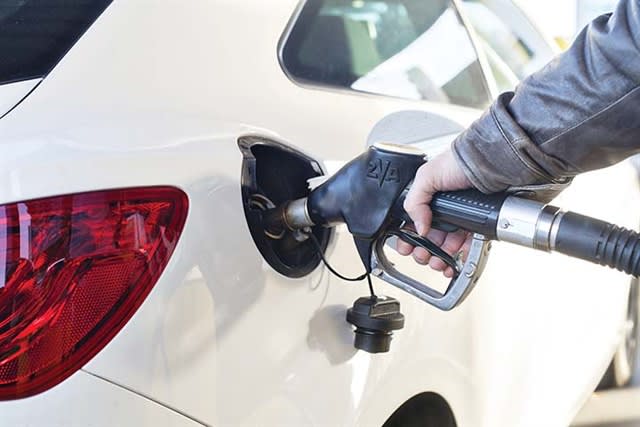
While fleets are benefiting from lower fuel prices, fuel spend continues to be among the top cost centers.
Ad Loading...
This means that fleet managers need to remain vigilant in keeping tabs on fuel costs and put best practices in place to make the fleet as efficient and cost effective in preparation for the inevitable rise in fuel prices.
Ad Loading...
Routing for Efficiency
Among the most fundamental ways fleets have seen gains in fuel efficiency is through improved routing.
“A majority of our technicians share local office vehicles and are dispatched based on the local office address. However, we do have a significant portion of remote technicians that do take their vehicles home with them each night and are dispatched for the next day’s business based on the location of their home residence,” said Abe Stephenson, fleet and administration manager for DISH Network. “So, we do a mix of automated job routing combinations that include dispatching from remote locations, as well as from the local office, to optimize our drive times and distances.”This is particularly imperative for fleets with drivers or technicians that take their vehicles home at the end of the day.
To improve routing efficiency, DISH implemented telematics in 2009, and has seen a direct benefit for its fuel use.
At a Glance
Even with fuel prices at the lowest they’ve been in several years, fleets need to keep a close watch on spend. This can be accomplished by:
Automating routing.
Using a fuel card.
Regularly auditing fuel spend for signs of fraud or abuse.
Implementing technology such as engine calibration and telematics.
“We began using telematics in 2009 primarily to automate our job routing functions. This led to a 10% reduction in miles per job which translates directly to a 10% reduction in fuel spend,” said Stephenson.
Savings Through Better Fueling
Automated routing is just one of the big benefits fleets are finding through the use of telematics.
Ad Loading...
For instance, Stephenson of DISH has integrated routing into the way the fleet’s drivers are fueling their vehicles by identifying and directing drivers to the fueling stations with the lowest cost per gallon.
“Quite commonly, the lower-cost fueling stations are consistently the lowest week to week,” he said. “Locations close to highways are higher in cost per gallon, with stations in lower visibility areas typically coming in with lower pricing. A balance has to be made operationally to not inconvenience the driver or extend drive times if a lower-cost station does not make sense logistically. But finding a convenient low-cost station can pay significant benefits with 10 cents or more per gallon. An additional opportunity here is to provide a list of low-cost fueling stations to the local office operations team as part of an office relocation or new build.”
Stephenson added that directing drivers to use the lowest octane fuel available and consistently auditing fuel use and fueling behaviors is a way to prevent fraud or losses.
Preventing fraud through consistent auditing is one of the key ways that Lee Jezek-Pierce, global fleet manager for Weatherford, an oilfield services company, employs to keep fuel costs under control.
To do this, Pierce uses a fuel card program, which allows her to assign cards to each vehicle. Each driver is issued a specific PIN.
Ad Loading...
This allows for a driver to use any fuel card and track which vehicles he or she fuels.
“To me it is very important to identify the driver that hops into several vehicles. This helps identify fraud by knowing who is actually fueling the vehicle. Keeping all of this information accurate is extremely important. The card is specific to each vehicle, instead of using multiple cards, once it goes rampant then you have no control,” she said. “That’s when you start pulling exception reports and researching why the driver is putting both unleaded and diesel fuel in the same truck. It raises red flags.”
Educating and communication to the drivers on the proper use of the fuel card has been among the biggest wins for Weatherford’s fleet.
“Once I have data integrity on my fuel spend, I can then audit and look at anomalies. It shows how we’re spending and see who’s spending,” she said. “And that’s how you start driving out the expense, and discover fraud within your fleet.”
The Weatherford fleet consists primarily of trucks, which fits the operation, but Pierce noted that another way she has been able to rein in fuel costs has been by identifying the right vehicle to the right driver. This has often meant rightsizing vehicles from ¾-ton pickups to ½-ton pickups.
Ad Loading...
“It’s about creating an alternative option to reduce fuel spend to have the right vehicle for the right application,” she said. “In my world, where a majority of the fleet is trucks, my question is the ¾ ton or the ½ ton going to get the job done? The ½ ton will get better MPG. The need versus want is always a topic of discussion. It’s identifying the type of vehicles that we’re ordering, and are they the right ones for the job? Along with which one is more cost effective and has better MPG. That’s when total cost of ownership comes into play.”
Choosing the most fuel-efficient vehicle is a high priority for DISH as well.
“Identifying vehicles with the best fuel economy is also a continual area of focus,” said Stephenson. “Even if a vehicle has a higher acquisition cost, better fuel economy can reduce total cost of ownership. They can even produce cash flow savings immediately since higher acquisition costs can be amortized over a financed lease term, allowing fuel economy benefits to drive savings from the time a vehicle hits the road.”
Going Alternative (Fuel)
With traditional fuel prices lower, interest in alternative fuels have waned a bit, but that doesn’t mean they don’t have a place in today’s fleets.
Stephenson of DISH has placed propane autogas vehicles in the telecommunication company’s fleet, and has reaped a number of benefits.
Ad Loading...
“Where we have the operational opportunity, we have deployed propane autogas vans,” he said. “The lower cost of propane autogas compared to gasoline, operational benefits of spending less time at fueling stations, use of HOV lanes in some markets, and taking advantage of federal incentives and state incentives (where available) have had a multi-angled influence on our ROI.”
While propane autogas has been a good fit for DISH in some instances, Pierce of Weatherford said that alternative-powered vehicles don’t quite work for the oil and gas provider because it doesn’t fit its operational needs.
Calibrating for Savings
Another way the DISH fleet is saving fuel is by using engine calibration programs across the fleet.
“We have used engine calibration programs across the entire fleet, including top speed limiters by state, reduction in idling RPMs, reduced acceleration rates, and other fuel optimization programming,” said Stephenson of DISH. “Engine calibrations save us 6-7% in fuel spend and provides some additional safety measures.”
Pierce of Weatherford is also looking to technology to improve the fuel use of the fleet. The fleet is about to implement a telematics program, and she expects it to not only aid in monitoring fuel use, but improve maintenance costs as well.
Fuel hedging has been used by some fleets as a way to lock in fuel prices, particularly when they are low. Pierce of Weatherford said that fuel hedging has been a “topic of conversation,” but ultimately has opted not to pursue fuel hedging as a way to control costs.
“It’s too volatile to do it,” she said. “Yes, it’s low right now, but as soon as you sign, it will change. The risk is too high due to the volatility of the market.”
Stephenson of DISH said that he has also looked into fuel hedging, but currently has no plans to implement it for the fleet.
“There are various ways that companies can use hedging,” he said. “If a fleet’s fuel spend is a material line item in a company’s overall P&L or there are significant budgeting considerations for the business unit, fuel hedging can be a valuable tool. Generally speaking, however, fuel hedging comes at a premium over the long term as a cost for providing more predictable fuel pricing.”
That being said, Stephenson noted that investigating whether fuel hedging is a good fit for a fleet can be piloted with little expense or risk.
Ad Loading...
“It’s quite easy to do your own hedging pilots,” he said. “It’s a paper-based process to begin with so simply tracking the various options on a spreadsheet can provide some hindsight specific to your own business. You’ll then have a more tangible example as backup across various hedging options.”
Facing the Next Challenges
Even with all the tools and techniques at the fingertips of today’s fleet managers, there are more options that fleets can and will be able to employ in the future.
“There are opportunities with lower mpg vehicles, cleaner and lower cost fuel sources, productivity tools, and processes. These are all opportunities to experiment with,” said Stephenson of DISH. “The challenge comes in determining which options to invest in, having the investigative rigor to proof them out with your stakeholders and suppliers, and the ability to present for approval and carry through to implementation. It can take a great deal of energy, commitment, and time to go through the whole process. Get some help along the way. Fleet managers should partner up with people internal and external to the company that can assist in their efforts.”
Pierce of Weatherford noted that while it can be daunting to get a handle on all of the data that these new tools and processes provide, there’s a benefit.
“You have to cipher through the noise to get to the truth. It is time consuming, but in the long term it pays off in cost savings and cost avoidance,” she said.
Where will fleet’s next generation of leaders come from? This week, we’re looking at the industry’s talent pipeline, what certification can add to a fleet career, how to build an award-worthy track record, and the return of Automotive Fleet’s Personal Use Survey.
Fleets have more driver data than ever, but identifying risky behavior doesn't necessarily correct it. Smith System's new Driver Risk Management program combines monitoring, training, and follow-up coaching to help fleets connect risk signals with driver intervention.
Less than two weeks left! Commercial and corporate fleet managers are invited to share how their organizations handle company vehicle personal-use policies, charges, and driver eligibility.
Can better prompts make AI more useful for fleet managers? This week, we’re breaking down smarter fleet analysis, an AI-assisted experiment that turned safety training into music, and what happened to fuel prices in August.
Tracking fleet metrics is only useful when the data leads to better decisions. This guide helps fleet leaders assess cost, utilization, and downtime more accurately, identify performance gaps, and prioritize the actions that can improve operational results.
Fleet compliance isn't just about having policies — it's about consistently enforcing them. This practical guide reveals six hidden compliance risks common in public sector and shared fleet operations and outlines proven strategies to improve visibility, accountability, and audit readiness