




Are You Ready to Manage Robots?
Holman’s new robotics division challenges the fleet industry to think beyond vehicles.

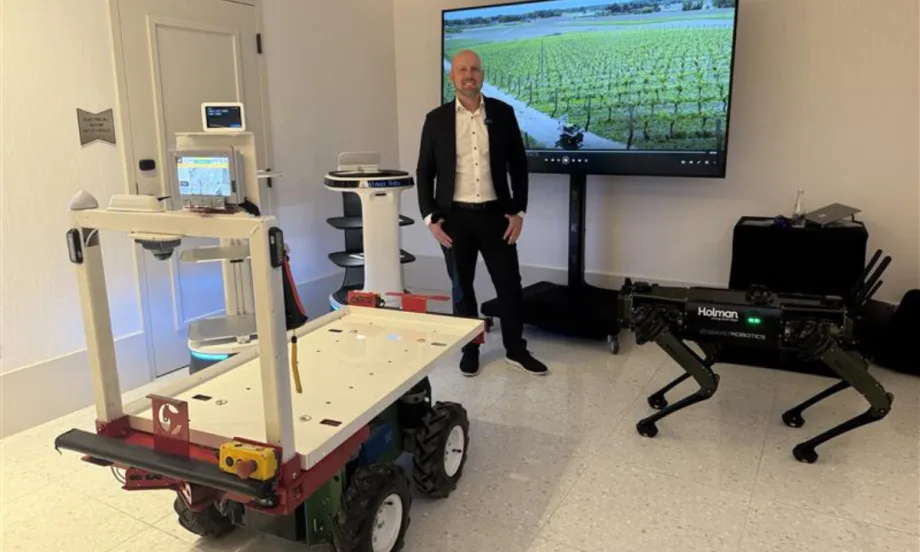
Holman Vice President of Robotics Joe Foster stands among robotic assets that will require management support, such as the Burro Verde autonomous a burrow cart for transporting heavy loads in outdoor and industrial environments and the Ghost Robotics “dog”, which uses sensors for inspections in potentially hazardous situations.
Photo: Chris Brown
Who is your robotic management service provider? Said no fleet manager — yet.
Automation is spreading from assembly lines to yards, depots, and warehouses. While we may not be buying Tesla Optimus line workers just yet, fleet managers may one day be responsible for autonomous carts, inspection drones, and robotic work companions.
Holman has its flag in this new sandbox with the unveiling of its new business unit, Holman Robotics, at Holman Drive 2025 in Miami Beach.
From Vehicles to Autonomous Assets
At Holman Drive, Holman Vice President of Robotics Joe Foster said the move is a natural evolution. “Fleet vehicles are a tool for your drivers to do their jobs,” he told attendees. “Autonomous Equipment like this is going to be a companion to the fleet, helping move parts, haul equipment, or perform inspections in ways that make people more productive and safer.”
As a fleet management company, Holman has managed the full lifecycle of assets for decades, including acquisition, financing, maintenance, and resale. The company now plans to apply that same expertise to autonomous equipment. Holman Robotics will help customers identify use cases, evaluate vendors, deploy robots, and manage them over time.
Automation and Employment
The impact of automation on employment remains a contentious issue. “Robots aren’t taking jobs, they’re taking tasks,” Foster said. “It doesn’t make sense to have someone walk half a mile across a warehouse just to move a part. That’s a task, not a job.”
He pointed to the so-called “3 Ds” of robotics — dull, dirty, and dangerous tasks. By automating these functions, companies can upskill their workers, improve safety, and remain competitive in a tight labor market.
How Will Robots Be Deployed?
Robotic automation will likely handle tasks that are repetitive, hazardous, or logistically challenging, freeing human workers to focus on higher-value activities. At Holman Drive, Foster highlighted several practical applications:
Material transport and logistics: Robots can move parts, tools, and equipment
across warehouses, depots, and industrial yards, reducing wasted walking and
increasing productivity. Units like the Burro Verde autonomous cart can
safely and efficiently transport heavy loads in outdoor and industrial environments
environments.Inspections and monitoring: Robots can patrol facilities, scan inventory, or
Inspect infrastructure, improving safety and operational awareness. The Ghost
Robotics’ Vision 60 autonomous “dog” uses mobile sensors, such as thermal
imaging, chemical detection, and LIDAR, to keep employees out of hazardous
situations.Routine maintenance and facility support: Autonomous units can perform cleaning, sweeping, and other repetitive tasks, allowing workers to focus on problem-solving instead of manual labor.
A New Kind of Asset Management
Holman Robotics will offer a fully integrated robotics solution, bundling solution design, funding options, and lifecycle support into a single model.
The hardest part is where to start, and that’s where Holman Robotics’ consulting services come in: identifying “low-hanging fruit” for automation and matching the right solutions from a curated network of vendors.
A centralized management platform will collect real-time data from robotic assets, tracking performance, utilization, and maintenance needs, like fleet dashboards do today for vehicles.
Financing models can be structured to mirror fleet leasing by turning upfront automation costs into manageable operational expenses.
“Customers can scale with certainty,” Foster explained. “We help them line up performance expectations and ROI, so they know exactly what their robotic investment is delivering.”
A New Market
One of the biggest unknowns in the robotics world is residual value. Unlike vehicles, most autonomous units don’t yet have a secondary market.
Foster believes Holman’s decades of experience selling used assets can help create one. “We know how to value and remarket equipment,” he said. “We think we can help define that market for robotics, too.”
In robotics, the secondary market is less of a concern than maintenance and ensuring existing equipment is properly upgraded, Foster said. Preparing for the Shift
For fleet managers, the definition of “fleet management” is expanding into new forms of asset management. Equipment that moves, hauls, inspects, or patrols — whether it has wheels, wings, or legs — may soon fall under the same asset-management umbrella as trucks and vans.
“This is going to happen,” Foster said. “You’re going to have executives asking, ‘What are we doing with automation?’ It’s not about resistance; it’s about helping your company compete for the future.”
More Telematics
Element Expands Waymo Partnership to Support Toronto Robotaxi Fleet
As Waymo prepares to enter the Canadian market, Element Fleet Management will oversee the fleet operations supporting its planned Toronto launch. The partnership highlights the maintenance, charging, and infrastructure requirements behind operating autonomous vehicles at scale.
Read More →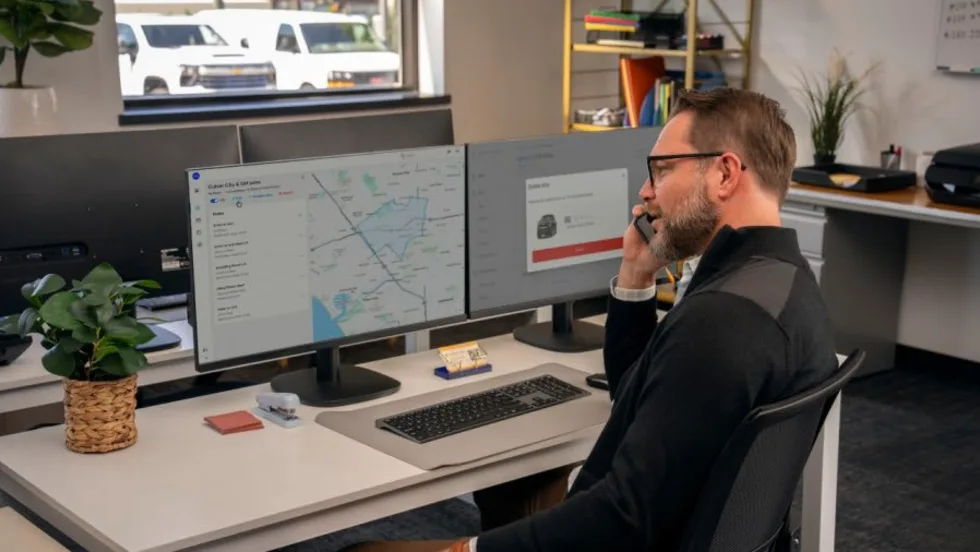
GM Launches OnStar Fleet Intelligence Platform With AI Assistant
The new platform brings vehicle data, order tracking, connected services and fleet analytics into one system, with an AI assistant that can answer fleet questions using natural-language prompts.
Read More →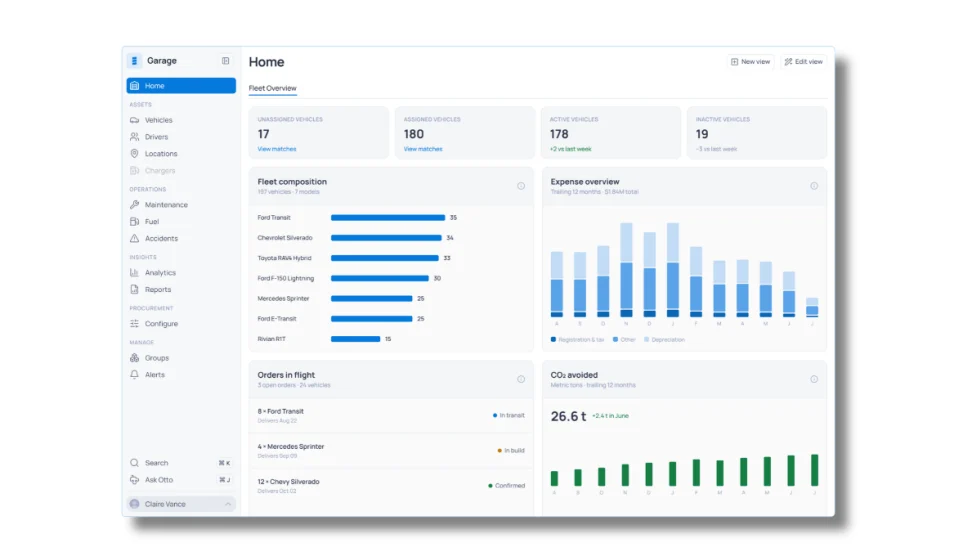
Inspiration Fleet Introduces Garage 2.0 Fleet Intelligence Platform
Fleet managers increasingly have access to data from vehicles, telematics, fuel, charging, and other systems, but those sources don't always communicate with one another. Inspiration Fleet's Garage 2.0 platform brings that information together while letting fleets keep working with different technology and service providers.
Read More →
Inside Inspiration Fleet’s New Platform for Connecting Fleet Data
Inspiration Fleet CTO Chris Getner explains how the new Garage 2.0 platform is designed to connect disparate fleet data and what that could mean for fleet managers in practice.
Read More →
Fleet Manager’s Ultimate Playbook: Navigating the New Standard in OEM Connectivity
Rising operating costs, driver safety concerns, and unplanned downtime are putting unprecedented pressure on modern fleets. Discover how fleet managers use embedded OEM connectivity and real-time vehicle data to cut TCO, prevent downtime, and protect drivers without aftermarket telematics hardware.
Read More →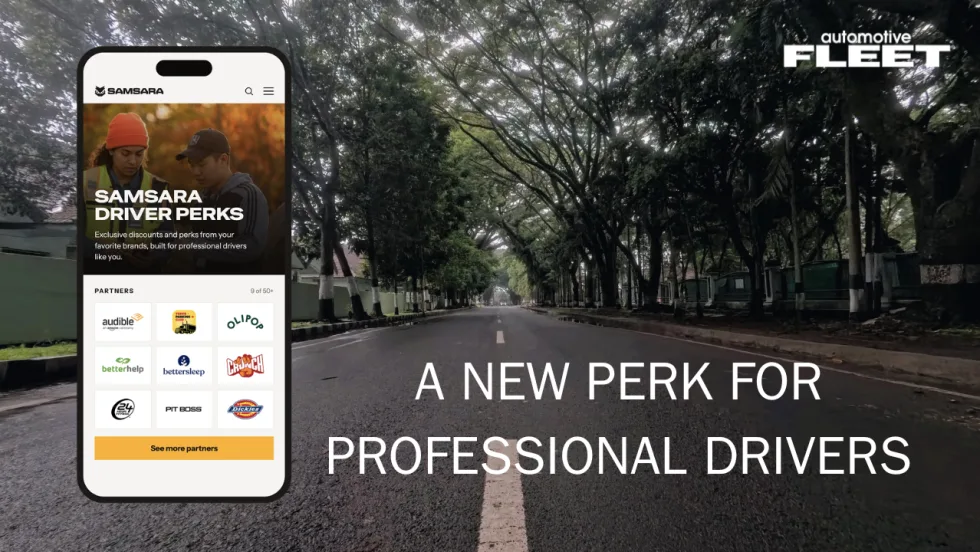
Samsara Driver Perks Adds New Benefit for Corporate Fleet Drivers
The rewards program gives eligible professional drivers access to discounts from more than 50 brands while giving fleets another way to support recruitment, retention, and the driver experience.
Read More →
Inside the Church of Jesus Christ of Latter-day Saints’ Two-Track Telematics Strategy
With 20,000 vehicles and two fundamentally different driver populations, the Church faced a fleet management problem that a single telematics program couldn't solve. How it responded offers a replicable framework for any fleet where one size doesn't fit every driver.
Read More →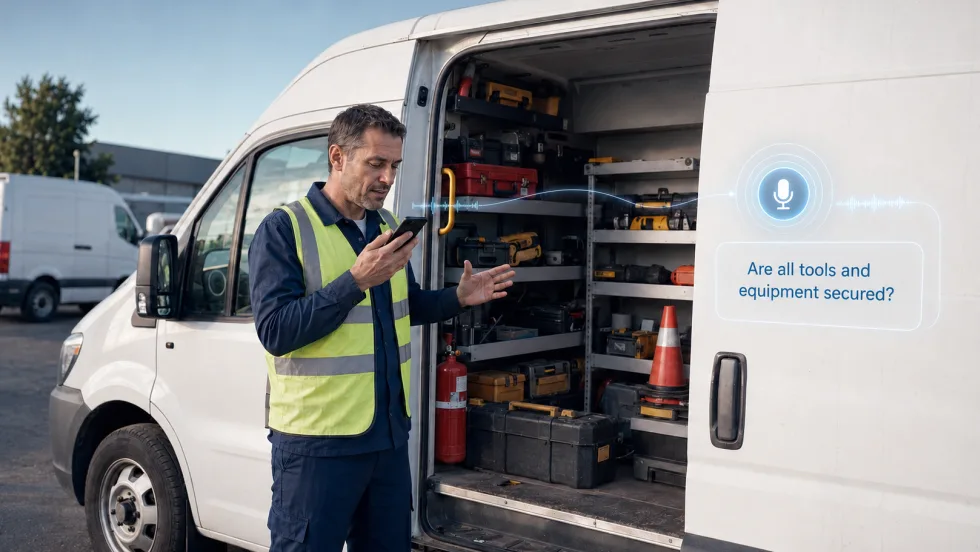
How Conversational AI Can Make Fleet Tasks Easier for Drivers
While most generative AI tools help fleet managers interpret data at their desks, Connex2X is applying voice interaction to tasks behind the wheel.
Read More →
Why Fleets Are Creating Dedicated Fleet Analyst Positions
Are fleet analyst positions the new norm? Listen here to find out.
Read More →
Teletrac Navman Begins Next Chapter as Standalone Private Company
What's new with Teletrac Navman and its new owner?
Read More →