




Animal Rescue Fleet Switches Back to Trucks from Vans
Bucking the trend to new vans, Peninsula Humane Society is switching back to trucks — which prove much better suited to manage animals, dead or alive.

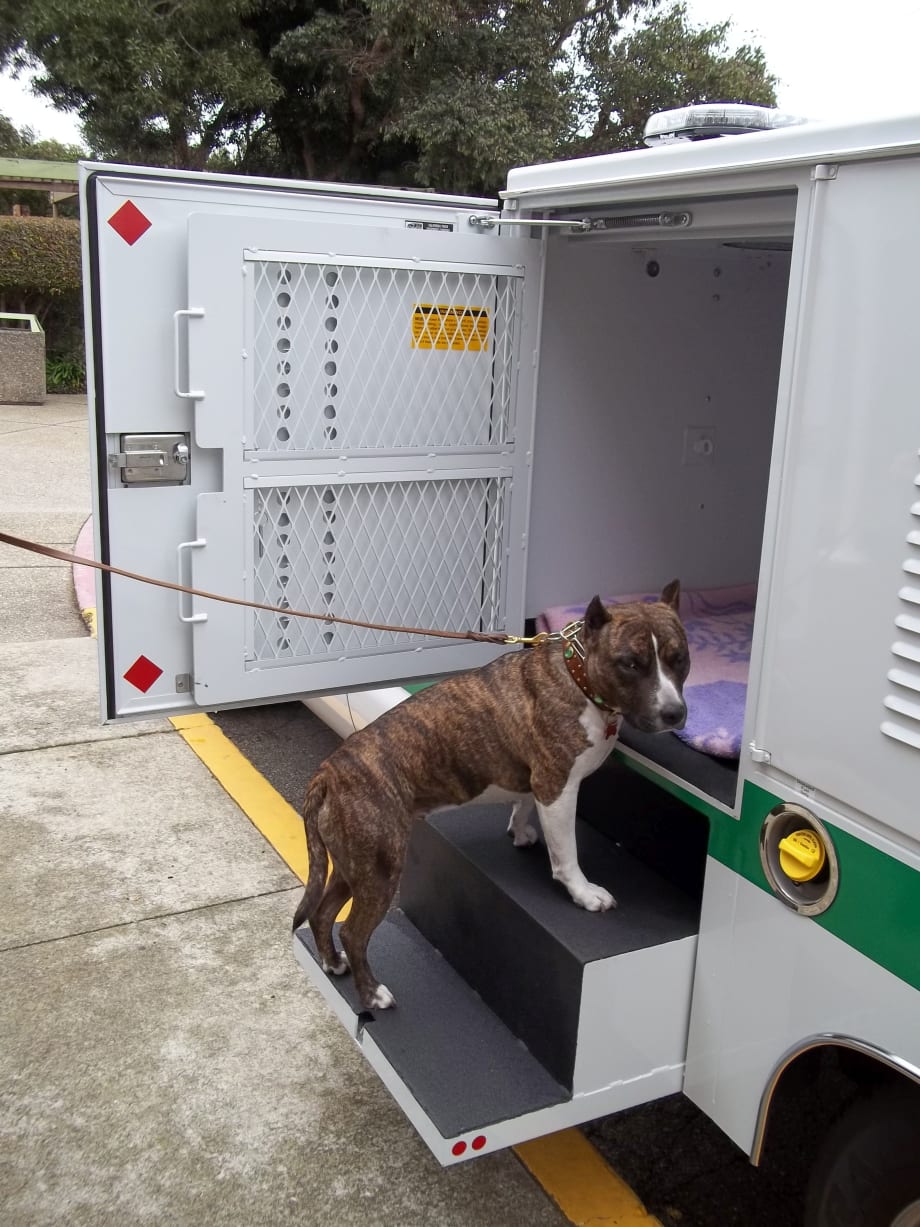
Peninsula Humane Society's customized F-250 trucks feature dog stairs, which fold out from the side of the vehicle to the kennels.
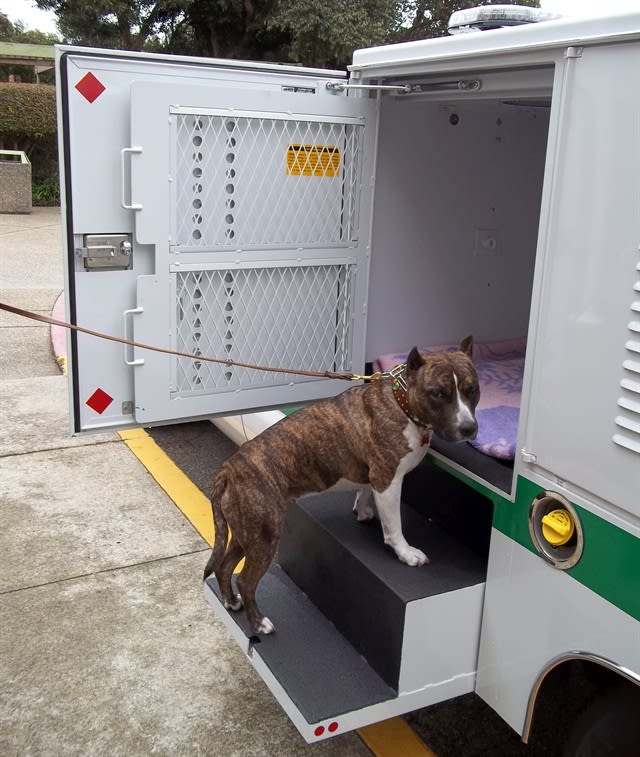
Peninsula Humane Society's customized F-250 trucks feature dog stairs, which fold out from the side of the vehicle to the kennels.
As captain of animal rescue and control for the Peninsula Humane Society (PHS) & SPCA of San Mateo County, Calif., Jeff Christner’s specialized fleet of vehicles — including custom-built pickups and vans — respond to about 18,000 animal rescue calls per year.
Covering a total area of 450 square miles, animal control officers need vehicles that can properly transport animals, as well as serve as a mobile office while spending workdays on the road.
“Each of our animal and rescue control vehicles put on around 20,000 miles per year,” says Christner. “As animal control, we respond to calls about sick and injured animals, loose and aggressive animals and animals that have been caught by citizens. We also pick up deceased animals on the road.”
The animal and rescue control division is made up of 10 marked vehicles, including five GMC Savana vans with a custom insert in the cargo area (caging and kennels) and five Ford F-250 pickup trucks with a custom animal control utility body.
Although the fleet currently includes half trucks and half vans, PHS has found the F-250 trucks to be more efficient when it comes to transporting a greater number of animals.
From Vans to Trucks
Looking to replace several old trucks, PHS decided to go a new direction and look at customized vans. In 2009, eight new GMC Savana vans were added to the fleet, says Christner.
Upfitted by Mavron Inc., a builder that specializes in animal and prison transport vehicles, the van cargo space was converted to fit everything from kennels to cages to an area for storing deceased animals.
“We specified exactly what we wanted for the vehicles,” says Christner. “We put a little more thought into it to make the officers’ jobs easier and safer.”
Working with California Truck Equipment, the F-250 trucks also include a custom animal control utility body, including caging, and feature a fold-down gate to place deceased animals.
After running the vans for several years, they have proved to not work as well as the trucks. According to Christner, the van specifications did not contain enough room for picking up animals all day, especially deceased deer.
“There is really only enough room for one deceased deer or two large dogs in the van,” says Christner. “If you pick up a deer, it has to go in the van’s big cargo area. Once an animal control officer has a deer, he or she has to come back to shelter to get rid of it. You can’t pick up any other animals with a deceased deer in the van.”
The trucks feature a separate compartment to store deceased animals. This means in addition to deceased animals, an officer driving a truck can carry — at a minimum — four big dogs and a variety of smaller animals and still be out in his or her area ready to respond to more calls, according to Christner.
Currently, PHS has two more F-250 trucks being built and plans to continue to add trucks to the fleet as the vans approach the end of their lifecycle.
“We thought the vans would be more economical with better fuel economy and a lower cost of operation,” says Christner. “But due to the capacity issue with our van specifications, our drivers now have to make more trips back to the shelter. That offsets any savings in fuel or maintenance.”
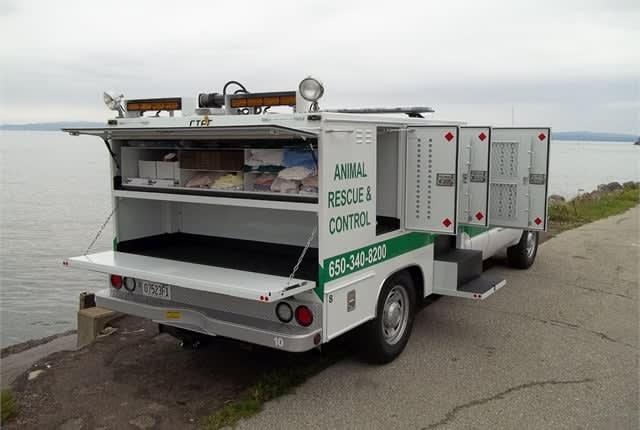
One of Peninsula Humane Society's custom-built F-250 trucks.
Originally posted on Work Truck Online
More Vehicle Research

EV Realty Names Henrik Holland President as Charging Platform Expands
The former Prologis Mobility and Shell executive will help expand EV Realty’s truck charging business and move its power-first infrastructure model into autonomous vehicle depots and other fleet sectors.
Read More →
Mercedes-Benz Introduces Electric GLC With Up to 350 Miles of Range
The GLC 400 4MATIC Electric features an 800-volt architecture, 330-kW DC fast charging and a 94-kWh battery, along with Mercedes-Benz's new MB.OS operating system.
Read More →
Fleet Has a Talent Pipeline Problem, not a Talent Problem
Where will the next generation of fleet leaders come from, and what does the industry need to do differently to find them?
Read More →
Fleet Hacks: What Are You Still Doing Manually?
From daily recaps to repeatable workflows, fleet professionals share how AI can cut through busywork while keeping human judgment at the center.
Read More →
How One Fleet Manager Put a New Spin on Safety Training
Joe Lewis turned a pre-trip inspection lesson into an AI-assisted song, then four safety albums. The experiment also revealed why human oversight matters when AI enters driver training.
Read More →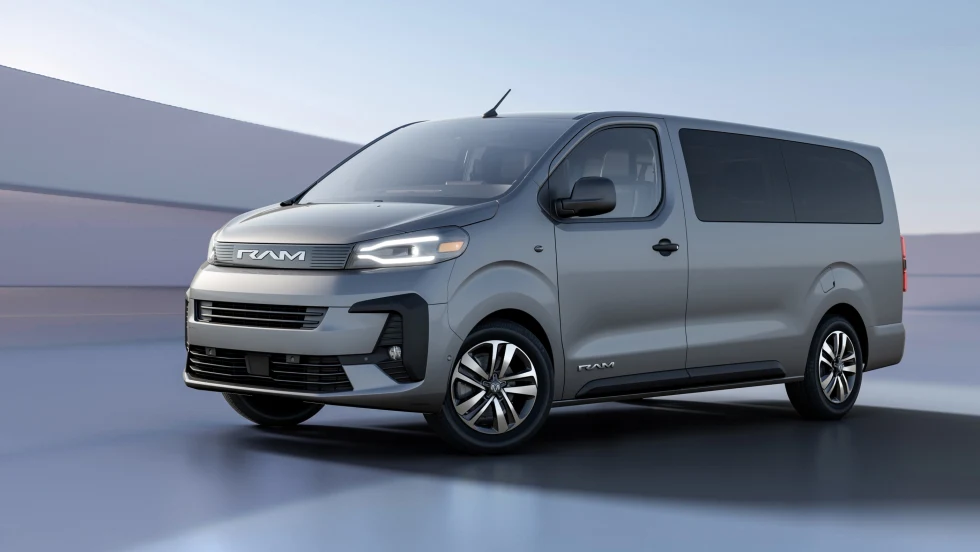
2027 Ram ProMaster City Starts Under $40K
Ram is returning to the smaller commercial van market with a new ProMaster City aimed at delivery, service, trade, and passenger applications. Starting at $39,995 with destination, the 2027 van offers up to 2,000 pounds of towing capacity, more than 2,000 pounds of payload, and multiple cargo and passenger configurations.
Read More →
New Tariff Threats & a Leadership Change at Wheels | AF News Recap
A new tariff threat is creating more uncertainty for fleet ordering, Wheels has named a new president, and we’re asking whether certification is really worth the investment.
Read More →
Certification: What’s in It for the Fleet Manager?
From smarter fleet decisions to stronger career credibility, certification can give fleet managers knowledge they may never gain inside a single operation.
Read More →
Wheels Names Matthew Cole President
Cole brings more than 30 years of automotive and technology experience to the fleet management company, including leadership roles at Aptiv, Visteon and Johnson Controls.
Read More →
AI is changing what fleet managers can build & 849,000 vehicles recalled | AF News Recap
Fleet managers are learning how to build their own AI-powered tools, Stellantis is recalling nearly 849,000 vehicles, and this year’s Fleet Manager of the Year finalists have been revealed. Additionally, we’re examining how to identify repairs that warrant a second look. Here’s what you need to know this week.
Read More →