




All-New 2011 F-150 and Powertrain Lineup
Ford extensively updated its all-new 2011 Ford F-150, offering it with multiple powertrain configurations, including an all-new EcoBoost engine, tuned and calibrated for the F-150.

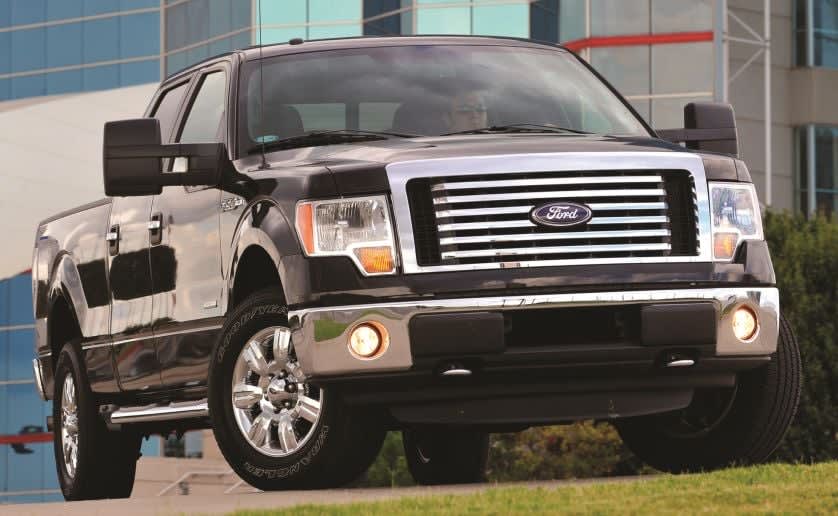
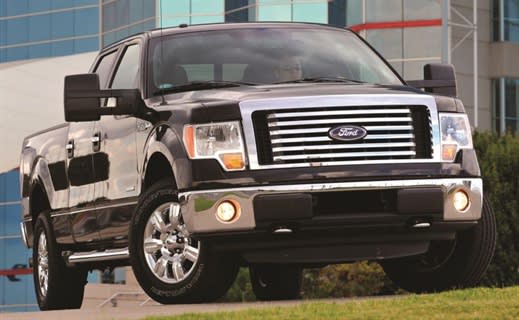
The 2011 Ford F-150 is getting the most extensive powertrain overhaul in the truck's history, according to the automaker. The 2011 F-150 will be offered with four new truck engines, all coupled to a revised six-speed automatic transmission.
Available engines include a 3.7L V-6 and a 5.0L V-8, each with fuel-saving, performance-enhancing twin independent variable camshaft timing (Ti-VCT) technology, and a version of the 6.2L V-8 that is the base engine in the 2011 Ford F-Series Super Duty. A 3.5L EcoBoost truck engine, specially tuned and calibrated for the F-150, will be available in early 2011.
"We are continuously monitoring the needs of our customers and implementing features and capabilities that are important to them. With our new engine lineup, we are able to continue our class-leading capability and provide best-in-class fuel economy with our 2011-MY truck," said John Ruppert, general manager, commercial and government operations for Ford NAFLRO (North American Fleet, Lease & Remarketing Operations).
Class-Leading Features
Fleets will be able to benefit from the new powertrain lineup.
"The key benefit is increased fuel economy and lower cost of ownership without sacrificing - and in most cases improving - power and capability. Our base 3.7L and mid-range 5.0L engines are also FFV capable," Ruppert said.
Several new features were integrated into the all-new F-150, from fuel-saving and in-vehicle technology to increased engine capability.
"The key changes for the 2011-MY are the all-new powertrains that provide class-leading capability and best-in-class fuel economy," Ruppert said. "Beyond the all-new powertrains, we have also introduced Select Shift (included with the Trailer Tow packages), spray-in bedliner (available on XL and above trims), a 4.2-inch LCD productivity screen (XLT and above), and a 110v power inverter (XLT and above)."
A 'Fleet-Minded' Truck
According to Ford, the best-in-class fuel economy, provided by the all-new powertrains will benefit all fleets, regardless of segment.
"Those that will benefit the most from the improved fuel economy will be segments that accumulate greater mileage on their trucks," Ruppert noted. "The usage and mileage accumulation can vary greatly, even within a given industry, but certainly vocations such as landscaping, construction, utility, and rental will benefit from the significant improvement in fuel economy."
Ford is committed to meeting the feature and capability requirements of its fleets.
"We continue to provide innovative features, such as SYNC and trailer brake control, and are focused on introducing new features such as spray-in bedliner and Select Shift to meet the evolving needs of our fleet customers and the industry," Ruppert said. "The 2011-MY F-150 provides industry-leading capability and performance our customers have come to expect and meets the Ford commitment of providing best-in-class fuel economy."[PAGEBREAK]
2011 F-150 Powertrain Lineup
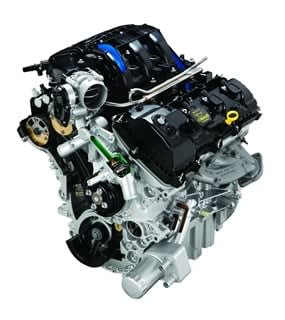
■ 3.7l Four-Valve Ti-VCT V-6
The 3.7L will be the most powerful, capable, and fuel-efficient base V-6 of any truck in its class, according to Ford, and will be built at the Cleveland Engine Plant.
Key attributes include:
● Best-in-class 302 hp at 6,500 rpm and
278 lb.-ft. of torque at 4,000 rpm.
● Best-in-class 17 mpg city/23 mpg highway
(4x2 configuration).
● Best-in-class 6,100-lb. maximum trailer tow.
● Ti-VCT creates precise, variable timing control of both the intake and
exhaust camshafts to optimize power, performance, and fuel economy.
● E-85 flex fuel capability.
● Piston-cooling jets, which squirt oil on the underside of the pistons to
keep the piston crowns cool under extreme operating conditions.
● Forged-steel crankshaft for improved durability.
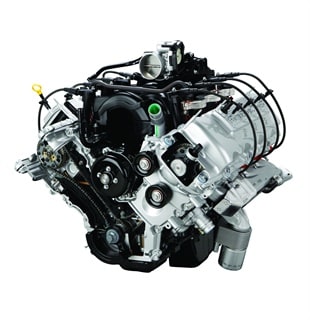
■ 6.2L Two-Valve SOHC V-8
The 6.2L V-8 is a premium engine
offering on the 2011 F-150, with an
expanded offering on the F-150 SVT
Raptor and other specialty applications. It will be built at the Romeo, Mich., Engine Plant with key attributes such as:
● Best-in-class 411 hp at 5,500 rpm and
434 lb.-ft. of torque at 4,500 rpm.
● Achieves 13 mpg city/18 mpg highway (4x2 configuration).
● Best-in-class 11,300-lb. maximum trailer tow.
● Utilizes a large bore and shorter stroke. The large bore allows for
larger intake and exhaust valves for improved engine airflow, and the
short stroke allows higher engine speed for increased horsepower.
● Two spark plugs per cylinder are used to more efficiently burn the
fuel-air mixture in the combustion chamber, enabling better fuel
economy and increased engine torque. The twin plugs also help
maintain a smooth, stable idle.
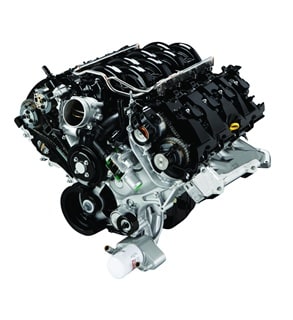
■ 5.0L Four-Valve DOHC Ti-VCT V-8
Built at Ford's Essex Engine Plant in Windsor,
Ontario, the 5.0L V-8 offers:
● Best-in-class 360 hp at 5,500 rpm and
380 lb.-ft. of torque at 4,250 rpm.
● Best-in-class 15 mpg city/21 mpg highway
(4x2 configuration).
● Best-in-class 10,000-lb. maximum trailer tow.
● New, strengthened block and new cylinder head
optimized for performance and enhanced cooling.
● Unique intake camshafts, combined with Ti-VCT, composite intake
manifold, and optimized compression ratio for improved low-speed
torque and towing capability.
● Forged-steel crank and all-new oil cooler enhance durability.
● Piston-cooling jets, which squirt oil on the underside of the pistons to
keep the piston crowns cool under extreme operating conditions.
● E-85 flex fuel capability.
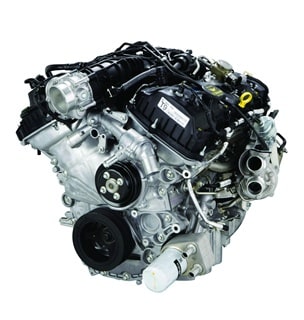
■ 3.5L Ti-VCT EcoBoost
The 3.5L EcoBoost is a premium engine offering with power comparable to a naturally aspirated V-8 and fuel economy of smaller displacement engines, according to the manufacturer. It will be built at the Cleveland Engine Plant. Its attributes include:
● 365 hp at 5,000 rpm on regular fuel with
420 lb.-ft. of torque at 2,500 rpm on regular fuel.
● Best-in-class 11,300-lb. maximum trailer tow.
● Best-in-class 3,060-lb. payload.
● Up to 90 percent of peak torque available from 1,700-5,000 rpm.
● Ti-VCT creates precise, variable timing control of both the intake and
exhaust camshafts to optimize power, performance, and fuel economy,
according to Ford.
● Fuel economy improves up to 20 percent versus 2010 F-150 5.4L V-8.
● Improved intake and exhaust camshafts optimized for improved fuel
economy and performance.
● Cast exhaust manifolds for heavy-duty operation and durability.
● Improved manifold and cylinder heads for improved performance.
● Direct-acting mechanical bucket (DAMB) valvetrain with polished buckets
to reduce friction and improve fuel economy.
More Operations

What Will Shape the Next Era of Fleet Management?
EVs, AI, and autonomous vehicles are reshaping fleet management. Discover what’s ahead—and how fleet leaders can prepare for the next era.
Read More →
How Fleets Can Recruit and Train Veterans for Technician Roles
Here's how the technician shortage has affected uptime for fleets, and what to do about it.
Read More →
Avis Budget Group Deploys Neology Toll Management Technology Across Major Brands
Neology’s neoFleet platform will manage toll transactions and toll-authority operations for vehicles across Avis, Budget, Payless, Budget Truck and Zipcar.
Read More →

Fleet Personal-Use Charges Edge Higher in 2026
Nearly eight in 10 surveyed fleets allow personal use of company vehicles, while just over half of respondents report charging employees for the privilege.
Read More →
The Future of Fleet + What’s Changing Right Now | AF News Recap
Could developments overseas offer a preview of what’s coming for U.S. fleets? This week, we’re looking at the future of AI, autonomy, and electrification, plus Ford Pro’s new certified pre-owned program, smarter vehicle offboarding, and a new way for fleets to manage toll expenses.
Read More →
How to Handle Vehicle Offboarding
What do fleet managers need to do when a driver leaves?
Read More →
Fleet Manager’s Ultimate Playbook: Navigating the New Standard in OEM Connectivity
Rising operating costs, driver safety concerns, and unplanned downtime are putting unprecedented pressure on modern fleets. Discover how fleet managers use embedded OEM connectivity and real-time vehicle data to cut TCO, prevent downtime, and protect drivers without aftermarket telematics hardware.
Read More →
U.S. Bank Adds Verra Mobility Toll Management to Voyager Fleet Platform
The integration allows U.S. Bank Voyager fleet customers to manage toll payments and violations alongside fuel, EV charging and maintenance expenses.
Read More →
ADAS Prevents Crashes. But Repairs Cost More | AF News Recap
ADAS-equipped vehicles may crash less often, but they can cost more when they do. This week, we’re breaking down what that tradeoff means for fleets, plus Subaru’s first Forester Wilderness Hybrid, Nissan’s new e-POWER Rogue, and why Calstart has become Catalyst Mobility.
Read More →
Moventum Fleet Management Names Mark Iorillo Head of Sales
Iorillo brings nearly 20 years of fleet management and sales experience to the role, including previous positions at Element Fleet Management, CEI, Donlen and Ryder.
Read More →