




All About Medium-Duty Truck Rear Suspensions
When developing a suspension specification, it’s important to determine what attributes are most important to the application.

Freightliner AirLiner family of rear suspension options keeps weights lower and payloads higher. Maintenance-friendly features include double-bonded rubber bushings on moving joints.
Photo: Frieghtliner
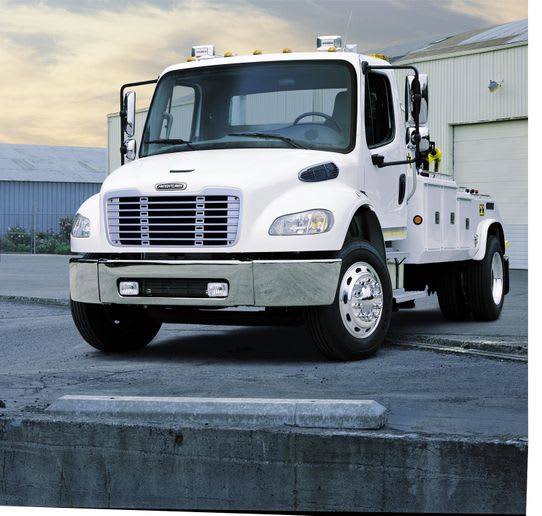
Photo: Frieghtliner
The rear-suspension selection process is relatively simple with light-duty trucks (Class 1-2), where at most there may be three or four options to choose from, usually labeled with simple-to-understand descriptions, such as "smooth ride suspension," "max payload," and "heavy-duty trailering."
Medium-duty trucks (Class 3 through Class 6) are a different story, with as many as 20 or more rear suspension options to consider, each impacting a truck's payload capacity, ride quality, stability, safety, and overall cost.
Why do medium-duties offer substantially more rear suspensions for any given make and model truck?
"We see more medium-duty suspension options over the lighter-duty markets because there are more varied payload applications and operating terrains for a medium-duty truck that require a wider band of suspension options - not only to meet the application needs but to also control truck procurement costs," explained Mark Faro, product marketing vocational segment manager for Freightliner Trucks. "Additional factors are likely the tighter price competition on a light-duty vehicle that mandate fewer options to simplify manufacturing and the larger build volumes in the light-duty market that dictate tighter option control."
With myriad suspension options available in the medium-duty market, what should fleet managers consider when selecting the most suitable rear suspension for the job? Faro recommended fleet managers keep the following 10 points in mind:
1. Payload Requirements
"Payload requirements are the most important consideration for correct suspension selection," Faro said. "Accurately project what the truck will be hauling, how much it weighs, and the potential for overload. A correct rear suspension spec should leave a small buffer for payload capacity, without going to extremes. An overloaded suspension could lead to premature failure; an under-loaded suspension could cause a harsher ride."
2. Suspension Type
For medium-duty trucks, from 14,001-lbs. to 26,000-lbs. gross vehicle weight rating (GVWR), Faro said there are two predominant suspension types:
Multi-leaf. "Multi-leaf suspensions provide extra stability and rigidity in applications that require heavy loads on the rear axle," Faro said. "They're also cost-effective and provide a good fit for purchases driven by price."
Air ride. "Air ride suspensions provide for superior ride quality, whether laden or unladen, and there are several that have been specifically designed for vocational applications. The suspension's air-dump capability lowers the chassis height and enables easier loading and unloading," Faro explained. "Air ride suspensions also carry a higher price tag than multi-leaf spring suspensions."
3. Ride Quality
"A suspension that is too rigid for the application will ride rough and cause discomfort for the vehicle operator," Faro said. "For applications where the truck is typically always laden, such as service and lube trucks, this [rough ride issue with rigid suspensions] is minimized."
4. Roll Stability
"High center-of-gravity applications need suspensions that have horizontal roll stiffness to keep the vehicle upright and tracking properly," Faro advised.
5. Stiffness
"Trucks that routinely carry heavier loads need a suspension that has vertical stiffness to support the weight and also minimize performance issues and maintenance concerns," Faro said.
6. Articulation
"In construction and other off-road applications, where the terrain can be rough and unlevel, suspensions with high degrees of articulation may be required to maintain a maximum uniform down force at all wheel ends to prevent the suspension from bottoming out," Faro explained. "This will likely mean going to a heavier weight suspension to achieve the needed level of articulation. The high articulation provides better traction and maneuverability on rougher terrain."
7. Suspension Weight
"The weight of the multi-leaf and air ride suspension in the 10,000-lb. to 18,000-lb. capacity range are quite comparable, with the air ride suspension typically weighing about 20 lbs. lighter. As would be expected, air springs can be built lighter than steel leaf springs. This plays more of a factor in heavier applications where the increased suspension weight affects payload capacity," Faro said.
8. Cargo Type
"An air suspension, for example, offers a smooth ride that provides a better means of protecting fragile loads," Faro said.
9. Chassis Wheelbase
"In short wheelbase configurations, it can be more difficult to locate air suspension components and find room for air reservoirs and other chassis requirements," Faro said.
Consult your truck manufacturer or fleet management rep to determine whether there are any potential compatibility issues with chassis wheelbase and rear suspension requirements.
10. Overall Cost
"What attributes - such as ride quality, roll stability, durability, and weight - are most needed? What are the trade-offs?" Faro asked. "Specifying too much suspension adds to the cost. Also, while offering superior ride quality, air ride suspensions come at an increased cost over multi-leaf suspensions."
6 Questions to Consider When Selecting Medium-Duty Rear Suspensions
What rear suspension weight capacity best supports the truck’s cargo weight requirements?
Which suspension type fits the truck’s application?
Will the truck be operating off-road or on unlevel terrain?
Will the truck haul fragile materials, requiring a smoother-ride suspension to minimize the potential for damage? Or does the truck’s payload consist of dense and durable cargo, requiring a heavier-duty, stiffer suspension to support it?
Is the suspension compatible with the truck’s wheelbase? Or will there be any interference issues?
Does the selected suspension strike the right balance between ride quality, roll stability, stiffness, articulation, and cost?
The Bottom Line
Faro put it this way: "There is rarely a 'one-size-fits-all' suspension that will meet all of the ride quality, roll stability, tractive force, durability, and productivity needs of a given application. So, when developing a suspension specification, it's important to determine what attributes are most important to the application and then decide on the trade-offs you're willing to make."
Originally posted on Work Truck Online
More Vehicle Research

EV Realty Names Henrik Holland President as Charging Platform Expands
The former Prologis Mobility and Shell executive will help expand EV Realty’s truck charging business and move its power-first infrastructure model into autonomous vehicle depots and other fleet sectors.
Read More →
Mercedes-Benz Introduces Electric GLC With Up to 350 Miles of Range
The GLC 400 4MATIC Electric features an 800-volt architecture, 330-kW DC fast charging and a 94-kWh battery, along with Mercedes-Benz's new MB.OS operating system.
Read More →
Fleet Has a Talent Pipeline Problem, not a Talent Problem
Where will the next generation of fleet leaders come from, and what does the industry need to do differently to find them?
Read More →
Fleet Hacks: What Are You Still Doing Manually?
From daily recaps to repeatable workflows, fleet professionals share how AI can cut through busywork while keeping human judgment at the center.
Read More →
How One Fleet Manager Put a New Spin on Safety Training
Joe Lewis turned a pre-trip inspection lesson into an AI-assisted song, then four safety albums. The experiment also revealed why human oversight matters when AI enters driver training.
Read More →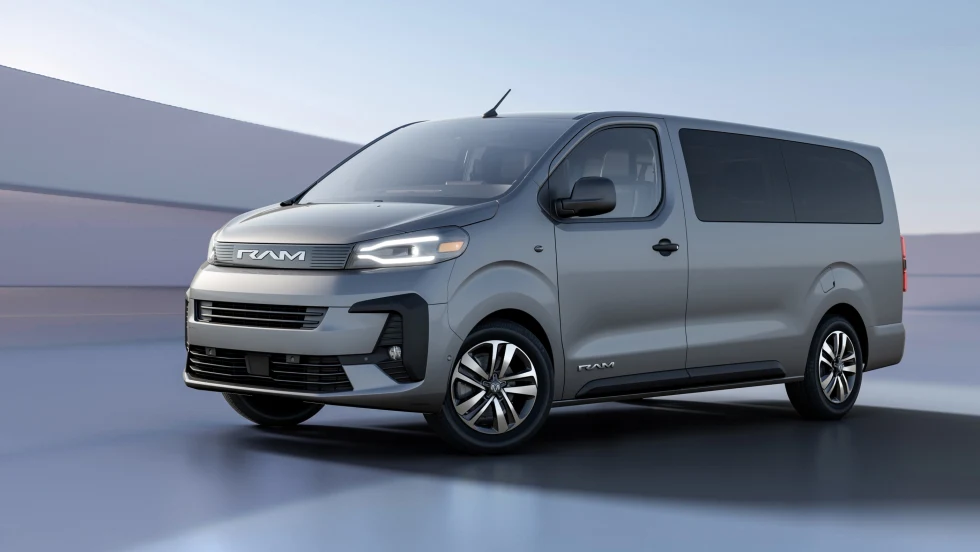
2027 Ram ProMaster City Starts Under $40K
Ram is returning to the smaller commercial van market with a new ProMaster City aimed at delivery, service, trade, and passenger applications. Starting at $39,995 with destination, the 2027 van offers up to 2,000 pounds of towing capacity, more than 2,000 pounds of payload, and multiple cargo and passenger configurations.
Read More →
New Tariff Threats & a Leadership Change at Wheels | AF News Recap
A new tariff threat is creating more uncertainty for fleet ordering, Wheels has named a new president, and we’re asking whether certification is really worth the investment.
Read More →
Certification: What’s in It for the Fleet Manager?
From smarter fleet decisions to stronger career credibility, certification can give fleet managers knowledge they may never gain inside a single operation.
Read More →
Wheels Names Matthew Cole President
Cole brings more than 30 years of automotive and technology experience to the fleet management company, including leadership roles at Aptiv, Visteon and Johnson Controls.
Read More →
AI is changing what fleet managers can build & 849,000 vehicles recalled | AF News Recap
Fleet managers are learning how to build their own AI-powered tools, Stellantis is recalling nearly 849,000 vehicles, and this year’s Fleet Manager of the Year finalists have been revealed. Additionally, we’re examining how to identify repairs that warrant a second look. Here’s what you need to know this week.
Read More →