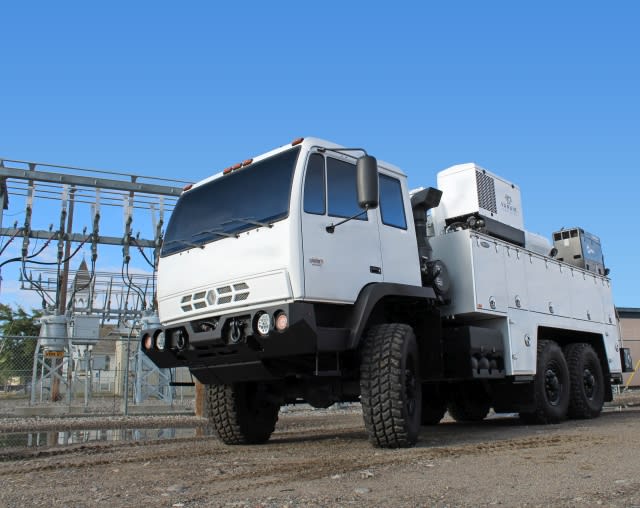
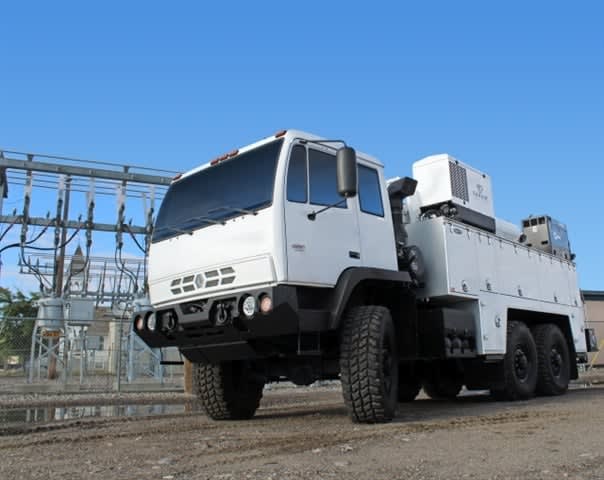
Acela Trucks offers two extreme-duty trucks, the Monterra 4x4 and the Monterra 6x6 (pictured). Both models were built specifically for use in extreme work environments. (Photo: Acela Truck Company)
3 min to read
Acela Trucks offers two extreme-duty trucks, the Monterra 4x4 and the Monterra 6x6 (pictured). Both models were built specifically for use in extreme work environments. (Photo: Acela Truck Company)
Walking up to one of Acela Truck Company’s new Monterra trucks is similar to an optical illusion. What looks like a typical cabover from a distance grows to the size of a family of medium tactical vehicles (FMTV) military truck. A full rebuild, brand-new paint job, and an abundance of comfort and technical upgrades brings a barely used truck a second life.
Ad Loading...
Headquartered in Belgrade, Mont., with a view of the Rocky Mountains and easy access to the roads of Yellowstone to the south and the Canadian oil sands to the north, Acela is the new automaker on the scene for extreme-duty, high-mobility commercial trucks.
Ad Loading...
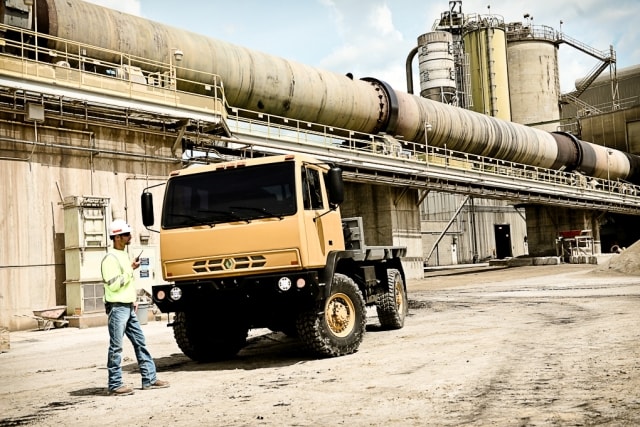
These trucks are built specifically for use in extreme environments, such as oil fields, mining operations, pipeline, forestry, and utility fleets.
“When people first see the big 7.2L yellow Caterpillar engine inside, they are surprised. But, they know they are getting a durable truck,” said David Ronsen, founder and president of Acela.
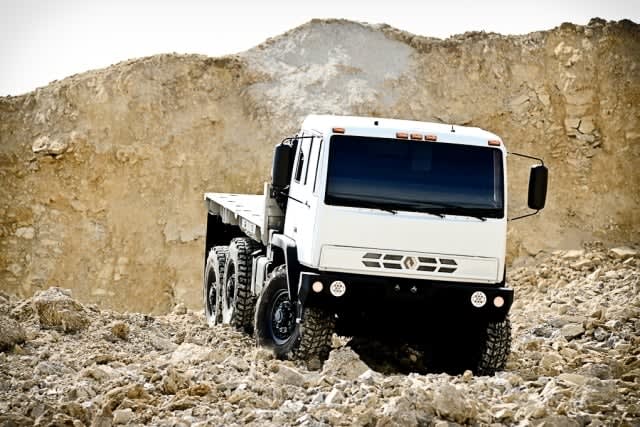
With the capabilities of military trucks and added creature comforts, the Monterra is available in either a 4x4 or 6x6 configuration.
Redesigning a Truck
With the capabilities of military trucks and added creature comforts, the Monterra is available in either a 4x4 or 6x6 configuration. (Photo: Acela Truck Company)
Acela purchases the used FMTV trucks from the U.S. Department of Defense (DOD) and turns them into extreme duty trucks for commercial use. Staff looks over each vehicle prior to purchase, selecting only the trucks in the best initial condition.
Acela trucks undergo a vigorous 1,600-step process to ensure their operation, with more than 650 new, OEM-guaranteed parts added or replaced on each remanufactured truck from suppliers including Allison, Meritor, Goodyear, Dana, Caterpillar, and Parker.
Ad Loading...
The process includes a full inspection and evaluation, tear-down and complete overhaul, sandblasting and painting, rebuild, performance testing, and customer sign-off. Acela’s Certified Reset Program ensures fleets get a like-new vehicle backed by a one-year limited warranty.
“Our proprietary process is no makeover. We perform a complete tear-down and prep, prime, and paint every fixed component on the cab and chassis,” Ronsen said.
In addition, the company’s trained technicians work in a strictly controlled lean manufacturing environment to eliminate errors and to meet a high standard of quality.
Acela Trucks will not be available through a dealer network but directly through the manufacturer and its body builder partners, starting at $95,000 MSRP for the 4x4 and $105,000 MSRP for the 6x6. Fleet discounts are available.
Building a New Company
Acela trucks undergo a vigorous 1,600-step process to ensure their operation, with more than 650 new, OEM-guaranteed parts added or replaced on each remanufactured truck from suppliers including Allison, Meritor, Goodyear, Dana, Caterpillar, and Parker. (Photo: Acela Truck Company)
Acela Truck Specs
• 46.6-inch tires.
• All-wheel drive.
• 23-inch ground clearance.
• 330 hp Turbocharged Caterpillar 7.2L diesel engine.
• 54-foot turning radius.
• Central Tire Inflation Systems (CTIS).
• Chassis corrosion protection.
• 90% parts commonality.
• Over-the-road configuration with extreme off-road capability.
• Easy service body configuration.
Acela currently employs about 30 personnel and is led by Ronsen, who is joined at the helm by Jason Benoit, CFO.
Ad Loading...
With more than 20 years of executive management experience in automotive manufacturing, design, and engineering and technology development, Ronsen is a seasoned entrepreneur with several successful startups and acquisitions under his belt. He is a proven, experienced innovator in the automotive manufacturing design sector with three patents issued and several others currently in pending status.
Benoit also has more than 20 years of experience, but in fleet management and operations. He was a partner and director of operations with Bronto Trucks, the first company to introduce heavy-duty on-/off-road, military-grade chassis into the Canadian Oil Sands. He has also held director and managerial positions with CEDA International Corporation, PLS Mine Services Ltd., Suncor Energy, and Fastenal.
Neology’s neoFleet platform will manage toll transactions and toll-authority operations for vehicles across Avis, Budget, Payless, Budget Truck and Zipcar.
Nearly eight in 10 surveyed fleets allow personal use of company vehicles, while just over half of respondents report charging employees for the privilege.
Could developments overseas offer a preview of what’s coming for U.S. fleets? This week, we’re looking at the future of AI, autonomy, and electrification, plus Ford Pro’s new certified pre-owned program, smarter vehicle offboarding, and a new way for fleets to manage toll expenses.
Rising operating costs, driver safety concerns, and unplanned downtime are putting unprecedented pressure on modern fleets. Discover how fleet managers use embedded OEM connectivity and real-time vehicle data to cut TCO, prevent downtime, and protect drivers without aftermarket telematics hardware.
ADAS-equipped vehicles may crash less often, but they can cost more when they do. This week, we’re breaking down what that tradeoff means for fleets, plus Subaru’s first Forester Wilderness Hybrid, Nissan’s new e-POWER Rogue, and why Calstart has become Catalyst Mobility.
Iorillo brings nearly 20 years of fleet management and sales experience to the role, including previous positions at Element Fleet Management, CEI, Donlen and Ryder.