




Read More: How to Reduce Drivers' Idling Behavior
Accurate Data on Idling Can Help Lower Fuel Consumption
By distinguishing “acceptable idling” from “exception idling,” a company can effectively measure the results of its fuel reduction goals.
by Jose Tingson
December 19, 2022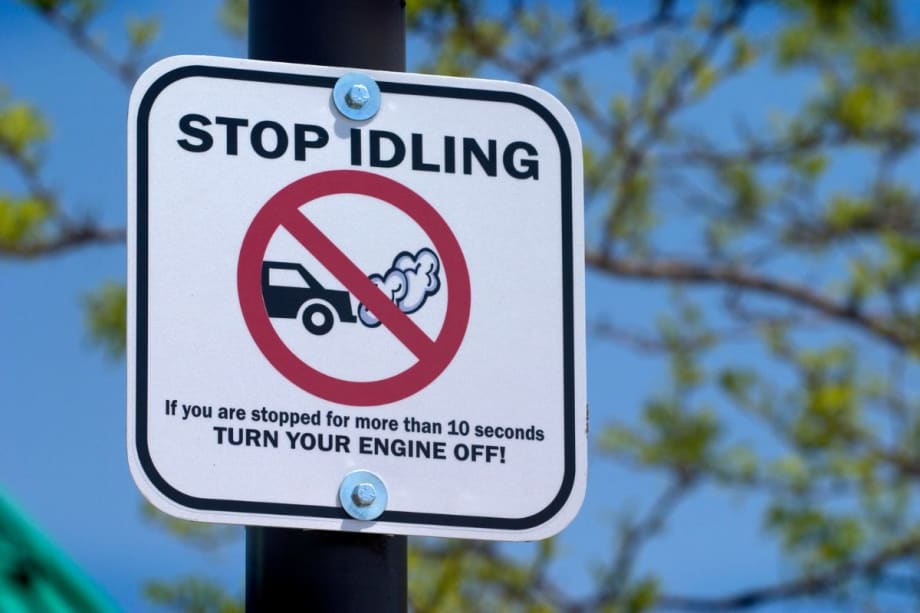
Vehicle idling is sometimes an important aspect of worker safety, as it helps to warm or cool field workers in extreme-temperature conditions.
Photo: Canva
5 min to read
Fleets are always looking for multiple ways to reduce fuel consumption, one of which deals with vehicle idling.
Jason Hammond, director of mobile field solutions at AT&T, shares his insights on how to lower fuel consumption, emphasizing the importance of separating “acceptable idling” from “exception idling,” enforcing rules on driver behavior, and shifting to EVs to reduce greenhouse emissions.
Differentiating ‘Acceptable Idling’ from ‘Exception Idling’
Idling is one of the first factors companies look for when looking to reduce fuel expense, since it is an area that normally yields the most impact, says Hammond. But he says that this does not necessarily apply in all cases, depending on the company and the industry, as well as the company’s policies. “Take the utilities industry, for example. Workers in the field are operating machinery components that are sometimes connected to the truck and that require power, or what we call power take-off (PTO) to run and operate those components. An example would be a boom lift to help prepare power lines.”
AT&T helps companies separate “acceptable idling” from the “exception idling” and create rule sets to accurately measure the difference between the two, says Hammond. “Once we have these rule sets in place, we’re able to accurately measure the exception idling to determine the true reduction measurements and input impacts versus the false data. To put it simply, if I only create goals around reducing all of my idling – but half of my idling is actually acceptable – then maybe I’m creating goals that can’t be measured accurately.”
Measuring Accurate Data
Most companies prioritize the safety of their field workers, and vehicle idling is sometimes a crucial aspect of it, says Hammond. He adds that there are extreme-temperature cases where idling is providing a safe haven to warm or cool the field workers. “If the workers aren’t safe, the whole business plan falls apart.”
Hammond points out that most companies AT&T deals with do not know how to effectively separate “acceptable idling” from “exception idling.” He says, “They haven’t found a partner that can utilize and read the data, and make recommendations to help them. At AT&T, we focus on reading the data we’re collecting on the vehicles and putting more precise measurements in place. Once we fine-tune these rules and exceptions, we can effectively measure the results of the company’s fuel reduction initiatives. Without that surgical approach, the returns will not usually be in line with the goals.”
Enforcing In-Cab Coaching
Hammond identifies driver behavior and idling as the two leading factors that help reduce fuel cost. Regarding driver behavior, Hammond says it is important to establish rule sets and parameters and measure them against the company’s goals. But he adds that if a company is only measuring against a safety scorecard, it could potentially be missing on other ways to reduce cost. “Is the Monday morning e-mail that goes out to all the drivers really driving the behavior that you want to see? Or has it become a little stale over time? Are the drivers actually paying attention to it? Do drivers really remember what we’re trying to accomplish? Do they know what we’re doing and how we’re doing it?”
Hammond says one area that can significantly impact fuel savings is in-cab coaching, which is providing drivers reminders whenever they are in violation of any of the company rules – ranging from idling to hard acceleration, and from harsh braking to hard cornering. “It’s not just to focus on fuel savings at that point, but on overall cost to replace a vehicle sometimes. It’s one thing to monitor exceptions and get feedback on the back end, potentially days and weeks after the exceptions occurred. It’s quite another situation to give the driver immediate feedback.”
With hardware components in the vehicle, the in-cab coaching can significantly impact driver behavior, Hammond says, through audible alerts and buzzers, or through spoken words. “We can speak to the drivers and say, ‘Hey, you’re violating this company policy, so you need to slow down.’”
He adds, “You start to connect behaviors with goals and see a larger impact on your fuel reduction goals. In certain cases, we’ve been able to compare a baseline of driver behaviors before the in-cab coaching implementation to after its implementation. That’s where we see some pretty dramatic results.”
Shifting to Electrification
Another way fleets can improve fuel consumption is through electrification. With a fleet of about 70,000 vehicles, AT&T is focused on climate initiatives such as reducing greenhouse emissions and fuel use, says Hammond. “As the market evolves, we see a shift to electrification to help reduce fuel cost.”
Hammond says AT&T can provide assessments for companies that plan to transition towards EVs. “Our approach is to assess the current vehicle payloads to determine if there’s a suitable EV replacement vehicle that would equally, say, handle the load. In other words, can I make the change from an internal combustion engine vehicle to an EV and keep the same levels of production? Do we have the charging infrastructure to support our plans, the number of vehicles, and the routes that we run?”
To complete these assessments, Hammond says that AT&T looks at a number of factors, which include number of miles driven, route diversity, idling time, payload on the electrical systems, voltage divided by production parameters, and heating and cooling cycles. “Once we’ve completed that, we feel that the customer has the most extensive assessment to move to EV that they can get. Every customer has to work through this cycle and workflow in order to make the best transition.”
Subscribe to Our Newsletter
More Fuel

Turning Fleet Payment Data into Executive Insights
Ramel Lindsay of U.S. Bank Voyager discusses how fleets can transform payment and transaction data into actionable intelligence to reduce costs, improve oversight, and support executive decision-making.
Read More →
Why the IRS Raised Its Mileage Rate in the Middle of 2026
Fuel-price volatility drove the rare increase to 76 cents per mile, the fifth midyear adjustment since 2000.
Read More →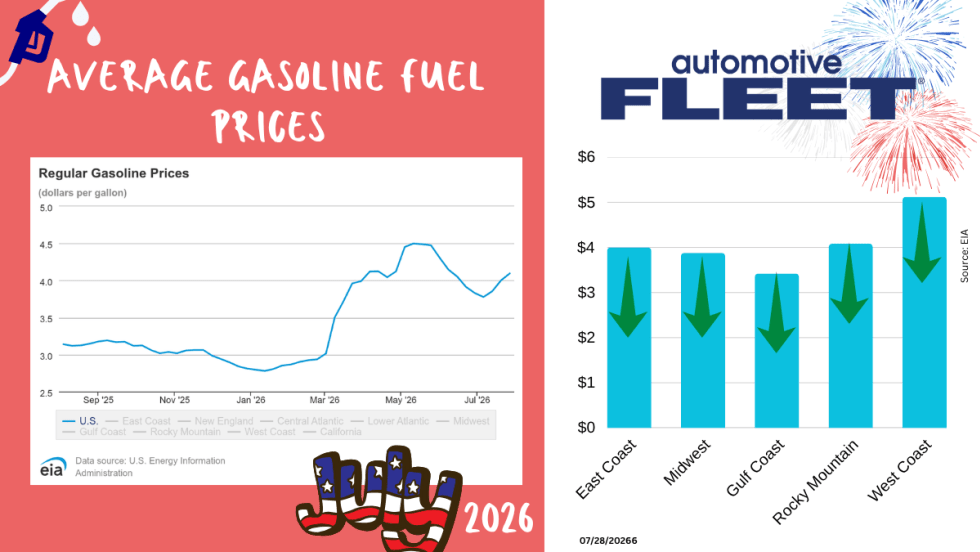
July Fuel Update: Prices Keep Rising in Light of More Conflict
Gas prices continue to rise as more and more conflicts do, too.
Read More →
Bob Adamsky on Fuel Volatility: "Don't Panic, Have a Plan."
When it comes to up and down fuel prices, Adamsky has a message for fleets: “Don’t panic.”
Read More →
How Fleets Can Gain Control of Non-Fuel Spend
Fuel often gets the spotlight, but non-fuel expenses can have a major impact on fleet costs. Ramel Lindsay of U.S. Bank Voyager discusses how fleets can gain better visibility and control over these often-overlooked expenditures.
Read More →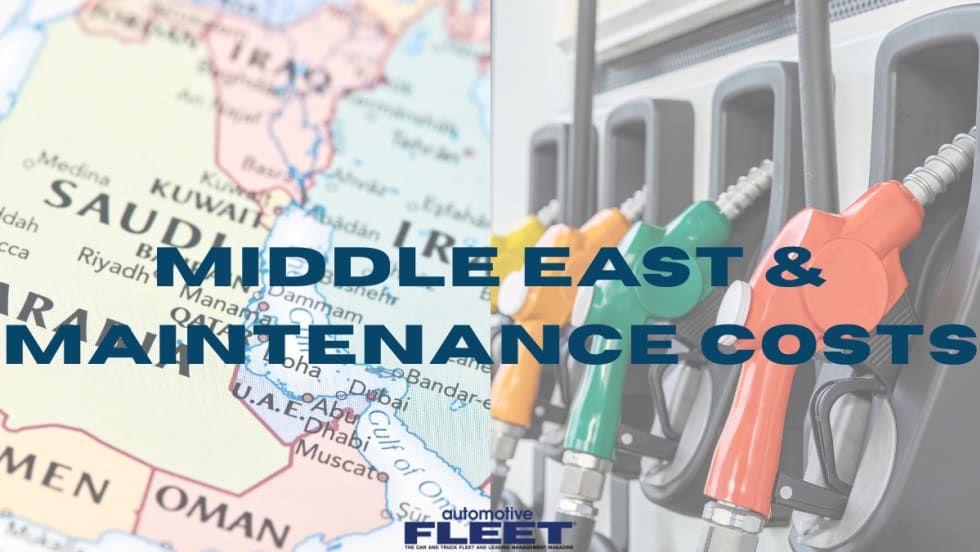
Fuel is Just the Start: How Middle East Tensions are Driving Up Fleet Maintenance Costs
The Middle East conflict is doing more than pushing up fuel prices. It’s also raising the cost of key maintenance products your fleet depends on, from motor oil to tires to windshield wipers. Here’s what you need to know about this budget-busting situation.
Read More →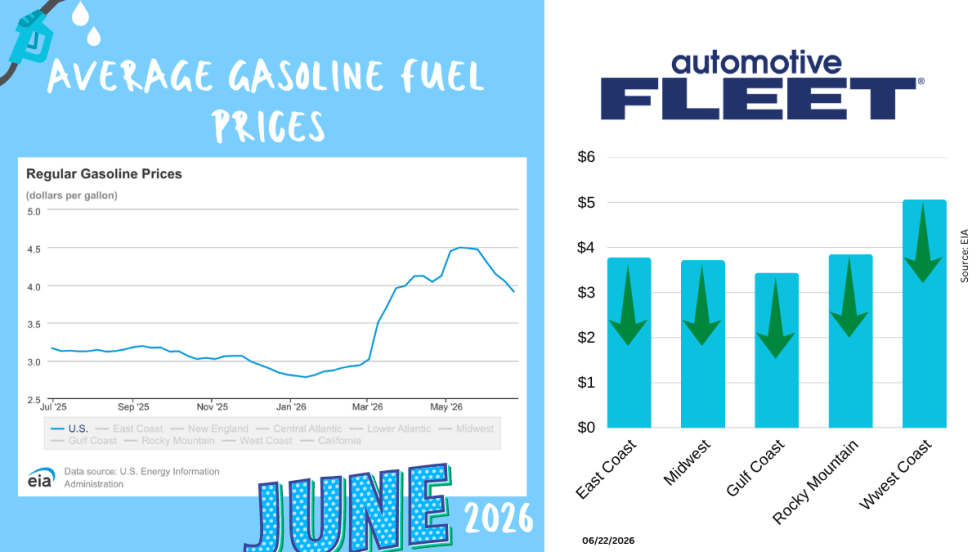
June Fuel Update: Prices Fall Below $4
Drivers are finally getting some relief at the pump. The national average gas price has dropped below $4 a gallon for the first time in months, with prices falling in 47 states as oil markets react to developments in U.S.-Iran negotiations.
Read More →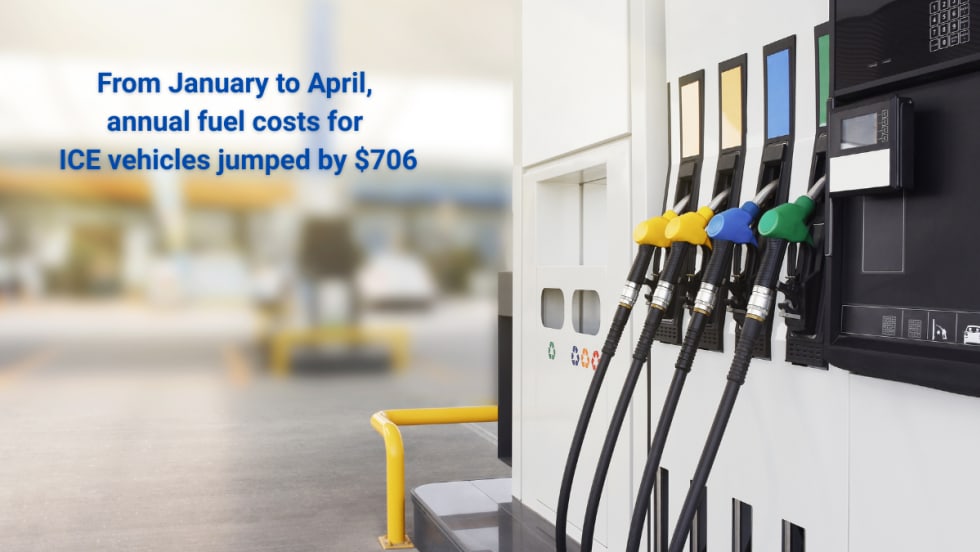
Study: How 2026's Gas Price Hikes Affect Different Vehicle Types
New data from iSeeCars reveals how rising fuel costs have affected different vehicle segments as gasoline prices climbed nearly 46% over the past four months.
Read More →
Sponsored•May 29, 2026
Are You Tracking Your Fleet's True Total Cost of Ownership?
Bobit Business Media surveyed 190 fleet professionals and found that while most fleets are tracking costs, fragmented systems and data gaps are keeping true TCO visibility out of reach. With rising pressure to control spend in an increasingly volatile environment, the gap between what fleets think they know and what the data actually shows is wider than you might expect. See how your peers are managing costs today and where the industry still has room to improve.
Read More →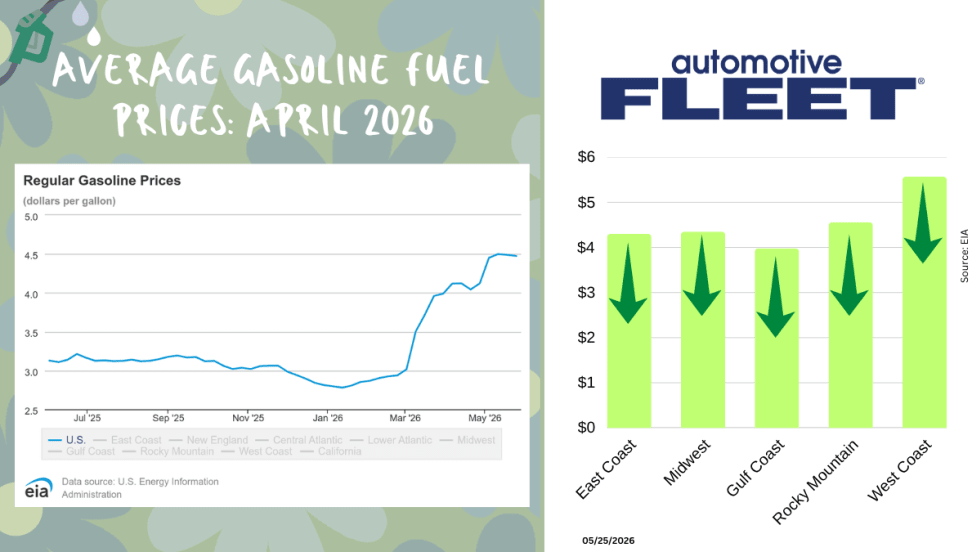
May Fuel Update: All Regions Experience Declines
Gas prices are finally easing in much of the country, but experts warn global tensions could quickly reverse the trend as the national average remains well above last month’s levels.
Read More →