




A Test Bed for New Remarketing Technology
Manheim DRIVE is a laboratory to test innovations with consignors and dealers in vehicle check-in, reconditioning, and paint and photo technology. If the innovations prove successful, they will be implemented at auctions.

The new Manheim DRIVE Center is a 145,000-square-foot facility that sits on 30 acres just outside of Atlanta, 15 minutes from the Hartsfield-Jackson International Airport.
Manheim DRIVE (Development, Research, Innovation, Vision, Excellence) Center opened in fall 2004. It is designed to serve as a controlled, cost-effective setting where industry participants can provide input on the potential uses of emerging technologies in vehicle remarketing.
Some of the first tools and systems being tested at DRIVE to make auctions more efficient include biometric systems for identification and bidding, RFID (radio frequency identification) technology for vehicle tracking and location, cinema sales, digital photo technology for online review of vehicles consigned for sale, and paint booth and reconditioning advancements. The Center’s research and development labs also will be used to further enhance existing services, such as Simulcast, electronic condition reporting, and automated image capture.
Biometric Technology
Manheim is developing the ability to have all dealer interactions with the company identified through a fingerprint, which would serve as the dealer’s signature. It would take the place of the Auction Access card. Biometric systems will allow dealers to check in at an auction facility with the press of a finger (no need to worry about lost or stolen ID cards) and give them the ability to achieve truly paperless transactions and checkouts when participating in biometric-based cinema sales using electronic signatures.
The fingerprint imprint would be converted into an algorithm and the image of the fingerprint is never stored, so that it could not be used for other purposes.
RFID Technology
Radio frequency identification (RFID) is a technology that will allow auctions to find vehicles on their lots, regardless of how many times the vehicles are moved and where they’re moved. By placing an “active” frequency tag on the rear-view mirror of every vehicle, auctions can locate cars to within three feet.
RFID technology improves auction efficiency by allowing vehicles to be tracked and located more easily and quickly, not only giving a dealer the ability to find a car on an auction lot, but also allowing the auction company the ability to see, for example, when and for how long a car stayed in the reconditioning shop.
Cinema Sales Technology
DRIVE features a state-of-the-art 180-seat bidding theater, where customers can hold auction sales administered by auction staff from one of Manheim’s three nearby Atlanta auction facilities. The bidding theater includes state-of-the-art A/V support for Simulcast (online auction) interface, remote training broadcasts, and a touch-screen bidder interface. The bidding theater incorporates numerous high-tech innovations. For example, dealers can use touch screens with multi-function capabilities to enable them to participate in Simulcast sales, book travel arrangements, and, in time, even order lunch without ever having to leave their seat or the sale.
According to Manheim, cinema sales combines the best elements of live and Simulcast Sales; dealers can come to auction to kick the tires and interact with other dealers, then bid in the comfort of a theater-style auditorium.
DRIVE has also hosted a number of onsite and online sales. The first sales event was held at Manheim DRIVE Center last September, when it hosted an auction of BMW vehicles. The event, open to BMW dealers only, featured a mix of more than 222 off-lease and company cars, of which 195 were sold. Fifty-five dealers participated in the sale, with 19 in attendance at the Manheim DRIVE Center’s bidding theater. The other 36 dealers participated in the sale via Simulcast, Manheim’s online auction service. On-hand as observers at the inaugural event were representatives from General Motors, Toyota Financial Services, and Mercedes-Benz.
Paint Booth Technology
Manheim is the highest volume paint and body system operator in the world. It repaired one million vehicles in 2004. Auto manufacturers have contracted with Manheim to paint new vehicles in special situations. Manheim is training a number of people on the latest paint technology.
“Indeed, the paint booths at the DRIVE Center are more advanced than most systems in the world, including the OEMs’, and the quality of the paint jobs performed by the auction is superior to any other,” said Lynn Morgan, executive director of Manheim DRIVE.
Manheim is also leading the development of its airflow management. Manheim’s down-draft air management system in its paint booths is so good that multiple cars can be painted in different colors at the same time in the same booth.
Digital Photo Booths
Manheim is developing new photo booth technology at DRIVE. Six cameras take pictures that have consistent framing and content across all makes and models. The booths allow the cameras to complete all six photos of a vehicle in 40 seconds, enabling one booth to handle the full capacity of multiple detail lines. “Also important to note is that the photo booths are activated by the work order number on the vehicle, which looks up the condition report and associates the images with the appropriate vehicle. This prevents an occasion where photos are associated with the wrong vehicles,” said Morgan.
Damage Analysis Center
Manheim DRIVE also includes a 60,000-square-foot collision repair factory designed to provide experiential insight into what it will require to repair today’s advanced automobiles.
“Manheim has separated its damage analysis system from the actual repair area, because getting the damage analysis right is a very different and very important function,” said Morgan. “We are working to perfect a system that will produce a blueprint of all damage on a vehicle in need of repairs. This will dramatically improve the system, which now regularly misses hidden damage that is identified only after the estimate is completed and repairs have begun.”
Exporting Technology
Innovations that prove successful at DRIVE will be offered for use at auctions across the country, said Morgan. “When new technologies are introduced or tested at an auction, a customer’s response is often, ‘I want it tomorrow at every one of my sales.’ Implementing new technologies under those pressures is often inefficient and expensive,” said Dean Eisner, president and CEO of Manheim. “There is a need to incubate and perfect new systems, integrate them with legacy systems, and make them ‘ready for prime time.’ That process takes time and is best handled away from the operating auctions.”
Using DRIVE as a laboratory to test improvements in check-in, reconditioning, and paint and photo technology offers several advantages. “A critical element in this process is working closely with consignors and dealers to help determine in which directions Manheim focuses its research and development efforts, ensuring that solving client problems is the primary goal of any new technology,” said Morgan. “By experimenting at DRIVE rather than at auctions, those auctions can continue to go about their daily business serving customers without the interruptions and distractions inherent in testing new products.”
Morgan added: “The new technologies from DRIVE - once proven - will be made available for export to auctions, but not necessarily always exported to Manheim auctions. They will be offered as available resources and not ‘forced’ into every Manheim auction.”
In addition to serving as a research and development and testing center, DRIVE will be an interactive training facility for employees, executive staff, and customers, featuring fully equipped classrooms and lecture halls. In addition, Manheim’s Nashville-based National Technical Center and its staff has relocated to DRIVE, which also has full-scale reconditioning shops.
More Operations
What Fleet Managers Really Want From Vendors
From customer service frustrations and technology breakdowns to RFQs, change management, and the growing impact of turnover across the industry, this conversation pulls back the curtain on the real operational challenges fleet managers are navigating every day.
Read More →
Fleet Safety Masterclass: Industry Leaders on Storytelling, Strategy & Innovation
In this special masterclass episode, industry leaders break down what it really takes to build safer fleets in today’s increasingly distracted and data-driven world.
Read More →
Integrating Legacy Fleet Systems and Historical Data
In this episode, we bring together fleet and technology leaders to unpack the realities of data integration, system migrations, and the evolving role of AI in fleet management.
Read More →

From Resistance to Results: Change Management Strategies for Fleets
From new technologies and safety programs to evolving regulations, fleets are under constant pressure to adapt. But as Dr. Betz explains, success isn’t about the system you implement—it’s about whether your people actually use it.
Read More →
Where We're Headed: A Practical Look at AI in Fleet
Discover how AI is actually being deployed in fleets, not just marketed, including practical use cases and emerging risks.
Read More →
How Coca-Cola United Protects Its Fleet from Growing Legal Risk
Growing legal exposure can put fleets at risk. Here's one company's approach.
Read More →
Fleet Managers Think They Understand Their Costs. The Data Says Otherwise.
Most fleet managers say they have a strong handle on their costs, but new research from Bobit Business Media tells a different story. A 2026 survey of 190 fleet professionals reveals a widespread "confidence gap" where fragmented systems, disconnected data, and delayed reporting are leaving major blind spots hidden beneath the surface. Find out what the data actually shows.
Read More →
Cameras, Safety and Insurance: From Reactive Claims to Real-Time Prevention (Part 2 of 2)
Part Two: Commercial auto remains one of the most challenging and costly lines of coverage for fleet operators and insurers alike. Continue learning more about how to effectively address these issues from Onur Aksan, Enterprise Business Development Executive, Geotab
Read More →
New Trucks, AI & Summer Downtime | AF News Recap
From new truck updates to AI-powered driver coaching and summer maintenance tips, this week's fleet headlines are all about keeping things moving.
Read More →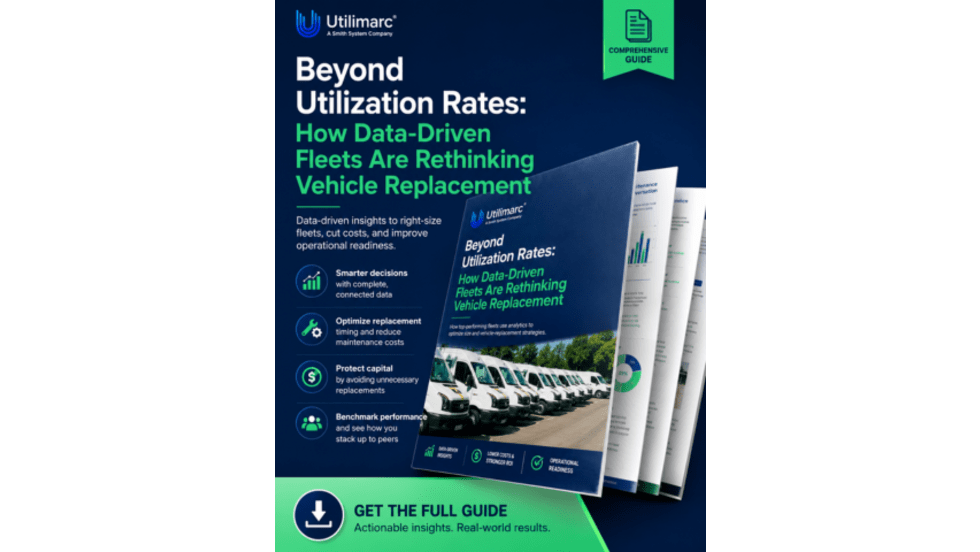
Beyond Utilization Rates: Smarter Fleet Replacement Decisions
Vehicle replacement decisions affect every aspect of fleet performance, from operating costs to asset availability. This guide explores how fleet leaders use integrated data, benchmarking, and lifecycle analytics to determine the right fleet size and optimize replacement timing with greater confidence.
Read More →