




A Primer on Natural Gas Fueling
Understanding a few key terms will help anyone sound like a pro when discussing natural gas.
Here are several key terms to kinow when discussing natural gas fueling. Understanding them will help anyone sound like a pro when discussing natural gas including:
Fuel Types
Compressed Natural Gas (CNG)
The vehicle fuel tank is a high pressure (3,600 psi) cylinder.
A CNG vehicle gets about the same performance as a gasoline vehicle with only a slightly lower gasoline gallon equivalent (GGE).
CNG is used in light-, medium-, and heavy-duty vehicle applications.
Liquefied Natural Gas (LNG)
Produced by super-cooling natural gas to negative 260-degrees Fahrenheit in order to convert it to a liquid. LNG is typically used in heavy-duty truck applications.
Vehicle Types
Dedicated Vehicle
Designed to run only on natural gas
Bi-fuel Vehicle
Runs on either natural gas or gasoline, with two separate fueling systems connected the same internal combustion engine.
CNG Infrastructure Types
Fast-fill
Drivers can fill up in the same amount of time as a gasoline vehicle.
Best suited for retail stations, where vehicles arrive in need of a quick fill, and CNG can be dispensed alongside gasoline.
Time-fill
May take many hours to fill up; the time depends on the number of vehicles fueling, compressor size, and storage.
Typically used for fleets with central refueling locations that allow vehicles to fill up overnight.
To read more about making the switch to natural-gas-fueled vehicles, click here.
More Green Fleet

Merchants Fleet Reports 290M EV Miles as Fleets Navigate Changing Electrification Market
From millions in operating savings to hundreds of millions of EV miles, Merchants Fleet’s latest report reveals what’s working and what’s changing in fleet electrification.
Read More →
The EV Breakdown Nobody's Talking About: Why Most Electric Vehicle Roadside Calls Aren't Mechanical Failures
Here's why EV breakdowns are widely misunderstood.
Read More →
ChargePoint Now Available in Energy Pass
ChargePoint and additional planned charging network integrations were added to GM's Energy Pass.
Read More →
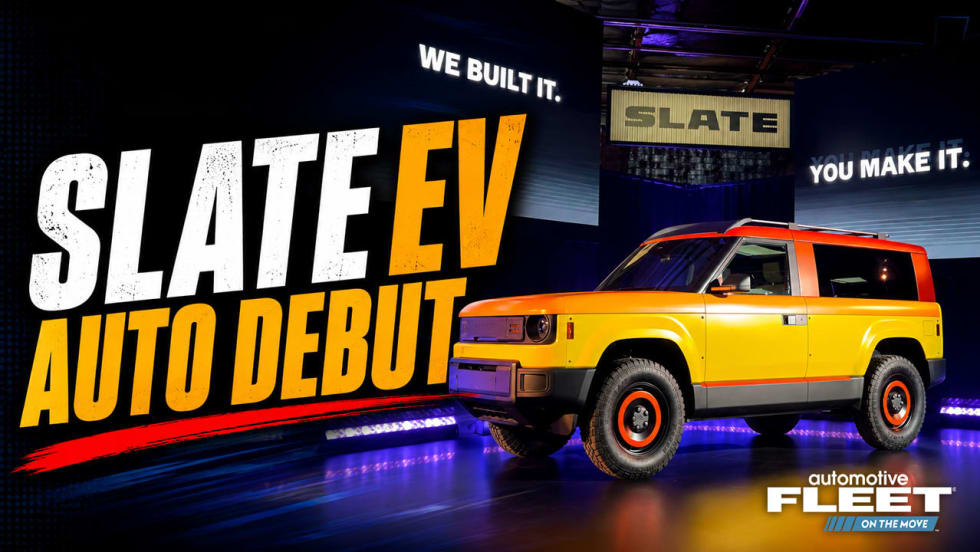
First Look: Slate Auto's Electric Fleet Pickup
Could an affordable, modular EV pickup make electrification more practical for fleets?
Read More →
Slate Debuts Colorful, Unique EV Models
A recent media and client event, studded with electric vehicles dressed up on platforms, planted a new position for the manufacturer in the wider EV market. Fleets will find cost-saving advantages.
Read More →
Slate Electric SUV, Pickup Switchable Model Aims For Light-Duty Fleets
Everything about this EV is counterintuitive and understated, making it stand out from the crowd.
Read More →
Inspiration Mobility Acquires Key Electrada Assets
Inspiration Mobility Group has acquired select assets of Electrada, adding the fleet electrification provider's team, technology, and charging infrastructure development capabilities to its energy management business.
Read More →
Turning Connected Vehicle Data Into Decisions That Matter
Fleet leaders have more data than ever, but turning that data into clear, actionable decisions remains a challenge. This white paper shows how leading organizations are using connected vehicle data to improve safety, reduce costs, and optimize fleet performance. Learn how to turn insight into action across your fleet.
Read More →
Are You Tracking Your Fleet's True Total Cost of Ownership?
Bobit Business Media surveyed 190 fleet professionals and found that while most fleets are tracking costs, fragmented systems and data gaps are keeping true TCO visibility out of reach. With rising pressure to control spend in an increasingly volatile environment, the gap between what fleets think they know and what the data actually shows is wider than you might expect. See how your peers are managing costs today and where the industry still has room to improve.
Read More →