




A Good Belt for the Road
Only 12, 200 lives would be saved. Only 330,700 disabling injuries would be avoided. Only $5.2 million in medical, litigation, and disability payments would be saved. Small potatoes? Hardly.
Only 12, 200 lives would be saved. Only 330,700 disabling injuries would be avoided. Only $5.2 million in medical, litigation, and disability payments would be saved. Small potatoes? Hardly.
According to the Highway Users Federation (HUF), only 14 percent of American drivers routinely use their seat belts. If every driver buckled up every time he climbed in his car, the saving in lives, injuries, and dollars would be ... It is difficult to find a word to end that sentence. How does one gauge the value of a life needlessly lost?
Consider these statistics, again from HUF: From 1978 to 1982, the average annual number of traffic deaths in the U.S. was 49,635. For that same period, seat belt use has saved 2,165 lives. Using HUF's estimate that an additional 12,290 lives could be saved if seat belt use were required and enforced (assuming 80 percent compliance) means that 24.8 percent of annual traffic deaths could be prevented. That's one in four.
To date, no state requires adults to use seat belts. New York requires 16- to 18-years olds to buckle up. And 19 states will be considering mandatory belt-use laws this year. Unfortunately, however, legislation without enforcement is little better than no legislation at all. What is the value of a low such as that passed by the Minnesota Senate last year and slated for House deliberation this year if it sets no penalty for non-compliance?
The problem is a thorny one, and one quickly gets into ancillary issues such as states' rights and personal freedom. There is, however, a simple way to circumvent the endless debate. And it is a case of fleets leading the way. Companies have the right to institute safety guidelines for their employees. A company can mandate that all drivers use seat belts all the time. Many companies have done just that.
United Parcel Service's glossy brown parcel trucks have become a part of the American landscape. The company has 55,000 drivers, operating 7,500 GVW vans up to tractor-trailers. The company policy is simple: A UPS driver must be buckled up whenever the vehicle is moving. If he is caught not complying to company policy, the matter is handled like any infraction. He is first issued a warning letter. UPS Vice President Tom Browne says the situation is cut and dried: "The driver is in a no-win situation. He's in violation of company policy, and he's not going to get any help from the union." The net result? Since seat-belt was mandated in 1980, traffic fatalities have been cut in half.
UPS does not stand alone in mandating belt-use for its drivers. Other companies as large as Johnson and Johnson and as small as Rohm and Haas, a Philadelphia industrial chemical manufacturer with approximately 40 vehicles, have joined the ranks. At Rohm and Haas, for example, occupants of company-owned or leased vehicles - including rental cars and private autos used for company business - are required to wear seat belts while occupying the front seat, while use in the back seat is recommended.
Driver reaction is not always negative; in fact, it is sometimes surprisingly positive. Browne at UPS comments, "Initially we had some negative reaction from drivers. But now we have no problem. The policy comes from the top down and applies to everyone." In fact, many drivers believe that seat belts are simply another way to feel secure and in control behind the wheel - much in the same way that a seat with lateral support keeps the driver from sliding across the seat when cornering. Dennis Poole, Rohm and Haas' manager of distribution safety, says, "We have not had any complaints or criticism. As a matter of fact, the policy received the support of our field sales managers. All of these people have concern for safety, and they recognize that wearing seat belts is a way to reduce injury if an accident occurs." Rohm and Haas has gone so far as to put flyers in every travel envelope and decals reading "Buckle Up for Business" on the window above the door handle of every company auto.
In an age where hardhats are mandatory on job sites, arguments about personal freedom seem moot. And projections are that mandatory belt-use will become more and more common on the corporate level, regardless of initial driver reaction. In fact, during PHH's recent client seminars, Communications Manager Donna Startzel advised fleet managers to expect an increase in company-mandated belt-use. "The direct and indirect costs of accidents continue to skyrocket. The single, most important action a fleet manager can take to impact those costs is to impose a mandatory belt-use policy. I have seen more and more companies, both large and small, doing this, with an encouraging degree of top-management commitment."
Other passive restraint systems are still very much up in the air. The Department of Transportation has promised a pronouncement about air-bags by September, but the feeling among many industry experts, including Chrysler's Lee Iacocca, is that the seat belts have not yet been utilized to their full potential. Another company aiming at doing just that is the Ford Motor Company.
Ford's seat-belt program was accelerated in '81 with a directive from Philip Caldwell, chairman of the board, which read: "Concern for highway safety has been a matter of high priority in our company for decades. A longstanding company practices directs employees to wear safety belts whenever they use company vehicles, including leased cars, on company business. Effective immediately, this practice is extended to require the use of safety belts in any vehicle used while on company business."
Ford's Corporate Safety Director Dale Gray explains that following that directive, the company developed pilot programs in two Michigan plants. At the Monroe plant, belt use during non-business driving rose from 5 to 28 percent; at Saline, it rose from 11 to 32 percent.
Then on February 22 of this year, Ford President Donald Peterson issued a directive, stating: "In the past six years, 367 Ford employees and retirees were killed in motor vehicle accidents, and over 13,000 have suffered disabling injuries... Safety of our employees is, of course, the overriding reason to increase the use of safety belts. But we also have a responsibility to be a leader in the national program to have people use safety belts."
Following Peterson's directive, Gray established a corporate committee to train approximately 160 safety-belt program coordinators, each of whom would be responsible for a local program, which includes both awareness devices and incentives. One of those local programs took place at Ford's world headquarters and involved 16 training sessions spread over a two-day period; in addition to films and Q&A, company vice presidents and a professional race-car driver spoke. Before the training programs, belt use at world headquarters was a 35 percent; within a month's time, it climbed to 58 percent. The company's intention seems clear: Everybody should buckle up.
In the final analysis, the facts about seat belts are fairly simple: They save lives. And while enforceable state legislation may still be years off, the move toward corporately mandated belt-use has become fact.
More Safety
Which Fleet Types Have the Highest Severe Speeding Rates?
New research from SambaSafety finds significant differences in speeding rates across fleet industries, even as nearly 90% of surveyed fleets report using telematics.
Read More →
When a Cyberattack Hits Your Fleet: What Happens Next?
“You have two opportunities to test your plans: when you choose or when the threat actor chooses.” A cybersecurity expert reveals what fleet managers need to know before a cyberattack puts their operations at risk — and why the decisions made in the first moments can shape the entire recovery.
Read More →
Tips for Driving Safely on Halloween Night
This video features a reminder from the Connecticut Department of Transportation (DOT) and the Connecticut Police Chiefs Association, urging drivers to prioritize safety this Halloween.
Read More →
IIHS Crash Avoidance Tests Reveal Safety Gaps in Cargo Vans and Work Trucks
New IIHS crash avoidance ratings show uneven performance among cargo vans and heavy-duty pickups, with most struggling to avoid vehicle-to-vehicle collisions.
Read More →
What’s Next for Fleet? Safety, AI & Industry Recognition | AF News Recap
Could your company's culture be encouraging distracted driving? This week, we're exploring how workplace expectations affect driver safety, what AI, EVs, and autonomous vehicles could mean for the future of fleet management, and how fleet professionals can strengthen their award nominations.
Read More →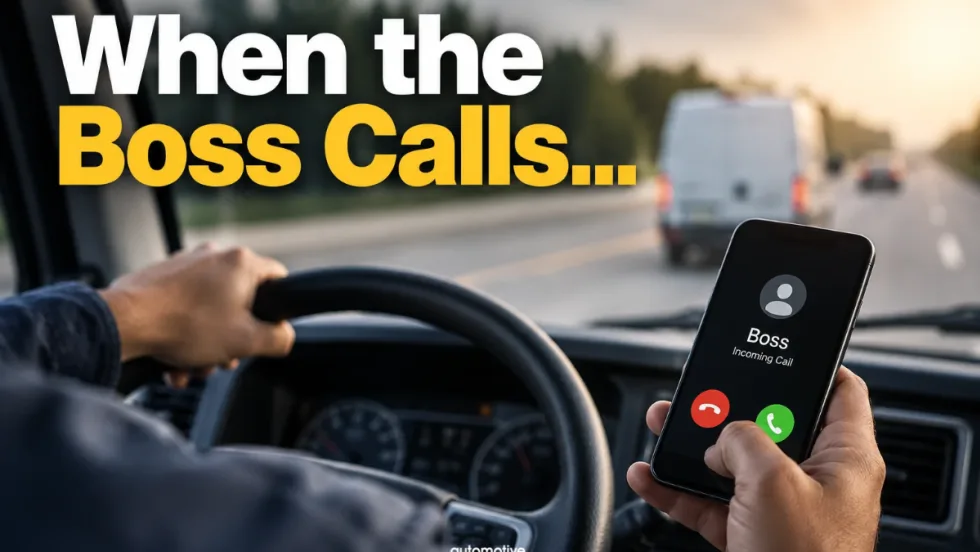
Does Your Fleet's Culture Encourage Distracted Driving?
What happens when the people responsible for enforcing safety rules are the ones setting the wrong example? The answer may reveal why some of the biggest risks to fleet drivers have little to do with what's written in the employee handbook.
Read More →
Fleet Manager’s Ultimate Playbook: Navigating the New Standard in OEM Connectivity
Rising operating costs, driver safety concerns, and unplanned downtime are putting unprecedented pressure on modern fleets. Discover how fleet managers use embedded OEM connectivity and real-time vehicle data to cut TCO, prevent downtime, and protect drivers without aftermarket telematics hardware.
Read More →
From Driver Well-Being to EV Charging | AF News Recap
Mental health belongs in the fleet safety conversation. This week, we’re looking at five ways fleets can support employee well-being before a crisis, plus Holman’s expansion in Mexico, new one-day Fleet Forward passes, and why EV charging demand is outpacing infrastructure growth.
Read More →
Nexar-Nauto Merger Aims to Give Fleets Better Safety Intelligence Through Larger Driving Dataset
Stefan Heck tells Automotive Fleet that combining more than 10 billion miles of driving history with Nexar's AI models will give fleets deeper insights into driver risk and roadway conditions than either company could provide independently.
Read More →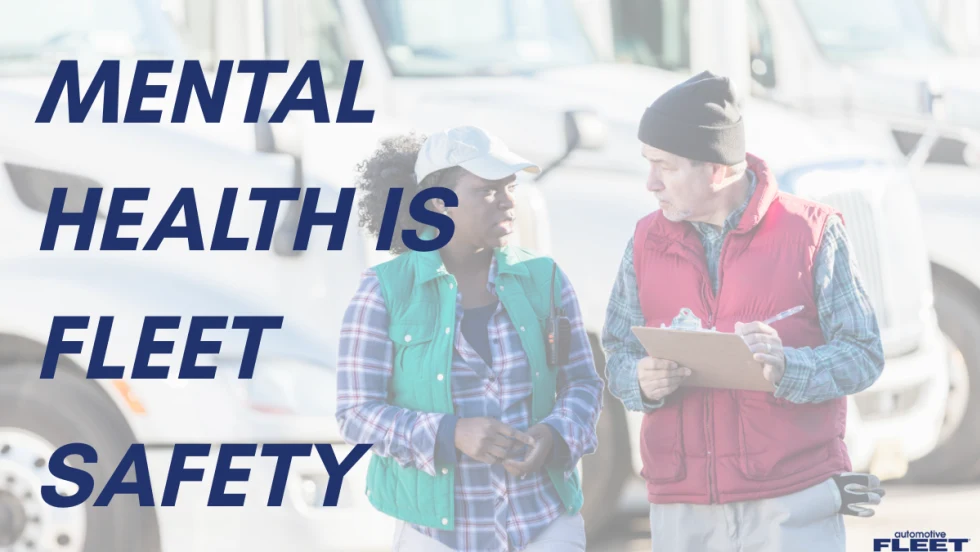
Don't Wait for a Crisis: 5 Ways to Build Mental Health Into Your Fleet Safety Program
For Suicide Prevention Month, fleet and safety leaders have an opportunity to put mental health where it belongs: at the center of workplace safety.
Read More →