




7 Questions to Ask Before Issuing an RFP
Going out to bid for fleet services isn’t an end unto itself; nor is it a process to just “see what’s out there.” Don’t waste your or a supplier’s time. Ask these key questions before sending out an RFP.
More and more, the issuance of a formal request for proposal (RFP) is often preceded by a formal request for information (RFI) in the process of choosing a fleet supplier. Years ago, the process was more informal; the fleet manager knew who the “players” were and if there was the need, simply asked for a quote. “Send me a proposal” was a commonly heard phrase.
The growing influence of strategic sourcing, purchasing, and procurement is no small part of the change, and fleet managers are often relegated to a supporting role in the process. RFPs can be a useful tool in selecting suppliers, but they can also be a waste of precious time and resources if improperly used. Fleet managers should ask the following seven questions before starting the process.
1. Why an RFP?
Common sense suggests before initiating any formal process, the fleet manager must know and understand exactly why it’s being done. Fleet RFPs are used for a number of reasons:
■ Company policy. Going “out for bid” for essential goods and services on some regular schedule is policy for many, if not most, companies.
■ Problem with existing supplier. Sometimes, problems and issues with existing suppliers become intractable. Solutions cannot be found or agreed upon, and the relationship simply doesn’t work.
■ “See what’s out there.” Curiosity or simply to catch a better deal if it’s there.
■ Bundling/Unbundling. Bundling an unbundled program, or vice versa, for price or other reasons.
■ Outsourcing. A decision to outsource the function, either administratively or in its entirety.
Some reasons are better than others. Seeking new suppliers because of problems with existing ones is certainly necessary, if the problems are long-term and solutions are elusive. Casting about in the mere hope of stumbling on a better program is not a good use of precious resources and time, for either the company or suppliers.
Knowing the purpose of the RFP is the first step in making certain the process will be useful.
[PAGEBREAK]
2. Whose RFP is It?
This question would not have been as important 20 years ago as it is today. A fleet RFP would have originated in the fleet department, by the fleet manager. But clearly, today, the influence and authority of sourcing and procurement is far more extensive, and if the fleet manager isn’t careful, he or she can be relegated to be merely an interested observer.
In most companies, however, true sourcing and purchasing professionals recognize to do their job right, they need a subject expert, in this case, a fleet manager who will provide the information necessary to ensure the best possible result. Fleet managers should develop relationships with their company strategic sourcing, procurement, and/or purchasing departments and personnel. They should also understand the difference between the two functions:
■ Sourcing, or strategic sourcing, is a process with which the company looks for “spend” — money the company spends to purchase goods and services necessary to function. The sourcing professional’s task is to gather as many categories of such spend as possible and leverage them into previously unavailable favorable pricing and discounts.
■ Purchasing/procurement is a relatively simple process: the company must buy widgets, the purchasing department goes to market and buys them, usually via competitive bidding. Purchasing is a more focused, specific process than sourcing.
In either case, however, if the RFP originates in either of these two areas, the fleet manager must be consulted as the subject expert and should be the final word on which is the successful bidder.
3. What is the Purpose of an RFP?
It seems a fairly obvious question, but fleet managers know it really isn’t. Fleet operations consist of a number of individual processes: leasing/purchasing vehicles, funding these acquisitions, maintaining and fueling them, repairing them when they’re damaged, and ensuring each has the proper documentation. These programs can be “bundled,” that is, provided by a single supplier, or “unbundled,” where the best supplier is found for each process or function. “Best practices,” as it were.
Fleet managers must make certain that, if an RFP originates with sourcing or purchasing, they understand the differences and the advantages and disadvantages of each. Staff and resources play a large role in determining whether a bundled or unbundled program is best. Indeed, with a single RFP, the company can solicit responses for both; that is, bidders are free to bid on all, some, or one required program.
Naturally, if the fleet operation is unbundled (even if only one program is unbundled) and the fleet intends to remain so, the RFP should detail specifically the service being sought.
4. How Will Responses Be Judged?
How RFP responses are judged should be the fleet manager’s decision. Sourcing and purchasing know their job isn’t to judge the effectiveness of a program or how a particular supplier choice will affect the fleet operation. Only a fleet manager can do this. Beyond price alone, several criteria play a role in the decision:
■ Technology. The most critical aspect of fleet management is the acquisition of, access to, and use of the large amounts of data a fleet operation generates.
■ Service. What service and how often and by whom it is provided, both for drivers as well as fleet personnel.
■ Experience. Some suppliers have greater experience with fleets of similar mission, makeup, and size. A company whose normal market is small fleets won’t be as successful in servicing a fleet of thousands of vehicles, and vice versa.
These and other non-price criteria should be an integral part of the RFP process. The fleet manager should educate sourcing and/or purchasing about the relative importance of each, but also be prepared to justify why, when appropriate, a low-cost supplier isn’t chosen.
[PAGEBREAK]
5. Who Makes the Final Decision?
The sourcing/purchasing phenomenon described previously demands the fleet manager know who will serve as the final arbiter of RFP responses.
As previously noted, sourcing and purchasing professionals have different missions than that of the fleet manager. Put simply, they do not have to live and work with the suppliers awarded the business. Their jobs are to leverage spend or find a low-cost provider. Before any RFP is issued, a fleet manager must understand the “rules of engagement”— who is involved in the process and what level of authority they have in decision making.
Clearly, the fleet manager should issue the final word on which supplier is awarded the business. Beyond price, the fleet manager must adapt his or her department processes to those of the chosen vendor, from paperwork to communications to the training necessary to best use the supplier’s technology. Further, a fleet manager must be able to work with the supplier’s representative. Don’t discount the personality factor either, particularly if a strong relationship exists with the previous supplier representative who will no longer be involved.
Ideally, if sourcing and purchasing staff are involved, they will control the process, i.e., the development of the RFP document itself, issuance, and collection of the responses. The fleet manager should determine candidates invited to bid, include his or her criteria for selection, and if possible, be the final word on the final contract recipient.
6. Who Will Negotiate the Contract?
Once the award is made, the next step is contract negotiation and execution. Fleet managers are seldom lawyers, and even if they are, the company legal department should be the primary contract negotiator. But the fleet manager should, at the very least, be involved in negotiating and incorporating aspects of the contract, primarily performance-related, into the final document.
Indeed, contract negotiation should be a team effort. Those involved in the RFP process itself, with the legal department, can all contribute to a final contract that serves the company’s best interests from both an operational and legal perspective. Everyone involved should remain in contact as each negotiates their area. However, for items specifically related to the performance of either party related to the contract, the fleet manager should be the “go-to” negotiator.
7. How Will a Transition be Implemented?
When a supplier change occurs — if the incumbent loses the business — the transition from one supplier to the other is a critical aspect in the new program’s success. If done correctly, implementation (which should be part of any RFP scoring process) will make the transition smooth and the new program effective. If implementation is not correctly undertaken, the resulting pain and problems can linger for the life of the contract.
Planning ahead for the possibility of a new supplier, before the RFP is even issued, allows the fleet manager to maximize resources, while keeping fleet running smoothly. The RFP should include a section in which respondents describe their implementation process, including who will be involved, willingness to work with the incumbent supplier, and recommendations on whether implementation should occur simultaneously or via attrition.
This last detail is a key question. Implementing a new fleet program that includes leasing, if done via attrition, can take years, as vehicles roll out of service and are replaced. On the other hand, when implementation occurs all at once, problems can be magnified. Either way, the plan for succession should be in place before an RFP is issued, with both parties ultimately agreeing on the best method.
Ask the Right Questions
A company generally asks fleet RFP respondents a wide range of questions. However, asking the right questions internally, among those involved in the process, is every bit as important. Doing so will ensure the right people are involved, everyone knows their respective roles, and if a new program is put in place, it will live up to the expectations of both the supplier and the fleet.
More Operations

Top 50 Executive Fleets
It is that time of year again! Time for the 2026 list of the Top 50 Executive Fleets, presented by Automotive Fleet and Volvo as part of its annual Fleet 500. Download now to see this year's list of companies!
Read More →
Gary Van Orden Retires After Nearly Four Decades in Commercial Fleet
From answering customer calls at Ford Motor Company to leading fleet sales across multiple OEMs and a fleet management company, Gary Van Orden's career reflects nearly four decades of leadership in commercial fleet.
Read More →
How Stellantis Plans to Get Ahead of Fleet Downtime
Vehicle acquisition may grab the headlines, but fleet uptime increasingly determines operating success. Darren Bradshaw of Mopar North America gives the details.
Read More →
Hyundai Releases 2027 Commercial Program Incentives
The 2027 Model Year "Fleet Street Incentives" are available to commercial and government fleets.
Read More →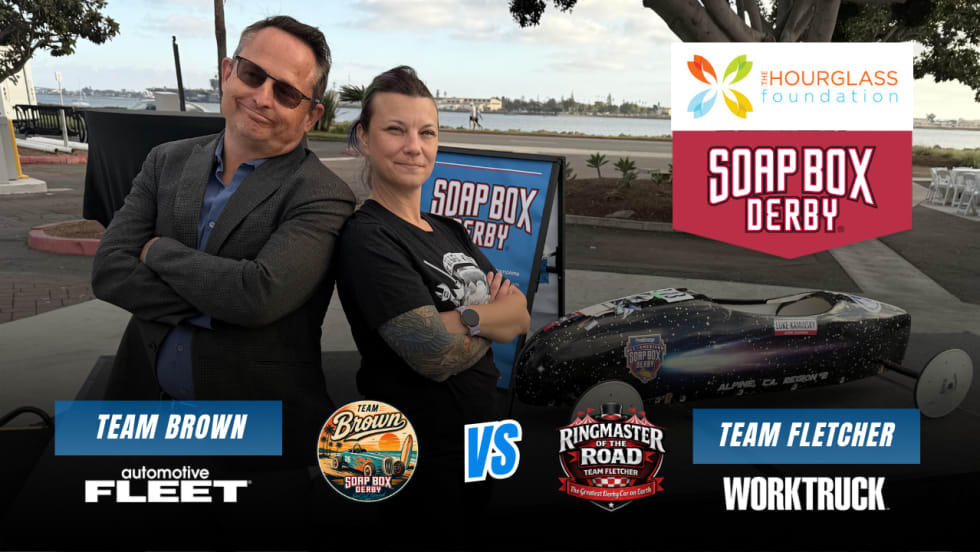
It's All Downhill from Here! Fleet Industry Raises $22,000 for Skilled Trades Scholarships
Work Truck’s Lauren Fletcher and Automotive Fleet’s Chris Brown turned a friendly racing rivalry into $22,000 for automotive technology and skilled trades scholarships.
Read More →
The Top 300 Commercial Fleets
The Top 300 Commercial Fleets: See the List
Read More →

Your Local Dealer Knows More Than You Think
Your local dealer can provide an information advantage that extends well beyond courtesy deliveries.
Read More →
Fleet Meets: Austin Schutte
Here are some industry insights, personal touches, and words of advice from the CEO and Founder of Anew Solutions.
Read More →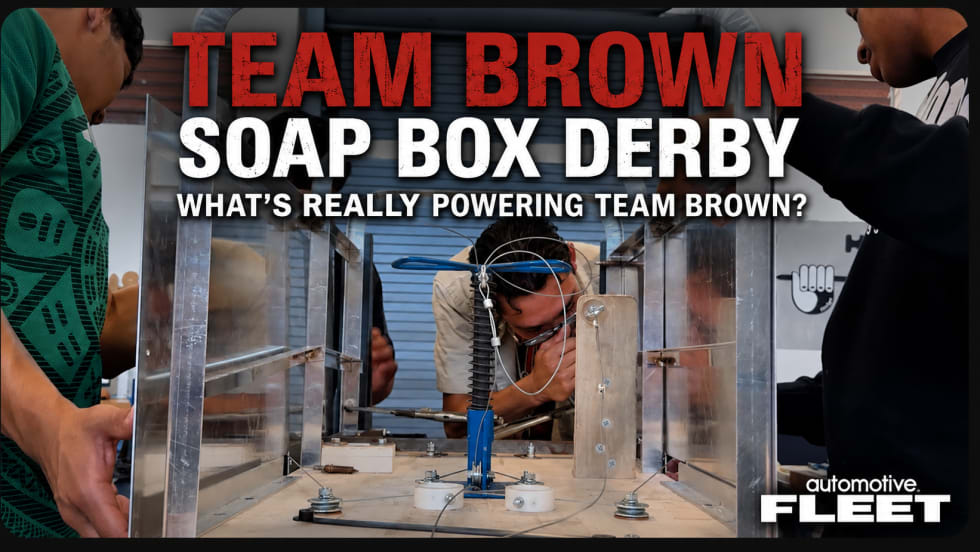
Soap Box Derby Challenge: What’s Powering Team Brown
The car is coming together, the students are solving real build problems, and the fleet industry is helping push Team Brown toward the starting line.
Read More →