




6 Markets, 4 States, 54 Vehicles: How to Manage a Dispersed Fleet
Though this service company’s fleet is spread across six locations nationwide, it was still able to cut idle time by up to 200 hours a month.

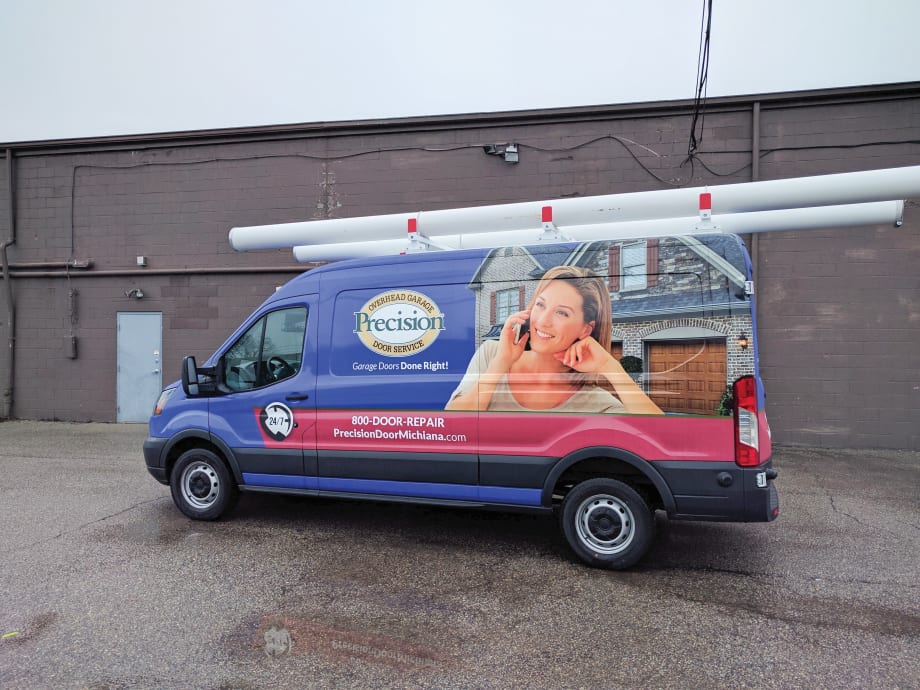
The 54-vehicle fleet consists of Ford pickups — mainly F-150s, a few F-250s and F-350s — and four long-wheelbase Ford Transit vans. Photo: Foris Solutions
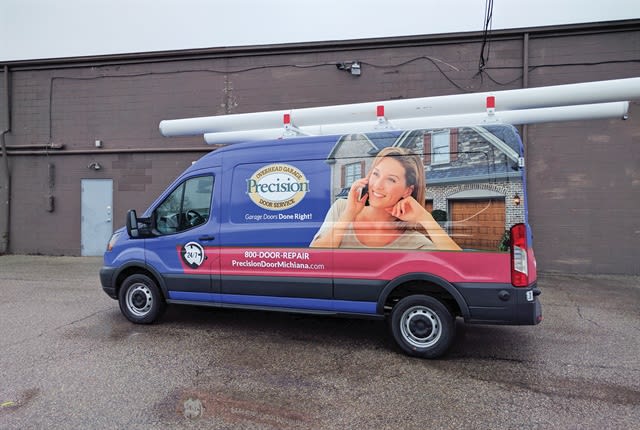
The 54-vehicle fleet consists of Ford pickups — mainly F-150s, a few F-250s and F-350s — and four long-wheelbase Ford Transit vans. Photo: Foris Solutions
Owning multiple franchises across the country, Joe Loader has experience managing a dispersed fleet. “I travel to each location about once a month,” says Loader, chief operating officer at Foris Solutions.
Foris Solutions, the parent company for six Precision Overhead Garage Door Service franchises, currently serves markets in Michigan (Detroit, Grand Rapids), Indiana (South Bend), Texas (Austin, Houston), and Delaware.
Between the six franchise locations, the 54-vehicle fleet consists of Ford pickups — mainly F-150s, a few F-250s and F-350s — and four long-wheelbase Ford Transit vans. Upfitted with boxes and racks, each vehicle carries enough supplies to take care of four appointments per day. Each vehicle puts on around 30,000 miles per year.
Loader is considering replacing all the trucks with Transit vans, which protect parts from the weather. “Plus, the technicians can work inside the vans if the weather is bad,” he says.
Loader purchases the vehicles new from local Ford dealerships. “We do an annual ROI analysis on leasing versus buying and buying always comes out better in overall costs,” he says.
Benefits of Telematics
Using a telematics system has been a benefit for Loader in maintaining the company’s dispersed fleet. Foris Solutions uses GPS Insight’s telematics system in each of its vehicles.
Telematics has helped promote safe driving, Loader says. Using the system, the company can monitor each technician’s driving behavior while behind the wheel, including incidents of hard braking, hard acceleration, and hard turns. GPS Insight sends an email when these types of incidents occur.
“At first, our technicians didn’t like the telematics; it was perceived as a ‘Big Brother’ thing watching over them too closely,” says Loader. “Now when we post the list of incidents, it’s a badge of honor to not have your name on the list. The technicians have made it into a competition to see who can get the least amount of incidents.”
Additionally, telematics has helped Loader pinpoint a method to reduce fuel costs: cut idle time. For every hour of idle time, each truck uses about a half-gallon of fuel, according to Loader. Before the telematics system, the company didn’t realize that its technicians had accumulated so much idle time.
“Our fleet’s idle time has been cut by 150 to 200 hours per month,” says Loader. “The technicians want the truck to stay warm or cool depending on the weather so they leave the trucks running longer. But they are out of the vehicles for two hours when servicing a garage door; there is no reason to leave a truck idling for a full two hours.”
Once the telematics system identified the high idling times, each Precision location had conversations with its drivers about how high amounts of idling cause the company to lose thousands of dollars.
“We had one technician who worked 40 hours a week and his truck ran 40 hours per week; he never turned it off,” says Loader. “Last month, he had fewer than four hours of idle time.”
Foris Solutions received GPS Insight’s IMPACT Award for outstanding acheivements in fleet safety using telematics. Winners were chosen based on the impact that their safety initiatives have on their businesses, according to Ryan Driscoll, marketing director of GPS Insight.
Buying, Maintaining Vehicles
Loader usually purchases around four to eight vehicles per year. Before buying, he will compare prices with multiple Ford dealerships near Precision’s locations.
“I will buy all the trucks from the dealership that gives me the best price,” says Loader. “Then I will have those trucks shipped from that dealership to our locations.”
The telematics system has helped track the diagnostic codes in each vehicle, keeping up with regular maintenance. Twice a year, Loader will look at the maintenance costs associated with keeping the vehicle on the road.
“Before the telematics system, we didn’t take as good of care of the vehicles as we do now,” says Loader. “We are watching for when the vehicle gets toward the end of its life. We will start to evaluate any maintenance outside of brakes and oil changes.”
With regular maintenance checks, Precision can usually run each vehicle about seven to eight years, according to Loader.
Originally posted on Work Truck Online
More Global Fleet

John Rossant: Don’t Make a Ten-Year Bet on a Two-Year Policy
At the 2026 Fleet Forward Conference, Rossant brought transportation insights from Europe, China, and the Middle East to a discussion of fleet management's changing role.
GeoFencing Adds to Your Truck Security Arsenal
Geofencing is a familiar fleet tool today, but its early adoption marked a major shift in vehicle tracking, route monitoring, and the debate over employee privacy.
Holman Takes Full Ownership of ARIZA in Mexico
Holman is bringing its Mexican fleet management operation fully under its own brand after more than 30 years as a joint venture. The change gives multinational fleet customers a single Holman operation across the U.S., Canada, and Mexico.

5 Tire Maintenance Tips to Help Prevent Work Truck Downtime
Regular tire checks can do more than extend tread life. These five maintenance practices can help work truck fleets catch problems early, reduce costs, and prevent downtime.

Proven Ways to Reduce Work Truck Downtime
The age-old problem of downtime will always be a reality, but with new strategies at hand, fleets have more ways to keep trucks on the road longer.

The Top 300 Commercial Fleets
The Top 300 Commercial Fleets: See the List


Cameras, Safety and Insurance: From Reactive Claims to Real-Time Prevention (Part 2 of 2)
Part Two: Commercial auto remains one of the most challenging and costly lines of coverage for fleet operators and insurers alike. Continue learning more about how to effectively address these issues from Onur Aksan, Enterprise Business Development Executive, Geotab

Cameras, Safety and Insurance: From Reactive Claims to Real-time Prevention
Commercial auto remains one of the most challenging and costly lines of coverage for fleet operators and insurers alike. Learn more about how to effectively address these issues from Onur Aksan, Enterprise Business Development Executive, Geotab.

Enterprise Fleet Management Surpasses 900,000 Vehicles in U.S. & Canada
Enterprise Mobility connects with mobility solutions around the globe