




5 Ways to Use Telematics to Green Your Fleets
Companies are able to use telematics solutions to lessen the carbon footprint of their vehicle fleets as well as reduce overall fuel consumption.

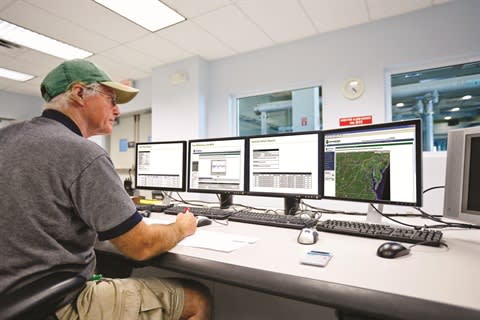
Utilizing telematics in fleet operations can help reduce the number of miles driven, incidents of vehicle idling, and overall fuel costs and wear-and-tear on a vehicle.
Telematics with onboard GPS that captures and transmits vehicle and driver information equips fleet and operations managers with the insight they need to uncover opportunities to reduce fuel consumption, as well as the fleet’s carbon footprint.
“Companies are leveraging real-time and historic vehicle data to monitor and manage driver behaviors and activities that can undermine sustainability goals, with real-time alerts for speeding, idling, after-hours use, and maintenance reminders,” said Matt Schaefer, enterprise sales executive at SageQuest, a provider of GPS fleet tracking and management technology. SageQuest’s solution includes a Carbon Footprint Report, which uses fuel consumption data to show the size of a vehicle’s carbon footprint for a given time period.
Rich Pearlman, director of product management, fleet services for Spireon, said that savvy fleet managers use telematics as a real-time business intelligence tool to help them make better-informed, timelier decisions with their vehicle operations.
“Fleet managers will know when their workers come and go, and can monitor the use of their vehicles, trailers, powered equipment, and assets — even if it’s after hours. And, as fuel prices fluctuate, fleet managers will, at least, be able to get a handle on their fuel and maintenance, which ultimately enables them to reduce harmful emissions,” he said.
How can fleet managers leverage telematics to improve fuel efficiency and make significant reductions in fleet-wide greenhouse gas (GHG) emissions?
Here are five ideas:
No. 1 Increasing Route Optimization
By eliminating unnecessary miles through optimal routing, fleets are able to not only reduce their environmental impact, but reduce their fuel costs as well, according to Nick Ehrhart, telematics VP of business development for Donlen, a full-service fleet management company headquartered in Northbrook, Ill., and a wholly owned subsidiary of the Hertz Corporation.
For example, when a customer requests a service call, it is crucial to determine which technician is available and closest to the customer. Telematics can give the dispatch department real-time vehicle location information to determine who would be the best technician to send to that job — and suggest the quickest route to get there.
Also, at the end of each shift, fleet managers can examine historical route data to determine whether certain routes could be consolidated, decreasing the number of vehicles and, consequently, miles driven to perform those jobs, without sacrificing quality of service to customers.
“Using telematics helps fleet managers reduce the number of miles driven, especially out-of-route miles,” Pearlman said. “By getting a handle on the miles driven, fleet managers can determine whether their drivers are being routed in the most efficient way, see if they are deviating from their routes, or have the ability to dispatch the closest vehicle.”
What’s the potential financial impact? Chris Ransom, director of sales engineering for Verizon Networkfleet, mentioned one customer, a municipal fleet, as an example.
“Within the first six months, employees drove about 165,000 fewer miles, and fuel costs declined by about $79,000 compared to the previous year’s data for the same period. The organization ended the first year by reducing total miles driven by 350,000 miles,” he said.[PAGEBREAK]
No. 2 Reducing Idle Time
According to the U.S. Environmental Protection Agency (EPA), unnecessary idling wastes as much as a half gallon (or more depending on vehicle class) of fuel per hour. These costs add up quickly when a fleet has 20, 50, 100, or more vehicles idling excessively each day, every day. Telematics can be programmed to capture idling incident data based on a specified number of minutes, which enables fleet managers to hold drivers accountable and facilitate training and incentive programs, helping drive down idle time.
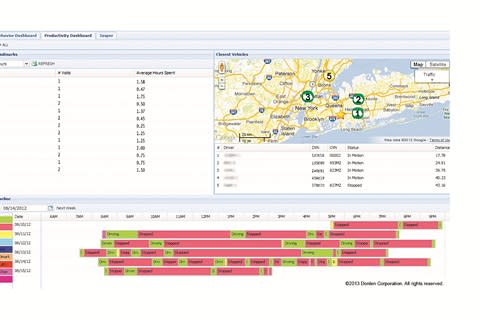
Many telematics programs feature a dashboard that can display the amount of time each driver has idled, helping reduce fuel costs, which can add up quickly.
“Excessive idling, especially during cold and hot seasons, can waste up to one gallon of fuel per hour,” said Pearlman. “If you have a fleet of 10 vehicles, and each vehicle idles for 60 minutes per day throughout the day, that’s 10 gallons of fuel wasted per day, or 50-70 gallons of fuel per week. At $4 per gallon, that equates to approximately $200-$280 per week or $10,400-$14,560 annually, in fuel waste alone. While the vehicle idles, that’s more GHG emitted back into the environment.”
No. 3 Identifying Unauthorized Vehicle Use
After-hours or other unauthorized use of fleet vehicles wastes fuel. Telematics solutions allow fleet managers to set up real-time alerts to spot instances of unauthorized usage — when it happens — so they can act quickly to address the issue before the infractions (and fuel costs) add up.
Ken Janosick, general manager, fleet payment solutions for WEX Inc., talked about how one customer in the heavy construction rental equipment business used telematics to reduce unauthorized use.
“The [system] provides real-time alerts to the fleet manager with a full violations summary and information on any additional side jobs or after-hours use of rented vehicles, which has ultimately reduced unauthorized fueling and emissions. It also identifies drivers ‘in the red,’ or drivers who consistently show violations, to increase accountability and enact consequences, including loss of basic jobsite privileges. With the vehicle tracking solution, the number of drivers ‘in the red’ decreased from 15 percent to 5 percent,” Janosick said.[PAGEBREAK]
No. 4 Promoting Eco-Driving Behaviors
Fleets are using telematics to reduce mpg by monitoring driver behavior. “Management can send alerts to drivers letting them know when they are accelerating too quickly, speeding, or idling too long. Changing these behaviors will improve mpg and reduce overall fuel spend,” said Ryan Driscoll, marketing manager for GPS Insight.
Ehrhart of Donlen agreed. “Drivers have a huge influence on a vehicle’s mpg. By focusing on factors such as rapid acceleration and deceleration as well as the speeds that a vehicle travels, fleet and operations managers are able to tell which specific areas that need improvement. Providing actionable feedback to the driver based on telematics reporting is very important so they know what they can do to help cut down on carbon emissions.”
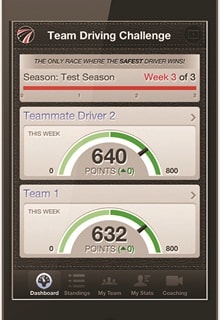
Some telematics programs also allow fleets to create and track internal competitions, where the safest drivers or team of drivers can win a prize.
According to Ehrhart, with the help of telematics, it’s quite common for a single driver to increase their mpg by 10 percent while, at the same time, reducing the number of miles they travel by 10 percent.
“For a vehicle that averages 20 mpg and 25,000 miles annually at the start of the program, these changes result in 227 fewer gallons of fuel used and 4,426 fewer pounds of carbon emitted,” Ehrhart said.
According to Perlman of Spireon, “Changing driver behavior is the key to realizing the ROI and reduce on greenhouse gas emissions.”
Driver behavior also impacts maintenance costs, according to Janosick of WEX Inc.
“According to the U.S. Department of Energy, speeding has costly consequences, as it produces heat that nearly doubles the wear on tires at road speeds of 70 miles per hour or greater,” he said. “Also, increasing speed from 60 miles per hour to 70 miles per hour increases maintenance costs by a whopping 80 percent, while increasing speed from 50 miles per hour to 60 miles per hour increases maintenance costs by 38 percent.”
No. 5 Ensuring Timely Maintenance & Repairs
One of the keys to improving fuel efficiency (and reducing harmful emissions) is ensuring all preventive maintenance, on all vehicles, is completed on time. Telematics can identify the vehicles that are due for oil changes, helping fleets plan and coordinate service schedules to minimize disruption to their operations.
Keeping on top of repairs is also important for optimal fuel economy. According to the U.S. Environmental Protection Agency (EPA), repairing a significant maintenance issue, such as a faulty oxygen sensor, can improve mileage by as much as 40 percent. Telematics can be configured to send real-time alerts when vehicle diagnostic codes are triggered fleet-wide, serving as an “early warning” system to complete repairs before there’s further damage to the vehicles — and to the environment.
“Vehicles with maintenance and engine related issues tend to experience lower mpg and higher emissions,” said Ransom of Networkfleet. “Telematics systems that include engine diagnostic tools can help fleets proactively maintain their vehicles, increase vehicle performance as well as reduce fuel and greenhouse gas emissions.”
More Green Fleet
New Propane Autogas Program Offers Fleet Compensation
Qualified commercial fleets can receive $7,500 per eligible propane autogas vehicle and up to $10,000 for new refueling site prep. Learn how the program works and see whether your fleet qualifies.
Read More →
EV Charging Use Is Outpacing Infrastructure Growth
ChargePoint’s 2026 Charging Forward Report points to rising charger use, higher-powered charging, commercial vehicle electrification, and energy-management technology. Here’s what fleets should know.
Read More →
Merchants Fleet Reports 290M EV Miles as Fleets Navigate Changing Electrification Market
From millions in operating savings to hundreds of millions of EV miles, Merchants Fleet’s latest report reveals what’s working and what’s changing in fleet electrification.
Read More →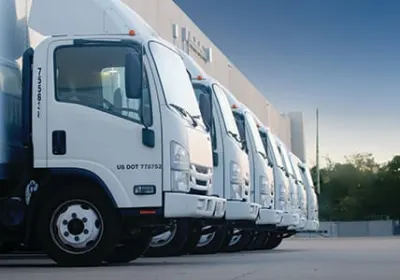

The EV Breakdown Nobody's Talking About: Why Most Electric Vehicle Roadside Calls Aren't Mechanical Failures
Here's why EV breakdowns are widely misunderstood.
Read More →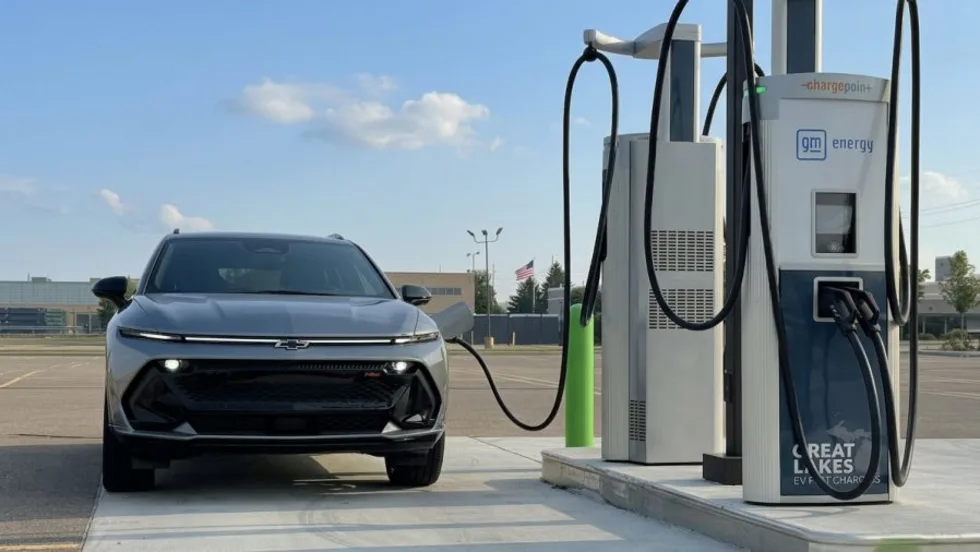
ChargePoint Now Available in Energy Pass
ChargePoint and additional planned charging network integrations were added to GM's Energy Pass.
Read More →

First Look: Slate Auto's Electric Fleet Pickup
Could an affordable, modular EV pickup make electrification more practical for fleets?
Read More →
Slate Debuts Colorful, Unique EV Models
A recent media and client event, studded with electric vehicles dressed up on platforms, planted a new position for the manufacturer in the wider EV market. Fleets will find cost-saving advantages.
Read More →
Slate Electric SUV, Pickup Switchable Model Aims For Light-Duty Fleets
Everything about this EV is counterintuitive and understated, making it stand out from the crowd.
Read More →
Inspiration Mobility Acquires Key Electrada Assets
Inspiration Mobility Group has acquired select assets of Electrada, adding the fleet electrification provider's team, technology, and charging infrastructure development capabilities to its energy management business.
Read More →