




5 Nominated for 2011 Fleet Executive of the Year
Five professional fleet executives vie for the prestigious award, to be presented at the 2011 NAFA Institute & Expo in Charlotte, N.C.

Douglas Else-Jack
Company: Schindler Holding AG
Title: Vice President of Corporate Purchasing
Total Vehicles: 17,000
Total Staff Supervised: Fleet : 1 (global category manager), 30-50 national fleet responsibles, otherwise 250+ buyers
Replacement Policy: 3-5 years depending on vehicle mileage and optimal TCO
Else-Jack manages Schindler's global fleet of 17,000-plus vehicles, both from a strategic and operational perspective. Prior to Schindler, Else-Jack's fleet experience included helping bid vehicles within his purchasing role and as a British territorial army officer commanding a unit with 40-plus vehicles (from armored personal carriers to Land Rovers), and as a fleet user.
He is globally responsible within Schindler for the vehicle fleet from a purchasing and operations perspective. The company's overall policy is owned by corporate HR but was written and is maintained by Else-Jack. He keeps HR up to date on any major exceptions he grants or when he wishes to query with them. As such, Schindler structurally manages 80 percent of costs from the company's headquarters and 20 percent in the countries it operates in; the day-to-day fleet administrative processes remain in country. This is in addition to Else-Jack's day-to-day job as corporate purchasing vice president, responsible for Purchasing Excellence and Indirects.
Major accomplishments include the 2003 introduction of a global fleet policy, bi-annual fleet managers' conferences, plus reduction of more than one third in CO2 emissions and fuel consumption over the past eight years (ongoing 10 percent per annum). In addition, under his leadership, Global Category Manager Raphaelle Jeanneret won the 2007 Fleet International Fleet Manager of the Year award.
Over the past year, Else-Jack installed a safety initiative in 2010 to remove two- and three-wheeled vehicles from fleet (sold on basis of safety first, irrespective of cost). He's currently completing an initiative to stretch global rebates linked to a European RFQ. The complexity of which requires it is conducted over five rounds of bidding in 24 countries with seven manufacturers, four main lessors, and national "local heroes." Benefits will include stronger contractual protection from "end of contract" charges and savings of approximately 10 percent. This is also linked to the introduction of a Fleet Electronic Invoice Payment and Monitoring program (FEIPM), delivering an additional 2-3 percent in savings. For 2011, Schindler is targeting continued CO2 reduction of 10 percent plus and is currently trialing electric vehicles in its fleet.
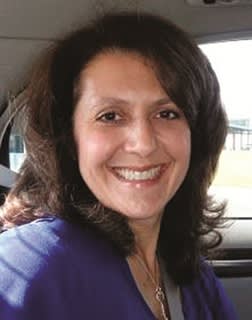
Caryn Helmandollar
Company: Ferguson Enterprises, Inc.
Title: Director of Risk Management
Total Vehicles: 4,000
Staff Supervised: 17 (3 dedicated to fleet - 1 fleet manager)
Replacement Policy: 36 months/75,000 miles (cars); 48 months/90,000 miles (light trucks); medium- and heavy-duty trucks vary
Helmandollar began her involvement with fleet in January 2010, when Ferguson's fleet function transitioned to the Risk Management Group. Ferguson is a diverse wholesale distributor with operations spanning multiple business groups and is also the industry's leading distributor of pipes, valves and fittings, water-works, and heating and cooling equipment in North America. The existing fleet staff includes experienced professionals with a sound strategy as follows:
■ Lease vehicle assets at the lowest cost and attain the highest possible resale value upon disposal.
■ Strive to partner with operations to control total cost through various strategies.
Helmandollar's challenge was communicating the strategy effectively across an organization of 1,300-plus sites. She and her team created an operations-friendly fleet management policy document to achieve buy-in and execution in the field. This convenient resource serves as a road map for managing local fleets. The result has been greater visibility and understanding of the methods underlying their strategy and the benefits to the bottom line.
Helmandollar's management strengths are process improvement and maximizing key vendor partnerships. Ferguson's relationship with its fleet management company has evolved into a team approach. In the past year, they have collaborated on the following key initiatives that have enhanced Ferguson's overall fleet program:
■ Creation of a selector program for manager vehicles.
■ Consolidated data to create one database for all company vehicle information.
■ Implemented required maintenance programs for all vehicles.
■ Extensive site visits across the organization by geography and business unit to gain feedback from the field to guide future programs and policies.
■ Specifically timed order cycles designed to maximize resale on disposals by selling at peak market values, and avoid maintenance cost associated with old, high-mileage vehicles.
As the director of risk management, she is also responsible for the overall insurance program, health and safety, DOT compliance, and claims management. The addition of fleet responsibilities has offered a unique opportunity to connect fleet and safety. It has also united a team of diverse professionals who share ideas across several disciplines.
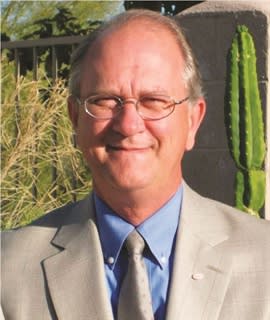
Kim Kemper
Company: Henkel North America
Title: Vice President, HR
Total Vehicles: 750
Staff Supervised: 22 (non fleet)
Replacement Policy: 36 months/75,000 miles
Henkel's 750-vehicle U.S. fleet is "owned" by the Human Resources department, which works closely with the vice president of procurement. In 2010, Henkel eliminated the fleet manager position and went to greater control by Human Resources, under the direction of Vice President Kemper. The company's goal was to achieve higher cost take-out while maximizing driver productivity.
Under Kemper's active engagement and authorization, Henkel accomplished the following:
■ Went from a centralized model to a more decentralized fleet and implemented efficiency initiatives that shifted administrative functionality to the fleet management company (PHH).
■ Adopted a short-cycling strategy that:
● Allowed Henkel to convert from six-cylinder to four-cylinder sedans in its sales fleet, replacing 84 percent of the fleet in the past 17 months.
● Increased the four-cylinder population from 38 percent in 2009 to 93 percent in 2010, which reduced fuel costs and greenhouse gas emissions.
● Decreased depreciation expense by 54 percent, going from 19.4 to 8.8 cents per mile.
● Took advantage of a strong resale market and allowed Henkel to achieve a 15-percent premium over normal resale pricing. This helped to push down depreciation expense along with lower cap costs.
Kemper's leadership in the area of change management and implementing best practices in Henkel's fleet led to a total cost take-out of 14 percent last year through increased efficiencies, total cost reduction, and improved productivity. He notes the success of the fleet program has been due to the strong collaborative efforts between HR, procurement, and the company's external fleet management company.[PAGEBREAK]
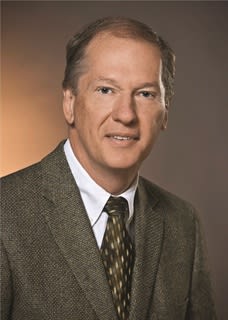
Paul Tomaszeski
Company: Novartis Pharmaceuticals Corp.
Title: Executive Director, Business Support Services
Total Vehicles: 7,000
Total Staff Supervised: 4 direct (including 1 fleet manager), 8 indirect, plus more than 200 contractors
Replacement Policy: 28 months/60,000 miles
Tomaszeski, executive director of Business Support Services at Novartis Pharmaceuticals Corporation, heads site services including travel, fleet operations, corporate card, electronic printing and publishing, cafeterias, company stores, mail operations, and stationery.
Tomaszeski has been with Novartis since 1982, serves as the North America travel manager, and has led Fleet since 1997. He is a CPA, and has an MBA in Finance from New York University, as well as a BS in Business and Economics from Lehigh University.
Novartis has one of the largest closed-end fleets in the U.S., according to Tomaszeski, and works closely with its leasing companies to annually select the most cost-efficient fleet. Switching to a single vehicle manufacturer, promoting a large hybrid and fuel-efficient fleet, working to help adopt an improved safety policy and program, and improving collision management are several of the innovative programs the Novartis fleet team has installed.
Close collaboration with the company's Strategic Sourcing Department has led to a highly cost-efficient fleet.
Additionally, Tomaszeski worked in 2010 to transition the fleet manager position, took on additional U.S. business units at Novartis to create a Fleet Operational Center of Excellence, and outsourced additional functions to onsite leasing company employees.

Dean Yerem
Company: Nestlé
Title: Purchasing Manager, Corporate Services - Nestlé Business Services
Total Vehicles: 5,000+ (29,000 worldwide)
Staff Supervised: 8
Replacement Policy: 36 months/75,000 miles
Yerem is responsible for delivering competitive advantage, value, and results to all Nestlé operating companies in North America, including Nestlé Waters North America, Nestlé Purina PetCare (U.S. and Canada), Nestlé Canada, L'Oreal (U.S. and Canada), and Nestlé USA as well as for Nestlé Mexico and other global initiatives. He is also tasked with developing relationships with suppliers while emphasizing value and monitoring performance.
Yerem has implemented several fleet initiatives over his three-year term working in fleet. His efforts, along with his team, led to significant projected savings for U.S., Mexico, and Canada based operations. Adjustments in selector list and a focus on more fuel-efficient vehicles will lower CO2 more than 3,000 tons each year. In the company's new global strategy, he supported fleet and purchasing managers at Nestlé Mexico to develop and adopt fleet policies and programs by sharing North American best practices.
In 2009, Yerem led an initiative in the U.S. and Canada that created a reduction of more than 300,000 gallons of fuel, reducing emissions by 15 percent and resulting in savings for the company. This three-year plan is currently on track to deliver the savings targets.
In 2008, when gas prices were at record highs, Yerem adjusted Nestlé's selector list to four-cylinder models to reduce fuel and overall capitalized costs. Fleet reduced emissions by internally promoting eco-friendly driving through continual driver education and communication.
With resources from Nestlé's fleet management company, he is currently working on the analysis of closed-end leasing and a funding shift to a self-funding model along with a comprehensive safety program in the final stages of approval. Yerem's leadership philosophy allows open communication among his team and senior management. This environment fosters teamwork and sharing of practices, good or bad. Senior management and the fleet team work together on all fleet initiatives.
Another fleet initiative Yerem led was evaluating personal use fees among different operating companies based on benchmarking information gained from industry publications and roundtables. He also collaborates with safety, environmental, and risk departments as the fleet safety program chairperson.
More Operations

Here's When You Should Make an Exception to Fleet Policy
Fleet policies are designed to create consistency, but not every driver or situation fits neatly within standard rules.
Read More →
AI-Native or AI-Acquired: What Should Fleet Managers Look for in an AI Platform?
Six questions can help fleet managers look beyond AI marketing claims to evaluate integration, data access, and real-world operational performance.
Read More →
A buyer's guide to fleet management software in 2027
Buying fleet management software in 2027 means looking beyond features and price. As fleet operations, technology and expectations evolve, this guide explores what today’s fleet professionals should consider when choosing a system that can deliver value now and adapt to what comes next.
Read More →

What Will Shape the Next Era of Fleet Management?
EVs, AI, and autonomous vehicles are reshaping fleet management. Discover what’s ahead—and how fleet leaders can prepare for the next era.
Read More →
How Fleets Can Recruit and Train Veterans for Technician Roles
Here's how the technician shortage has affected uptime for fleets, and what to do about it.
Read More →
Avis Budget Group Deploys Neology Toll Management Technology Across Major Brands
Neology’s neoFleet platform will manage toll transactions and toll-authority operations for vehicles across Avis, Budget, Payless, Budget Truck and Zipcar.
Read More →
Fleet Personal-Use Charges Edge Higher in 2026
Nearly eight in 10 surveyed fleets allow personal use of company vehicles, while just over half of respondents report charging employees for the privilege.
Read More →
The Future of Fleet + What’s Changing Right Now | AF News Recap
Could developments overseas offer a preview of what’s coming for U.S. fleets? This week, we’re looking at the future of AI, autonomy, and electrification, plus Ford Pro’s new certified pre-owned program, smarter vehicle offboarding, and a new way for fleets to manage toll expenses.
Read More →
How to Handle Vehicle Offboarding
What do fleet managers need to do when a driver leaves?
Read More →
Fleet Manager’s Ultimate Playbook: Navigating the New Standard in OEM Connectivity
Rising operating costs, driver safety concerns, and unplanned downtime are putting unprecedented pressure on modern fleets. Discover how fleet managers use embedded OEM connectivity and real-time vehicle data to cut TCO, prevent downtime, and protect drivers without aftermarket telematics hardware.
Read More →