




3 Fleet Trends to Tackle in 2020
At ARI's most recent Best in Fleet Conference, the fleet management company presented an overview on some of the top trends that could impact fleets in 2020. Some of the top trends addressed involved a strong vehicle market, railcar shortages, and impaired driving.

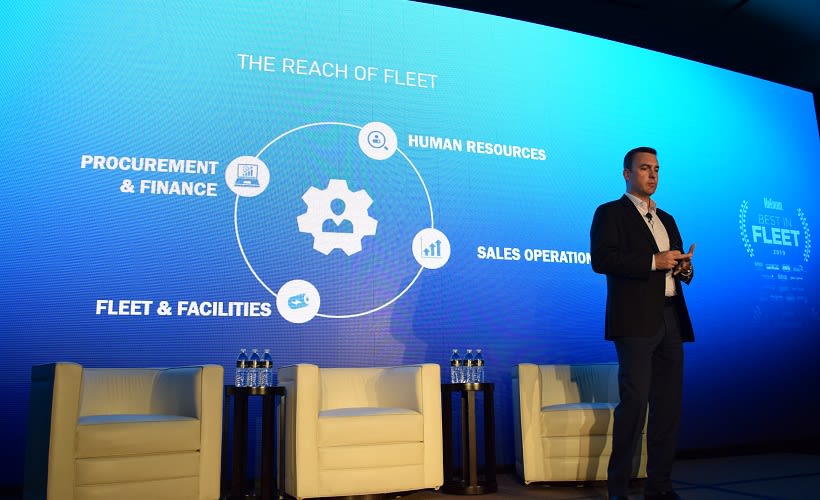
Trip O’Neil, VP of Sales, Southern U.S. of ARI, during his panel at the ARI Best in Fleet Conference.
Photo by Andy Lundin.
At ARI's most recent Best in Fleet Conference, the fleet management company presented an overview on some of the top trends that could impact fleets in 2020. Some of the top trends addressed involved a strong vehicle market, railcar shortages, and impaired driving.
1. Take Advantage of the Strong Vehicle Market
While vehicle sales in the overall auto industry in 2019 were mostly consistent with what was seen 2018, the fleet market had a strong year with approximately 10% growth.
Overall, the fleet market performed well throughout the year, driven in large part by strong truck sales. The used vehicle segment also had a solid year with pickups and SUVs once again leading the way.
Considering these trends, Trip O’Neil, VP of Sales, Southern U.S. of ARI, suggested that now would be a good time to take advantage of liquidating used assets, and taking care to consider new asset acquisition, particularly regarding depreciation values.
“We’re definitely recommending taking the time to think about making those replacements while the market is still in a healthy position,” noted O’Neil.
He added what this trend might mean for a fleet running a passenger vehicle-focused operation, since, while sedans are holding their values relatively well, they are starting to show their decline.
“It’s a good time to start talking about if it’s time to take those units out of service and capitalize on market trends. Should these fleets look at different types of models like crossovers or SUVs as a replacement platform? Some customers are looking at things like short cycles for sedans,” he said. “One thing we’re advocating with them is to time that market, and maybe, for example, if a sedan had a typically three-year lifespan, maybe it’s time to consider running them for a year and a half.”
2. Overcoming Railcar Shortages
While the fleet market continues to grow, railcar shortages have been a consistent issue to plague the industry.
“We’ve continuously seen over the last couple of years rail car shortages affecting the entire industry,” said O’Neil of ARI. “It’s simply that there’s not enough capacity to get vehicles to their end destinations.”
To help minimize the impact to their customers, ARI has incorporated some transport companies to pull vehicles out of ship-thru lanes to get them on a truck to their destinations. However, even that practice has put strain on that channel of transportation for vehicle logistics. Further demand for vehicles such as pickup trucks and SUVs has impacted areas like factory order costs and time.
“We’ve seen a shift in the time of year for some particular manufacturers and models on when orders are coming through,” said O’Neil. “And that’s caught some fleet operators a bit off guard at times where they’re left with a short amount of time to figure out how many vehicles they need to order, scrambling to get capital budget approval.”
O’Neil said a key for fleets to prevent any headaches resulting from this will be to plan ahead and work closely with their FMC.
“Look at everything in your business from a growth perspective, work with your team members to run replacement schedules, and match it against what your budget caps may be to determine what vehicles you need to order as soon as possible,” he said.
He added the fleets may want to review vehicle orders in the summer, as opposed to the fall, to get a jump on the traditional ordering cycle.
“This is not going to guarantee that vehicles will necessarily get built and delivered on time, but it gets you further ahead of the curve and hopefully avoid the situation where you might have field operations that are in desperate need for new equipment,” he said.
3. The Cannabis Concern
In the U.S., there has been a continued push for the decriminalization of cannabis and marijuana, with some states making it fully legal. This has created newfound concerns of driver impairment for fleets in states where the substance is legally available.
“At the federal level, cannabis is still illegal, but as a growing number of states pass legislation to legalize it, it can be a bit confusing if you have employees driving your vehicles in all states across the U.S.,” O’Neil said.
While the laws surrounding the continued legalization of marijuana are still in their infancy, safety risks involving impaired driving are apparent.
“What we do know though is that when it comes to cannabis use and driving, impairment behind the wheel is a significant risk,” he said. “The research is still somewhat limited due to it being a relatively short period of time since we started to see this trend take off across the country, but some links are obviously pointing to an increasing number of collisions and accidents due to cannabis and impaired driving.”
O’Neil said because of these risks, which could turn into major liability concerns, fleet operators need to take a closer look at their fleet policies.
“Take a look at your driver policies, your employee policies, and reinforce zero tolerance to impairment behind the wheel,” he said.
He added that if fleets need a policy framework to lean on when trying to address this concern, he recommends fleets reference the U.S. Department of Transportation’s framework.
“At the federal level, you have a DOT regulated driver, and they all need to sit within the guidelines of zero usage, and clearly, no impairment for anyone that drives commercial vehicles,” he said. “Reeducating your driver to the DOT Federal Law standards is a good place to start as we continue to move forward in this uncertain environment.”
More Operations
Here's When You Should Make an Exception to Fleet Policy
Fleet policies are designed to create consistency, but not every driver or situation fits neatly within standard rules.
Read More →
AI-Native or AI-Acquired: What Should Fleet Managers Look for in an AI Platform?
Six questions can help fleet managers look beyond AI marketing claims to evaluate integration, data access, and real-world operational performance.
Read More →
A buyer's guide to fleet management software in 2027
Buying fleet management software in 2027 means looking beyond features and price. As fleet operations, technology and expectations evolve, this guide explores what today’s fleet professionals should consider when choosing a system that can deliver value now and adapt to what comes next.
Read More →

What Will Shape the Next Era of Fleet Management?
EVs, AI, and autonomous vehicles are reshaping fleet management. Discover what’s ahead—and how fleet leaders can prepare for the next era.
Read More →
How Fleets Can Recruit and Train Veterans for Technician Roles
Here's how the technician shortage has affected uptime for fleets, and what to do about it.
Read More →
Avis Budget Group Deploys Neology Toll Management Technology Across Major Brands
Neology’s neoFleet platform will manage toll transactions and toll-authority operations for vehicles across Avis, Budget, Payless, Budget Truck and Zipcar.
Read More →
Fleet Personal-Use Charges Edge Higher in 2026
Nearly eight in 10 surveyed fleets allow personal use of company vehicles, while just over half of respondents report charging employees for the privilege.
Read More →
The Future of Fleet + What’s Changing Right Now | AF News Recap
Could developments overseas offer a preview of what’s coming for U.S. fleets? This week, we’re looking at the future of AI, autonomy, and electrification, plus Ford Pro’s new certified pre-owned program, smarter vehicle offboarding, and a new way for fleets to manage toll expenses.
Read More →
How to Handle Vehicle Offboarding
What do fleet managers need to do when a driver leaves?
Read More →
Fleet Manager’s Ultimate Playbook: Navigating the New Standard in OEM Connectivity
Rising operating costs, driver safety concerns, and unplanned downtime are putting unprecedented pressure on modern fleets. Discover how fleet managers use embedded OEM connectivity and real-time vehicle data to cut TCO, prevent downtime, and protect drivers without aftermarket telematics hardware.
Read More →