




2014 BMW 328d xDrive Sedan Overview
BMW has added to its diesel legacy with the 328d's 2.0L, four-cylinder TwinPower Turbo Diesel engine — a first for the U.S. market — which produces 180 hp and 280 lb.-ft. of torque at 1,750 rpm. When mated to the 8-speed automatic transmission, the combination achieves a 7-second 0-60 mph lapse time.

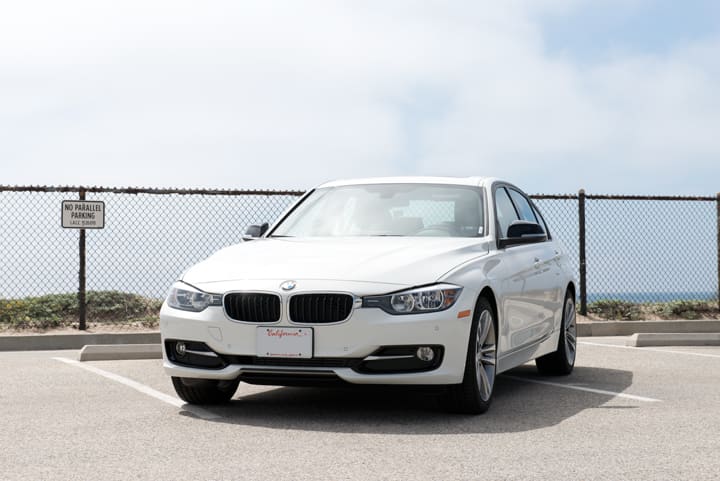
Photo by Vince Taroc.
Photo by Vince Taroc.
The 2014-MY BMW 328d xDrive Sedan is not the automaker's first dip into the diesel pool. After the U.S. fuel crisis of the 1970s, BMW decided to change consumers' views of diesel engines with the introduction of a turbocharged 2.4L engine that produced 115 hp and 155 lb.-ft. of torque.
Fast-forward more than three decades and BMW has added to its diesel legacy with the 328d's 2.0L, four-cylinder TwinPower Turbo Diesel engine — a first for the U.S. market — which produces 180 hp and 280 lb.-ft. of torque at 1,750 rpm. When mated to the 8-speed automatic transmission, the combination achieves a 7-second 0-60 mph lapse time.
Improving Fuel Economy
Increasing the transmission to eight gears affords a more efficient shifting sequence and improved fuel economy, which is currently rated at an EPA-estimated 45 mpg. The 2014 328d includes Adaptive Transmission Control (ATC) with Sport and Manual shift modes. The ECO PRO mode uses engine management software to adjust the engine's output characteristics, allowing the automatic transmission to upshift sooner and remain in a higher gear longer, improving fuel economy. Depending on the driver, it can result in a fuel savings of up to 20 percent, according to the automaker.
Adding to this savings is the vehicle's auto start-stop function, which reduces fuel consumption and lowers emissions by automatically turning off the engine when it's not needed, and restarting when it is. The system is monitored by a central control unit that monitors the battery and is only active when specific conditions are met: an adequately charged battery, an engine at the ideal operating temperature, fully closed doors, and fastened seat belts.
To further improve fuel economy, the 328d utilizes brake energy regeneration, where the generator produces electricity when the driver brakes or takes their foot off the accelerator. While driving the 328d, kinetic energy from braking is transformed into electrical energy, then fed into the battery, generating electricity without consuming fuel.
Stabilizing the Vehicle and Driver
The new 328d also comes with a number of safety features, including dynamic stability control (DSC), brake fade compensation, start-off assistant, brake drying, brake stand-by features, and dynamic traction control. Passengers also benefit from a number of safety additions, including a driver and passenger front air bag supplemental restraint system, front-passenger seat sensors designed to prevent unnecessary air bag deployment, seat-mounted front side-impact air bags, and knee air bags.
Incentivizing Fleets
As part of BMW's fleet incentive program, companies can receive a $2,500 rebate off dealer invoice for the BMW 328d Sedan model or the BMW 328d xDrive sedan model.
"From my point of view, this is a perfect vehicle for sales fleets due to its MPG rating and the overall total cost of ownership," said Rainer Wahl, Corporate Sales Manager for BMW. "While the initial capital cost is higher, a strong TCO is supported by strong resale values when compared to competitive models, and BMW Ultimate Service, which includes includes maintenance costs for four years or 50,000 miles, whichever comes first." For more information related to BMW Ultimate Service, please visit www.bmwusa.com.
Related:
More Operations

Avis Budget Group Deploys Neology Toll Management Technology Across Major Brands
Neology’s neoFleet platform will manage toll transactions and toll-authority operations for vehicles across Avis, Budget, Payless, Budget Truck and Zipcar.
Read More →
Fleet Personal-Use Charges Edge Higher in 2026
Nearly eight in 10 surveyed fleets allow personal use of company vehicles, while just over half of respondents report charging employees for the privilege.
Read More →
The Future of Fleet + What’s Changing Right Now | AF News Recap
Could developments overseas offer a preview of what’s coming for U.S. fleets? This week, we’re looking at the future of AI, autonomy, and electrification, plus Ford Pro’s new certified pre-owned program, smarter vehicle offboarding, and a new way for fleets to manage toll expenses.
Read More →
How to Handle Vehicle Offboarding
What do fleet managers need to do when a driver leaves?
Read More →
Fleet Manager’s Ultimate Playbook: Navigating the New Standard in OEM Connectivity
Rising operating costs, driver safety concerns, and unplanned downtime are putting unprecedented pressure on modern fleets. Discover how fleet managers use embedded OEM connectivity and real-time vehicle data to cut TCO, prevent downtime, and protect drivers without aftermarket telematics hardware.
Read More →
U.S. Bank Adds Verra Mobility Toll Management to Voyager Fleet Platform
The integration allows U.S. Bank Voyager fleet customers to manage toll payments and violations alongside fuel, EV charging and maintenance expenses.
Read More →
ADAS Prevents Crashes. But Repairs Cost More | AF News Recap
ADAS-equipped vehicles may crash less often, but they can cost more when they do. This week, we’re breaking down what that tradeoff means for fleets, plus Subaru’s first Forester Wilderness Hybrid, Nissan’s new e-POWER Rogue, and why Calstart has become Catalyst Mobility.
Read More →
Moventum Fleet Management Names Mark Iorillo Head of Sales
Iorillo brings nearly 20 years of fleet management and sales experience to the role, including previous positions at Element Fleet Management, CEI, Donlen and Ryder.
Read More →
Fleet Has a Talent Pipeline Problem. What Comes Next? | AF News Recap
Where will fleet’s next generation of leaders come from? This week, we’re looking at the industry’s talent pipeline, what certification can add to a fleet career, how to build an award-worthy track record, and the return of Automotive Fleet’s Personal Use Survey.
Read More →
Smith System Launches Driver Risk Management Program
Fleets have more driver data than ever, but identifying risky behavior doesn't necessarily correct it. Smith System's new Driver Risk Management program combines monitoring, training, and follow-up coaching to help fleets connect risk signals with driver intervention.
Read More →