




13 Steps Management Can Take Right Now to Optimize Fuel-Cost Savings
Increasing a vehicle’s fuel economy by 1 mpg can save a 300-vehicle fleet as much as $54,000 per year. Fleet managers can take action today to start decreasing fuel consumption in executive vehicle fleets.

A fleet manager can't control the market forces driving average national fuel prices to $4 per gallon in some markets, eating into the company's bottom line. However, there are some things you can do right now to soften the impact of volatile fuel prices and squeeze as much fuel savings as possible from the company's vehicle fleet.
Consider these scenarios based on improving fuel economy by just 1 mpg (from 22 to 23 mpg) at $3.65 per gallon:
■ At 15,000 miles per year, annual fuel savings per vehicle is $108.
■ At 20,000 miles per year, annual fuel savings per vehicle is $144.
■ At 25,000 miles per year, annual fuel savings per vehicle is $180.
If a fleet operates 300 vehicles at 25,000 miles per year, and is able to attain an extra mile per gallon in savings on each vehicle, annual fuel costs can be conceivably cut by as much as $54,000 for the 300 units.
What adjustments can be made to an existing fleet to achieve such fuel cost savings while preserving profit for the company? Here are 13 strategies that can be implemented immediately to trim fleet-wide fuel costs.
1. Promote Conservative Driving Habits
According to the U.S. Environmental Protection Agency (EPA), aggressive driving (such as speeding, rapid acceleration, and braking) can lower fuel economy by 33 percent at highway speeds and by 5 percent on city streets. Save fuel by holding drivers accountable to observe speed limits and avoid harsh stop-and-go driving.
2. Eliminate Unnecessary Idling
A typical executive vehicle can waste 0.2 gallons of fuel per hour while idling, according to the EPA. Therefore, unnecessary idling, even just one hour per day, can waste as much as $189 per year, per vehicle, based on $3.65 per gallon.
A fuel savings calculator is provided by the Argonne National Laboratory, one of the U.S. Department of Energy's oldest and largest national laboratories for science and engineering research. To access it, visit: www.transportation.anl.gov/engines/idling.html.
3. Maintain Optimal Tire Pressure
According to the EPA, fuel economy can be improved up to 3.3 percent by keeping tires inflated to the proper pressure. The government says underinflated tires can lower gas mileage by 0.4 percent for every pound per square inch (psi) drop in pressure. For example, if each tire on a vehicle was underinflated by just 10 psi, the result would be 16-percent drop in fuel economy. (Check the label on the driver's side door jam or consult the owner's manual for the proper tire pressure for the vehicle.)
4. Plan More Efficient Routes
To save fuel, the United Parcel Service (UPS), plans delivery routes with no left turns. Why? The company has learned that idling while waiting to turn left wastes fuel.
While this approach may not be practical for all fleet operations, other ways may be discovered to adjust routes to optimize fuel economy. Consult a fleet management company for advice or look into route-planning software packages to help minimize route miles - and fuel consumption.
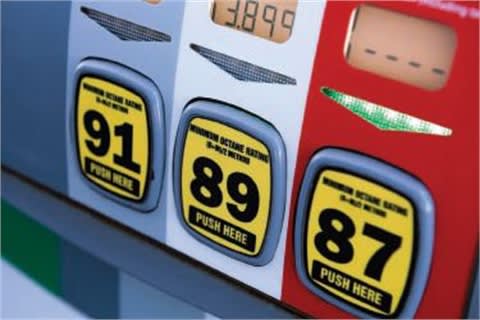
Direct drivers to fuel providers known to offer lower gas prices. Many fuel
card companies provide this information daily.
5. Plan Off-Peak Travel
When travel is scheduled during off-peak times (such as evenings or early mornings), drivers will encounter significantly less traffic, which reduces unnecessary idling and fuel consumption to complete each route, compared to traveling during heavy-traffic times.
6. Perform Required Engine Maintenance
According to the EPA, repairing a vehicle's engine when it is noticeably out of tune or has failed an emissions test can improve its fuel mileage by an average of 4 percent, depending on the issue repaired.
For more serious maintenance problems that directly impact fuel consumption, such as a faulty oxygen sensor, the repair can improve a vehicle's mileage by an astounding 40 percent.
[PAGEBREAK]
7. Utilize the Proper Grade of Motor Oil
Use the manufacturer's recommended grade of motor oil. The EPA notes gas mileage can be improved 1-2 percent by using the proper grade of motor oil for each vehicle. Consult the owner's manual for recommended grade oil.
8. Ensure Correct Wheel Alignment
If any of the wheels are out of alignment, the total drag on the vehicle increases, reducing fuel economy.
9. Utilize Cruise Control
If a vehicle is equipped with cruise control, instruct drivers to use it during highway speed applications. This will help drivers maintain constant speed, which saves fuel.
10. Remove Unnecessary Payload
Are there extra tools, equipment, parts, or product in the vehicle that are not absolutely required for that day's route? Reduce weight and improve fuel economy.
11. Re-Examine Personal Use of Company vehicles
"Ensure employees follow company policies and appropriate personal use charges are imposed," advised Paul Youngpeter, fleet director for Orkin Termite and Pest Control. "During times of high fuel prices, tighten policies or limit personal use as needed to keep overall fuel costs in line," he said.
12. Consider Installing Telematics
"Implement telematics systems that equip you with the data you need to seek out and address driving habit issues, such as harsh braking, excessive idle time, or jackrabbit starts," said Youngpeter.
Tony Woodall, vice president of marketing at Morey Corporation, a Woodridge, Ill.-based telematics manufacturer, agreed. "You can configure the system to report back to dispatch if idle minutes exceed a minimum threshold (for example, five minutes) or if vehicles are used off-hour or out-of-bounds," Woodall said. "The system can also be configured to send an alert to dispatch if the driver exceeds certain speed thresholds that affect fuel economy. The same holds true for hard braking."
Telematics systems can also deliver data related to vehicle health that impacts fuel economy.
"Items, such as oil pressure and other diagnostic data points, give fleet managers a glimpse into maintenance needs that affect fuel consumption," Woodall said. "Demonstrable fuel savings are in the 8- to 10-percent range and a 2-mile-per-gallon improvement in fuel economy in some cases.
13. Purchase from the Lowest-Cost Fuel Providers
Direct drivers to fuel providers known to offer lower gas prices. "Many fuel card companies provide this information daily. Purchasing fuel from gas stations with lower prices can make as much as a 10-cent difference per gallon," Youngpeter said.
More Operations
A buyer's guide to fleet management software in 2027
Buying fleet management software in 2027 means looking beyond features and price. As fleet operations, technology and expectations evolve, this guide explores what today’s fleet professionals should consider when choosing a system that can deliver value now and adapt to what comes next.
Read More →
What Will Shape the Next Era of Fleet Management?
EVs, AI, and autonomous vehicles are reshaping fleet management. Discover what’s ahead—and how fleet leaders can prepare for the next era.
Read More →
How Fleets Can Recruit and Train Veterans for Technician Roles
Here's how the technician shortage has affected uptime for fleets, and what to do about it.
Read More →

Avis Budget Group Deploys Neology Toll Management Technology Across Major Brands
Neology’s neoFleet platform will manage toll transactions and toll-authority operations for vehicles across Avis, Budget, Payless, Budget Truck and Zipcar.
Read More →
Fleet Personal-Use Charges Edge Higher in 2026
Nearly eight in 10 surveyed fleets allow personal use of company vehicles, while just over half of respondents report charging employees for the privilege.
Read More →
The Future of Fleet + What’s Changing Right Now | AF News Recap
Could developments overseas offer a preview of what’s coming for U.S. fleets? This week, we’re looking at the future of AI, autonomy, and electrification, plus Ford Pro’s new certified pre-owned program, smarter vehicle offboarding, and a new way for fleets to manage toll expenses.
Read More →
How to Handle Vehicle Offboarding
What do fleet managers need to do when a driver leaves?
Read More →
Fleet Manager’s Ultimate Playbook: Navigating the New Standard in OEM Connectivity
Rising operating costs, driver safety concerns, and unplanned downtime are putting unprecedented pressure on modern fleets. Discover how fleet managers use embedded OEM connectivity and real-time vehicle data to cut TCO, prevent downtime, and protect drivers without aftermarket telematics hardware.
Read More →
U.S. Bank Adds Verra Mobility Toll Management to Voyager Fleet Platform
The integration allows U.S. Bank Voyager fleet customers to manage toll payments and violations alongside fuel, EV charging and maintenance expenses.
Read More →
ADAS Prevents Crashes. But Repairs Cost More | AF News Recap
ADAS-equipped vehicles may crash less often, but they can cost more when they do. This week, we’re breaking down what that tradeoff means for fleets, plus Subaru’s first Forester Wilderness Hybrid, Nissan’s new e-POWER Rogue, and why Calstart has become Catalyst Mobility.
Read More →