




2013 Ford Escape to Get 5 Better MPG Than Previous Model
LOS ANGELES - The automaker said the new model will offer 11 new exclusive features and fuel economy that Ford said will be 5 mpg better than previous Escape models.
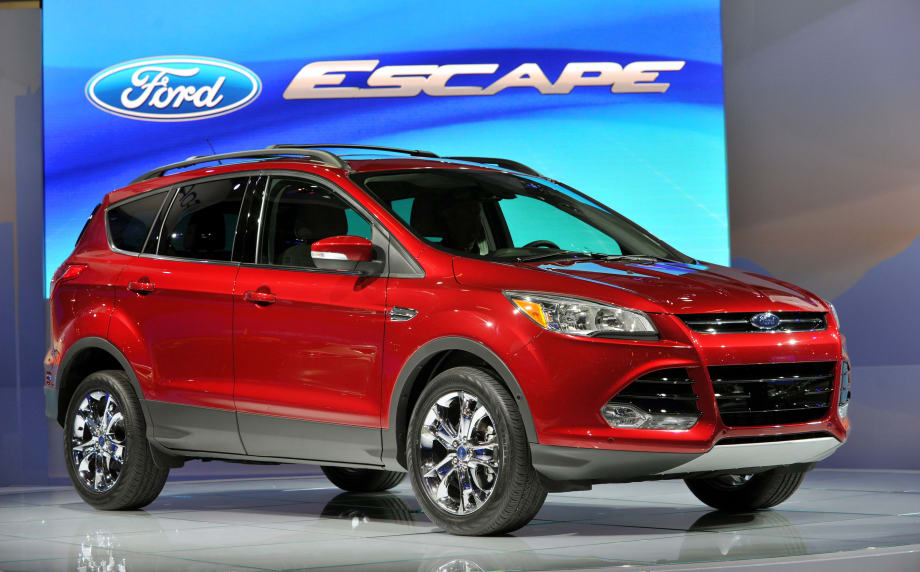
LOS ANGELES – At the 2011 Los Angeles Auto Show, Ford revealed its all-new 2013-MY Escape for the first time. The automaker said the new model will offer 11 new exclusive features.
Performance
Under the hood, the new Escape will offer three powertrain choices, a 2.5L engine as standard and two EcoBoost engines as optional. Ford expects the 2.0L EcoBoost four-cylinder to deliver 250 lb.-ft. of torque and 237 horsepower. The automaker said it expects the 1.6L EcoBoost four-cylinder to deliver 177 lb.-ft. of torque and 173 horsepower. The EcoBoost engine options, and the standard 2.5L engine, are mated to a SelectShift Automatic six-speed transmission.
In terms of fuel economy, Ford said it will achieve 5 better mpg when compared with the previous model, though the automaker hasn’t officially announced fuel economy figures yet. The Escape’s gearbox features a new torque converter for improved driving feel, smoother shifting, and better fuel economy, according to Ford.
The vehicle features an active park assist system, which (via a button press), detects an open parallel parking spot and then automatically maneuvers the vehicle into that space. The driver controls the gas and brake pedals.
The new Escape offers a trailer tow rating of 3,500 pounds (when equipped properly).
You can check out a video from Ford here that shows the Escape on the road, plus its interior and other features.
Exterior
The Escape has a new look and comes in a number of new exterior colors. They include Ginger Ale, Ruby Red, White Platinum Tricoat, Frosted Glass Metallic, Deep Impact Blue, and Kodiak Brown, along with Tuxedo Black, Sterling Gray Metallic, Ingot Silver Metallic, and Oxford White.
Interior
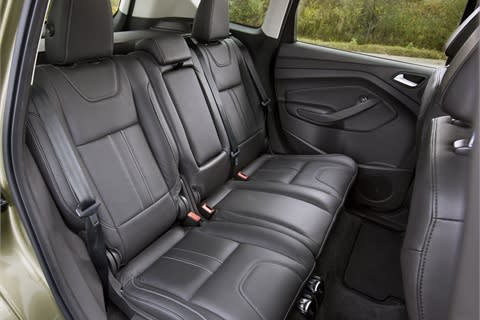
The new Escape has more cargo volume than the previous model, with 68.1 cubic feet of space behind the first row and 34.3 cubic feet behind the second row. The vehicle’s seats feature two-way power recline, two-way power lumbar support, and six-way adjustability. A sport seat, with higher bolsters and a distinct thread pattern in the stitching, also is available. The new Escape’s rear seats are designed to fold flat easily.
The front head restraint offers four-way adjustability. Ford also upgraded the head restraints and rear seats to allow for easier folding. Interior color choices include Charcoal Black on Charcoal Black or Charcoal Black on Medium Light Stone or Medium Dark Stone.
Interior materials include a soft-touch instrument panel, wrapped, padded and stitched door armrests, deep padding on console armrests, and soft upper roll on the doors.
The new vehicle offers SYNC with MyFord Touch. Ford recently announced it is rolling out an upgrade to the software, which includes a new look and menus that Ford said are easier to navigate.
Safety
The new version of the Escape adds roughly four times as much high-strength, and ultra-high-strength, steel compared to the previous model. The new Escape also features an enhanced Personal Safety System with new safety belt technologies (the inflatable seat belt) and seven airbags.
According to Ford, the Personal Safety System is a network of components that work together to tailor the activation of the front airbags in frontal collisions. The new side airbags deploy lower in the pelvis area for vehicle occupants, in addition to the chest, and incorporate new venting technology. The side airbag’s venting technology takes into account the size of the occupant, varying the pressure so smaller occupants withstand a lower pressure.
The new vehicle features the Blind Spot Information System (BLIS), which displays an alert in the side mirror when it detects a vehicle entering a blind spot. A cross-traffic alert warns the driver if it detects traffic coming from the sides. The Escape also features the Curve Control and Torque Vectoring Control technologies, which automatically slow the vehicle when it’s cornering too fast or help it accelerate through a turn. Also, a new Intelligent 4WD system improves performance in adverse road conditions and helps provide traction in off-road conditions.
Other Features
One of the new features the automaker touted at the Auto Show was the new hands-free power liftgate, which allows a user to wave their foot under the rear bumper to unlock and open or close it. Ford said the hands-free liftgate technology uses two sensors integrated into the Intelligent Access system are located in the rear bumper.
The hands-free liftgate builds off Ford’s Intelligent Access with push-button start, which allows customers to unlock and start their vehicles without ever having to take out the key. When the key fob is in their possession – kept in a pocket, coat, purse or briefcase – a simple pull on the door handle unlocks the vehicle. Once inside, the driver simply holds down the brake pedal and presses the power button to start the vehicle. The liftgate opens from about 4 feet to a maximum of about 7 feet above the ground. The system detects the key fob on a user in addition to the shin and leg motion, which prevents the liftgate from accidentally opening.
You can see the vehicle's complete specs here.
More Operations

How Fleets Can Recruit and Train Veterans for Technician Roles
Here's how the technician shortage has affected uptime for fleets, and what to do about it.
Read More →
Avis Budget Group Deploys Neology Toll Management Technology Across Major Brands
Neology’s neoFleet platform will manage toll transactions and toll-authority operations for vehicles across Avis, Budget, Payless, Budget Truck and Zipcar.
Read More →
Fleet Personal-Use Charges Edge Higher in 2026
Nearly eight in 10 surveyed fleets allow personal use of company vehicles, while just over half of respondents report charging employees for the privilege.
Read More →
The Future of Fleet + What’s Changing Right Now | AF News Recap
Could developments overseas offer a preview of what’s coming for U.S. fleets? This week, we’re looking at the future of AI, autonomy, and electrification, plus Ford Pro’s new certified pre-owned program, smarter vehicle offboarding, and a new way for fleets to manage toll expenses.
Read More →
How to Handle Vehicle Offboarding
What do fleet managers need to do when a driver leaves?
Read More →
Fleet Manager’s Ultimate Playbook: Navigating the New Standard in OEM Connectivity
Rising operating costs, driver safety concerns, and unplanned downtime are putting unprecedented pressure on modern fleets. Discover how fleet managers use embedded OEM connectivity and real-time vehicle data to cut TCO, prevent downtime, and protect drivers without aftermarket telematics hardware.
Read More →
U.S. Bank Adds Verra Mobility Toll Management to Voyager Fleet Platform
The integration allows U.S. Bank Voyager fleet customers to manage toll payments and violations alongside fuel, EV charging and maintenance expenses.
Read More →
ADAS Prevents Crashes. But Repairs Cost More | AF News Recap
ADAS-equipped vehicles may crash less often, but they can cost more when they do. This week, we’re breaking down what that tradeoff means for fleets, plus Subaru’s first Forester Wilderness Hybrid, Nissan’s new e-POWER Rogue, and why Calstart has become Catalyst Mobility.
Read More →
Moventum Fleet Management Names Mark Iorillo Head of Sales
Iorillo brings nearly 20 years of fleet management and sales experience to the role, including previous positions at Element Fleet Management, CEI, Donlen and Ryder.
Read More →
Fleet Has a Talent Pipeline Problem. What Comes Next? | AF News Recap
Where will fleet’s next generation of leaders come from? This week, we’re looking at the industry’s talent pipeline, what certification can add to a fleet career, how to build an award-worthy track record, and the return of Automotive Fleet’s Personal Use Survey.
Read More →