




GM to Help Develop Safe Sound Alert for Electric & Hybrid Vehicles
DETROIT - Chevrolet, General Motors, and the National Federation of the Blind are working to identify a safe level of sound to alert the blind and other pedestrians to the presence of near silent-running electric and hybrid vehicles.
DETROIT - Chevrolet, General Motors, and the National Federation of the Blind (NFB) are working to identify a safe level of sound to alert the blind and other pedestrians to the presence of near silent-running electric and hybrid vehicles, GM announced Nov. 25.
"We are confident electric vehicles can produce a safe and acceptable level of sound to alert blind pedestrians to their presence," said John Paré, NFB executive director of strategic initiatives. "We look forward to working with Chevrolet and GM to identify an appropriate sound that will alert pedestrians in the most effective and least disruptive way possible."
Members of the National Federation of the Blind and engineers from GM began meeting earlier this year to understand the safety needs of pedestrians with respect to quiet vehicles, and to work on solutions for the benefit of pedestrians, cyclists, runners, children, and other members of the public.
Several NFB members recently experienced a demonstration of the pedestrian warning alert on a pre-production Chevrolet Volt electric vehicle driven at various speeds by chief engineer Andrew Farah. While visiting GM's Milford Proving Ground, they also evaluated the alert from the front, sides, and rear of the car.
"We have significant background in the area of pedestrian alerts dating to our work on our first electric car, the EV1," Farah said. "The most important thing is to listen to the people who will interact with these vehicles in everyday life."
Deborah Kent Stein, who chairs the NFB's Committee on Automobile and Pedestrian Safety, said, "A recent report from the National Highway Traffic Safety Administration (NHTSA) demonstrated that the silent operation of hybrid vehicles is an issue for all pedestrians, not just the blind. In certain situations, electric or hybrid vehicles are twice as likely to be involved in collisions with pedestrians. The NFB looks forward to working with the safety agency in the crafting of appropriate standards establishing an acceptable level of minimum vehicle sound."
"We urge all automobile manufacturers to work with the blind in designing vehicle sounds to alert us to the approach, speed and direction of vehicles so that both drivers and pedestrians can safely use America's roadways," said Dr. Marc Maurer, president of the National Federation of the Blind.
More Safety

From Driver Well-Being to EV Charging | AF News Recap
Mental health belongs in the fleet safety conversation. This week, we’re looking at five ways fleets can support employee well-being before a crisis, plus Holman’s expansion in Mexico, new one-day Fleet Forward passes, and why EV charging demand is outpacing infrastructure growth.
Read More →
Nexar-Nauto Merger Aims to Give Fleets Better Safety Intelligence Through Larger Driving Dataset
Stefan Heck tells Automotive Fleet that combining more than 10 billion miles of driving history with Nexar's AI models will give fleets deeper insights into driver risk and roadway conditions than either company could provide independently.
Read More →
Don't Wait for a Crisis: 5 Ways to Build Mental Health Into Your Fleet Safety Program
For Suicide Prevention Month, fleet and safety leaders have an opportunity to put mental health where it belongs: at the center of workplace safety.
Read More →
How Camera Data Can Strengthen a Fleet’s Insurance Renewal
Insights from a commercial insurance carrier and a broker show how fleets can turn video telematic data, driver coaching, and improved claims results into a stronger case at insurance renewal.
Read More →
The Safest Fleets Aren’t the Ones with the Most Technology
You’ve made the telematics investment. Here’s how to capture the other half of its value and build the safest fleet on the road.
Read More →
Hidden in Plain Sight: Fleet Compliance Risks
Fleet compliance isn't just about having policies — it's about consistently enforcing them. This practical guide reveals six hidden compliance risks common in public sector and shared fleet operations and outlines proven strategies to improve visibility, accountability, and audit readiness
Read More →
NETS Sets 2026 Fleet Safety Benchmark Conference for Indianapolis
The Sept. 15–17 program will feature fleet benchmarking data, case studies, emerging technologies, and implementation strategies while running alongside the NSC Safety Congress & Expo.
Read More →
Off-the-Job Crashes Account for 43% of Employers’ $61.7 Billion Crash Burden
NETS quantifies costs dispersed across fleet, risk, HR, and other departments while providing new per-crash benchmarks for employers.
Read More →
Ram Recalls More Than 1.27 Million 1500 Pickups for Seat Belt Anchor Issue
The recall affects certain 2019-2026 Ram 1500 pickups that may have improperly attached second-row seat belt buckle anchors.
Read More →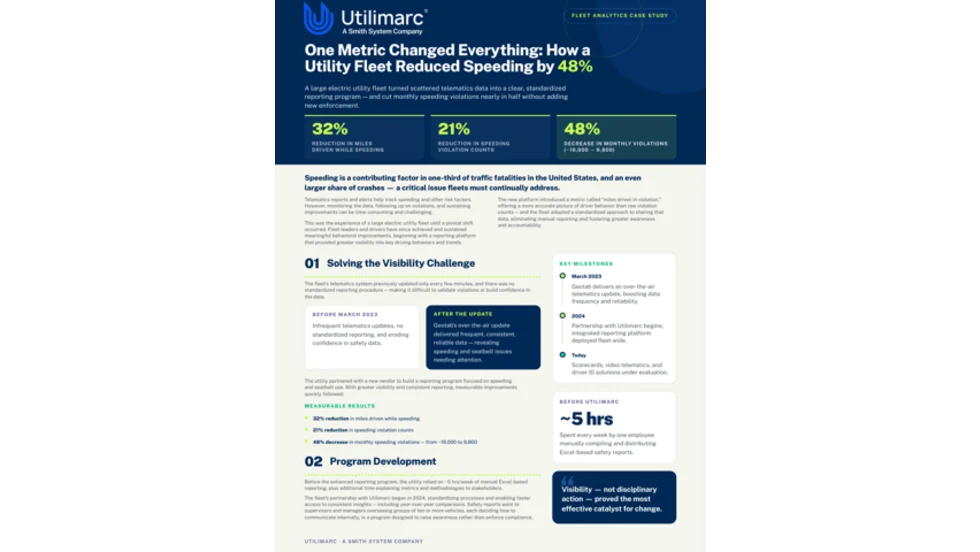
How Better Visibility Cut Speeding Violations by 48%
Fleet leaders don't need more data, they need clearer visibility into what the data is saying. This case study explores how one utility replaced speeding-event counts with a single metric — miles driven in violation — to strengthen safety and significantly reduce speeding violations.
Read More →