





Fleet Tips: 6 Vehicle Tracking System Must-Have Features
How GPS Tracking Improves ETAs and Communication for Service and Delivery Fleets
Need a better way to communicate with your mobile workforce? Read to find out how GPS Tracking helps improves ETAs and driver communication for service and delivery fleets.
December 18, 2019
Getty/alphaspirit
4 min to read
Providing customers with accurate estimated time of arrivals (ETAs) and efficiently communicating with drivers is crucial for businesses in service or delivery industries. Long wait times and the inability to proactively provide updates to customers causes anxiety and frustration, which leads to a poor experience. How well you communicate with drivers and employees has a significant impact on this part of the business.
Before utilizing GPS tracking to add transparency to their processes, some companies wasted hours on the phone each day communicating with drivers. This form of communication consists of finding out current locations, receiving ETAs to their next stop, or to provide updates on their current route - adding stops, providing gate codes, etc.
GPS tracking technology reduces the amount of time spent trying to get a hold of drivers lets you focus on the core of your business.
If you are a service or delivery company looking to solve one or both of these challenges, GPS tracking can be the answer and why you should think about implementing the technology.
Improving ETAs for Customers with GPS Tracking
Providing excellent customer service is the crux of success for service and delivery companies. The power of online reviews and social media is enough to topple any business or exponentially grow it. As previously mentioned, ETAs are a significant factor in determining what kind of experience customers have with your business. In today's world, it's imperative that you have the capability of providing the shortest service window times and accurate ETAs – contacting customers within a certain amount of time before the driver’s arrival.
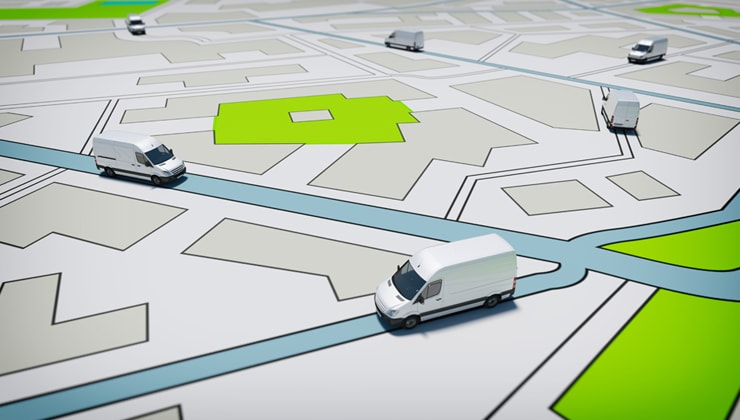
With a GPS tracking system, you have everything you need at your fingertips to accomplish all of this. It enables route planning based on traffic and the location of stops. You can send routes directly to drivers and even update them mid-route if necessary when an emergency or last-second job arises. Alerts are available to know when they leave current job sites and heading to their next location. This functionality will allow you to send accurate ETAs to customers proactively.
Planning each day or week like this can dramatically decrease service and delivery window times for customers, which will lead to a much better experience and improved customer service, not to mention a revenue increase because your drivers will be able to complete more jobs per day.
Improving Driver Communication
Having to make endless calls to drivers throughout the day causes many headaches. It distracts drivers from getting to their next location or delays them on a current job while taking time away from the office staff who are attempting to reach them.
GPS tracking provides dispatchers and office staff real-time maps that have updated locations of all vehicles and assets. This functionality dramatically reduces the need to call or text drivers. Most GPS tracking providers have a "closest to" feature that allows you to plug in an address and see which of your drivers are closest to that location.
GPS tracking software also provides the capability of direct messaging drivers. This functionality makes it extremely convenient to send updates directly to drivers’ smartphones.
Attribute features also enable you to mark vehicles with specific equipment if necessary. This means that you’re always sending the right vehicle and driver to the right job.
The Fuel Savings and Additional Revenue Bonus
A bonus of more efficiently communicating and dispatching drivers to jobs is a substantial reduction if fuel expenditures. A significant component of long window times is because drivers aren't taking the most efficient routes to jobs, intentional or not. This means that they are potentially wasting significant amounts of fuel.
Because GPS tracking software efficiently maps their routes, it should lead to a reduction in fuel usage and monthly fuel costs. It will also likely mean that you can complete more jobs per day, which will lead to additional revenue to your bottom line.
Start Improving Your ETAs and Driver Communication Now!
Don't make your customers wait any longer and begin the process of implementing a GPS tracking system into your business. Speak with experts from top GPS tracking providers on how to implement a solution.
{incontentformtoken}
Subscribe to Our Newsletter
More Telematics
GM Launches OnStar Fleet Intelligence Platform With AI Assistant
The new platform brings vehicle data, order tracking, connected services and fleet analytics into one system, with an AI assistant that can answer fleet questions using natural-language prompts.
Read More →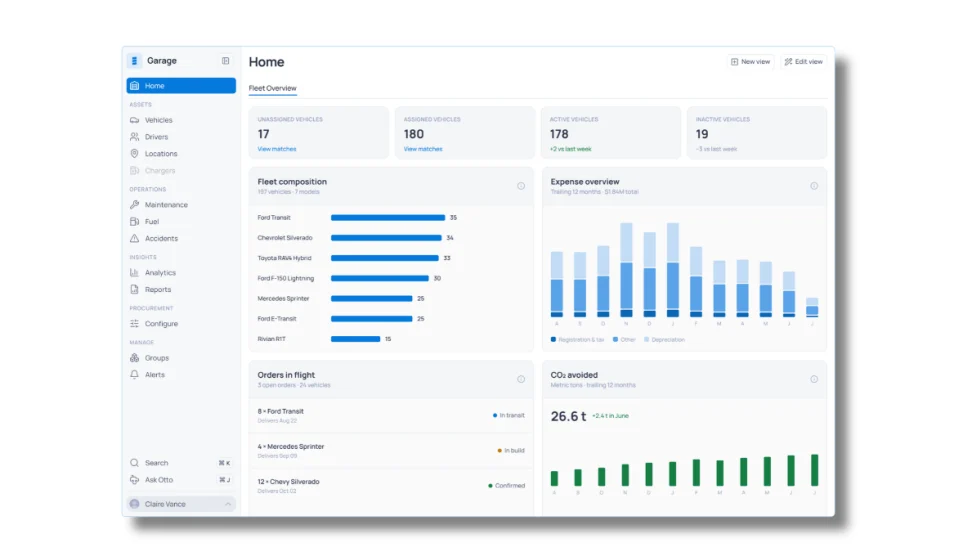
Inspiration Fleet Introduces Garage 2.0 Fleet Intelligence Platform
Fleet managers increasingly have access to data from vehicles, telematics, fuel, charging, and other systems, but those sources don't always communicate with one another. Inspiration Fleet's Garage 2.0 platform brings that information together while letting fleets keep working with different technology and service providers.
Read More →
Inside Inspiration Fleet’s New Platform for Connecting Fleet Data
Inspiration Fleet CTO Chris Getner explains how the new Garage 2.0 platform is designed to connect disparate fleet data and what that could mean for fleet managers in practice.
Read More →
Sponsored•October 1, 2026
Fleet Manager’s Ultimate Playbook: Navigating the New Standard in OEM Connectivity
Rising operating costs, driver safety concerns, and unplanned downtime are putting unprecedented pressure on modern fleets. Discover how fleet managers use embedded OEM connectivity and real-time vehicle data to cut TCO, prevent downtime, and protect drivers without aftermarket telematics hardware.
Read More →
Samsara Driver Perks Adds New Benefit for Corporate Fleet Drivers
The rewards program gives eligible professional drivers access to discounts from more than 50 brands while giving fleets another way to support recruitment, retention, and the driver experience.
Read More →
Inside the Church of Jesus Christ of Latter-day Saints’ Two-Track Telematics Strategy
With 20,000 vehicles and two fundamentally different driver populations, the Church faced a fleet management problem that a single telematics program couldn't solve. How it responded offers a replicable framework for any fleet where one size doesn't fit every driver.
Read More →
How Conversational AI Can Make Fleet Tasks Easier for Drivers
While most generative AI tools help fleet managers interpret data at their desks, Connex2X is applying voice interaction to tasks behind the wheel.
Read More →
Why Fleets Are Creating Dedicated Fleet Analyst Positions
Are fleet analyst positions the new norm? Listen here to find out.
Read More →
Teletrac Navman Begins Next Chapter as Standalone Private Company
What's new with Teletrac Navman and its new owner?
Read More →
Why Fleets Are Creating Dedicated Fleet Analyst Positions
Telematics, AI, EVs, and connected technologies are generating more fleet data than traditional teams can effectively manage. Reed Jackson explains why dedicated fleet analytics roles are emerging to turn that information into better operational decisions.
Read More →