




Related: Personal-Use Charges Trending Upward
Personal-Use Charges Inch Higher Due to Vehicle Costs
Average personal use charges have been on a gradual rise over the past several years, led by vehicle preference and pricing.

Andy Lundin・Former Senior Editor

More than 25% of respondents for the survey reported personal use charges of more than $130, with a majority of this group charging more than $160.
5 min to read
Personal use charges averaged around $139 in Automotive Fleet’s latest annual Personal Use Survey, which was $4 more than what was reported last year. Though relatively consistent with what was reported in 2018, this marks a consecutive year of marginal growth.
Roughly 3% more respondents for the survey this year reported that personal use charges remained the same as the previous year, and averaged out at 79% of total votes.
Meanwhile, the percentage of those who reported an increase was flat at 17%. Personal use charge fluctuation seems to have flattened out after increases were reported at a high of 18% in 2017, which dipped slightly to 16% last year, and bumped up slightly this year.
More than 25% of respondents for the survey reported personal use charges of more than $130, with a majority of this group charging more than $160. This contributed to the incremental personal use charge increase, mentioned earlier, and was countered somewhat by more survey respondents (7% more), overall, charging less than $130.
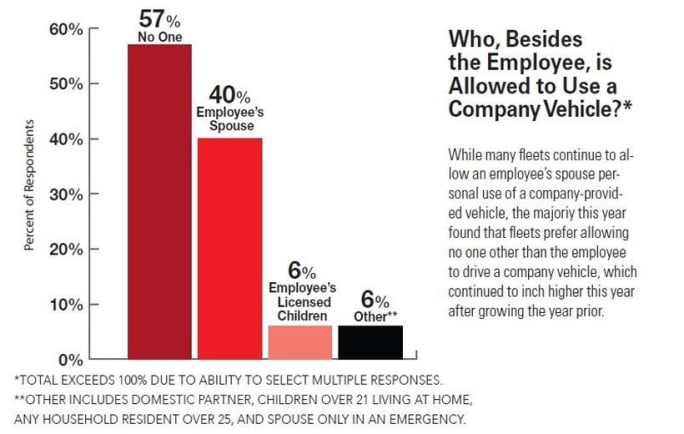
Fewer respondents in the survey this year were lenient on the idea of having anyone other than an employee granted with the ability to drive a fleet vehicle for personal use.
“In general, our customers who are currently charging for personal use have evaluated the amount and many fleets have increased it,” said Susan Luddick, senior strategic consultant for Element Fleet Management. “From a small recent survey, 60% of customers have increased their personal use charge in 2019. Other fleets have a fee charged to drivers when they upgrade their vehicle selection and we have seen some increases in those upcharges.”
Fleet Industry Feedback
One fleet manager who responded to the survey aligned closely with what the averages of the survey had come out to. Catherine Mayall, fleet and card program administrator for IDM&S Purchasing North America, was one of the many who responded to the survey, listing that her average fleet personal use charges were below $130 and that the amount charged had remained the same for several years.
“This was an HR decision,” she said. “We have charged $85 for many years, at least the last three to five years, before I took over fleet administration.”
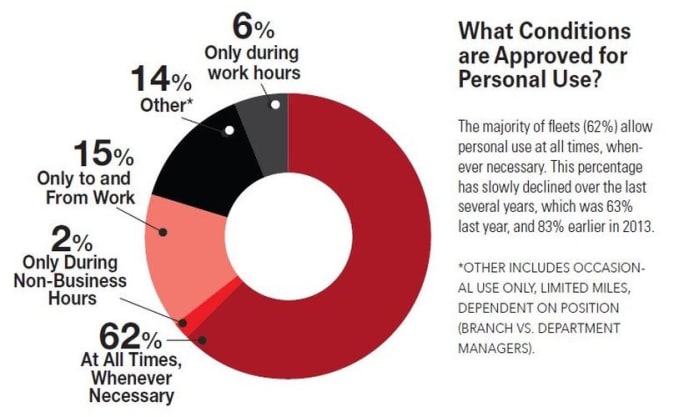
Recently fleets have seen their overall capitalized vehicle costs rise because of the increasing OEM expense.
She added that her company has considered raising the monthly fee for the last couple of years, but that human resources had not settled on a decision yet to do so.
Other companies have also noted a need to raise personal use charging fee, and follow a system that best works for them, said an anonymous fleet manager with an industrial services company.
“We use the IRS vehicle valuation to determine the value of the vehicle and based on the (percentage spent on) commute and personal use assign a value subtract from the employees payroll. The amount varies on a month-to-month basis based on personal usage,” said the anonymous manager.
And because of the system, the anonymous fleet manager said that personal use charges have risen, due to the value of vehicles rising and how they measure personal usage through telematics.
Other industry professionals have also observed a rise on personal use charges, and more than just because of the value of vehicles.
Data from the survey reflected liability concerns among fleet manager as a majority of respondents who allowed for personal use beyond the employee, required MVR checks. (78%)
“Traditionally, there has always been a small increase in vehicle cost due to inflation,” said Eric Miller, senior fleet consultant for Merchants Fleet. “However, recently fleets have seen their overall capitalized vehicle costs rise because of the increasing OEM expense related to adding safety items, like lane departure warning, to their new vehicles. In addition, the OEMs are switching to producing more SUVs and less sedans has also increased the average capitalized cost. Higher maintenance technician wages required to offset labor shortages has led to higher maintenance costs which is also pressuring clients to raise their personal use charge amounts.”
Personal Use Beyond the Employee
Fewer respondents in the survey this year were lenient on the idea of having anyone other than an employee granted with the ability to drive a fleet vehicle for personal use.
This year, 3% more respondents said no one other than the employee is allowed to use a company vehicle, and settled in at 57% overall, according to data from our survey. Following this were those who reported that only the employees spouse was allowed to use a company vehicle, which settled in at 40% of respondents and was 6% lower than what was reported last year. One of the main reasons for this shift was ultimately due to concerns relating to increased liability exposure.
The anonymous fleet manager echoed this thought, noting that his company observed that 73% of accidents occurred after hours.
“So restricting the usage of the vehicle to only company employee for company business has created a reduction in accident frequency,” he said. “The second reason is that we (had) training and MVR records of employees but we did not have training and MVRs for anyone else, so we were adding liability without the ability to regulate who was driving vehicles.”
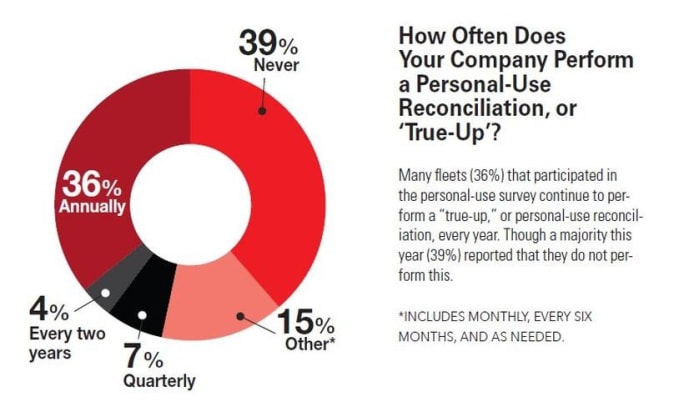
Fewer fleets managers reported performing personal use reconciliation in the latest survey.
Data from the survey reflected this concern among fleet manager as a majority of respondents who allowed for personal use beyond the employee, required MVR checks. (78%)
Other fleets expressed a somewhat more lax perspective of personal use being applied beyond the employee.
“I was told by treasury/insurance that it did not make any significant difference letting the spouses be able to drive the vehicles if they needed to,” said Mayall of IDM&S Purchasing. “Spouses are not to be the main drivers. The employee has to be the primary driver and the fleet vehicle is to be used for all business that they don’t fly for. This decision was made by our past treasurer who also took care of the insurance that we could let the spouses drive the vehicles if needed.”
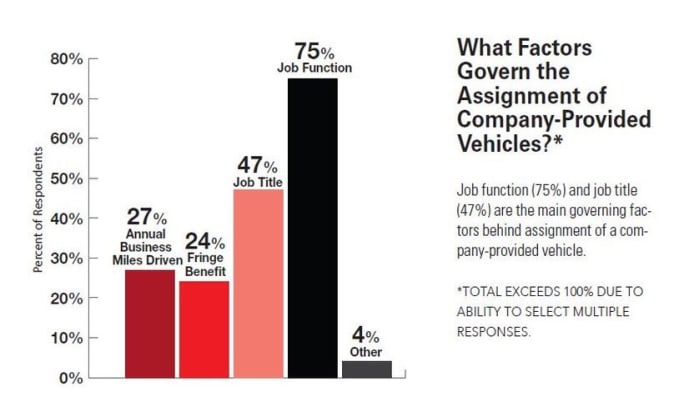
Indeed, predictably, job function was the No. 1 factor that governed the assignment of fleet-provided vehicles.
Subscribe to Our Newsletter
More Operations

How Fleets Can Recruit and Train Veterans for Technician Roles
Here's how the technician shortage has affected uptime for fleets, and what to do about it.
Read More →
Avis Budget Group Deploys Neology Toll Management Technology Across Major Brands
Neology’s neoFleet platform will manage toll transactions and toll-authority operations for vehicles across Avis, Budget, Payless, Budget Truck and Zipcar.
Read More →
Fleet Personal-Use Charges Edge Higher in 2026
Nearly eight in 10 surveyed fleets allow personal use of company vehicles, while just over half of respondents report charging employees for the privilege.
Read More →
The Future of Fleet + What’s Changing Right Now | AF News Recap
Could developments overseas offer a preview of what’s coming for U.S. fleets? This week, we’re looking at the future of AI, autonomy, and electrification, plus Ford Pro’s new certified pre-owned program, smarter vehicle offboarding, and a new way for fleets to manage toll expenses.
Read More →
How to Handle Vehicle Offboarding
What do fleet managers need to do when a driver leaves?
Read More →
Sponsored•October 1, 2026
Fleet Manager’s Ultimate Playbook: Navigating the New Standard in OEM Connectivity
Rising operating costs, driver safety concerns, and unplanned downtime are putting unprecedented pressure on modern fleets. Discover how fleet managers use embedded OEM connectivity and real-time vehicle data to cut TCO, prevent downtime, and protect drivers without aftermarket telematics hardware.
Read More →
U.S. Bank Adds Verra Mobility Toll Management to Voyager Fleet Platform
The integration allows U.S. Bank Voyager fleet customers to manage toll payments and violations alongside fuel, EV charging and maintenance expenses.
Read More →
ADAS Prevents Crashes. But Repairs Cost More | AF News Recap
ADAS-equipped vehicles may crash less often, but they can cost more when they do. This week, we’re breaking down what that tradeoff means for fleets, plus Subaru’s first Forester Wilderness Hybrid, Nissan’s new e-POWER Rogue, and why Calstart has become Catalyst Mobility.
Read More →
Moventum Fleet Management Names Mark Iorillo Head of Sales
Iorillo brings nearly 20 years of fleet management and sales experience to the role, including previous positions at Element Fleet Management, CEI, Donlen and Ryder.
Read More →
Fleet Has a Talent Pipeline Problem. What Comes Next? | AF News Recap
Where will fleet’s next generation of leaders come from? This week, we’re looking at the industry’s talent pipeline, what certification can add to a fleet career, how to build an award-worthy track record, and the return of Automotive Fleet’s Personal Use Survey.
Read More →