




Related: Propane Education & Research Council Updates Fleet Info Online
Exploring Propane as a Fleet Fuel Source
Propane may be a viable option for certain fleets looking for an alternative fuel source. While converting a vehicle to a propane system comes with a high initial cost, the system may come with reduced lifecycle costs over the course of that vehicle's life.
by Eric Gandarilla
June 11, 2019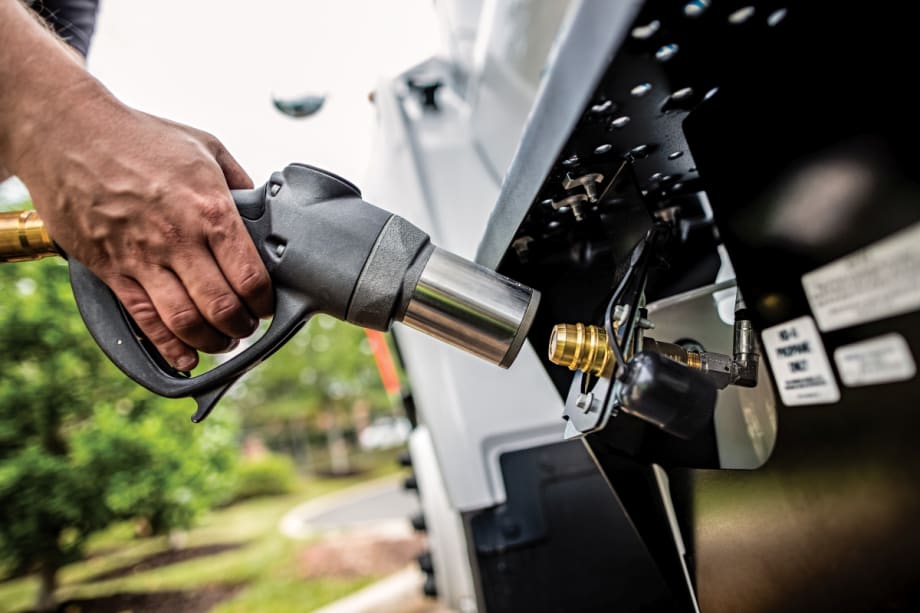
In the first week of May 2019, the national average price per gallon of propane autogas was $1.45. The national average cost of regular grade gasoline was $2.86.
Photo courtesy of PERC.
3 min to read
In an environment with rising gasoline prices, propane could offer a viable option for fleet managers looking for an alternative-fuel source.
There’s a misconception that propane autogas is more expensive than traditional fuels, noted Michael Taylor, former director of autogas development for the Propane Education & Research Council. Taylor ended his nearly eight years as the director of autogas development in 2020.
But, the actual cost of wholesale propane typically falls between the price of oil and natural gas — the two sources of propane, he added.
According to the U.S. Department of Energy, between July 1, 2023 and July 15, 2023, the national average price of gasoline was $3.59 a gallon while propane was $3.25 a gallon.
“There is a small segment of the fleet industry who may have tried propane autogas years ago and wasn’t pleased with the performance,” said Taylor. “Over the past decade [there have been] dramatic improvements in propane engine and fuel system technologies.”
Total Cost of Ownership for a Propane Vehicle
Fleets with light- or medium-duty trucks, delivery vans, sedans, shuttle busses, and school busses are all viable candidates for propane autogas, noted Taylor.
In order to use propane as a fuel source, fleets need to first modify their vehicles’ engines through the use of an EPA or CARB-certified conversion kit.
This presents the biggest hurdle in terms of total cost of ownership for a fleet considering a conversion to propane. The cost to convert a vehicle to accept propane autogas ranges between $6,000 and $12,000, according to the U.S. Department of Energy’s Office of Energy Efficiency & Renewable Energy.
This initial cost is eventually offset through a fuel source that can cost between 30% and 50% less than gasoline, Taylor noted.
However, fuel economy for a propane-powered vehicle does tend to be lower than gasoline vehicles, according to the U.S. Department of Energy. On average, propane-powered vehicles see 5-10% lower miles per gallon than their gasoline alternatives, Taylor noted.
This hit to fuel economy, however; is offset by the considerably lower fueling costs.
Propane’s high octane rating — around 106 compared to gasoline’s 87-93 — along with its low-carbon and low-oil contamination characteristics leads to improved engine life compared to gasoline engines, according to the U.S. Department of Energy. The comparatively cleaner fuel typically leads to lower maintenance costs as well.
When it comes time to retire the vehicle from a company’s fleet, fleet owners have several options in terms of how they can remarket their propane vehicles.
A fleet manager can remarket their propane vehicles as-is, as there are buyers who are looking for vehicles already equipped with propane conversion kits.
“Dependent upon the vehicle’s age and mileage, some buyers will choose to deploy the propane autogas vehicles into their operation while other buyers may choose to remove the high-value components which can be remanufactured and sold as aftermarket parts,” said Taylor.
The inventory of propane trucks in the wholesale market is increasing and the number of buyers for used propane autogas trucks is increasing with it, according to Taylor.
Fleet managers remarketing their propane-converted vehicles can also choose to remove the propane autogas fuel system, reinstall the OEM gasoline fuel system, and remarket the vehicle as a gasoline truck, Taylor added.
Editor's Note: This article was origianlly published in June 2019 and was been updated as of Oct. 2023 to reflect changes.
Subscribe to Our Newsletter
More Green Fleet
Sponsored•October 1, 2026
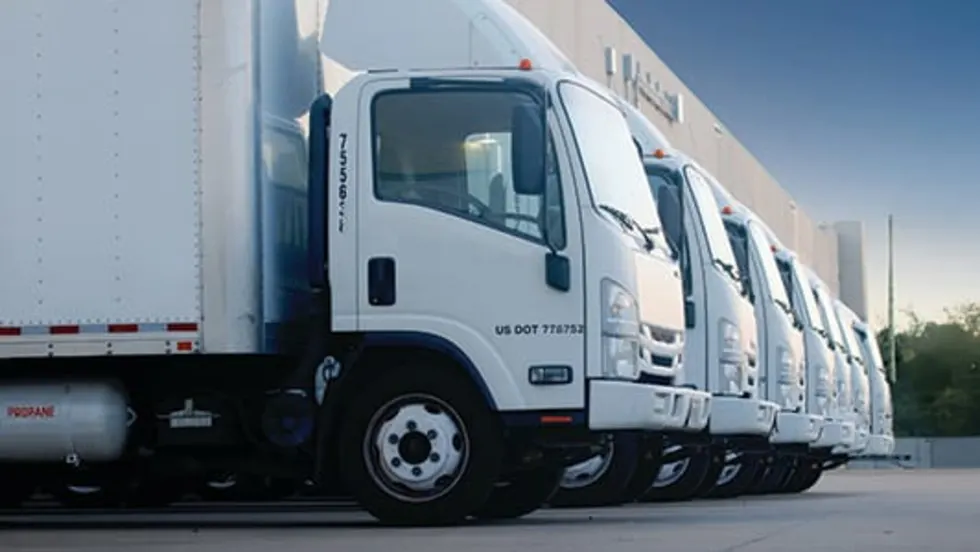
New Propane Autogas Program Offers Fleet Compensation
Qualified commercial fleets can receive $7,500 per eligible propane autogas vehicle and up to $10,000 for new refueling site prep. Learn how the program works and see whether your fleet qualifies.
Read More →
EV Charging Use Is Outpacing Infrastructure Growth
ChargePoint’s 2026 Charging Forward Report points to rising charger use, higher-powered charging, commercial vehicle electrification, and energy-management technology. Here’s what fleets should know.
Read More →
Merchants Fleet Reports 290M EV Miles as Fleets Navigate Changing Electrification Market
From millions in operating savings to hundreds of millions of EV miles, Merchants Fleet’s latest report reveals what’s working and what’s changing in fleet electrification.
Read More →

The EV Breakdown Nobody's Talking About: Why Most Electric Vehicle Roadside Calls Aren't Mechanical Failures
Here's why EV breakdowns are widely misunderstood.
Read More →
ChargePoint Now Available in Energy Pass
ChargePoint and additional planned charging network integrations were added to GM's Energy Pass.
Read More →

First Look: Slate Auto's Electric Fleet Pickup
Could an affordable, modular EV pickup make electrification more practical for fleets?
Read More →
Slate Debuts Colorful, Unique EV Models
A recent media and client event, studded with electric vehicles dressed up on platforms, planted a new position for the manufacturer in the wider EV market. Fleets will find cost-saving advantages.
Read More →
Slate Electric SUV, Pickup Switchable Model Aims For Light-Duty Fleets
Everything about this EV is counterintuitive and understated, making it stand out from the crowd.
Read More →
Inspiration Mobility Acquires Key Electrada Assets
Inspiration Mobility Group has acquired select assets of Electrada, adding the fleet electrification provider's team, technology, and charging infrastructure development capabilities to its energy management business.
Read More →