




What Fleet Drivers Should Do After an Accident
Despite the best laid plans of iron-clad fleet safety policies, accidents will happen, and commercial drivers need to know what to do when the time comes.
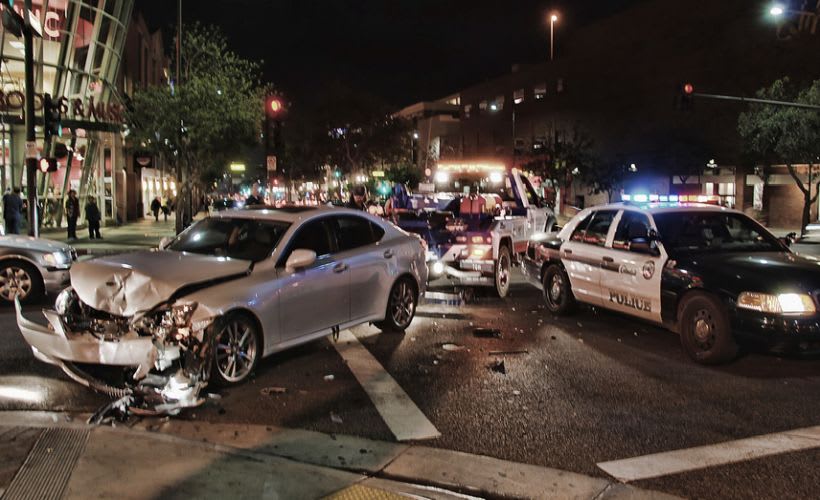
Drivers should follow these 13 steps after they're involved in a collision involving a company vehicle.
Photo via Chris Yarzab/Flickr.
Despite the best laid plans of iron-clad fleet safety policies, accidents will happen, and commercial drivers need to know what to do when the time comes.
The annual accident rate for commercial fleets has reached 20% and some industries, such as pharmaceuticals, are even higher.
The average non-fleet motorist in the U.S. travels 12,000 to 15,000 miles annually, and each year has a one in 15 chance of being involved in a vehicle collision. Most fleet drivers, however, travel 20,000 to 25,000 miles or more each year.
It’s simple math: The more miles on the road, the greater exposure to crash risk.
Whether it is a fender bender or a fatal collision, commercial drivers need to know what steps to take immediately following an accident. It's incumbent upon fleet managers to set an official policy of post-collision best practices.
Your accident kit policy should be kept in the glove compartment of each company provided vehicle, and it should detail the steps to follow at the scene of the accident.
The following are some guidelines offered by an industry-leading fleet manager to help shape an effective policy for your drivers:
Don't move the vehicle unless it is in the way of traffic. If necessary, move the vehicle away from traffic.
In the case of injury to an occupant of either vehicle or an injury to a pedestrian, make sure you call for medical assistance immediately.
Always call the police in the event of an accident, regardless of damage or location of incident.
Obtain the home and business addresses and phone numbers of all passengers and witnesses.
Obtain the names, addresses, and telephone numbers of the other driver, passengers, and witnesses. Additionally, record the color, year, make, model, VIN, and license plate number of the vehicles involved.
Note the seating location of each person in the vehicles.
Get the name of the other driver’s insurance company and policy number.
Write down the time, place of accident, direction of vehicles, road conditions, and weather.
Closely examine the damage to the other vehicle and make notes on the accident report. Take photos of the scene and damages (if a camera is available).
Assess the extent of injuries to others, if any. Record the names of medical personnel involved.
Make no statements regarding who was at fault, even to the police. All the facts of the accident must be determined before fault can be defined.
Provide the following information to the police and include it on the accident report: vehicle owner, insured, liability insurance (from the current insurance card in the glove box of the vehicle), and policy number (from the current insurance card in the glove box of the vehicle).
Remove all items from the vehicle before towing. Call for assistance if you need help removing items from your vehicle.
Nearly 38,800 people lost their lives in motor vehicle accidents in the U.S. in 2015 and additional 4.4 million were seriously injured. Moreover, traffic fatalities increased 6% in 2016, reaching an estimated 40,200 deaths, according to the National Safety Council.
As a fleet manager, it is imperative to provide a culture and policies that keep your drivers as safe as possible while on the road. However, preparing for the worst — by developing a comprehensive accident policy — is equally crucial.
More Safety

Fleet Manager’s Ultimate Playbook: Navigating the New Standard in OEM Connectivity
Rising operating costs, driver safety concerns, and unplanned downtime are putting unprecedented pressure on modern fleets. Discover how fleet managers use embedded OEM connectivity and real-time vehicle data to cut TCO, prevent downtime, and protect drivers without aftermarket telematics hardware.
Read More →
From Driver Well-Being to EV Charging | AF News Recap
Mental health belongs in the fleet safety conversation. This week, we’re looking at five ways fleets can support employee well-being before a crisis, plus Holman’s expansion in Mexico, new one-day Fleet Forward passes, and why EV charging demand is outpacing infrastructure growth.
Read More →
Nexar-Nauto Merger Aims to Give Fleets Better Safety Intelligence Through Larger Driving Dataset
Stefan Heck tells Automotive Fleet that combining more than 10 billion miles of driving history with Nexar's AI models will give fleets deeper insights into driver risk and roadway conditions than either company could provide independently.
Read More →
Don't Wait for a Crisis: 5 Ways to Build Mental Health Into Your Fleet Safety Program
For Suicide Prevention Month, fleet and safety leaders have an opportunity to put mental health where it belongs: at the center of workplace safety.
Read More →
How Camera Data Can Strengthen a Fleet’s Insurance Renewal
Insights from a commercial insurance carrier and a broker show how fleets can turn video telematic data, driver coaching, and improved claims results into a stronger case at insurance renewal.
Read More →
The Safest Fleets Aren’t the Ones with the Most Technology
You’ve made the telematics investment. Here’s how to capture the other half of its value and build the safest fleet on the road.
Read More →
Hidden in Plain Sight: Fleet Compliance Risks
Fleet compliance isn't just about having policies — it's about consistently enforcing them. This practical guide reveals six hidden compliance risks common in public sector and shared fleet operations and outlines proven strategies to improve visibility, accountability, and audit readiness
Read More →
NETS Sets 2026 Fleet Safety Benchmark Conference for Indianapolis
The Sept. 15–17 program will feature fleet benchmarking data, case studies, emerging technologies, and implementation strategies while running alongside the NSC Safety Congress & Expo.
Read More →
Off-the-Job Crashes Account for 43% of Employers’ $61.7 Billion Crash Burden
NETS quantifies costs dispersed across fleet, risk, HR, and other departments while providing new per-crash benchmarks for employers.
Read More →
Ram Recalls More Than 1.27 Million 1500 Pickups for Seat Belt Anchor Issue
The recall affects certain 2019-2026 Ram 1500 pickups that may have improperly attached second-row seat belt buckle anchors.
Read More →