




Self-Driving Startup to Launch Ride-Hailing in Texas
Drive.ai will gradually on-board partners into the program and allow Frisco residents access to its ride-hailing app beginning in July.

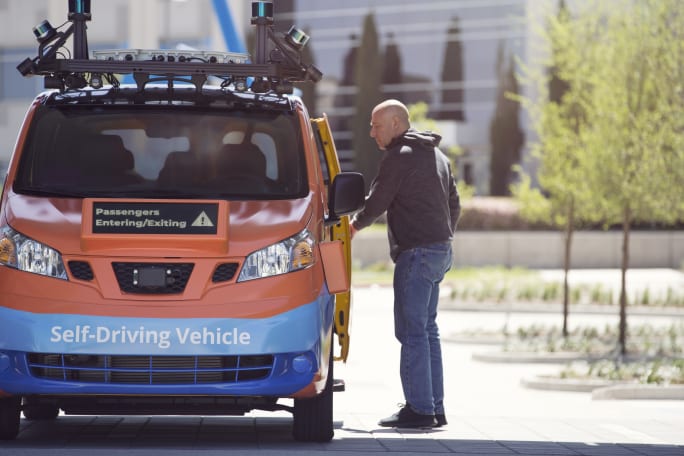
Drive.ai’s self-driving, on-demand service will be operated in conjunction with Frisco TMA, a public-private partnership dedicated to bringing innovative last-mile transportation options to the growing population of Frisco. Photo: Drive.ai
Photo via Drive.ai.
California-based self-driving car company Drive.ai will launch a pilot program to bring an on-demand, self-driving car service to Frisco, Texas beginning in July, the company announced today.
Drive.ai will offer rides to over 10,000 people in self-driving vehicles within a geofenced area comprised of retail, entertainment, and office space. The company is partnering with the Frisco Transportation Management Association (TMA).
The initial pilot will run for six months, beginning with fixed pickup and drop-off locations around HALL Park and The Star, and with planned expansion into Frisco Station. This program is a milestone for the State of Texas, marking the first time members of the public will have access to an on-demand, self-driving car service on public roads.
This pilot program is a model for the deployment of self-driving vehicles in a public setting, one of the first of its kind in the nation, and a major step forward for the industry. Drive.ai’s self-driving, on-demand service will be operated in conjunction with Frisco TMA, a public-private partnership dedicated to bringing innovative last-mile transportation options to the growing population of Frisco.
Related Content: Ford Begins Testing Driverless Delivery Service in Florida
Leading up to the July launch date, office employees, residents, and patrons of TMA's partners will gradually on-board into the program, gaining access to Drive.ai’s ride-hailing smartphone app. Once the program is live, riders will use the app to hail complimentary on-demand rides in self-driving cars that connect to popular destinations in one of Frisco’s most lively areas.
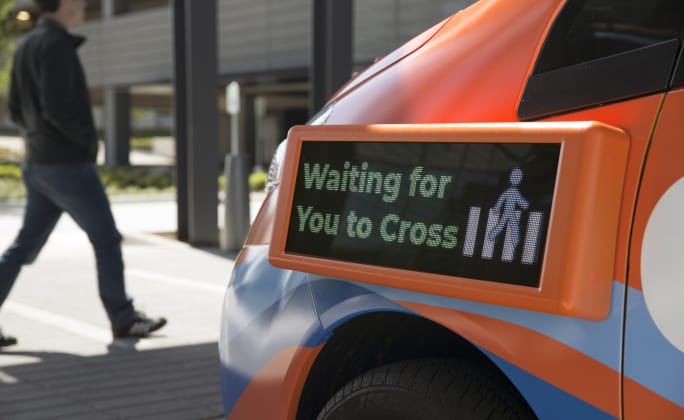
Drive.ai's vehicles will be painted a highly-visible orange, and they will feature four external screens that communicate the vehicles’ intended actions to pedestrians and other drivers on the roads. Photo: Drive.ai
“Frisco is recognized as a leader in using ‘smart,’ innovative traffic technologies,” said Frisco Mayor Jeff Cheney. “Drive.ai’s autonomous vehicles will help people get around one of our most vibrant, commercial areas along Frisco’s North Platinum Corridor. Today definitely marks a mobility milestone for our entire region. It also gets us closer to achieving one of our council’s ‘Top Ten’ goals, which is to improve traffic throughout Frisco...”
Drive.ai is dedicated to partnering with cities and transit authorities to safely deploy self-driving technologies in a scalable, measured way. Leading up to the July launch, Drive.ai will work with its partners to engage with members of the Frisco community, ensuring they are educated about and comfortable with the self-driving program.
In addition, informational signage will be placed throughout the route, the vehicles will be painted a highly-visible orange, and they will feature four external screens that communicate the vehicles’ intended actions to pedestrians and other drivers on the roads.
“Self-driving cars are here, and can improve the way we live right now,” said Sameep Tandon, co-founder and CEO of Drive.ai. “Our technology is safe, smart, and adaptive, and we are ready to work with governments and businesses to solve their transportation needs. Working with the City of Frisco and Frisco TMA, this pilot program will take people to the places they want to go and transform the way they experience transportation.”
Related Content: Aptiv, Lyft to Launch 30 Autonomous Vehicles in Las Vegas
Originally posted on Auto Rental News
More Safety

Nexar-Nauto Merger Aims to Give Fleets Better Safety Intelligence Through Larger Driving Dataset
Stefan Heck tells Automotive Fleet that combining more than 10 billion miles of driving history with Nexar's AI models will give fleets deeper insights into driver risk and roadway conditions than either company could provide independently.
Read More →
Don't Wait for a Crisis: 5 Ways to Build Mental Health Into Your Fleet Safety Program
For Suicide Prevention Month, fleet and safety leaders have an opportunity to put mental health where it belongs: at the center of workplace safety.
Read More →
How Camera Data Can Strengthen a Fleet’s Insurance Renewal
Insights from a commercial insurance carrier and a broker show how fleets can turn video telematic data, driver coaching, and improved claims results into a stronger case at insurance renewal.
Read More →
The Safest Fleets Aren’t the Ones with the Most Technology
You’ve made the telematics investment. Here’s how to capture the other half of its value and build the safest fleet on the road.
Read More →
Hidden in Plain Sight: Fleet Compliance Risks
Fleet compliance isn't just about having policies — it's about consistently enforcing them. This practical guide reveals six hidden compliance risks common in public sector and shared fleet operations and outlines proven strategies to improve visibility, accountability, and audit readiness
Read More →
NETS Sets 2026 Fleet Safety Benchmark Conference for Indianapolis
The Sept. 15–17 program will feature fleet benchmarking data, case studies, emerging technologies, and implementation strategies while running alongside the NSC Safety Congress & Expo.
Read More →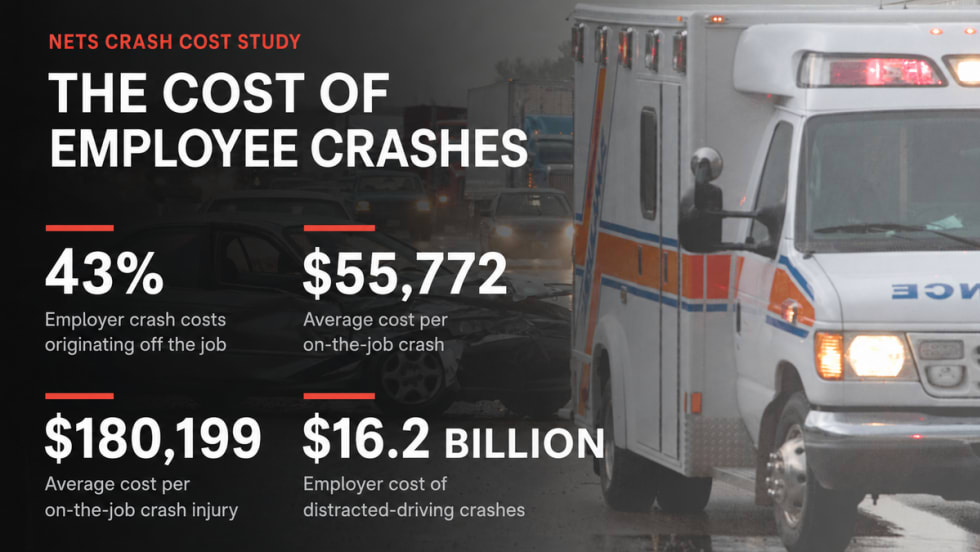
Off-the-Job Crashes Account for 43% of Employers’ $61.7 Billion Crash Burden
NETS quantifies costs dispersed across fleet, risk, HR, and other departments while providing new per-crash benchmarks for employers.
Read More →
Ram Recalls More Than 1.27 Million 1500 Pickups for Seat Belt Anchor Issue
The recall affects certain 2019-2026 Ram 1500 pickups that may have improperly attached second-row seat belt buckle anchors.
Read More →
How Better Visibility Cut Speeding Violations by 48%
Fleet leaders don't need more data, they need clearer visibility into what the data is saying. This case study explores how one utility replaced speeding-event counts with a single metric — miles driven in violation — to strengthen safety and significantly reduce speeding violations.
Read More →
Operation Safe Driver Week: Why the Industry's Oldest Safety Campaign Still Matters to Fleets
A look at how a 2007 enforcement initiative became one of the most consequential weeks on the fleet safety calendar, and what it means for your drivers in 2026.
Read More →