




5 U.S. Cities Rank Among World’s Most Traffic-Congested Areas
For the sixth consecutive year, Los Angeles topped the list of the world’s most gridlocked cities, with drivers spending 102 hours in congestion in 2017 during peak time periods, according to the annual INRIX Global Traffic Scorecard.
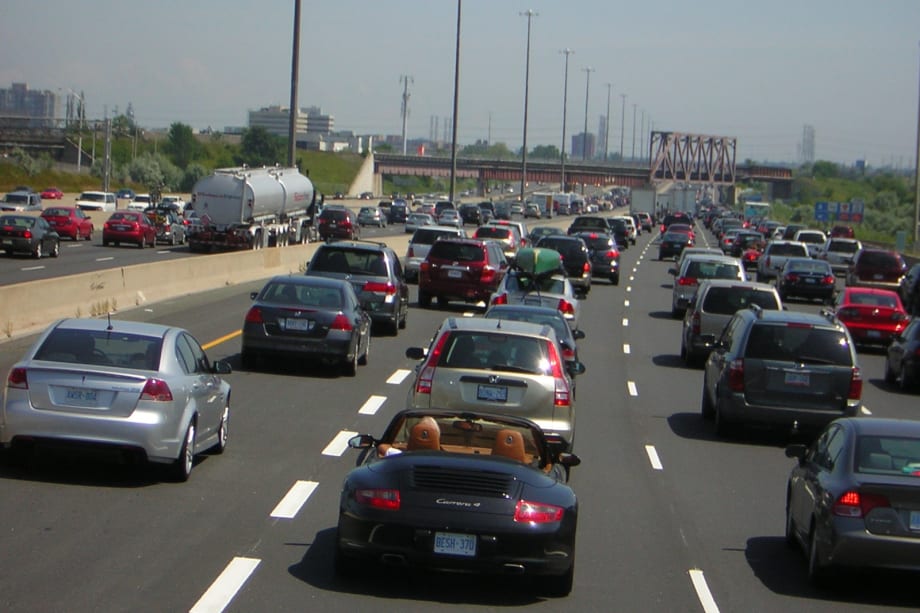
Photo via Haljackey/Wikimedia.
Photo via Haljackey/Wikimedia.
For the sixth consecutive year, Los Angeles topped the list of the world’s most gridlocked cities, with drivers spending 102 hours in congestion in 2017 during peak time periods, according to the annual INRIX Global Traffic Scorecard.
The U.S. accounted for five of the Top 10 cities worldwide with the worst traffic congestion. In addition to Los Angeles, New York City tied with Moscow for second place with 91 hours in congestion, San Francisco (79 hours) ranked fifth, Atlanta (70 hours) ranked eighth, and Miami (64 hours) ranked tenth.
INRIX analyzed 1,360 cities across 38 countries. Based on the findings, the U.S. ranked as the most congested developed country in the world, with drivers spending an average of 41 hours a year in traffic during peak hours. The report concludes that congestion costs drivers nearly $305 billion in 2017, an average of $1,445 per driver.
While the economic impact is one issue, gridlock can also have a major impact on road safety. Experts have long known that frayed nerves from sitting in hours of congestion can lead to aggressive behavior.
A study published in 2016 by the AAA Foundation for Traffic Safety found that 78% of U.S. drivers reported having engaged in at least one aggressive driving behavior during the past year. The most common behaviors included: Intentionally tailgating another vehicle (50.8%); yelling at another driver (46.6%); and honking the horn “to show annoyance or anger” (44.5%). The study suggests that underlying issues in the driving environment, such as congestion, can contribute to aggressive driving.
However, the new data from INRIX implies that traffic congestion across the country is unlikely to clear up anytime soon. Additional noteworthy facts from the report include:
New York’s Cross Bronx Expressway topped the list as the U.S.’s worst corridor for the third year in a row, with the average driver wasting 118 hours per year
Commuters within Boston and San Francisco had the highest U.S. congestion rates on arterial and city streets during the peak commute hours (23 percent)
The worst downtown slowdowns were in El Paso, Texas, where speeds dropped from 43 mph at free flow speeds to 5 mph when congested
New York businesses suffered the most from congestion with an average of 14 percent of travel time on weekdays in gridlock and where drivers wasted the most daytime hours stuck in traffic in the entire U.S.
Santa Cruz, Calif., had the worst overall daytime congestion on arterial and highways, with drivers spending 12 percent of their days sitting in traffic.
Read the full report here.
More Safety

Tips for Driving Safely on Halloween Night
This video features a reminder from the Connecticut Department of Transportation (DOT) and the Connecticut Police Chiefs Association, urging drivers to prioritize safety this Halloween.
Read More →
IIHS Crash Avoidance Tests Reveal Safety Gaps in Cargo Vans and Work Trucks
New crash-avoidance ratings from the Insurance Institute for Highway Safety reveal inconsistent performance among commercial vehicles, with several popular cargo vans and heavy-duty pickups struggling to avoid collisions with other vehicles and pedestrians.
Read More →
What’s Next for Fleet? Safety, AI & Industry Recognition | AF News Recap
Could your company's culture be encouraging distracted driving? This week, we're exploring how workplace expectations affect driver safety, what AI, EVs, and autonomous vehicles could mean for the future of fleet management, and how fleet professionals can strengthen their award nominations.
Read More →
Does Your Fleet's Culture Encourage Distracted Driving?
What happens when the people responsible for enforcing safety rules are the ones setting the wrong example? The answer may reveal why some of the biggest risks to fleet drivers have little to do with what's written in the employee handbook.
Read More →
Fleet Manager’s Ultimate Playbook: Navigating the New Standard in OEM Connectivity
Rising operating costs, driver safety concerns, and unplanned downtime are putting unprecedented pressure on modern fleets. Discover how fleet managers use embedded OEM connectivity and real-time vehicle data to cut TCO, prevent downtime, and protect drivers without aftermarket telematics hardware.
Read More →
From Driver Well-Being to EV Charging | AF News Recap
Mental health belongs in the fleet safety conversation. This week, we’re looking at five ways fleets can support employee well-being before a crisis, plus Holman’s expansion in Mexico, new one-day Fleet Forward passes, and why EV charging demand is outpacing infrastructure growth.
Read More →
Nexar-Nauto Merger Aims to Give Fleets Better Safety Intelligence Through Larger Driving Dataset
Stefan Heck tells Automotive Fleet that combining more than 10 billion miles of driving history with Nexar's AI models will give fleets deeper insights into driver risk and roadway conditions than either company could provide independently.
Read More →
Don't Wait for a Crisis: 5 Ways to Build Mental Health Into Your Fleet Safety Program
For Suicide Prevention Month, fleet and safety leaders have an opportunity to put mental health where it belongs: at the center of workplace safety.
Read More →
How Camera Data Can Strengthen a Fleet’s Insurance Renewal
Insights from a commercial insurance carrier and a broker show how fleets can turn video telematic data, driver coaching, and improved claims results into a stronger case at insurance renewal.
Read More →
The Safest Fleets Aren’t the Ones with the Most Technology
You’ve made the telematics investment. Here’s how to capture the other half of its value and build the safest fleet on the road.
Read More →