




Next-Gen Employees Attach Less Importance to Face-to-Face Meetings
The value of face-to-face meetings is beginning to be questioned by younger generation employees who have only known a world interconnected by the internet, social media, and FaceTime.

According to survey results, 65% of the global respondents indicated they talk to peers more frequently via texting or a mobile device than in person, with that number even higher in English-speaking nations.
Photo: Automotive Fleet
Today’s fleet industry was founded on the company sales car almost 80 years ago. The sales car became a corporate tool to transport sales personnel from meeting to meeting within assigned sales territories and carry product samples, literature, and point-of-sale merchandise.
In addition to TCO considerations, the expenditure of corporate funds to provide company sales vehicles was justified by the universally accepted value of face-to-face meetings. This sales truism advocates getting away from your desk and into the field to meet face-to-face with customers and prospective customers.
However, the value of face-to-face meetings is beginning to be questioned by the younger generation of employees who have only known a world interconnected by:
The internet.
Social media.
FaceTime.
In particular, they question the cost-effectiveness of traveling by car from point A to point B, its negative impact on corporate sustainability goals, the inefficient use of time lost behind the wheel of a vehicle, and being a major contributory factor to distracted driving as employees multitask during unproductive “windshield time.”
Worldwide Phenomenon
The next generation of managers will be digital natives, who forged relationships using social media. This mindset promises to change the way companies conduct business, communicate among themselves, and interact in seller-buyer relationships.
The two generational groups typically examined are millennials born between 1980 and 1995 and Generation Z born between 1995 and 2012. Gen Z has the distinction of being the first generation to be born into a cellular world enabled by ever-more sophisticated smartphones.
A survey conducted in September 2017, found that 7 in 10 millennials and Gen Z prefer to communicate digitally — mostly by text message — than in person. LivePerson, a business solutions provider, polled more than 4,000 adults between the ages of 18 and 34 in six countries – the U.S., the UK, Australia, France, Germany, and Japan.
As background, LivePerson is best known as the developer of LiveEngage, a cloud-based messaging platform that allows companies to talk with visitors in real-time on websites, mobile, and social networks.
According to the survey results, 65% of the global respondents indicated they talk to peers more frequently via texting or a mobile device than in person, with that number even higher in English-speaking nations. In both the U.S. and in the UK, about 74% of millennials and Gen Z communicate digitally more frequently with others than talking to them.
From a business perspective, nearly 70% of the group surveyed said they could foresee a future in which all purchases are made online, and most prioritized using technology when they needed assistance with a product or service.
This new workforce will feel very comfortable with the next generation of business-focused social media. Already, Facebook has unveiled “Workplace by Facebook,” which lets businesses create their own social networks. Workplace is a collaborative platform run by Facebook that was started on October 10, 2016.
Workplace may be used to communicate via groups, to chat with colleagues and offers the social networks features in a corporate environment. Using Workplace, employees can create a new work account to connect with coworkers. This account is separate from a personal Facebook profile, but works in similar ways. Increasingly, a connected workplace will be viewed as a more productive workplace and provide an alternative to out-of-office travel.
Workplace Transition to Majority Digital Natives
In terms of fleet management, disintermediation is a process that provides direct access to a product, service, or information without requiring a vehicle to travel from point A to point B to connect a seller with a buyer.
One example of forthcoming disintermediation of vehicles is the next generation of remote visualization technologies, which I foresee becoming more prevalent, easier to use, and increase in popularity as a key communication medium for next generation of employees and customers.
As corporate generational demographics change, there will be a growing personal preference to communicate remotely versus driving in a vehicle to a specific location for a face-to-face meeting. Remote visualization will be viewed as a cost-effective and “smart” way to conduct business. Driving somewhere to have the same one-hour meeting will increasingly be viewed as an “old school” business practice that is neither cost-effective nor time-efficient and which increases the corporate carbon footprint.
Despite this, the next generation of workers will continue to meet face-to-face, but, I do foresee them more inclined to use alternate communication channels, which promises to proliferate as the next-generation communication technology increases in sophistication and capability. In addition, the generational transition occurring in the workforce will result in a more tech-savvy senior management, dominated by digital natives.
This new workforce and management will demand and accelerate adoption of technological solutions in sales operations, which, by default, will impact fleet operations. I envision future generations of social media will become the new communication medium of choice.
At many companies, their technology platform has lagged behind consumer technology. This transition to a workplace dominated by digital natives will create greater demand by management and drivers to match corporate capabilities with that available in the consumer market, which will usher interesting alternatives to traditional business practices.
Let me know what you think. Leave a comment below.
More Blog Posts

Fleets Want Trust Restored with Suppliers
During this period of ongoing supply constraints, the trust that fleet managers had with OEMs, upfitters, and dealers has been strained. Fleet managers say they have had too many experiences over the past three years coping with erroneous information, adjusting to multiple price increases, and feeling betrayed by inadequate transparency from suppliers.
Read More →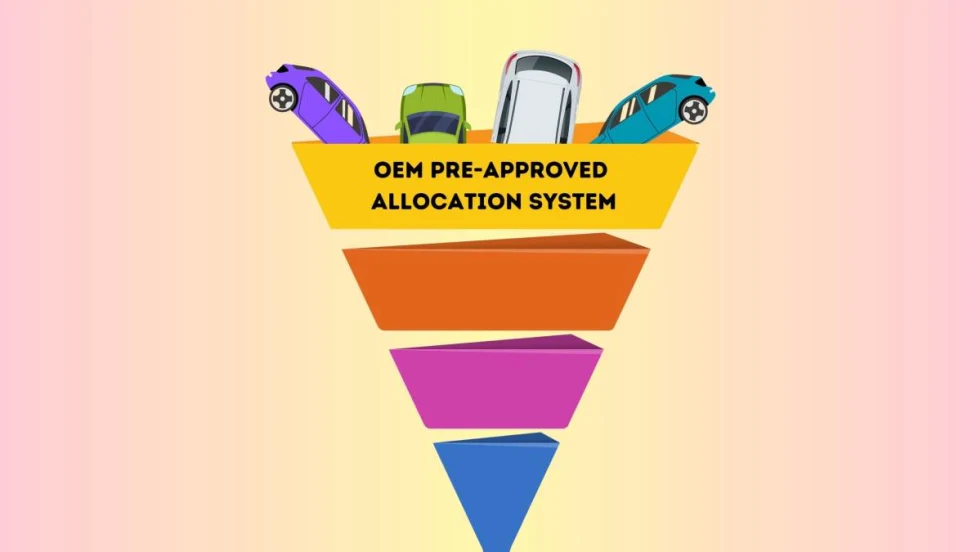
Scheduled Replacement Cycles Are Becoming a Distant Memory
The ongoing difficulty in sourcing replacement vehicles is forcing companies to extend the service lives of vehicles that are unable to be replaced, which, inevitably, increases unscheduled maintenance expenses.
Read More →
Fleet Simplification is the Antidote to Asset Variability
Fleet simplification identifies asset functions to uncover commonality among the equipment and assets. Simplification increases operational efficiency as end-users become accustomed to the controls, displays, and operation of less diverse units.
Read More →
The Dangers of Static Fleet Policies
A fleet policy is a living document, flexible enough to adapt to evolving business priorities, developing industry trends, and changing industry best practices and standards.
Read More →
Short-Term vs. Long-Term Cost Reductions
Corporate procurement staff are often driven by short-term, immediate cost reductions. However, a longer perspective to soft cost savings is critical because fixating on short-term results will hurt a company in the long run.
Read More →
Uptick in Unscheduled Maintenance Increasing Vehicle Downtime
Fleet data analysis can identify recurring downtime issues. It’s important to determine the root causes of downtime so procedures can be developed to minimize such problems.
Read More →
Eliminate Needless Curb Weight to Maximize ICE & EV Efficiencies
Vehicle weight relates directly to fuel economy. In today’s era of electrification, there is also a direct correlation between vehicle weight and battery range.
Read More →
Tech Dependence Risks Dumbing Down Fleet Manager Expertise
The line between creative thinking and problem solving and doing what the data indicates is thin. To lead in fleet management, you need to balance understanding the fundamentals and embracing what smart technology offers.
Read More →
Leverage the Synergy of Safe Driving to Achieve Sustainability and Cost Goals
Safe driving, emission reductions, and cost containment can all be achieved at the same time.
Read More →
The Playbook for Fleet Manager Success
There are many paths to success — most of them involve being flexible, open-minded, and willing to learn.
Read More →