




Related: Brenda Davis Named 2015 AF Professional Fleet Manager of the Year
The Changing World of Fleet
While sometimes challenging, there is no denying that the world of fleet management is changing. To be seen as the “best of the best” today requires dedication to the profession and a strong desire to raise the bar.
by Dan Frank
October 9, 2015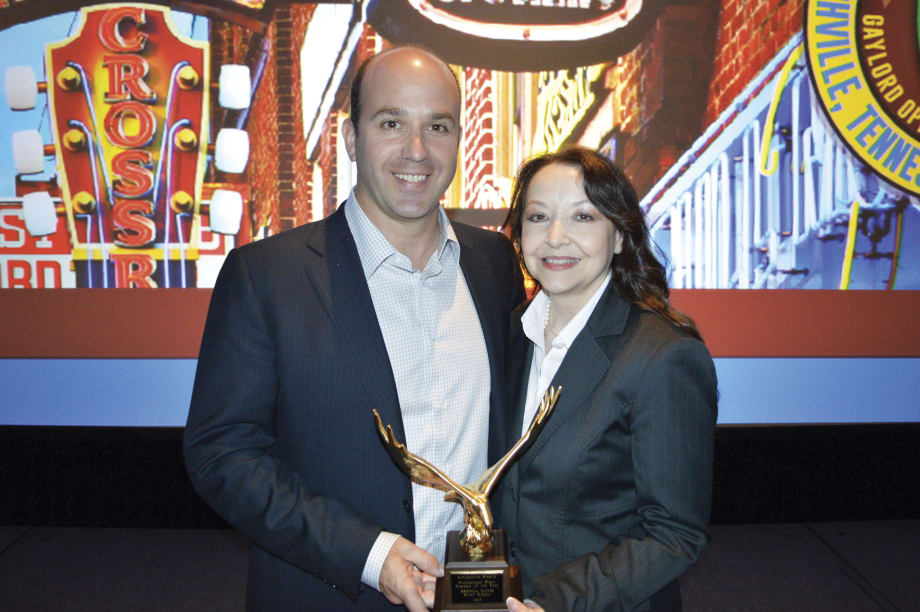
Dan Frank, president of Wheels Inc., and Brenda Davis, fleet commodity manager for Baker Hughes and 2015 Professional Fleet Manager of the Year, celebrate this year’s recognition.
3 min to read
Dan Frank, president of Wheels Inc., and Brenda Davis, fleet commodity manager for Baker Hughes and 2015 Professional Fleet Manager of the Year, celebrate this year’s recognition.
We once again have a terrific field of candidates for Automotive Fleet’s Professional Fleet Manager of the Year award. While this has always been a very prestigious award, it seems like, with each passing year, the level of effort, dedication, and skill required to truly establish oneself as an outstanding fleet manager continues to increase.
The Challenges of Tech
Indeed, the standard “job description” for a typical fleet manager today involves a much more complex set of responsibilities than it traditionally did. Fleet managers are often tasked not only with overseeing the day-to-day fleet operations, but also with managing procurement initiatives, conducting manufacturer negotiations, evaluating the supply chain, overseeing safety and risk mitigation, keeping track of regulatory changes, and understanding a marketplace that continues to evolve at an extremely rapid pace.
To make matters even more interesting, many vehicles today have 40 or more microprocessors and more than 100 million lines of code, in addition to a plethora of sensors, cameras, and communications devices.
This type of technology provides a host of useful new features that are boosting vehicle safety, efficiency, and usability in ways that seemed impossible only a few years ago.
On the other hand, it brings a number of new challenges that can be difficult for fleet managers to address, including hacking, system quality and upgrades, driver distraction, and hardware compatibility. Many drivers took an educational course before these features existed and don’t know how to properly use newer technology such as adaptive cruise control, not to mention those of us who still pump our ABS brakes.
But, that’s just the tip of the iceberg. Volatile oil prices have made it difficult to project fuel costs. A greater focus on quality and safety by the manufacturers and National Highway Traffic Safety Administration (NHTSA) has led to a record number of recalls. And, an improved retail market for new vehicles has meant vehicle production and delivery schedules that, at times, are more protracted for fleets.
Evolution of Fleet Management
As we look forward, we will continue to face more challenges and opportunities to enhance the safety and productivity of our drivers. Fleet managers will be faced with accounting changes, rising fuel economy standards, new-vehicle technologies, and evolving transportation models from ride-sharing to autonomous vehicles.
Suffice to say, this year’s Professional Fleet Manager of the Year nominees are raising the bar in terms of performance, versatility, and resourcefulness. They’ve managed to turn today’s challenges into opportunities to drive efficiency, safety, and cost savings for their fleets.
We commend them on all the success they’ve already achieved and look forward to the leadership roles they’ll take in the industry going forward.
Dan Frank is the president of Wheels Inc., and leads virtually all of Wheels’ business units. He is also president of Wheels Leasing Canada, Ltd., and chairman of Ixe Fleet, Wheels’ joint venture in Mexico.
Subscribe to Our Newsletter
More Operations

How Fleets Can Recruit and Train Veterans for Technician Roles
Here's how the technician shortage has affected uptime for fleets, and what to do about it.
Read More →
Avis Budget Group Deploys Neology Toll Management Technology Across Major Brands
Neology’s neoFleet platform will manage toll transactions and toll-authority operations for vehicles across Avis, Budget, Payless, Budget Truck and Zipcar.
Read More →
Fleet Personal-Use Charges Edge Higher in 2026
Nearly eight in 10 surveyed fleets allow personal use of company vehicles, while just over half of respondents report charging employees for the privilege.
Read More →
The Future of Fleet + What’s Changing Right Now | AF News Recap
Could developments overseas offer a preview of what’s coming for U.S. fleets? This week, we’re looking at the future of AI, autonomy, and electrification, plus Ford Pro’s new certified pre-owned program, smarter vehicle offboarding, and a new way for fleets to manage toll expenses.
Read More →
How to Handle Vehicle Offboarding
What do fleet managers need to do when a driver leaves?
Read More →
Sponsored•October 1, 2026
Fleet Manager’s Ultimate Playbook: Navigating the New Standard in OEM Connectivity
Rising operating costs, driver safety concerns, and unplanned downtime are putting unprecedented pressure on modern fleets. Discover how fleet managers use embedded OEM connectivity and real-time vehicle data to cut TCO, prevent downtime, and protect drivers without aftermarket telematics hardware.
Read More →
U.S. Bank Adds Verra Mobility Toll Management to Voyager Fleet Platform
The integration allows U.S. Bank Voyager fleet customers to manage toll payments and violations alongside fuel, EV charging and maintenance expenses.
Read More →
ADAS Prevents Crashes. But Repairs Cost More | AF News Recap
ADAS-equipped vehicles may crash less often, but they can cost more when they do. This week, we’re breaking down what that tradeoff means for fleets, plus Subaru’s first Forester Wilderness Hybrid, Nissan’s new e-POWER Rogue, and why Calstart has become Catalyst Mobility.
Read More →
Moventum Fleet Management Names Mark Iorillo Head of Sales
Iorillo brings nearly 20 years of fleet management and sales experience to the role, including previous positions at Element Fleet Management, CEI, Donlen and Ryder.
Read More →
Fleet Has a Talent Pipeline Problem. What Comes Next? | AF News Recap
Where will fleet’s next generation of leaders come from? This week, we’re looking at the industry’s talent pipeline, what certification can add to a fleet career, how to build an award-worthy track record, and the return of Automotive Fleet’s Personal Use Survey.
Read More →