




Are Drivers Putting Safety First?
From management leadership down the ladder to each driver, the importance of driving safety must be a mission-critical part of an organization’s DNA.

A committment to driver safety can deliver ROI when matched with driver safety technology.

A committment to driver safety can deliver ROI when matched with driver safety technology.
At a Glance
To create a safety culture, fleet managers should:
Start with the data.
Assess the risks.
Get the Board of Directors “on board.”
Communicate the “rules of the road.”
Use technology for measurement.
Drivers face ongoing pressure to deliver goods or services on schedule, while also dealing with roadway congestion and various distractions. According to Trimble, best known for its GPS technology, the majority of drivers admit to eating or using a cell phone when behind the wheel.
Data from the Network of Employers for Traffic Safety (NETS) state that about a quarter of drivers will read or take care of personal grooming while driving. All drivers are affected by the safety implications these distractions cause.
Studies consistently show that the top contributors to crashes are both external distractions and driving behavior, including driving too fast for the conditions, speeding around curves, and illegal maneuvers. While managers are limited in what they can do about external distractions, driving behavior is something they can truly influence.
Many fleet managers create programs that bring together various safety-related communications, incentives, and training to promote a safe driving culture. Various consulting groups work with managers to assess an organization’s crash history, identify improvement targets, and build a new personality for the business — creating a safe driving culture.
Some areas to adjust that can help encourage safer driving culture are routing, scheduling, and dispatch.
Creating a Safe-Driving Culture
Investing in a safe driving corporate culture can pay off threefold: It helps drivers stay safe, reduces crash costs, and minimizes risk to an organization. Jeff Colburn, leader of UK Marsh Risk Consulting, said current health and safety legislation places much responsibility on the employer for employees involved in driving collisions while working.
“There’s a belief among some employers that they don’t need to worry about managing occupational road risk if their employees drive their own vehicles, or if a fleet management company handles its fleet,” Colburn said. “But, irrespective of whom the vehicle belongs to, management of occupational road risk remains the responsibility of the employer.”
Creating a safe driving culture involves communicating safety across the entire organization; this means that from board leadership down to each driver, the importance of driver safety is understood to be as much a mission-critical part of the organization’s DNA, as marketing and customer service.
Whether the fleet consists of five vehicles or more than 10,000, there are five key components to include in any campaign to create a safe driving culture:
1. Start with the Data. Look at the organization’s recent history of incidents and associated costs. Knowing where the fleet is starting from helps synch plans with the realities each organization faces. It also allows for the ability to measure real improvement. Try to assess the following areas over the past three years:
What are the fleet’s collision, incident, and injury rates per million miles?
What are the direct costs of repairs, fees, legal expenses, and premium increases?
If possible, estimate any indirect costs of lost productivity or added management time related to the incidents.
2. Assess the Risks. Take data gathering one step further to find out how, where, and when incidents occurred:
Is there a common part of a route that tends to be dangerous?
Are particular vehicles more prone to incidents than others?
What role do driver attitudes and behaviors play?
3. Get the Board “On Board.” Effective change requires the full support of an organization’s board and/or management team. They should know the data and provide the necessary leadership to guide the organization through a culture change.
4. Communicate the “Rules of the Road.” Identify the specific rules your drivers should follow, both on the road and when an incident occurs. Then communicate these rules through employee training, new-hire orientation, driver handbooks, and ongoing meetings until they become integrated with corporate messaging and culture. Be sure to include both driving rules and post-incident rules, for example:
While driving: no texting, no eating, must slow down for turns, and maintain speed limit, etc.
If a collision occurs: what to do to prevent further damage or injury, who to call, what forms to fill out, etc.
5. Use technology for measurement. Once the rules have been set, there needs to be a way to measure and enforce compliance. Find a driver safety technology solution that can give managers and drivers real-time visibility into the day-to-day and long-term effectiveness of your safety program.
[PAGEBREAK]
Driver Safety Technology: The Critical Component
While safety communications and training are necessary for spreading the safety message across an organization, an essential part of any effort to bring long-term corporate culture change should also include the latest driver safety technology.
Driver safety technology is new to the market, and is usually an extension of telematics solutions that use GPS data to provide managers with real-time information about drivers’ locations.
Driver safety telematics solutions are now also capable of helping organizations identify safety risks, monitor driving behavior, coach drivers, and measure the results — enabling both driver accountability and significant cost savings.
Mark Rosenker, former chairman of the U.S. National Transportation Safety Board, endorses the use of driver safety technology.
“It’s a natural progression that telematics solutions would be extended to provide drivers and their managers with immediate feedback aimed at improving driving style,” Rosenker said. “Driver safety technology will reduce collisions, save fuel, and enable managers to know that drivers are behaving in a way that protects the organization’s or agency’s reputation.”
In driver safety solutions with an in-cab component, a small device on the dashboard alerts drivers when they’re too aggressive with their turns, braking, or acceleration. Solutions with on-demand reports give managers a full view of their drivers’ behaviors. When alerted to a safety incident, managers can quickly identify who was driving, what happened, when it happened, and where the incident occurred.
Since unsafe driving behaviors also affect fuel economy and vehicle wear-and-tear, using telematics to monitor safe driving can also result in a 10-20 percent fuel savings and reduced vehicle repair costs.
Creating a safe driving culture may require a serious commitment, but when coupled with driver safety technology it can deliver a return on investment and significant long-term savings. Together, the improvements in safety and operating efficiency from telematics technology can positively affect insurance costs, reduce vehicle operating and maintenance expenses, improve customer service and profitability, improve drivers’ quality of life, and elevate an organization’s image.
Plus, extending beyond any monetary value is the benefit of drivers arriving home safely at the end of each day.
About the Author

Joyce Tam, head of product management for Trimble Field Service Management.
Joyce Tam is head of product management for Trimble Field Service Management and is an expert in driver safety, telematics, and next-generation solutions geared to the field service industry.
More Safety

Nexar-Nauto Merger Aims to Give Fleets Better Safety Intelligence Through Larger Driving Dataset
Stefan Heck tells Automotive Fleet that combining more than 10 billion miles of driving history with Nexar's AI models will give fleets deeper insights into driver risk and roadway conditions than either company could provide independently.
Read More →
Don't Wait for a Crisis: 5 Ways to Build Mental Health Into Your Fleet Safety Program
For Suicide Prevention Month, fleet and safety leaders have an opportunity to put mental health where it belongs: at the center of workplace safety.
Read More →
How Camera Data Can Strengthen a Fleet’s Insurance Renewal
Insights from a commercial insurance carrier and a broker show how fleets can turn video telematic data, driver coaching, and improved claims results into a stronger case at insurance renewal.
Read More →
The Safest Fleets Aren’t the Ones with the Most Technology
You’ve made the telematics investment. Here’s how to capture the other half of its value and build the safest fleet on the road.
Read More →
Hidden in Plain Sight: Fleet Compliance Risks
Fleet compliance isn't just about having policies — it's about consistently enforcing them. This practical guide reveals six hidden compliance risks common in public sector and shared fleet operations and outlines proven strategies to improve visibility, accountability, and audit readiness
Read More →
NETS Sets 2026 Fleet Safety Benchmark Conference for Indianapolis
The Sept. 15–17 program will feature fleet benchmarking data, case studies, emerging technologies, and implementation strategies while running alongside the NSC Safety Congress & Expo.
Read More →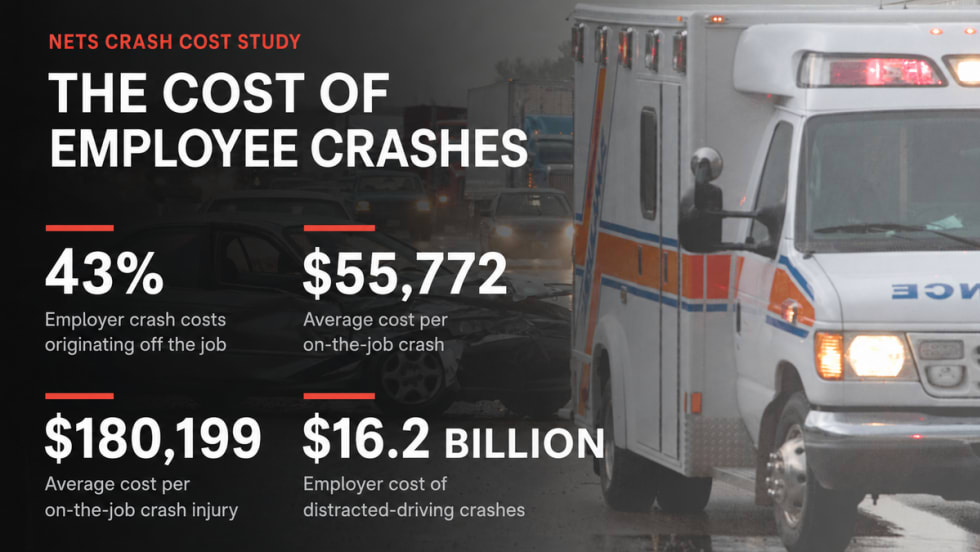
Off-the-Job Crashes Account for 43% of Employers’ $61.7 Billion Crash Burden
NETS quantifies costs dispersed across fleet, risk, HR, and other departments while providing new per-crash benchmarks for employers.
Read More →
Ram Recalls More Than 1.27 Million 1500 Pickups for Seat Belt Anchor Issue
The recall affects certain 2019-2026 Ram 1500 pickups that may have improperly attached second-row seat belt buckle anchors.
Read More →
How Better Visibility Cut Speeding Violations by 48%
Fleet leaders don't need more data, they need clearer visibility into what the data is saying. This case study explores how one utility replaced speeding-event counts with a single metric — miles driven in violation — to strengthen safety and significantly reduce speeding violations.
Read More →
Operation Safe Driver Week: Why the Industry's Oldest Safety Campaign Still Matters to Fleets
A look at how a 2007 enforcement initiative became one of the most consequential weeks on the fleet safety calendar, and what it means for your drivers in 2026.
Read More →