




Valero Extends Mileage as Vehicle Quality Increases
Since extending its replacement cycle in 2004, Valero saved more than $200,000 per year for a total of $654,000 through 2007.


Randy Burwell, fleet administrator and his staff.
As companies continue to find ways to get the most out of their fleet vehicles and technology continues to evolve, replacement cycles are increasingly extended. Valero Energy Corporation is one company that has extended mileage and/or service life to get a handle on fleet costs. Since extending its replacement cycle in 2004, Valero saved more than $200,000 per year for a total of $654,000 through 2007.
Randy Burwell, fleet administrator, has managed Valero Energy Corporation’s fleet for more than 10 years. He and a staff of two handle 1,845 vehicles (262 cars, 56 SUVs, 70 vans, 1,337 light trucks, 75 medium trucks, and 45 heavy vehicles), including Ford F-150s, F-250s, and F-350s; GM 1500s and 2500s; and Dodge 1500s.
Headquartered in San Antonio, Valero has more than 22,000 employees and generated 2007 revenues of more than $95 billion. The company owns and operates 17 refineries throughout the U.S., Canada, and the Caribbean, with a combined throughput capacity of approximately 3.1 million barrels per day, making it the largest refiner in North America.
Valero is also one of the nation’s largest retail operators, with approximately 5,800 retail and branded wholesale outlets in the U.S., Canada, and the Caribbean under various brand names, including Valero, Diamond Shamrock, Shamrock, Ultramar, and Beacon.

Valero achieved several benefits after increasing its vehicle replacement in 2004, including savings in costs and labor required on vehicles.
“When our fleet cost-per-mile averages are benchmarked against our industry, we fall in the lower percentiles,” Burwell said. “This is a good indicator that the decision to postpone vehicle replacement has been cost-effective, at least when compared to the industry.”
Sixty-five percent of the company’s units are owned, and the remaining 35 percent are leased through PHH Arval. Replacement cycles have been extended on most of the company’s vehicles, including:
Cars: 65,000 miles/four years to 85,000 miles/five years.
Light trucks: 85,000 miles/four years to 115,000 miles/five years.
Diesel trucks: 115,000 miles/five years to 150,000 miles/six years.
“Mileage limits were raised due to a study that indicated a monetary value in extending the vehicle life,” Burwell said.
The fleet team determined the most effective replacement parameters by first conducting a mathematical analysis to determine at what point the average monthly cost of maintenance and repairs exceeded the average monthly depreciation cost. By using the actual cost history of Valero vehicles (including resale values and maintenance expenses), the team arrived at a beginning “optimal” numerical range for replacement.
The next step included the additional calculation and analysis of certain non-vehicle factors impacted by the replacement criteria, such as the potential of productivity loss for employees if their vehicle suffers an increase/decrease in unscheduled maintenance breakdown, and the addition or reduction in planning and administrative hours required for actually managing the vehicle replacements.
“The final step included adjustments for soft issues, such as the potential company name brand impact of having older vehicles in the field, employee satisfaction, seasonality, full utilization of vehicle warranty, and Valero’s expectations about the future,” Burwell said. “We also had to take into account possible business growth, motor company incentives, and new technology.”
When deciding how long to keep the fleet vehicles in service, the fleet team had a delicate balance to maintain.
“Several criteria are used when determining the optimal replacement cycle,” Burwell said. “It has long been known that depreciation is the leading fleet expense (44 percent for Valero), and the way to lower this expense is to keep vehicles longer. However, keeping units too long is a costly endeavor. Average maintenance cost should not exceed average depreciation cost.”
Other factors Burwell examined were safety, maintenance history, resale, and driver satisfaction. The vehicles must be maintained to assure safety in all cases.
[PAGEBREAK]
While Valero has seen great results after increasing its vehicle replacement policy, it might change yet again. The fleet team proactively assesses policies to maintain effectiveness despite changes in the industry.
“Like most other strategies, it is prudent to review them as business conditions change,” Burwell said. In fact, Burwell and his team are currently conducting a study to determine if the current replacement cycle is the best choice. The goal is to verify if optimal replacement is currently in use. Factors under consideration include depreciation, maintenance cost, and driver and vehicle productivity.
“Lost productivity is a real cost many companies may not be considering,” Burwell said. “As factors change, including manufacturer rebates, the replacement cycle needs to be reviewed.”
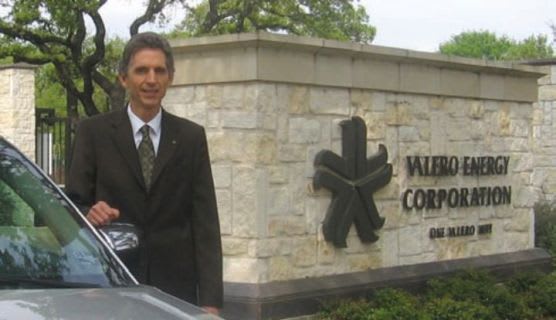
Randy Burwell, fleet administrator for Valero Energy Corp., shares strategies and best practices with Automotive Fleet readers.
AF: What are the key steps you take to effectively manage your fleet?
Burwell: First and foremost, Valero has always had its primary objective as being best-in-class with respect to its peers. This is accomplished by a continuous, aggressive search for the best fit possible between the “tool” (the vehicle) and the business. This includes regularly identifying cost-saving opportunities, pursuing new innovations (such as in-vehicle diagnostics and GPS systems), and investing the time necessary to make the most informed decisions possible.
Having the right partnership is especially crucial with regard to understanding the market and emerging opportunities (such as advanced fleet safety programs) and having access to benchmarking information that allows Valero to quickly pinpoint areas of opportunity, while also identifying the potential size of the opportunity. This gives us an easy and effective way to prioritize opportunities and perform feasibility analyses.
We benchmark our fleet against industry averages, right-size vehicles to specific jobs, run MVRs on all drivers, and conduct driver training.
AF: Can you discuss the importance of driver safety?
Burwell: We strive to assure vehicles are safe and reliable. Prior to truck replacement, we have the vehicle weighed along with any trailers to assure we are properly selecting the replacement unit.
AF: How do you remain proactive?
Burwell: We conduct regular and disciplined goal-setting along with quarterly review meetings with our fleet partner, PHH. We have a consistent methodology for assessing opportunities and moving quickly to realize cost savings or productivity improvements in our fleet operations.
Valero’s fleet programs is managed by a consistent and aggressive desire to maximize utility of vehicles in the field, while decreasing cost to the company and its shareholders.
AF: What do you have planned for the future?
Burwell: We are currently looking into the PHH driver safety program, which will allow Valero to proactively identify high-risk drivers and utilize counter-measures and training to reduce the risk to the company. Our goals are to stop accidents before they happen. This is accomplished through targeted training and driver risk identification, as well as identifying and avoiding mechanical breakdowns using in-vehicle diagnostics sent directly to our maintenance liaison at PHH through their telematics program.
More Operations

Avis Budget Group Deploys Neology Toll Management Technology Across Major Brands
Neology’s neoFleet platform will manage toll transactions and toll-authority operations for vehicles across Avis, Budget, Payless, Budget Truck and Zipcar.
Read More →
Fleet Personal-Use Charges Edge Higher in 2026
Nearly eight in 10 surveyed fleets allow personal use of company vehicles, while just over half of respondents report charging employees for the privilege.
Read More →
The Future of Fleet + What’s Changing Right Now | AF News Recap
Could developments overseas offer a preview of what’s coming for U.S. fleets? This week, we’re looking at the future of AI, autonomy, and electrification, plus Ford Pro’s new certified pre-owned program, smarter vehicle offboarding, and a new way for fleets to manage toll expenses.
Read More →
How to Handle Vehicle Offboarding
What do fleet managers need to do when a driver leaves?
Read More →
Fleet Manager’s Ultimate Playbook: Navigating the New Standard in OEM Connectivity
Rising operating costs, driver safety concerns, and unplanned downtime are putting unprecedented pressure on modern fleets. Discover how fleet managers use embedded OEM connectivity and real-time vehicle data to cut TCO, prevent downtime, and protect drivers without aftermarket telematics hardware.
Read More →
U.S. Bank Adds Verra Mobility Toll Management to Voyager Fleet Platform
The integration allows U.S. Bank Voyager fleet customers to manage toll payments and violations alongside fuel, EV charging and maintenance expenses.
Read More →
ADAS Prevents Crashes. But Repairs Cost More | AF News Recap
ADAS-equipped vehicles may crash less often, but they can cost more when they do. This week, we’re breaking down what that tradeoff means for fleets, plus Subaru’s first Forester Wilderness Hybrid, Nissan’s new e-POWER Rogue, and why Calstart has become Catalyst Mobility.
Read More →
Moventum Fleet Management Names Mark Iorillo Head of Sales
Iorillo brings nearly 20 years of fleet management and sales experience to the role, including previous positions at Element Fleet Management, CEI, Donlen and Ryder.
Read More →
Fleet Has a Talent Pipeline Problem. What Comes Next? | AF News Recap
Where will fleet’s next generation of leaders come from? This week, we’re looking at the industry’s talent pipeline, what certification can add to a fleet career, how to build an award-worthy track record, and the return of Automotive Fleet’s Personal Use Survey.
Read More →
Smith System Launches Driver Risk Management Program
Fleets have more driver data than ever, but identifying risky behavior doesn't necessarily correct it. Smith System's new Driver Risk Management program combines monitoring, training, and follow-up coaching to help fleets connect risk signals with driver intervention.
Read More →