




Related: 2016 Pedestrian Deaths Projected to Shatter Records
Most Dangerous, Safest Highways Ranked
The 545-mile U.S. Highway 1 that runs from southern Georgia to Key West, Fla., has been deemed the most dangerous highway in the U.S. because it has the highest fatal crash rate, according to Geotab.
by Staff
April 20, 2017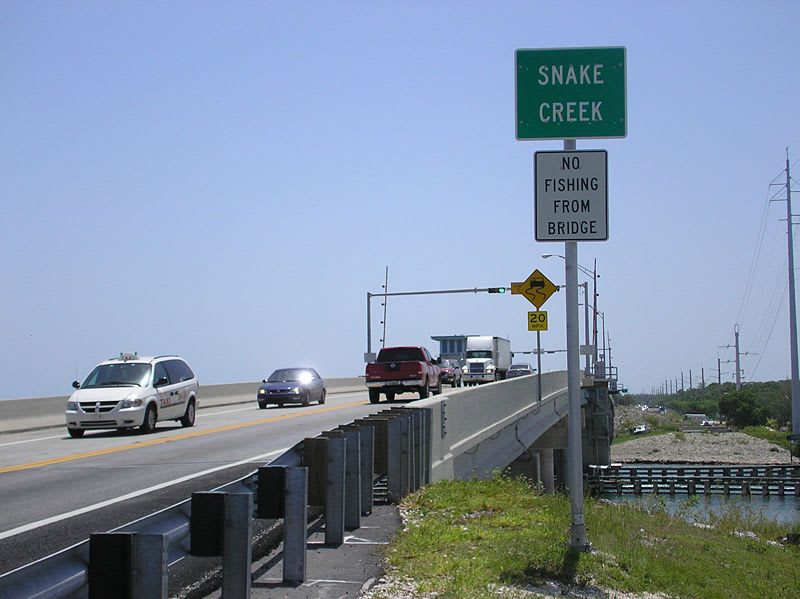
Photo of the Snake Creek bridge in the Florida Keys via Wikimedia.
2 min to read
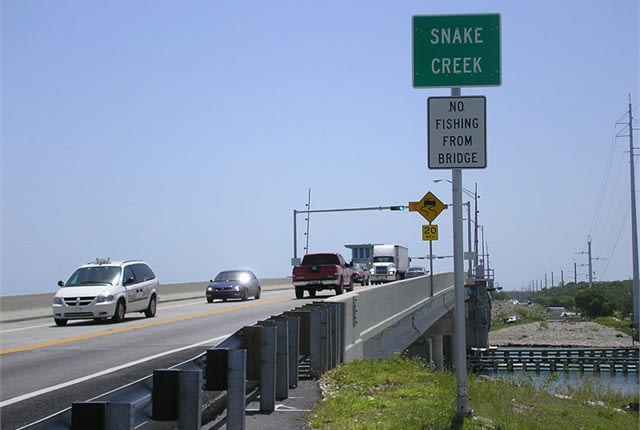
Photo of the Snake Creek bridge in the Florida Keys via Wikimedia.
The 545-mile U.S. Highway 1 that runs from southern Georgia to Key West, Fla., has been deemed the most dangerous highway in the U.S. because it has the highest fatal crash rate, according to Geotab.
The telematics provider has ranked the nation's most dangerous, as well as safest, highways in the country based on federal highway data analyzed by the company over the past 10 years.
There were 1,011 crashes and 1,079 fatalities on U.S. Highway 1, giving it a 2.8 fatal crash rate, according to Geotab.
Other top five dangerous highways include Texas' U.S. Highway 83, which runs 893 miles from the state's southern tip to the Oklahoma border; the California section of Interstate 40 that runs 155 miles from Barstow east to the Arizona border; the 359.6-mile Arizona section of Interstate 40 that crosses the entire state; and the section of U.S. Route 18 that runs east-west in southern South Dakota.
By comparison, four of the nation's five safest freeways with the lowest fatal crash rate run through New England, including three sections of Interstate 95. The 43-mile Rhode Island section of I-95 has 39 crashes and 40 fatalities, giving it the lowest crash rate of 0.1.
Other top five safest highways include the 131-mile New Hampshire section of Interstate 93 that runs from the Boston area to Vermont; the 111-mile I-95 Connecticut Turnpike; Wisconsin's 348-mile Interstate 94 that runs from the Minnesota to Illinois state lines; and Massachussetts' 120-mile Interstate 495 that runs from near Cape Cod to Salisbury.
Geotab looked at the annual number of road fatalities and fatal crashes according to the National Highway Traffic Safety Administration and adjusted for the average daily traffic counts provided by the Federal Highway Administration.
Read the full report here.
More Safety

Sponsored•June 1, 2026
Turning Connected Vehicle Data Into Decisions That Matter
Fleet leaders have more data than ever, but turning that data into clear, actionable decisions remains a challenge. This white paper shows how leading organizations are using connected vehicle data to improve safety, reduce costs, and optimize fleet performance. Learn how to turn insight into action across your fleet.
Read More →
Sponsored•June 1, 2026
Cameras, Safety and Insurance: From Reactive Claims to Real-time Prevention
Commercial auto remains one of the most challenging and costly lines of coverage for fleet operators and insurers alike. Learn more about how to effectively address these issues from Onur Aksan, Enterprise Business Development Executive, Geotab.
Read More →
NAFA Fleet Safety Symposium to Collocate With 2026 Fleet Forward Conference
The daylong certificate program will precede the Fleet Forward Conference at the Gaylord National Harbor in Maryland.
Read More →

The Distractions You Can’t Turn Off: What Drivers Face Outside the Vehicle
Fleet drivers face constant visual, cognitive, and environmental interruptions the moment they hit the road. From roadside chaos to mental fatigue and digital overload, today’s biggest driving risks often come from outside the vehicle itself.
Read More →
FLASH Weather AI Launches First Deep-Learning Hail Prediction Model With High-Resolution Forecasting
FLASH Weather AI has launched a first-of-its-kind hail prediction model capable of forecasting hail size and arrival time at 1-kilometer resolution up to 55 minutes ahead, giving fleets and insurers critical time to prepare for severe storms.
Read More →
How Coca-Cola United Protects Its Fleet from Growing Legal Risk
As litigation risk rises, vehicles are increasingly targeted. This Coca-Cola bottler shares how it’s reducing exposure through driver training, technology, and a proactive risk management approach.
Read More →
How to Speak the Same Language on Fleet Safety
Drivers, supervisors, and data often speak different safety “languages.” Getting on the same page will drive better results.
Read More →
Fleet Cybersecurity 101: What You Need from Your Technology Vendors
From identity management to third-party certifications, the right technology partner should make security easier to manage. Here are the three building blocks that fleet managers need to stay in control as connected systems scale.
Read More →
Reducing Risk by Eliminating Phone Use Behind the Wheel
Distracted driving remains one of the most persistent risks in fleet operations. New approaches focus on removing mobile device use entirely while adding real-time safety support.
Read More →
Distracted Driving in the Age of Smart Tech – Part 2
As distraction risks evolve, fleets are turning to smarter, more connected technologies to better understand what’s happening behind the wheel. Part 2 explores how these tools are helping identify risky behaviors and improve visibility across operations.
Read More →