




VW Pleads Guilty to Emissions Scandal
Volkswagen AG has pleaded guilty to three felonies and agreed to pay $4.3 billion in criminal and civil penalties related to its emissions scandal, the U.S. Department of Justice has announced.
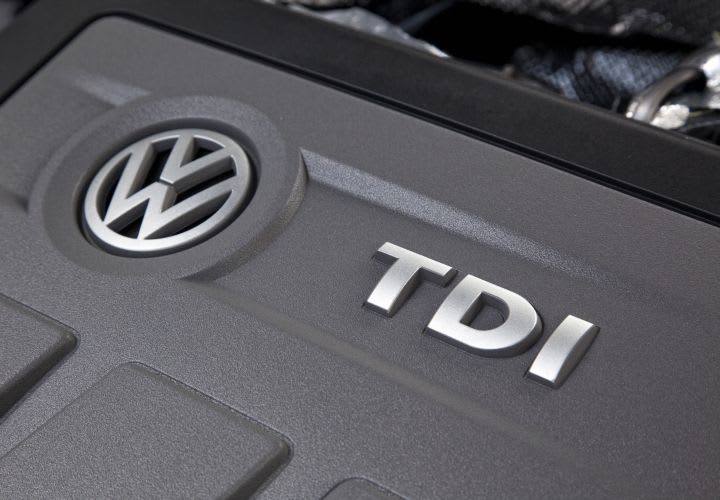
Photo courtesy of VW.
Photo courtesy of VW.
Volkswagen AG has pleaded guilty to three felonies and agreed to pay $4.3 billion in criminal and civil penalties related to its emissions scandal, the U.S. Department of Justice has announced.
Of the total, a $1.5 billion civil penalty resolves the U.S. Environmental Protection Agency’s claims for civil penalties as well as the U.S. Customs and Border Protection claims for customs fraud.
In addition, six Volkswagen executives have been indicted for their roles in the nearly 10-year conspiracy by a federal grand jury in the Eastern District of Michigan, including Heinz-Jakob Neusser, Jens Hadler, Richard Dorenkamp, Bernd Gottweis, Oliver Schmidt, and Jürgen Peter.
The executives are being charged for their role in a decade-long conspiracy to defraud the United States, conspiracy to defraud Volkswagen customers using interstate wires, and conspiracy to violate the Clean Air Act, according to the announcement.
“Volkswagen’s attempts to dodge emissions standards and import falsely certified vehicles into the country represent an egregious violation of our nation’s environmental, consumer protection and financial laws,” said U.S. Attorney General Lorreta Lynch. “In the days ahead, we will continue to examine Volkswagen’s attempts to mislead consumers and deceive the government. And we will continue to pursue the individuals responsible for orchestrating this damaging conspiracy.”
The announcement comes a day after Volkswagen AG confirmed it was in advance discussions with the U.S. Department of Justice and U.S. Customs and Border Protection on the $4.3 billion settlement, which includes injunctive relief to prevent future violations. It also follows the Jan. 7 arrest of Schmidt in Miami. He headed up the automaker’s regulatory compliance office and engine development and made his initial appearance on Jan. 9 before U.S. Magistrate Judge William C. Turnoff of the Southern District of Florida.
The case against Schmidt and the five other VW execs has been assigned to U.S. District Judge Sean F. Cox of the Eastern District of Michigan. The other defendants, according to today’s announcement, are believed to be in Germany.
According to the indictment, Neusser worked as head of development for VW brand and was also on the management board for VW. He also served as the head of engine development between October 2011 and July 2013. Hadler served as head of engine development for the automaker between May 2007 until March 2011. Dorenkamp worked as the head of VW’s engine development after-treatment department in Wolfsburg, Germany, and led the team of engineers who developed the first diesel engine allegedly equipped with the emissions defeat device.
Also indicted was Gottweis, a supervisor who was responsible for quality management and product safety from 2007 until October 2014, and Peter, who has worked in Volkswagen’s quality and management product safety group since 1990. He also served as one the liaisons between the company and regulatory agencies from March 2015 until July 2015.
According to the complaint against Schmidt, which was unsealed on Jan. 9, VW employees based in Germany began designing a new EA 189 2.0-liter diesel engine — referred to as the Gen 1 engine — in 2006 as part of a new project to sell “clean” passenger diesel vehicles in the United States. Engineers, however, realized they would not be able to design a diesel engine that would meet the stricter U.S. standards that would become effective in 2007. Working under Dorenkamp and Hadler, they began designing and testing defeat device software that would recognize whether a vehicle was undergoing standard U.S. emissions testing on a dynamometer or being driven on the road under normal driving conditions.
If the software detected that it was being tested, the vehicle would perform in a mode that would satisfy U.S. Environmental Protection Agency (EPA) standards. If the software detected it was not being tested, it would operate in a different mode. According to the complaint, the vehicle would emit substantially more NOx — at times more than 40 times higher than U.S. standards.
“Disagreements over the direction of the project were articulated at a meeting over which Hadler presided, and which Dorenkamp attended,” the Justice Department stated in its announcement, in part. “Hadler authorized Dorenkamp to proceed with the project knowing that only the use of the defeat device software would enable VW diesel vehicles to pass U.S. emissions tests.”
The defeat device was first installed in the 2009 model-year “clean diesel” vehicle. And after successfully selling the defeat device-equipped Gen 1 vehicles in the United States for a few years, the automaker began working on a second generation diesel engine — referred to in the complaint as “Gen 2” — that would also contain the defeat device software. The Gen 2 engine was included in vehicles sold in the United States in or around 2011. This continued up until the manufacturer’s model-year 2016 vehicles.
In March 2014, the German automaker learned of results of a study undertaken by West Virginia University’s Center for Alternative Fuels, Engines and Emissions and commissioned by the International Council on Clean Transportation (ICCT). It found that VW diesel vehicles emitted drastically different NOx values during road testing. About a month later, Schmidt, who was responsible for communicating and coordinating with U.S. regulatory agencies, including the U.S. EPA and the California Air Resources Board, as general manager for VW in Auburn Hills, Mich., received an email informing him of the study’s discovery.
That same day, Schmidt wrote to a colleague: “It should first be decided whether we are honest. If we are honest, everything stays as it is. ICCT has stupidly just published measurements of NAR diesel off-cycle, not good.” According to the complaint, VW employees referred to VW’s North American Region as “NAR.”
Schmidt was promoted to principal deputy of the head of engine development for VW around March 2015, and returned to the automaker’s headquarters in Wolfsburg, Germany, where he played a direct role in VW’s response to questions from U.S. regulators, according to the complaint. Around this time, U.S. regulators had discovered that VW diesel vehicles emitted substantially higher emissions when driven on the road than when undergoing standard U.S. emissions tests and had repeatedly asked VW for an explanation of this discrepancy.
According to the complaint, Schmidt — who was in direct contact with U.S. regulators about the matter — knew the reason the discrepancies were the result of the defeat device software. However, during multiple discussions, both in-person and through teleconference, with U.S. regulators, he lied about the reasons for inconsistencies.
“Rather than tell the truth, VW employees, including Neusser, Gottweis, Schmidt, and Peter, pursued a strategy to disclose as little as possible — to continue to hide the existence of the software from U.S. regulators, U.S. customers, and the U.S. public,” read the Justice Department’s announcement.
It wasn’t until Sept. 3, 2015, meeting in El Monte, Calif., that a VW manager formally admitted that VW had intentionally installed a defeat device in 475,000 U.S. 2.0-liter diesel vehicles sold in the United State from 2009 to 2015.
As for the possible involvement of other high-ranking executives, the complaint alleges that Schmidt and other employees briefed executive management in Germany on or about July 27, 2015, “regarding the existence purpose and characteristics of the defeat device.” During the presentation, which included a chart showing possible consequences of a meeting Schmidt was schedule to have with the CARB the following week, including indictment, VW’s executive management decided against disclosing the existence of the defeat device.
“In the presentation, VW employees assured VW executive management that U.S. regulators were not aware of the defeat device — that is the engine’s ability to distinguish between the dynamometer and road mode,” reads the complaint, in part. “Rather than advocate for disclosure of the defeat device to U.S. regulators, VW executive management authorized its continued concealment.”
“The investigation is still ongoing,” Lynch said at a press conference today. “We are not able to comment on anyone else in particular, but I will stress that we are looking at individuals who are involved and would have had knowledge of the same information that’s currently being charged.”
Editor's note: This news story first appeared on the website of F&I and Showroom, a sister publication of Automotive Fleet.
More Operations

Personal-Use Charges Rise as Vehicle Values Fall | AF News Recap
Personal-use charges are climbing, wholesale used-vehicle values are declining, and commercial fleet sales growth is slowing. This week, we're breaking down the latest fleet data, plus how Element Fleet Management is helping Waymo prepare for its first Canadian robotaxi market.
Read More →
Here's When You Should Make an Exception to Fleet Policy
Fleet policies are designed to create consistency, but not every driver or situation fits neatly within standard rules.
Read More →
AI-Native or AI-Acquired: What Should Fleet Managers Look for in an AI Platform?
Six questions can help fleet managers look beyond AI marketing claims to evaluate integration, data access, and real-world operational performance.
Read More →

A buyer's guide to fleet management software in 2027
Buying fleet management software in 2027 means looking beyond features and price. As fleet operations, technology and expectations evolve, this guide explores what today’s fleet professionals should consider when choosing a system that can deliver value now and adapt to what comes next.
Read More →
What Will Shape the Next Era of Fleet Management?
EVs, AI, and autonomous vehicles are reshaping fleet management. Discover what’s ahead—and how fleet leaders can prepare for the next era.
Read More →
How Fleets Can Recruit and Train Veterans for Technician Roles
Here's how the technician shortage has affected uptime for fleets, and what to do about it.
Read More →
Avis Budget Group Deploys Neology Toll Management Technology Across Major Brands
Neology’s neoFleet platform will manage toll transactions and toll-authority operations for vehicles across Avis, Budget, Payless, Budget Truck and Zipcar.
Read More →
Fleet Personal-Use Charges Edge Higher in 2026
Nearly eight in 10 surveyed fleets allow personal use of company vehicles, while just over half of respondents report charging employees for the privilege.
Read More →
The Future of Fleet + What’s Changing Right Now | AF News Recap
Could developments overseas offer a preview of what’s coming for U.S. fleets? This week, we’re looking at the future of AI, autonomy, and electrification, plus Ford Pro’s new certified pre-owned program, smarter vehicle offboarding, and a new way for fleets to manage toll expenses.
Read More →
How to Handle Vehicle Offboarding
What do fleet managers need to do when a driver leaves?
Read More →