




Related: Renault-Nissan Alliance Slates Autonomous Vehicles Globally Through 2020
Renault-Nissan, Microsoft Developing Connected-Vehicle Tech
The Renault-Nissan Alliance and Microsoft Corp. are collaborating toward development of connected-driving technology.
by Staff
September 27, 2016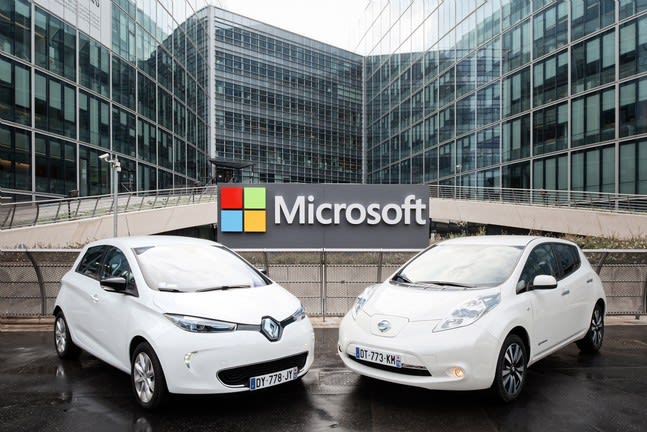
Photo courtesy of Nissan
2 min to read
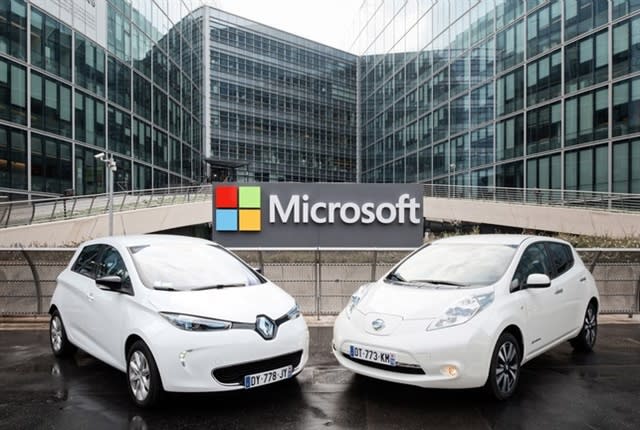
Photo courtesy of Nissan
The Renault-Nissan Alliance and Microsoft Corp. are collaborating on the development of connected-driving technology.
The companies signed a global, multi-year agreement to develop technologies for cars powered by Microsoft Azure, one of the company's intelligent cloud offerings. The service offers advanced navigation, predictive maintenance and vehicle centric services, remote monitoring of car features, external mobile experiences and over-the-air updates.
"A car is becoming increasingly connected, intelligent and personal," said Ogi Redzic, Renault-Nissan Alliance senior vice-president, connected vehicles and mobility services. "Partnering with Microsoft allows us to accelerate the development of the associated key technologies needed to enable scenarios our customers want and build all-new ones they haven't even imagined. We aim to become the provider of connected mobility for everyone with one single global platform."
The partnership is also intended to support Renault-Nissan Alliance’s efforts to launch more than 10 vehicles with autonomous driving technology by 2020.
Renault-Nissan selected Azure in part due to its ability to support multiple operating systems, programming languages and tools, according to the company.
"While the connected car experience is in its infancy, we believe there's so much potential to dramatically change the industry," said Jean-Philippe Courtois, executive vice president and president, Microsoft Global Sales, Marketing and Operations, Microsoft. "We are partnering to accelerate Renault-Nissan's mobile and cloud strategies and unlock new experiences for their customers. Renault-Nissan is an exceptional partner thanks to its global presence and range of brands, which enable it to bring entirely new mobile and digital experiences to so many people. This collaboration will bring a new standard to connected cars."
More Operations
Here's When You Should Make an Exception to Fleet Policy
Fleet policies are designed to create consistency, but not every driver or situation fits neatly within standard rules.
Read More →
AI-Native or AI-Acquired: What Should Fleet Managers Look for in an AI Platform?
Six questions can help fleet managers look beyond AI marketing claims to evaluate integration, data access, and real-world operational performance.
Read More →
Sponsored•October 14, 2026
A buyer's guide to fleet management software in 2027
Buying fleet management software in 2027 means looking beyond features and price. As fleet operations, technology and expectations evolve, this guide explores what today’s fleet professionals should consider when choosing a system that can deliver value now and adapt to what comes next.
Read More →

What Will Shape the Next Era of Fleet Management?
EVs, AI, and autonomous vehicles are reshaping fleet management. Discover what’s ahead—and how fleet leaders can prepare for the next era.
Read More →
How Fleets Can Recruit and Train Veterans for Technician Roles
Here's how the technician shortage has affected uptime for fleets, and what to do about it.
Read More →
Avis Budget Group Deploys Neology Toll Management Technology Across Major Brands
Neology’s neoFleet platform will manage toll transactions and toll-authority operations for vehicles across Avis, Budget, Payless, Budget Truck and Zipcar.
Read More →
Fleet Personal-Use Charges Edge Higher in 2026
Nearly eight in 10 surveyed fleets allow personal use of company vehicles, while just over half of respondents report charging employees for the privilege.
Read More →
The Future of Fleet + What’s Changing Right Now | AF News Recap
Could developments overseas offer a preview of what’s coming for U.S. fleets? This week, we’re looking at the future of AI, autonomy, and electrification, plus Ford Pro’s new certified pre-owned program, smarter vehicle offboarding, and a new way for fleets to manage toll expenses.
Read More →
How to Handle Vehicle Offboarding
What do fleet managers need to do when a driver leaves?
Read More →
Sponsored•October 1, 2026
Fleet Manager’s Ultimate Playbook: Navigating the New Standard in OEM Connectivity
Rising operating costs, driver safety concerns, and unplanned downtime are putting unprecedented pressure on modern fleets. Discover how fleet managers use embedded OEM connectivity and real-time vehicle data to cut TCO, prevent downtime, and protect drivers without aftermarket telematics hardware.
Read More →