




Video: NHTSA Revamping Crash Tests
Additions to NHTSA’s 5-Star Safety Ratings program would include assessment of advanced technologies and reliance on more lifelike crash-test dummies.
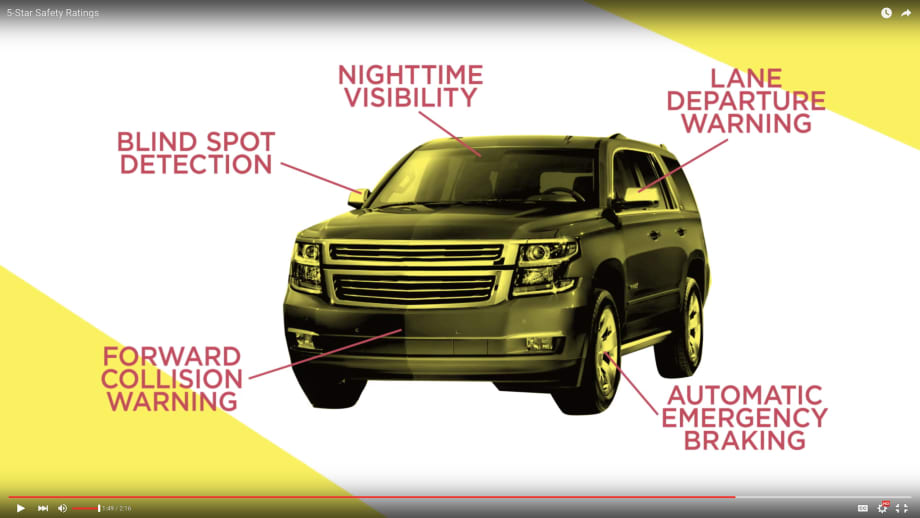
The U.S. Department of Transportation has proposed updates to the National Highway Traffic Safety Administration’s 5-Star Safety Ratings program that would include a new crash test, use of more human-like crash test dummies, and assessment of advanced crash-avoidance technologies.
“NHTSA’s 5-Star Safety Ratings have set the bar on safety since it began in 1978, and today we are raising that bar,” said U.S. Transportation Secretary Anthony Foxx. “The changes provide more and better information to new-vehicle shoppers that will help accelerate the technology innovations that saves lives.”
The 5-Star Safety Ratings, also known as the New Car Assessment Program, crash-tests new vehicles every year and currently rates them on how well they protect occupants in frontal, side and rollover crashes. Results from these tests are compiled into a rating of 1 to 5 stars, with more stars indicating a safer car. The vehicle safety ratings appear on window stickers of new cars, and searchable ratings are available on NHTSA’s Safercar.gov website.
The current program also includes a checklist of recommended advanced technology features such as rear-visibility cameras, lane departure warning, and forward collision warning.
The planned changes to the 5-Star Safety Ratings system include:
A new 5-Star Safety Ratings system, which will, for the first time, encompass assessment of crash-avoidance and advanced technologies as well as pedestrian protection
New tests to assess how well vehicles protect pedestrians from head, leg and pelvic injuries that occur when a pedestrian is struck by a vehicle
A new frontal oblique crash test that measures how well vehicles protect occupants in an angled frontal crash
An improved full frontal barrier crash test to drive safety improvements for rear seat occupants
New crash-test dummies – including the Test device for Human Occupant Restraint (THOR) and WorldSID – that will provide improved data on the effects a crash is likely to have on the human body
An assessment of additional crash-avoidance and advanced technologies that offer drivers the most potential for avoiding or mitigating crashes
Use of half-star increments to provide consumers more discriminating information about vehicle safety performance
The ability to dynamically update the program more swiftly as new safety technologies emerge.
The full proposal, including all planned changes, can be viewed here. The agency will collect public comments for the next 60 days. NHTSA said it intends to analyze public comments and issue a final decision notice on the planned changes by the end of 2016.
The proposed changes drew immediate praise from the National Safety Council.
"NHTSA’s proposal tricks out the 5-Star Safety Ratings by embracing technology as the big game-changer in saving lives," said Deborah A.P. Hersman, National Safety Council president and CEO. "The announcement comes at a critical time, as highway fatalities have spiked this year. The new ratings address technologies that can stem the carnage for both vehicle occupants and pedestrians on our roadways."
Vehicle buyers are expected to begin seeing ratings under the new system when model-year 2019 vehicles are introduced, NHTSA said. To view a video about NHTSA's 5-Star Safety Ratings program, click on the image or link below the headline.
More Safety

Ram Recalls More Than 1.27 Million 1500 Pickups for Seat Belt Anchor Issue
The recall affects certain 2019-2026 Ram 1500 pickups that may have improperly attached second-row seat belt buckle anchors.
Read More →
Top 50 Executive Fleets
It is that time of year again! Time for the 2026 list of the Top 50 Executive Fleets, presented by Automotive Fleet and Volvo as part of its annual Fleet 500. Download now to see this year's list of companies!
Read More →
How Better Visibility Cut Speeding Violations by 48%
Fleet leaders don't need more data, they need clearer visibility into what the data is saying. This case study explores how one utility replaced speeding-event counts with a single metric — miles driven in violation — to strengthen safety and significantly reduce speeding violations.
Read More →
Operation Safe Driver Week: Why the Industry's Oldest Safety Campaign Still Matters to Fleets
A look at how a 2007 enforcement initiative became one of the most consequential weeks on the fleet safety calendar, and what it means for your drivers in 2026.
Read More →
Nexar-Nauto Merger Aims to Give Fleets Better Safety Intelligence Through Larger Driving Dataset
Stefan Heck tells Automotive Fleet that combining more than 10 billion miles of driving history with Nexar's AI models will give fleets deeper insights into driver risk and roadway conditions than either company could provide independently.
Read More →
From Silos to Solutions: Relationship Management for Safer Fleets
From telematics adoption and driver accountability to policy consistency and risk mitigation, this episode breaks down what it really takes to build a safer fleet culture without slowing business down.
Read More →
IIHS Launches First Commercial Vehicle Safety Evaluations
The Insurance Institute for Highway Safety has begun evaluating heavy-duty pickups and cargo vans for driver protection. Which models earned top marks?
Read More →
Reducing Risk by Eliminating Phone Use Behind the Wheel
Hosted with the cofounder of Lifesaver Mobile, this episode addresses phone use behind the wheel and how to design a driving environment that actually helps prevents accidents.
Read More →
Cameras, Safety and Insurance: From Reactive Claims to Real-Time Prevention (Part 2 of 2)
Part Two: Commercial auto remains one of the most challenging and costly lines of coverage for fleet operators and insurers alike. Continue learning more about how to effectively address these issues from Onur Aksan, Enterprise Business Development Executive, Geotab
Read More →
How 5-Second Telematics Data Is Changing Fleet Safety
This episode connects with Steve Santostasi of Ford Pro and covers how a few seconds of data can make a difference in fleet safety.
Read More →