




These Edges Are Measured in Inches — Matt Dyer on Fleet’s New Normal
The Merchants Fleet CEO contends that fleets that drive the business win the inches. In 2026, every one of them counts.
April 8, 2026

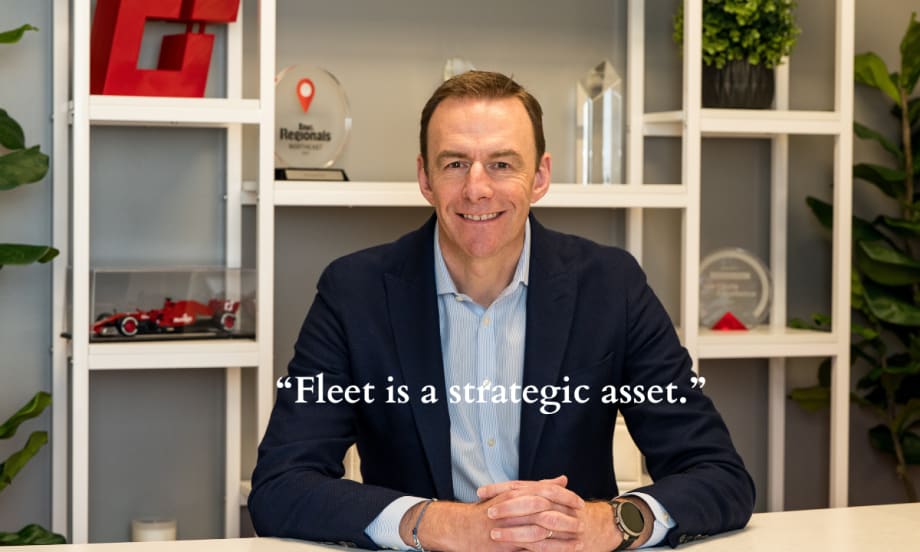
Matt Dyer, CEO of Merchants Fleet, says fleet’s role has shifted from cost center to business driver, with direct impact on revenue, uptime, and client retention.
Credit: Merchants Fleet
7 min to read
Have we finally turned the page on the COVID era? Merchants Fleet CEO Matt Dyer isn’t there quite yet. “We definitely are in a new normal,” Dyer said in an exclusive interview with Automotive Fleet.
But that “new normal” is still influenced by the pandemic’s aftershocks.
When OEM allocations forced fleets to hold vehicles longer than planned, the knock-on effect was longer replacement cycles, more frequent maintenance issues, and a backlog of decisions that fleet managers are still decisioning in 2026.
However, the more important shift, he argued, is more about how fleet itself is being viewed within the organizations it serves.
“Fleet is really being seen as a strategic asset,” he said. “It’s driving revenue, it’s driving fulfillment rates, it’s contributing to client retention.” That’s a different conversation from the one the industry was having five or 10 years ago, when fleet was often seen primarily as a cost.
This places new expectations on fleet managers and is illustrated by the fleet market continuing to shift toward outsourced models as rising vehicle complexity, heightened operational and efficiency demands, more sophisticated data analysis, and EV uncertainty push more organizations away from self-managed fleets.
Companies are increasingly seeking partners with the breadth to manage the full lifecycle across funding, acquisition, services, and remarketing for both long- and short-term durations.
“There’s a growing recognition that managing this all yourself is a big challenge,” he says. “Our total won lease potential was up 75% year on year, which shows how seriously clients are taking fleet as a strategic lever.”
There’s also new recognition, Dyer said, that vehicle uptime drives clients’ topline revenue, though the margins involved are thin. “These edges are measured in inches,” he said. “Every small win makes a difference.”
The dynamic of “fleet as a business driver, not just a cost center” embodies everything Dyer sees coming in 2026.
The Inches Matter
Now that fleet has been elevated to a strategic asset, uptime becomes much more crucial.
And that’s where today's new normal challenges can lie. When you run longer replacement cycles, repair costs rise, repair times lengthen, and ADAS complexity — the sensors, cameras, and computing systems now standard on most new vehicles — has made even routine collision repairs longer and more expensive.
And with fleets still running older vehicles held over from the allocation era, the exposure is worse. “It’s crucial that we have a really clear focus on avoiding downtime, getting our clients’ vehicles back on the road, keeping vehicles, and assisting with possible shorter-term options in the interim if needed,” Dyer noted.
Maintenance spend policies can be a drag on uptime when they fall out of step with the reality that maintenance costs are going up 5%-6% a year. Approval thresholds have to keep pace. “If you’re not careful, you’re capturing more and more requests that need a formal sign-off when actually they can still be considered routine, and the vehicle can be back out on the road,” he said.
Registration is another lever. Navigating 50-state DMV requirements that are becoming more complex, “You can’t have a single day where you stand still,” he said. “You’ve got to be improving every single day, otherwise you’re going backward.”
Order-to-delivery factors matter here, as every day a new vehicle sits waiting is a day when its TCO isn’t realized. Merchants improved OTD performance by more than 20% year-over-year in 2025, which Dyer attributed in part to tighter upfitter partnerships and a push toward standardization over customization.
“We’ve invested more in our upfit network and high-touch service capabilities, so we can reduce complexity and get vehicles into active service faster, said Dyer. Merchants' 42% growth in value-added services within new-business sales highlights this shift and reinforces a more consultative, client-centered approach.
TCO Under a New Calculus
If uptime is the operational challenge of 2026, total cost of ownership is the financial one.
“TCO is still highly, highly relevant and a high priority,” he said. “But it’s also about being agile, because the situation is changing a lot.”
The numbers bear that out. Cap costs, while off their pandemic peaks, remain well above 2018–19 baselines. Interest rates have reset to levels fleet managers weren’t budgeting for four or five years ago. And with current oil price shocks adding fuel-cost pressure to an already strained fleet budget, Dyer said the math needs to be revisited more frequently these days.
A telling stat in that regard, Merchants’ consulting engagements were up 42% year-over-year in 2025. “That shows that this topic is highly relevant,” he said.
This is no longer 2021. Remember then, when all fleet managers were heroes, when interest rates were near zero, resale values were strong, and cap costs were roughly 20% lower than today? Those vehicles are now long past their original replacement windows. Dyer said 2026 is the year the TCO case for replacing those vehicles gets strongest — even factoring in today’s higher cap costs and rates.
The reason is that running costs for aging vehicles, combined with the growing risk of downtime, are reaching a point where holding on is no longer the cheaper option.
Dyer believes TCO is no longer defined only by what fleets buy next, but by how well they manage the entire lifecycle of the vehicles they already have, from leasing strategy to maintenance and uptime, to remarketing timing and daily utilization.
The focus is shifting from acquisition alone to a smarter, more holistic approach to asset use. At Merchants, that’s supported by solutions such as FleetShare, the company's shared mobility platform.
There’s a van-specific twist worth noting for commercial fleets: Cargo van resale values were softer than expected over the past couple of years, creating a drag on TCO assumptions for some operators and pushing replacement decisions out further. Dyer said the van market is now stabilizing, removing one more reason to delay.
“You’ve got to almost be constantly analyzing and working the math,” he said. “Windows will open — opportunities will open — to really get a preferential TCO.”
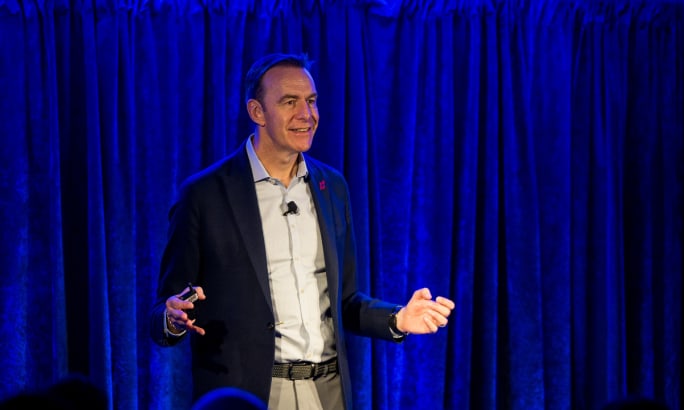
Matt Dyer speaks at the 2025 Merchants Fleet Summit, held annually at the company's headquarters in Hookset, N.H.
Credit: Merchants Fleet
Table Stakes: Connected Vehicles
Telematics is table stakes, said Dyer, and most in the industry would agree. The next step is to integrate connected vehicle data with everything else a fleet generates.
For Dyer, technology is foundational, not optional, to a high-performing fleet model. As fleets become more complex, with rising regulatory demands, expanding data, and shifting operating environments, organizations can lose clarity and confidence in daily decisions. Technology provides the structure and discipline to cut through that complexity and support smarter, more consistent long-term outcomes.
“When you can align (telematics data) with fuel data, maintenance data, other key data points within the ecosystem, that’s where it really starts to become beneficial,” he said.
Merchants runs its own proprietary Total Connect solution that harvests data from embedded OEM modems, but also maintains APIs with third-party providers to bring the data together.
Remaining manufacturer-agnostic is part of that logic. The allocation era forced fleets to diversify across manufacturers, and those mixed fleets need a connected vehicle strategy that works across all of them. “You need a solution that’s not going to be looked at through one OEM,” he said.
The Utilization Opportunity
With cap costs and interest rates elevated, getting maximum productivity from every asset matters more than ever. As many fleets move to pooled systems, with drivers accessing shared vehicles rather than assigned ones, the utilization opportunity rises further.
Merchant’s FleetShare service represents a shift from fixed-fleet models to dynamic, pooled-vehicle systems that flex with demand. It enables organizations to deploy and rebalance vehicles in real time, maximizing utilization while reducing cost, risk, and idle capacity.
Vehicle utilization in FleetShare increased significantly in 2025, with enrolled utilization rising 24% year over year and total program utilization up 30%. "This has helped us achieve a 142% year-over-year revenue increase," said Dyer.
Winning Inch by Inch
Throughout all of it — uptime, TCO, connected vehicles, utilization — is complexity for today’s fleet managers. The 2026 fleet manager is making decisions across a broader range of variables than the role demanded a decade ago, and the expectation that they get those decisions right has never been higher.
“If you look at our fleet decision makers, they’ve really elevated over the last few years,” Dyer said.
“The scope of decision-making they have to go through is really broad. Fleets need partners that can support them across the full lifecycle, not just in one part of the process, because that’s what it takes to manage TCO, uptime, and utilization together.”
That elevation changes what fleet managers should expect from their partners; a single-service relationship isn’t enough anymore.
“It’s not just point to point,” Dyer said. “It’s having the breadth of capability, the consulting capability, and a multi-layered dedicated relationship — to really reflect the elevation in decision making that fleets now need to go through.”
Subscribe to Our Newsletter
More Leasing
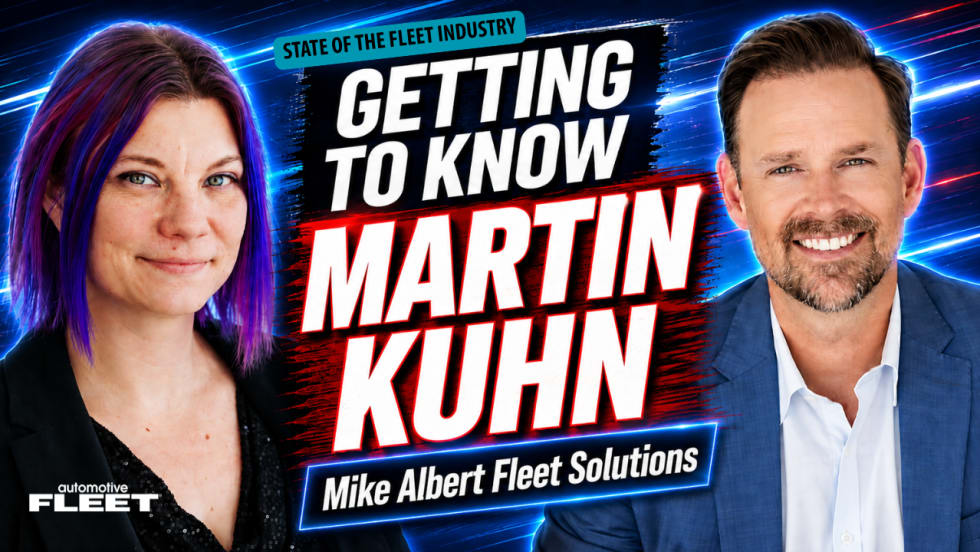
Martin Kuhn on the Future of Mike Albert Fleet Solutions
The new president and CEO explains how Mike Albert Fleet Solutions plans to invest in technology, data, and people without losing the personal service fleet customers value.
Read More →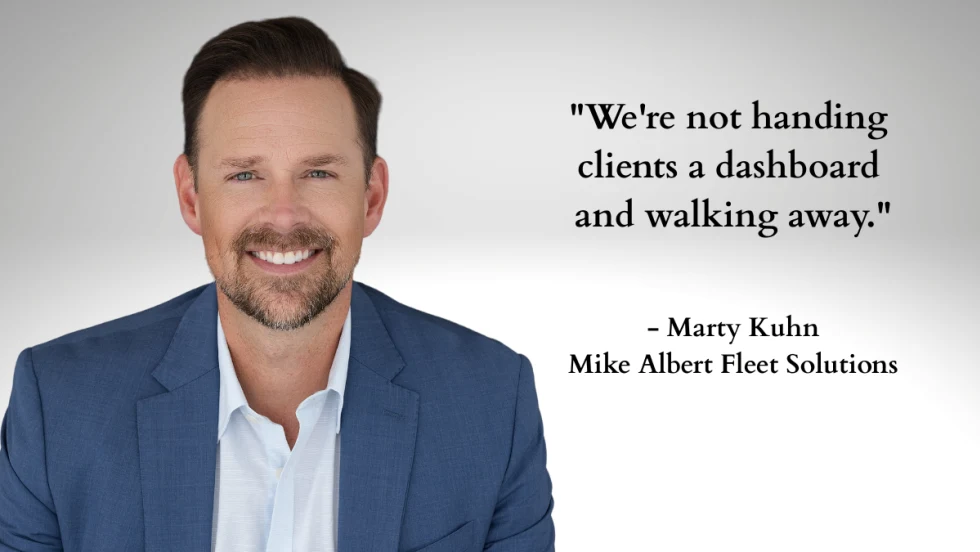
Mike Albert Fleet Solutions Names Marty Kuhn CEO, First from Outside the Family
Kuhn has a theory of what sets the company apart from larger FMCs: depth of partnership over breadth of volume.
Read More →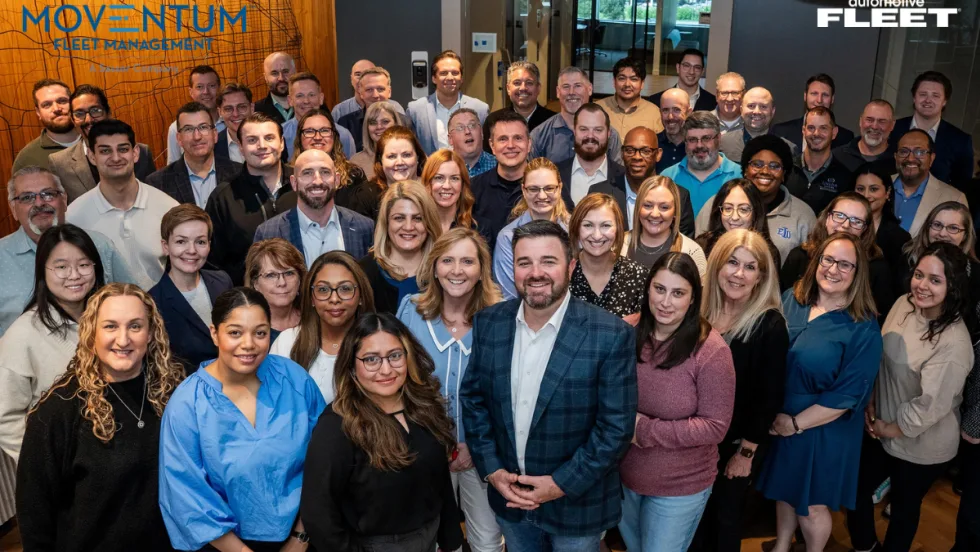
Union Leasing Rebrands as Moventum Fleet Management
The name Moventum reflects the company’s position at the intersection of movement and momentum, with the guiding principle "Keep Work Moving."
Read More →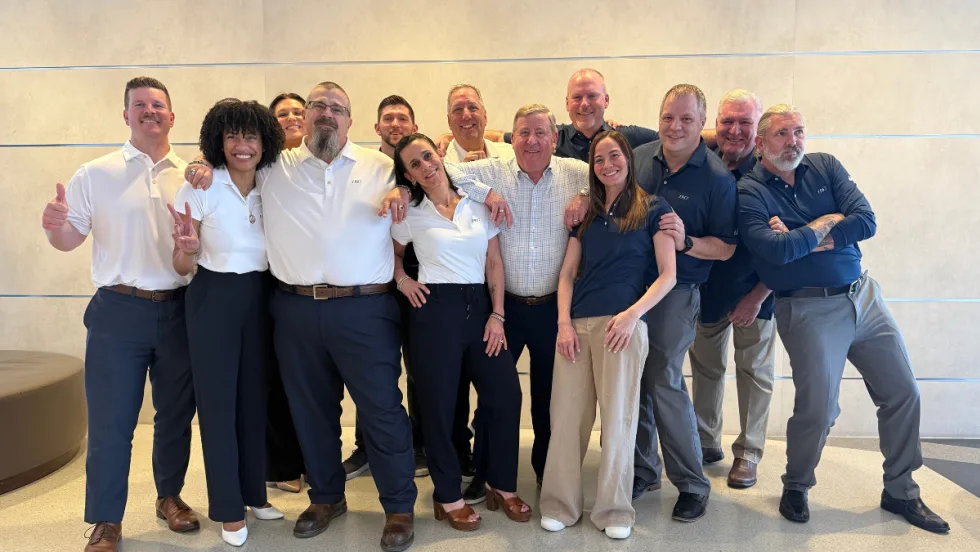
How Does a Mid-Major FMC Compete? Ask BBL Fleet
This Pittsburgh-based FMC built a technology-first culture, sustained double-digit organic growth, and expanded its Midwest footprint through a recent acquisition. How did it happen?
Read More →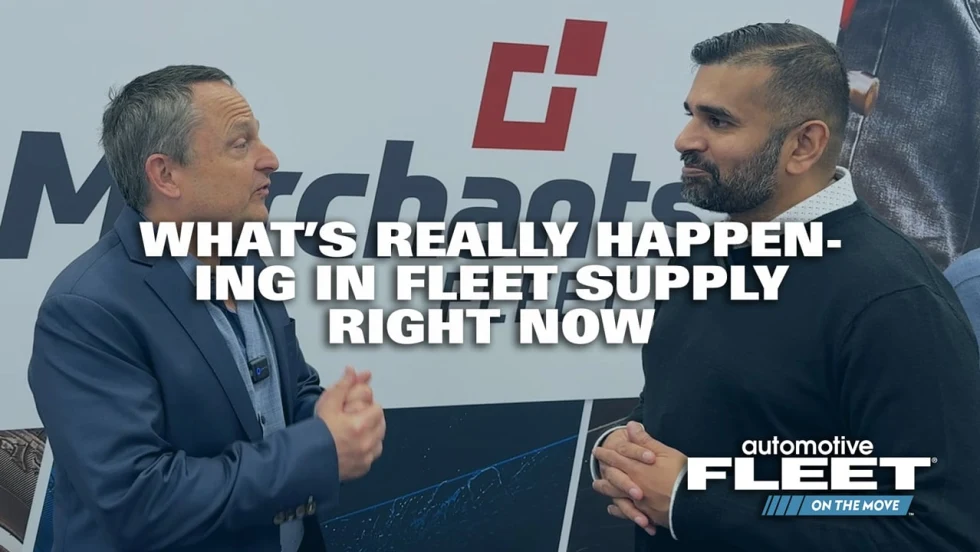
What’s Really Happening in Fleet Supply Right Now
Fleet supply has improved, but not everywhere. Merchants Fleet’s Charles Matthew explains where constraints still exist, what risks are emerging, and why fleets shouldn’t wait to place orders.
Read More →
Who Gets a Company Car? (In 2026 and Beyond)
As costs rise and scrutiny increases, fleets are refining criteria that govern eligibility for company-owned vehicles.
Read More →
DriveItAway Holdings, Free2move Launch Operations In Nine Cities
The co-branded program with Stellantis’ mobility division scales up leasing and financing options nationwide with more cities to come online in 2026.
Read More →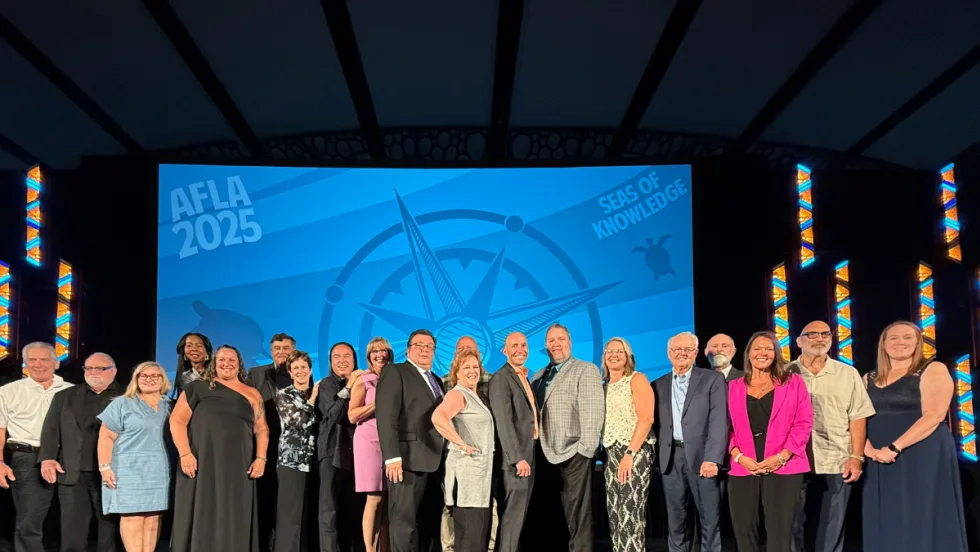
AFLA 2025 Conference in Pictures
Drawing over 640 attendees, the 2025 AFLA Annual Conference was held Sept. 14-17 at the JW Marriott Marco Island Beach Resort in Florida.
Read More →
DriveItAway, Free2move Partner to Expand Vehicle Access for Dealers
The arrangement enables franchise dealers to offer flexible lease-to-own programs with no credit checks, no down payments, and no long-term commitments.
Read More →
New Survey: How Well Are FMCs Serving Fleets? We Want Your Input
Fleet managers: Share your experience to help benchmark fleet management companies’ service, strategy, and support.
Read More →