




All-Star Stats Panel Details Main Influences on Wholesale and Used Vehicle Markets
Industry data and economic experts emphasize the need to focus on the facts and long-term trend lines as media coverage and political messaging may not always interpret the information accurately.


The remarketing industry economic and markets panel at CAR includes (L to R): Eric Lyman, vice president of product for automotive finance solutions at Black Book; Forrest Dougan, senior director of business and OPENLANE; Jeremy Robb, senior director of industry insights at Cox Automotive; John Coles, vice president of data science and analytics at ACV Auctions; and CAR emcee and panel moderator Charlie Vogelheim.
Photo: Ross Stewart / Stewart Digital Media
The Conference of Automotive Remarketing brought together the leading sources of economic and markets data on March 19 that altogether pointed to a period of industry uncertainty in wholesale and used vehicle markets.
Experts from Cox Automotive, OPENLANE, Black Book, and ACV Auctions all presented niche data that in sum provides a wider context. Their presentations were held the same day as complementary sessions from AuctonNet and JD Power.
Among the big factors influencing automotive remarketing: Tariffs, the supply and demand of new and used electric vehicles, consumer sentiment, off-lease used vehicles, interest rates, and credit availability, among others.
The panel explained the effects of interest rates on new and used car sales, noting that while new car sales were strong in 2024, used car sales faced high interest rates. They highlighted the K-shaped recovery and wealth effect, with high-income consumers buying higher-end vehicles and lower-income consumers opting for lower-end ones. One wild card is plummeting consumer sentiment, which noticeably dropped in February, from 77 to 65. Tax refunds are averaging $3,300, boosting retail sales and reducing day supply to 39 days, the lowest since April 2021. Off-lease maturities are expected to decline by 23% to 25%, reducing wholesale market volume.
Here are key insights from a dynamic discussion among the members of CAR’s annual industry markets and economy panel: Jeremy Robb, senior director of industry insights at Cox Automotive; John Coles, vice president of data science and analytics at ACV Auctions; Forrest Dougan, senior director of business and OPENLANE; and Eric Lyman, vice president of product for automotive finance solutions at Black Book.
Interest Rates and Consumer Affordability
Affordability depends in large part on movement in interest rates, with the inflation rate primarily determining expected movements by the Federal Reserve.
The Fed cut rates in August, September, and November leading to uncertainty over whether the recent increase in interest rates was a temporary blip or a longer-term trend.
New car interest rates ended 2024 well, with many under 3% rates, boosting new car sales.
Consumer interest rates are high, and used car interest rates have returned to historical highs, emphasizing the importance of affordability in automotive transactions.
Economic Recovery and Wealth Effect
The economy is seeing a K-shaped recovery and wealth effect, where high-income individuals purchase higher-end vehicles, while lower-income individuals buy lower-end vehicles.
The vehicle market is seeing an unusual correlation between unemployment and auto sales, suggesting that auto sales are expected to rise despite high unemployment.
Gas prices, consumer sentiment, and housing starts are key areas to focus on, with gas prices expected to decrease due to Trump administration energy pursuits and policies.
Consumer Sentiment and Economic Indicators
The slip in consumer sentiment is historically large and likely will remain in that range for the next 8-12 weeks.
Meanwhile, Morning Consult's daily index of consumer sentiment, shows a decline in Democratic sentiment about the state of the economy and an increase in Republican sentiment since the Presidential election on Nov. 5.
As a result, businesspeople and vehicle remarketers should be discerning about the reliability of media and information sources and be aware of the impact of politics on media outlets’ presentation of economic data.
With gas prices and geopolitical stability closely correlated, higher gas prices would lead to more efficient vehicle purchases.
Credit Availability and Rental Income
The economy should see an expected increase in credit availability and rental income, which should lead to higher wage growth and discretionary purchases like automobiles.
However, the tightening of lending standards can result in more homeowners being rejected for home refinancings.
Subprime delinquency rates are reaching all-time highs, while prime delinquency rates are close to their lows.
The automotive market is also seeing an increase in repossessions.
The economy is in a period with rapid inflation growth, but not necessarily corresponding wage growth, and this tension can affect discretionary purchases like new and used vehicles.
Retail Fleet Penetration and Used Vehicle Retention
Rental fleets overall would like more new vehicles to improve customer experience but are competing with retail buyers.
The used vehicle retention index shows significant volatility in recent years but is expected to return to normal levels.
The Manheim Value Index for used vehicles has flattened out but is expected to increase due to inflation and tariffs.
Looking at the vehicle market through the lens of the consumer price index, the market could see a return to normal depreciation patterns.
Inflation and Repair Costs
Inflation is increasing repair and maintenance expenses, with the cost to fix a car increasing at a rate higher than overall inflation.
The cost of battery replacements for electric vehicles will increase as more EVs enter the market.
Given the tech-heavy features of newer vehicles, even minor accidents can lead to high repair bills.
The average age of vehicles on the road has increased to 12.6 years, which makes them more expensive to maintain.
Tax Refunds and Retail Sales
Tax refunds are likely to boost consumer spending, noting that the average tax refund is $3,300, up almost 6% year over year.
The number of refunds is up 1.5% resulting in consumers spending more and boosting the economy.
The delayed start to the tax season affected February retail sales but is expected to improve in March and April.
Many consumers believe that now is a better time to buy a car due to potential future increases in prices.
Used Retail Sales and Wholesale Market Outlook
Data on used retail sales show they are up 8% year over year and have been running at the highest level since 2018.
Days’ supply is down to under 40 days, the lowest level since April 2021, indicating strong demand.
The expected wholesale used vehicle market flows for the next several years will likely see a decrease in volume due to lower off-lease maturities and dealer acquisitions.
The expected decrease in wholesale volume is resulting from 2022 off-lease maturities that were lower due to equity positions.
Outlook for Vehicle Remarketing
Panelists shared the following observations about vehicle markets in the months and years ahead:
John Coles: There will be a sustained healthy demand for affordable vehicles. I think this idea of a key shape recovery, or the wealth effect, while we see some volatility, especially in the economy or the stock market. That will create a direct relationship to some of the high-end purchases, but I anticipate that on the mid- or low-end vehicles you'll see healthy and sustaining demand mostly following a more normal pattern. The three- to eight-year-old used vehicles without much trim or packages will be tougher to find over the coming years due to increased demand.
Jeremy Robb: “There’s an interesting phenomenon happening in our data and the one-year-old segment of wholesale used vehicles have appreciated the most so far this year. I think that is being driven by the increase [in possible] tariffs and what that might do to new vehicles. You must stay grounded in what's happening every week and the facts, but then you have to look for nuances in the market. Every year we're dealing with something else new. We must reset our framework and think through the impacts and be prepared to consider different scenarios, not just one thing happening.”
Eric Lyman: “We’ve seen the jump in the in [vehicle] pricing and saw an increase in the conversion rate up to 66% in our last report. Certainly, if tariffs are deployed and around long term, what would the impact be on car prices? Well, based on the kind of the pass-through rate that we typically see for volatility in new car transaction prices, it could be anywhere from five to $7,500 on a typical kind of three-year-old vehicle.”
Forrest Dougan: “Business leaders are super plugged into the economy, but the average retail consumer less so. Most of our decisions and strategies are an attempt to reflect the future needs of those retail consumers, so that when we tie this to the tariffs and regulatory environment that we're in, that information will trickle down slowly into consumer pricing expectations. Tariffs are like Beetlejuice. If you say them too much, they show up whether they are ever implemented. If more discussion of tariffs in the economy over the next 16 weeks starts hitting headlines, people will behave as if they are in place, whether they are or not. Long story short: We don't know what will happen. I would put giant asterisks on every comment that everybody's made, because it can all be turned sideways. That's not necessarily a bad thing. We've had a super low volatility environment during the past 15 years, and people are searching for that alpha [investment]. They're searching for volatility, because that's where gains can be made. So even in a tariff or regulatory environment ahead there could be opportunities.”
More Remarketing

Copart to Acquire ACV in $1.9 Billion Deal
The acquisition would expand Copart beyond its traditional salvage business into dealer-to-dealer wholesale remarketing while adding ACV’s vehicle data, inspection, and valuation technology.
Read More →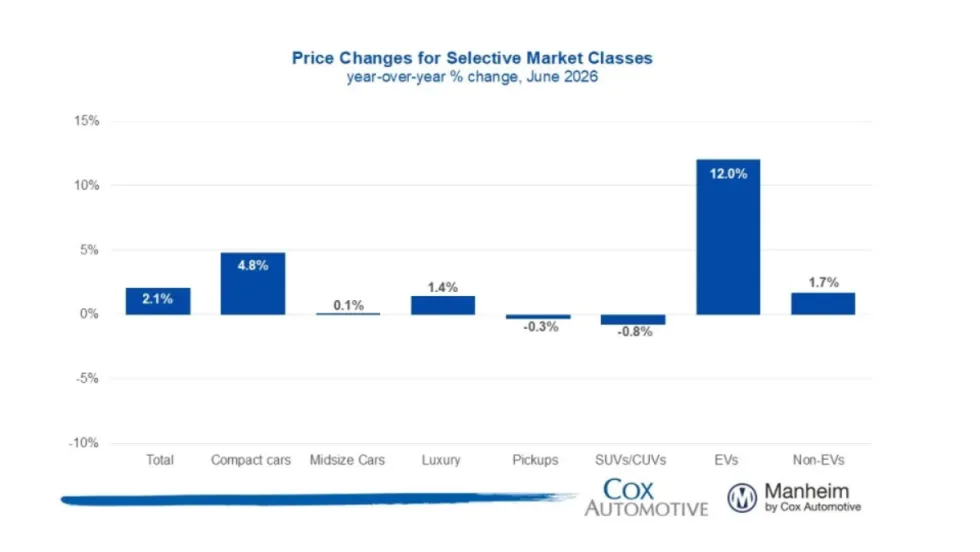
Manheim Index Shows Used-Vehicle Wholesale Prices Up 2.1% in June
The market is seeing stronger appreciation in older used vehicles this year, and the most affordable segments have been among the year’s best performers.
Read More →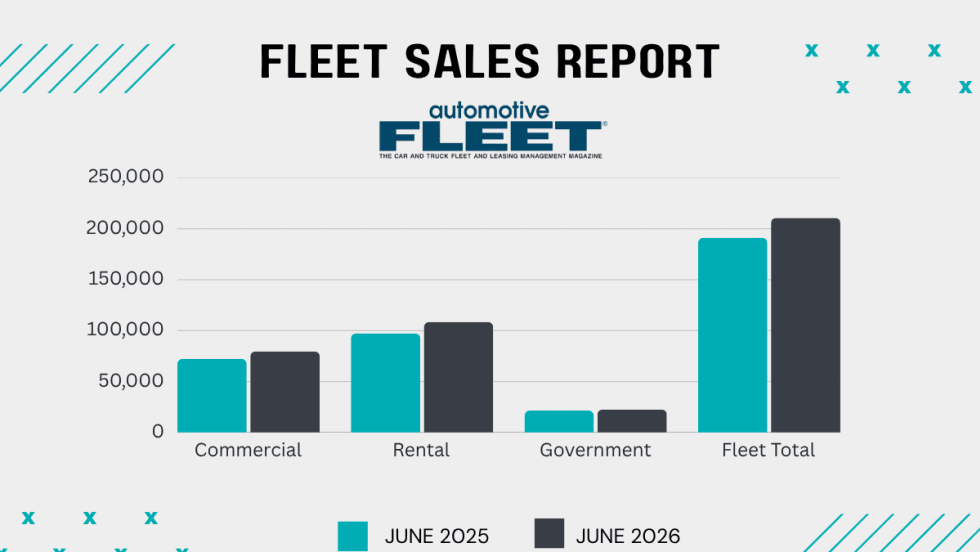
Commercial Fleet Sales Contribute To June, YTD Gains
The fleet sector has boosted its vehicle purchases at a reliable pace in the first half of this year compared with 1H 2025.
Read More →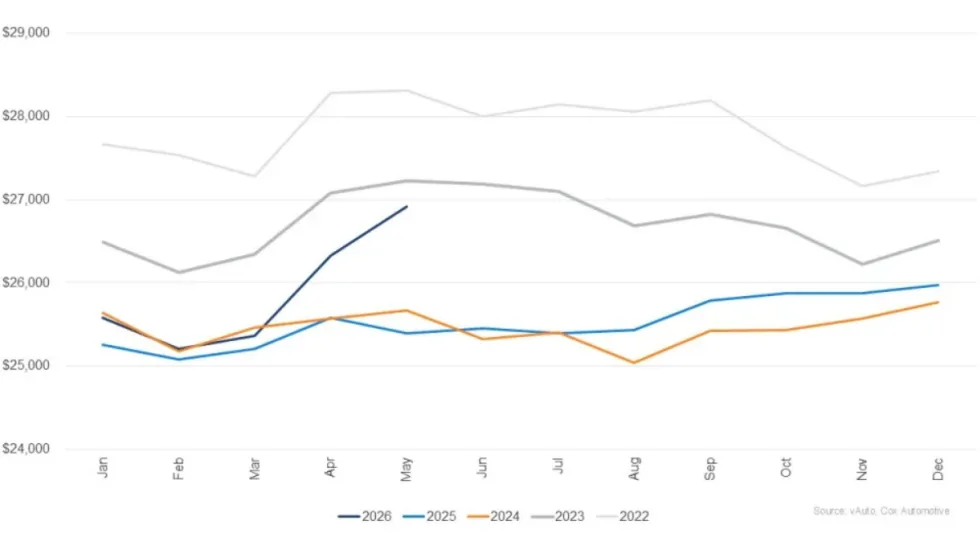
Used Vehicle Prices Climb Higher As Sales Pace Slows
The higher prices at used retail reflect strong wholesale values earlier in the spring, particularly for older, more affordable vehicles.
Read More →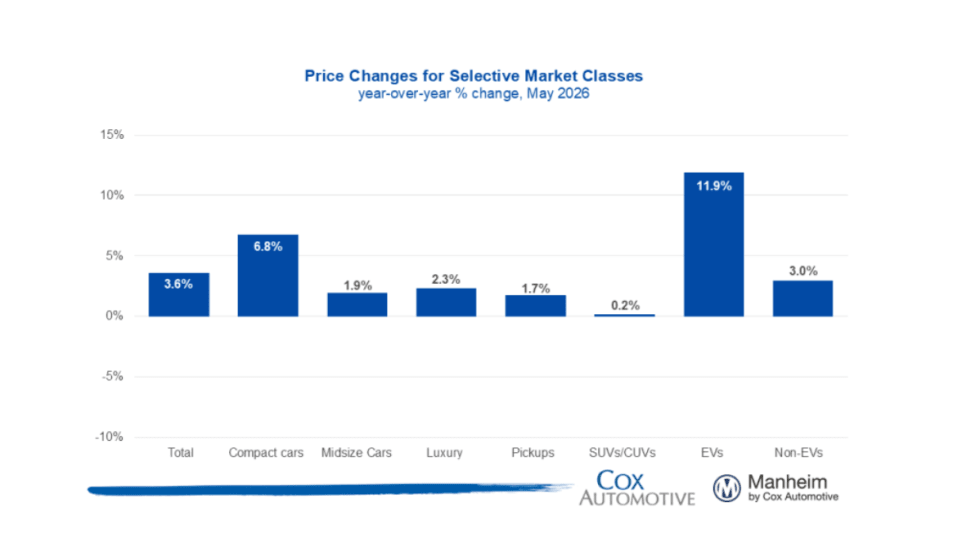
Wholesale Used Vehicle Market Sustains Moderate Rise In Values, Prices
Trends continue to normalize after a strong start to the year, as consumers contend with higher gas prices in the coming summer months.
Read More →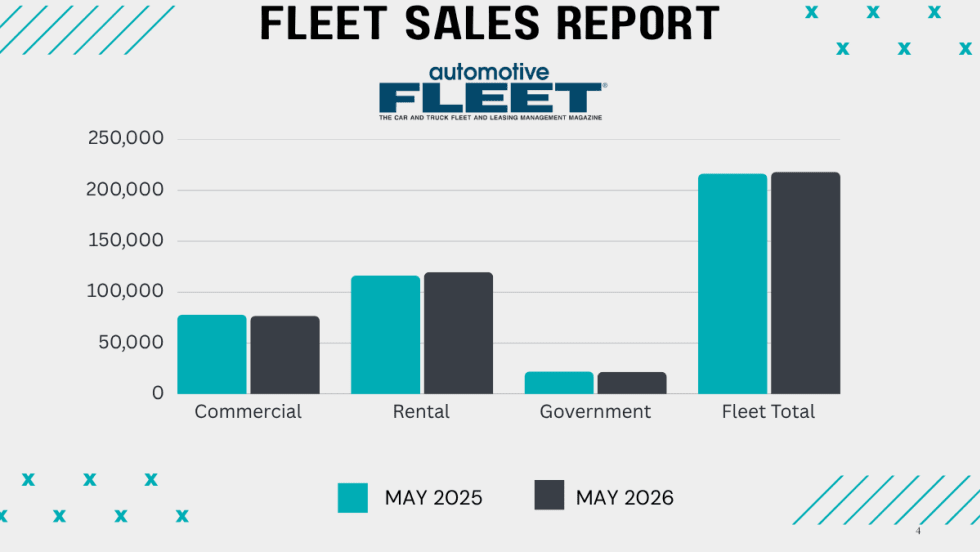
Commercial Fleet Sales Still Lead Sectors Despite May Mini Dip
The U.S. economy's continued growth and positive business investment are creating a favorable environment for fleet vehicle demand.
Read More →
How Connected Vehicle Data Is Lifting Fleet Resale Values
A vehicle health score could improve the value of fleet vehicles at remarketing. The path to a universal standard is forming, and fleets that understand the process early will be better positioned when it arrives.
Read More →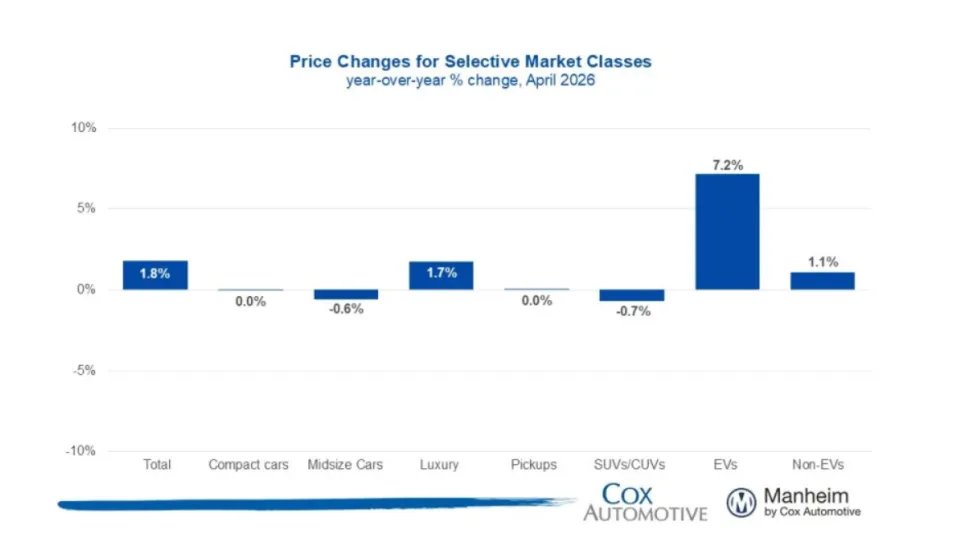
Wholesale Used Vehicle Prices Slightly Up In April
The Iranian conflict and rising gas prices inject much uncertainty into the future wholesale used vehicle markets, as higher gas prices soak up spendable income from vehicle buyers.
Read More →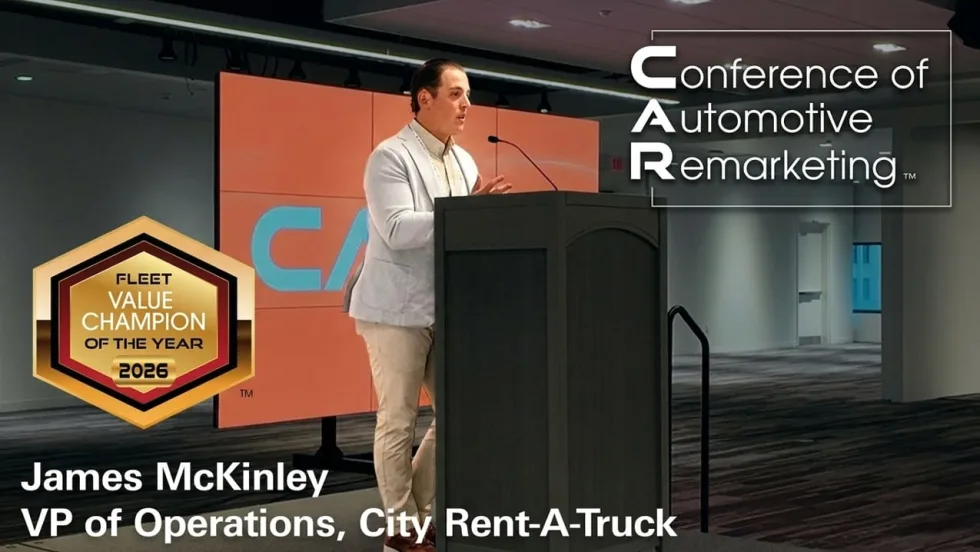
CAR2026: James McKinley Wins Value Champion of the Year
James McKinley of City Rent a Truck was named the inaugural Fleet Value Champion at the CAR Conference for his data-driven approach to fleet lifecycle management and vehicle remarketing.
Read More →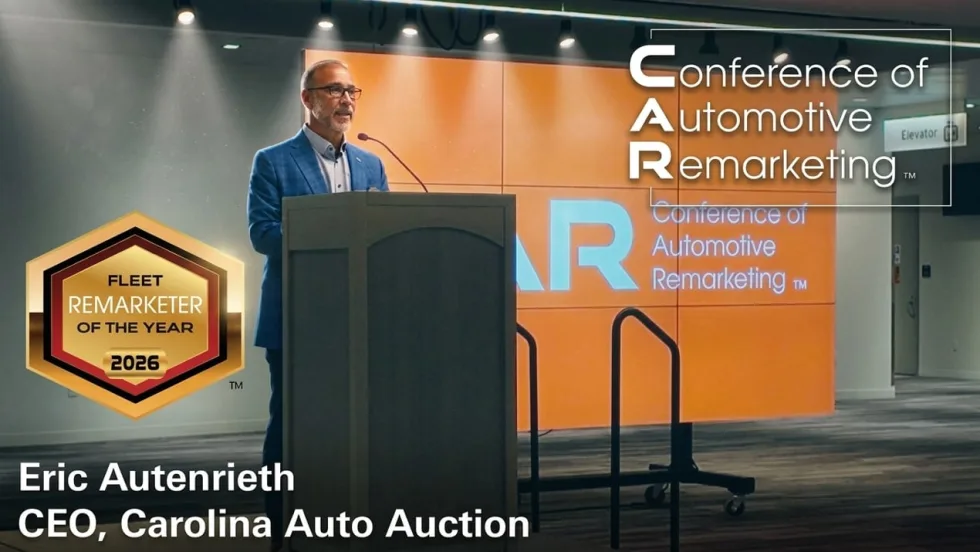
CAR2026: Eric Autenrieth Wins Remarketer of the Year
Eric Autenrieth was recognized at this year's CAR Conference as the Remarketer of the Year.
Read More →