





Related: Women in Fleet Reflect on Leadership and Industry Change
Fleet Meets: Amy Hudson
Fleet Meets is back. Up next: Amy Hudson.
April 7, 2026
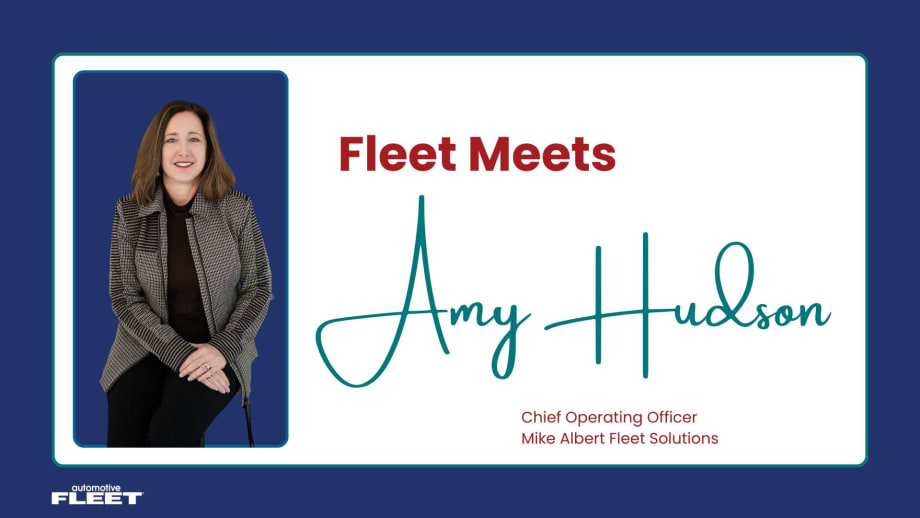
Amy Hudson’s path to fleet leadership wasn’t planned—but her blend of operational insight, data-driven strategy, and openness to opportunity has helped shape a career defined by impact and continuous growth in the industry.
Credit: Automotive Fleet / Amy Hudson
5 min to read
The "Fleet Meets" series is a segment on Automotive Fleet dedicated to showcasing the human side of the industry. Each feature includes insights from industry pioneers on professional development, thought leadership, personal goals, life lessons, and more.
This week, Automotive Fleet connected with Amy Hudson of Mike Albert Fleet Solutions.
A dedicated leader, Hudson was named COO of the Year at the Cincinnati Business Courier’s C-Suite Awards and has been a part of Mike Albert for more than seven years.
Meet Amy Hudson
AF: What’s your professional background, and how did you get involved with fleet?
Hudson: My career is rooted in accounting, technology, and operations leadership. Out of college, I jumped into public accounting, developing a strong foundation in accounting practices and problem-solving and gaining valuable exposure to a wide range of industries, companies, and leaders. In my opinion, it was the best experience a new college grad could have. It shaped the way I approach challenging conversations, communicate with associates at all levels, and give and receive feedback. Over the years, I held a variety of leadership roles across finance, IT, training, client experience, and operations, including more than two decades with Med Plus and Quest Diagnostics before joining Mike Albert Fleet Solutions.
Fleet wasn’t originally an industry I had planned to enter, but the opportunity came through a former colleague who encouraged me to consider Mike Albert. Once I saw how well my background in operations, analytics, and continuous improvement aligned with the business, it felt like a natural fit. What started as an unexpected career move turned into a true passion, and I’ve found the fleet industry to be an incredibly rewarding place to grow and lead.
AF: What do you love about the industry?
Hudson: What I love most about the fleet industry is that it sits at the intersection of people, operations, and technology. It’s an industry where the work seems fairly simplistic from the outside, but has many facets and complexities on the inside. The decisions we make have a real impact on businesses, drivers, safety, efficiency, and customer experience. I truly had no appreciation for all the elements that need to come together to operate an efficient and successful fleet.
I also love that the fleet industry is constantly evolving. Whether it’s technology, data, electrification, safety solutions, or process improvement, there is always something new to learn and an opportunity to create value for our clients.
Most of all, I appreciate the people in this industry. I was completely blown away when I attended my first AFLA event and started getting involved in Women in Fleet — everyone is so willing to help you. This industry is full of hardworking, collaborative professionals who are focused on helping fleet managers succeed.
AF: What’s your biggest piece of life advice?
Hudson: Stay open to opportunities you didn’t plan for. Some of the most meaningful growth in my career has come from saying yes to roles or industries that weren’t originally on my radar. While I applaud professionals who have a clear progression and highly specific goals, I’ve found you don’t always need the full path mapped out — but you do need to be willing to learn, work hard, and trust your ability to adapt.
I’d also add never stop learning. Whether it’s through mentors, certifications, books, podcasts, or simply listening well, continuous learning is one of the best investments you can make in yourself.
AF: What are your hobbies outside of work?
Hudson: Outside of work, I enjoy learning or seeking out mini adventures (which could range from glassblowing to volunteering at a PGA event). I’m a big believer in continuous growth, so I genuinely enjoy listening to podcasts, especially those focused on leadership and professional development. My husband and I have really started to appreciate the value of traveling, especially when we can work in a National Park on every trip. We also enjoy quiet (or loud-friend-filled) weekends at our lake cottage.
AF: If you were an animal, what type of animal would you be?
Hudson: I would choose to be a leopard. They are known for being observant and incredibly patient, often navigating challenging terrain with a quiet, steady focus. There’s a fundamental authority in how they move — they don’t need to be loud to be impactful. In leadership, I find that some of the most powerful moments come from listening, observing the landscape, and then acting with precision and purpose.
AF: You’ve emphasized operational efficiency and ‘data storytelling’ as key leadership strengths. How do you see fleet leaders evolving their use of data to move from reporting metrics to actually influencing strategic decisions?
Hudson: I think the next evolution for fleet leaders is moving beyond simply presenting data to using it to shape decisions, priorities, and actions. Reporting metrics is important, but on its own, it only tells you what happened. Strategic leadership requires asking what the data means, why it matters, and what action it should drive.
That’s where data storytelling becomes so important. Fleet leaders need to connect operational metrics to broader business outcomes, such as cost control, driver safety, client satisfaction, asset utilization, and growth. The goal is not to overwhelm people with dashboards, but to clearly translate data into succinct insights that executives can act on. When you can frame the story behind the numbers, trends become clearer, tradeoffs become easier to evaluate, and decisions become more aligned with business strategy.
The organizations that truly stand out won't just be looking in the rearview mirror with historical reporting; they will be the ones using data as a predictive engine to anticipate challenges and uncover hidden opportunities. When we move from simply documenting what happened to influencing what happens next, data stops being a static report and starts becoming a high-leverage leadership tool that drives real business outcomes.
If you would like to be a part of the "Fleet Meets" series, please reach out to faith.howell@bobit.com for more info.
Subscribe to Our Newsletter
More Operations

Sponsored•October 14, 2026
A buyer's guide to fleet management software in 2027
Buying fleet management software in 2027 means looking beyond features and price. As fleet operations, technology and expectations evolve, this guide explores what today’s fleet professionals should consider when choosing a system that can deliver value now and adapt to what comes next.
Read More →
What Will Shape the Next Era of Fleet Management?
EVs, AI, and autonomous vehicles are reshaping fleet management. Discover what’s ahead—and how fleet leaders can prepare for the next era.
Read More →
How Fleets Can Recruit and Train Veterans for Technician Roles
Here's how the technician shortage has affected uptime for fleets, and what to do about it.
Read More →

Avis Budget Group Deploys Neology Toll Management Technology Across Major Brands
Neology’s neoFleet platform will manage toll transactions and toll-authority operations for vehicles across Avis, Budget, Payless, Budget Truck and Zipcar.
Read More →
Fleet Personal-Use Charges Edge Higher in 2026
Nearly eight in 10 surveyed fleets allow personal use of company vehicles, while just over half of respondents report charging employees for the privilege.
Read More →
The Future of Fleet + What’s Changing Right Now | AF News Recap
Could developments overseas offer a preview of what’s coming for U.S. fleets? This week, we’re looking at the future of AI, autonomy, and electrification, plus Ford Pro’s new certified pre-owned program, smarter vehicle offboarding, and a new way for fleets to manage toll expenses.
Read More →
How to Handle Vehicle Offboarding
What do fleet managers need to do when a driver leaves?
Read More →
Sponsored•October 1, 2026
Fleet Manager’s Ultimate Playbook: Navigating the New Standard in OEM Connectivity
Rising operating costs, driver safety concerns, and unplanned downtime are putting unprecedented pressure on modern fleets. Discover how fleet managers use embedded OEM connectivity and real-time vehicle data to cut TCO, prevent downtime, and protect drivers without aftermarket telematics hardware.
Read More →
U.S. Bank Adds Verra Mobility Toll Management to Voyager Fleet Platform
The integration allows U.S. Bank Voyager fleet customers to manage toll payments and violations alongside fuel, EV charging and maintenance expenses.
Read More →
ADAS Prevents Crashes. But Repairs Cost More | AF News Recap
ADAS-equipped vehicles may crash less often, but they can cost more when they do. This week, we’re breaking down what that tradeoff means for fleets, plus Subaru’s first Forester Wilderness Hybrid, Nissan’s new e-POWER Rogue, and why Calstart has become Catalyst Mobility.
Read More →