




Disaster Readiness Starts Before the Storm [Call for Experts]
The 2026 Disaster Response Guide is officially underway, and we’re now opening a Call for Insights and Experts. Call closes February 20!

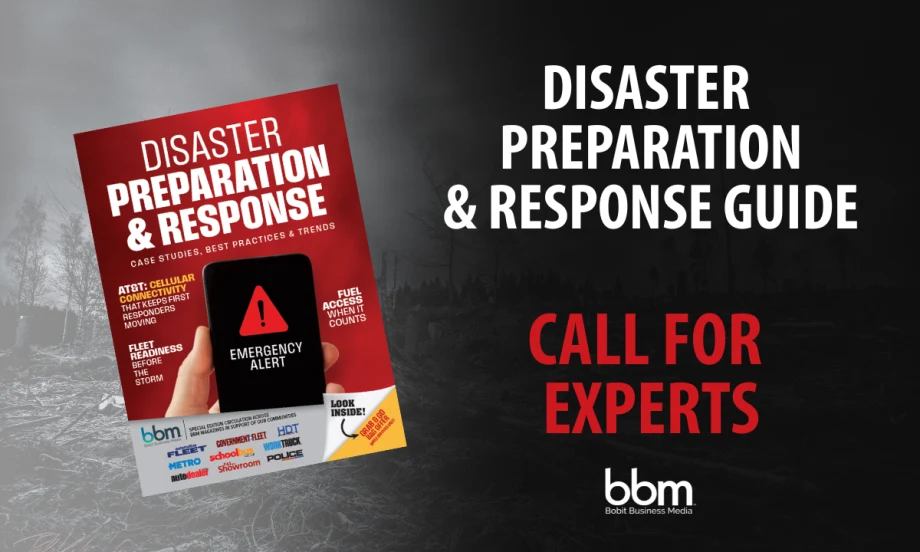
If you have expertise to share, we’d love to hear from you. Submissions will help shape our 2026 coverage, and we’ll be reaching out to select experts once the call closes.
CREDIT: Bobit Business Media
If you work with vehicles in any capacity, you already know the truth: disasters don’t wait for your schedule.
Wildfires. Flooding. Hurricanes. Winter storms. Extreme heat. Tornadoes. Smoke conditions that shut down operations. Even widespread outages that take communication, fuel access, and supply chains offline.
Whether you’re managing a fleet, running a dealership, operating a small business with service vehicles, supporting public sector transportation, or keeping equipment and customers moving, disaster readiness has become part of the job.
That’s why the 2026 Disaster Response Guide is officially underway, and we’re now opening a Call for Insights and Experts. But don't wait - the call for insights closes February 20!
The Disaster Response Guide is an annual resource for fleet, trucking, transportation, public-sector, and vehicle-based business leaders who need real-world guidance on preparing, responding to, and recovering from disasters. It focuses on practical strategies, lessons learned, and tools that help teams stay operational and make smart decisions under pressure.
“This guide is built for the real-world grit of people who keep vehicles moving for work,” said Lauren Fletcher, VP of Content at Bobit Business Media. “It’s not just about having a plan. It’s about knowing what actually works when things go sideways, and sharing that knowledge so others can respond faster and recover stronger.”
Share Your Expertise for the 2026 Guide
We’re looking for insight from people across the vehicle ecosystem, including:
fleet and transportation leaders
dealerships and service teams
small businesses and contractors
OEMs, upfitters, and maintenance providers
utilities, infrastructure, public sector, and emergency response
insurance, risk, technology, and connectivity experts
You can contribute by:
participating as an expert interview source
writing an educational article or case study
sharing a quote or quick insight
providing data or research we can cite
What Topics Are We Looking for This Year?
We’re interested in insights and lessons learned related to:
emergency planning and preparedness
business continuity and operational resilience
vehicle staging, relocation, and asset protection
communication planning and backup systems
fuel and energy readiness
EV preparedness and charging continuity
safety and training for drivers and teams
insurance, risk mitigation, and recovery planning
technology, telematics, and data readiness
supply chain disruptions and maintenance planning
real-world disaster response experiences and takeaways
and other trends that YOU see happening
Ready to Contribute?
If you have expertise to share, we’d love to hear from you. Submissions will help shape our 2026 coverage, and we’ll be reaching out to select experts as we receive entries, which are due by February 20. All interviews or contributions are due by March 16 and will be available to our readers online around the end of March.
Submit your insights using our Call for Experts form here:
https://forms.office.com/r/nNFy0e7qZq
To explore the 2025 Disaster Response guide and downloadable resources, visit https://www.disasterresponseguide.com/.
Originally posted on Work Truck Online
More Safety

Fleet Manager’s Ultimate Playbook: Navigating the New Standard in OEM Connectivity
Rising operating costs, driver safety concerns, and unplanned downtime are putting unprecedented pressure on modern fleets. Discover how fleet managers use embedded OEM connectivity and real-time vehicle data to cut TCO, prevent downtime, and protect drivers without aftermarket telematics hardware.
Read More →
From Driver Well-Being to EV Charging | AF News Recap
Mental health belongs in the fleet safety conversation. This week, we’re looking at five ways fleets can support employee well-being before a crisis, plus Holman’s expansion in Mexico, new one-day Fleet Forward passes, and why EV charging demand is outpacing infrastructure growth.
Read More →
Nexar-Nauto Merger Aims to Give Fleets Better Safety Intelligence Through Larger Driving Dataset
Stefan Heck tells Automotive Fleet that combining more than 10 billion miles of driving history with Nexar's AI models will give fleets deeper insights into driver risk and roadway conditions than either company could provide independently.
Read More →
Don't Wait for a Crisis: 5 Ways to Build Mental Health Into Your Fleet Safety Program
For Suicide Prevention Month, fleet and safety leaders have an opportunity to put mental health where it belongs: at the center of workplace safety.
Read More →
How Camera Data Can Strengthen a Fleet’s Insurance Renewal
Insights from a commercial insurance carrier and a broker show how fleets can turn video telematic data, driver coaching, and improved claims results into a stronger case at insurance renewal.
Read More →
The Safest Fleets Aren’t the Ones with the Most Technology
You’ve made the telematics investment. Here’s how to capture the other half of its value and build the safest fleet on the road.
Read More →
Hidden in Plain Sight: Fleet Compliance Risks
Fleet compliance isn't just about having policies — it's about consistently enforcing them. This practical guide reveals six hidden compliance risks common in public sector and shared fleet operations and outlines proven strategies to improve visibility, accountability, and audit readiness
Read More →
NETS Sets 2026 Fleet Safety Benchmark Conference for Indianapolis
The Sept. 15–17 program will feature fleet benchmarking data, case studies, emerging technologies, and implementation strategies while running alongside the NSC Safety Congress & Expo.
Read More →
Off-the-Job Crashes Account for 43% of Employers’ $61.7 Billion Crash Burden
NETS quantifies costs dispersed across fleet, risk, HR, and other departments while providing new per-crash benchmarks for employers.
Read More →
Ram Recalls More Than 1.27 Million 1500 Pickups for Seat Belt Anchor Issue
The recall affects certain 2019-2026 Ram 1500 pickups that may have improperly attached second-row seat belt buckle anchors.
Read More →