





Related: Winter Driving Safety for Fleet Drivers: Managing Risk Across North America
The Hidden Risks of Driving in Extreme Conditions
Why ice, heat, and surface conditions compromise vehicle performance before drivers realize it.
January 6, 2026
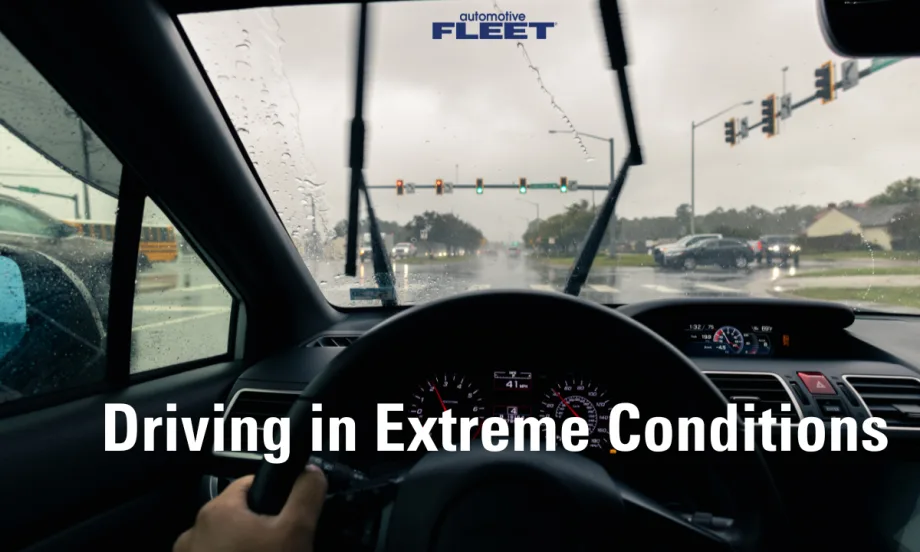
Drivers typically lose traction only during braking or turning, leaving little opportunity for corrective action. (NHTSA winter driving research)
Credit: Automotive Fleet
5 min to read
Extreme weather presents complex challenges for fleet operations, often affecting vehicles, roadways, and schedules simultaneously. While common guidance focuses on preparedness, such as vehicle inspections and speed reduction, many risks associated with extreme conditions are less visible and not always well understood.
Conditions like ice, freezing rain, snow, and extreme heat can subtly alter vehicle performance. Steering response may feel different, braking distances can change unexpectedly, and traction can vary dramatically within short distances or along familiar routes. These changes are not always intuitive and may not be immediately apparent to even experienced drivers.
Ice ≠ Snow: Why Surface Conditions Matter More Than Temperature
Ice can cause an immediate loss of traction with little warning, especially on bridges, overpasses, shaded areas, and untreated secondary roads.
Unlike snow, ice is often transparent. Pavement may appear wet or clear while offering little to no grip.
Drivers may not feel reduced traction until braking or turning is required, limiting the ability to make corrective adjustments.
A route may alternate between dry pavement, packed snow, and ice within the same mile, increasing the need for early speed and spacing adjustments.
Ice can form near or above freezing due to refreezing meltwater, wind exposure, or overnight temperature swings.
On ice, braking effectiveness can vary significantly, even at low speeds, increasing the likelihood of intersection and rear-end incidents.
ABS, traction control, and stability systems rely on available grip; on ice, their ability to assist is reduced.
The Illusion of Control: Why Freezing Rain Is So Dangerous
Freezing rain creates a smooth glaze of ice that offers significantly less traction than snow or sleet, often approaching zero grip.
Pavement may look damp rather than icy, providing little visual indication of the actual surface condition.
At steady speeds, vehicles may track straight, creating a false sense of control that disappears during braking, turning, or lane changes.
Even light braking can result in extended stopping distances, making intersections, ramps, and downhill grades particularly hazardous.
On a glazed surface, steering corrections may not register, reducing the driver’s ability to recover once traction is lost.
ABS, traction control, and stability control depend on some level of friction; freezing rain can exceed their functional limits.
Freezing rain can develop rapidly, sometimes outpacing weather alerts and leaving little time for reactive adjustments.
Because corrective driving inputs are limited, delaying departures, modifying routes, or suspending operations often provides the greatest risk reduction.
Heat as a Silent Risk: How Extreme Temperatures Affect Vehicles and Drivers
Tire pressure increases with temperature: Rising heat can elevate tire pressure beyond optimal levels, increasing the risk of reduced traction, uneven wear, or blowouts, especially during sustained highway driving.
Braking systems experience thermal stress: High temperatures can reduce braking efficiency, particularly during frequent stops, downhill grades, or heavy-load operations.
Vehicle cooling systems are pushed to their limits: Radiators, hoses, belts, and fluids are more likely to fail under prolonged heat exposure, often without immediate warning signs.
Cabin heat contributes to driver fatigue: Even with air conditioning, extended exposure to high temperatures can increase fatigue, slow reaction times, and reduce concentration.
Heat accelerates vehicle wear: Fluids degrade faster, batteries are stressed, and rubber components deteriorate more quickly in extreme temperatures.
Breakdowns create secondary safety risks: Disabled vehicles on roadways during extreme heat expose drivers to traffic hazards and heat-related health concerns.
Risk accumulates over time, not instantly: Unlike ice or freezing rain, heat-related risks build gradually, making proactive planning and monitoring essential.
Why Tire Pressure Matters in Both Cold and Heat Extremes
Tire pressure is one of the few vehicle factors that is directly influenced by temperature, and one of the most commonly misunderstood. While underinflation is often associated with winter driving and overinflation with summer heat, both conditions can occur year-round depending on temperature swings, vehicle load, and driving duration. Understanding how temperature affects tire pressure helps fleets and drivers reduce risk before performance is compromised.
Cold Weather and Tire Pressure
Air pressure decreases as temperatures drop
Tire pressure typically drops about 1 PSI for every 10°F decrease in ambient temperature.
Underinflated tires reduce traction and control
Low pressure increases tire flex, reduces steering responsiveness, and can extend braking distances on cold or slick surfaces.
Fuel efficiency and tire wear are impacted
Underinflation increases rolling resistance, leading to uneven wear and reduced fuel economy.
Cold tires provide less real-time feedback
Reduced responsiveness can delay a driver’s ability to sense changes in road conditions.
Hot Weather and Tire Pressure
Air pressure increases as temperatures rise
Heat causes air inside the tire to expand, which can push pressure beyond recommended levels during extended driving.
Overinflation reduces the contact patch
Excess pressure limits the tire’s surface contact with the road, reducing traction and braking effectiveness.
Risk increases during sustained or high-speed driving
Long routes, heavy loads, and high pavement temperatures amplify pressure buildup.
Heat accelerates tire degradation
Elevated temperatures increase stress on tire components, raising the risk of failure if pressures are not properly managed.
Drivers should take action if a tire pressure warning light illuminates, if tires show uneven or rapid tread wear, or if the vehicle feels less responsive or unusually “floaty” while driving. Visible tire damage, bulging, or vibration should also be addressed immediately. Best practices include carrying a reliable tire pressure gauge rather than relying solely on TPMS alerts, promptly reporting recurring pressure loss or abnormalities, and treating tire pressure as a dynamic safety check that requires attention year-round, not just seasonally.
Extreme driving conditions don’t create risk in isolation, they expose it. Ice, freezing rain, and extreme heat each affect vehicles and drivers in different, often subtle ways that aren’t always obvious in the moment. By understanding how surface conditions, temperature, vehicle systems, and equipment like tires interact, fleets and drivers can move beyond seasonal checklists toward more informed, proactive decisions. The goal isn’t to eliminate exposure entirely, but to recognize changing conditions early, adjust expectations accordingly, and apply sound judgment supported by training, policy, and planning. When awareness and preparation align, extreme conditions become more manageable, and preventable incidents remain just that: preventable.
Subscribe to Our Newsletter
More Safety

Sponsored•October 1, 2026
Fleet Manager’s Ultimate Playbook: Navigating the New Standard in OEM Connectivity
Rising operating costs, driver safety concerns, and unplanned downtime are putting unprecedented pressure on modern fleets. Discover how fleet managers use embedded OEM connectivity and real-time vehicle data to cut TCO, prevent downtime, and protect drivers without aftermarket telematics hardware.
Read More →
From Driver Well-Being to EV Charging | AF News Recap
Mental health belongs in the fleet safety conversation. This week, we’re looking at five ways fleets can support employee well-being before a crisis, plus Holman’s expansion in Mexico, new one-day Fleet Forward passes, and why EV charging demand is outpacing infrastructure growth.
Read More →
Nexar-Nauto Merger Aims to Give Fleets Better Safety Intelligence Through Larger Driving Dataset
Stefan Heck tells Automotive Fleet that combining more than 10 billion miles of driving history with Nexar's AI models will give fleets deeper insights into driver risk and roadway conditions than either company could provide independently.
Read More →
Don't Wait for a Crisis: 5 Ways to Build Mental Health Into Your Fleet Safety Program
For Suicide Prevention Month, fleet and safety leaders have an opportunity to put mental health where it belongs: at the center of workplace safety.
Read More →
How Camera Data Can Strengthen a Fleet’s Insurance Renewal
Insights from a commercial insurance carrier and a broker show how fleets can turn video telematic data, driver coaching, and improved claims results into a stronger case at insurance renewal.
Read More →
The Safest Fleets Aren’t the Ones with the Most Technology
You’ve made the telematics investment. Here’s how to capture the other half of its value and build the safest fleet on the road.
Read More →
Sponsored•August 7, 2026
Hidden in Plain Sight: Fleet Compliance Risks
Fleet compliance isn't just about having policies — it's about consistently enforcing them. This practical guide reveals six hidden compliance risks common in public sector and shared fleet operations and outlines proven strategies to improve visibility, accountability, and audit readiness
Read More →
NETS Sets 2026 Fleet Safety Benchmark Conference for Indianapolis
The Sept. 15–17 program will feature fleet benchmarking data, case studies, emerging technologies, and implementation strategies while running alongside the NSC Safety Congress & Expo.
Read More →
Off-the-Job Crashes Account for 43% of Employers’ $61.7 Billion Crash Burden
NETS quantifies costs dispersed across fleet, risk, HR, and other departments while providing new per-crash benchmarks for employers.
Read More →
Ram Recalls More Than 1.27 Million 1500 Pickups for Seat Belt Anchor Issue
The recall affects certain 2019-2026 Ram 1500 pickups that may have improperly attached second-row seat belt buckle anchors.
Read More →