




New Auto Tariffs Now Bring the Unthinkable
Commentary/Analysis: Look for likely higher prices across the broader economy, with the auto market heading into uncharted territory — a rough road indeed.
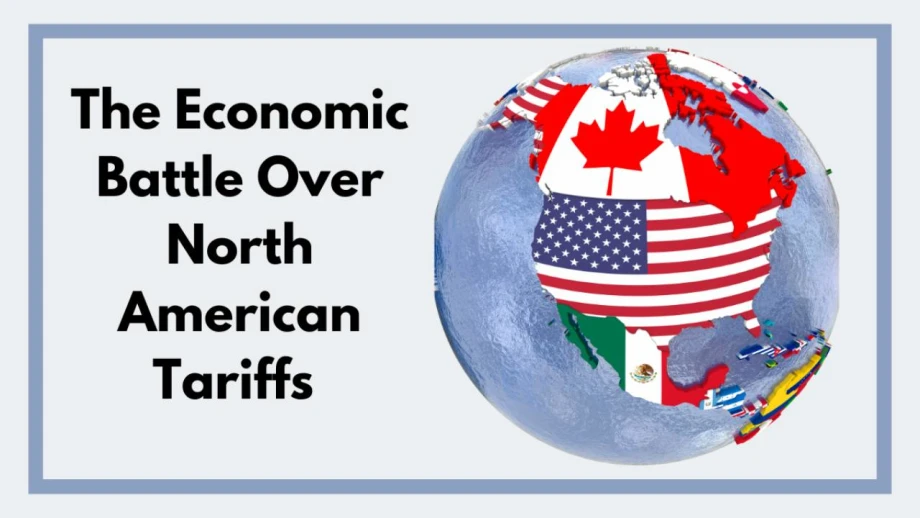
Finished automobiles no longer flow freely across North America, and key automotive free trade agreements have been scrapped.
Graphic: BBM
As our Chief Economist Jonathan Smoke feared, the “unthinkable” has happened. New automotive-specific tariffs of 25% on all imported vehicles are now in place.
Finished automobiles no longer flow freely across North America, and key automotive free trade agreements have been scrapped. This significant shift in the automotive landscape creates a ripple effect affecting sales, inventory, pricing, and manufacturing. Here’s what to consider and what the Cox Automotive Economic and Industry Insights team is watching closely:
Tariffs Spur Short-Term Sales Spike
Initial industry estimates suggest March ended with a surge in new vehicle sales driven by consumers jumping in before new tariffs begin to push prices higher. New-vehicle sales in March are estimated at 1.59 million units sold, exceeding the Cox Automotive forecast and the best month for sales volume in four years. Our team had expected volume in March to be 1.43 million, a decline from 2024 levels. Volume rose by nearly 11% year-over-year and a remarkable 30% from February. Clearly, in the short term at least, shoppers have embraced a “better buy now” attitude, betting on higher prices later this year.
The seasonally adjusted annual rate (SAAR) of sales in March is now initially estimated at 17.8 million, the highest SAAR in four years as well and nearly 2 million units higher than the Cox Automotive forecast of 15.9 million. The retail SAAR was at 15.2 million, up 20% year over year.
Following President Trump’s executive order, the market experienced a big shift as consumers responded with increased urgency, resulting in higher shopping traffic and sales activity. Shopping traffic on Cox Automotive’s Kelley Blue Book and Autotrader websites surged, with activity rising by 30% in the final days of March compared to the year-to-date average daily traffic.
Our team expects strong sales until “pre-tariff inventory” declines, although every automaker and dealer approaches this situation differently. Some automakers are already moving forward with sales and discounts or offering price assurance programs. In contrast, others have already scheduled production stoppages or are holding vehicles at the border, still deciding how to approach the new tariff rules.
April new-vehicle sales may well be strong as existing inventory is drawn down. However, our team expects new-vehicle sales dynamics to shift by summer as the market slows under the weight of higher prices. Our full-year forecast has been lowered to 15.6 million from 16.3 million.
New, Used Vehicles Inventory Bears Close Watching
New and used inventory will be a key metric to watch. New-vehicle inventory increased modestly to 2.67 million units toward the end of March, down 2.7% against the same time in 2024. But a surge of sales pushed days’ supply lower to 71, down from 89 a month earlier. Our full, official inventory report from vAuto will be available next week, and at that point, we will likely see the full picture of strong month-end sales.
Used-vehicle inventory will eventually be affected by new-vehicle tariffs as well. Used inventory was trending lower late in March, falling to 2.15 million units, down 1.2% against 2024. Used days’ supply declined 4% on the week, moving down to 38 days. But that is mostly typical for this time of year, as the used-vehicle market feels its “spring bounce” during tax refund season, with stronger sales and tightening inventory. Our team will be reviewing used vehicle pricing and sales during the quarterly Manheim Used Vehicle Value Index (MUVVI) call on Monday.
Before tariffs went into effect, we could see that brands had different levels of immediate exposure due to their current supply levels. Analyzing our vAuto data, the current days of supply – or how long existing inventory will last based on the current sales pace – shows that the market had 89 days’ supply nationally at the beginning of March, so nearly three months of available new vehicles before the month-end rush pulled days’ supply lower. Some brands had far more: Ford, Mazda, and Hyundai all had supply levels above four months at the start of March. Meanwhile, Stellantis brands Jeep and Ram had slightly less after recent reductions, and, typically, Toyota, Honda, and Subaru had much tighter inventory.
It is more important, however, to look at key, high-volume, lower-priced vehicles that the new tariff plans will certainly challenge. We can see great variation there as well.
A Hard Hit to Compact Sedan, SUV Prices
The average price of a new vehicle in the U.S. is north of $48,000, according to our analysis. Importantly, however, more than 40% of new-vehicle sales by volume in 2024 were priced under $40,000. These “lower-priced” vehicles are particularly vulnerable to the new tariffs.
Our analysis suggests the 25% tariff on imported vehicles will apply to nearly 80% of vehicles priced under $30,000. Popular models in this category include the Honda Civic, Toyota Corolla, Chevy Trax and Trailblazer, Nissan Sentra, and Honda HR-V.
Compact SUVs – most priced well below the industry average – will also be impacted. Some of the best-selling vehicles in the market today, the Toyota RAV4 and Honda CR-V, are exposed, and also volume products such as the Nissan Rogue, Chevy Equinox, Hyundai Tucson, and Subaru Forester. How much will vehicle prices go up? It is impossible to say at this moment, as each automaker will handle the tariffs differently.
Before the COVID pandemic and supply chain disruptions that followed, new-vehicle prices typically rose about 3-to-4% annually, roughly aligned to natural inflation. Following the initial surge of the pandemic, new vehicle price growth accelerated notably: In 2021, the average new vehicle transaction price was nearly 15% higher in December than it was in January. New vehicle price inflation cooled dramatically in 2023 and 2024. What’s on tap for 2025 is yet to be seen.
But all roads lead to this fact: As new tariffs settle into place in the coming months and years, vehicle prices in the U.S. are expected to increase. A bill for the 25% duty at the border for imported vehicles and a 25% tariff on foreign content in vehicles assembled inside the U.S. will likely result in price inflation within the auto industry. We expect that vehicles impacted by these tariffs could see prices increase 10-15%. In addition, given market dynamics, we also anticipate seeing at least a 5% increase in prices of vehicles not subject to the full 25% tariff.
U.S. Manufacturing Readies for Disruption
Cox Automotive’s position on tariffs is that they will add cost to a business already facing affordability issues and profitability challenges. The Trump Administration’s goal is admirable — to grow U.S. manufacturing — but the current U.S. auto market has been shaped by global trade for more than 60 years, and abrupt changes to the status quo will be disruptive.
We know this: The auto industry is a high-cost, complex, long-horizon business that operates best in a stable, consistent environment. However, it is also a highly innovative, tech-intensive industry that has recently come under increased pressure from the success of Chinese manufacturers that have raced ahead in terms of speedy and efficient development cycles and cost efficiency.
This situation comes when traditional automakers are deeply engaged in rethinking decades of ingrained production methodologies. So, while building, selling and servicing vehicles is highly dynamic, given sufficient time, investment, and the proper incentives, automakers and dealers should be able to navigate this challenge. The toughest part will be doing so without pricing more consumers out of the new vehicle market, shrinking the market further.
As our team noted, tariffs can be effective tools to level international playing fields and grow domestic manufacturing. How they are implemented, however, matters. The size and structure of the global auto industry make rapid change difficult at best – factories take time to build, supply chains years to create, and workforces cannot be developed overnight. In the auto industry, sudden changes usually produce only one result: Chaos.
It is important to remember that nearly every volume automaker that sells vehicles in the U.S. also builds vehicles in the U.S. or in North America, where the long-standing rules in USMCA (formerly NAFTA) encouraged investment and production. These are familiar names: Acura, Audi, BMW, Genesis, Honda, Hyundai, INFINITI, Kia, Lexus, Mazda, Mercedes-Benz, Nissan, Subaru, Toyota, Volkswagen, Volvo and, of course, all the “domestic” nameplates produce vehicles in the U.S. However, these companies are global players as well, manufacturing and selling vehicles in nearly every corner of the global market and balancing global product needs and global supply chains. The U.S. is a big market, but not the biggest.
We support manufacturing vehicles within the United States; however, it is important to acknowledge that such transitions require time and investments. While certainly possible, they all begin with long-term policy stability and consistent rulemaking at the borders. The rollout of massive new tariffs at the U.S. border has been anything but.
What’s Next
As noted above, the Cox Automotive economic and industry insights team expects sales to be healthy in the short term. April and May may be good months for vehicle sales, with consumers feeling an urgency to buy, even though loan rates remain close to 25-year highs and incentives are likely to shrink.
This summer, production disruptions and declines could be a reality, especially as automakers and suppliers work to align practices with the new rules. Additional tariffs, per a Rose Garden ceremony on April 2, are likely pushing prices higher across the broader economy, so the auto market is absolutely heading into uncharted territory — a rough road indeed. We will do our best to provide perspective on this story as it unfolds.
More Remarketing
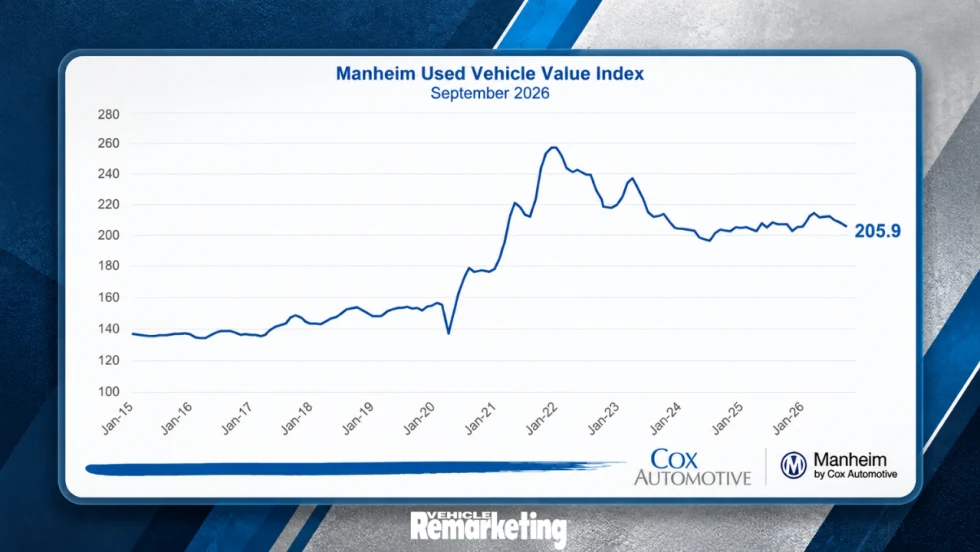
Wholesale Used-Vehicle Values Fall as Cox Automotive Cuts 2026 Forecast
Wholesale used-vehicle prices declined in September as depreciation accelerated, prompting Cox Automotive to lower its year-end forecast.
Read More →
FLD Promotes Three Executives in Leadership Changes
FLD has promoted three longtime executives, naming Gary Mott CEO, Richard Mallek president, and Ron Sanders managing partner.
Read More →
Ford Pro Launches Certified Pre-Owned Program for Commercial Vehicles
Ford Pro Advantage will offer certified pre-owned Class 1-7 commercial vehicles through more than 700 Ford Pro Commercial Vehicle Centers.
Read More →
Copart to Acquire ACV in $1.9 Billion Deal
The acquisition would expand Copart beyond its traditional salvage business into dealer-to-dealer wholesale remarketing while adding ACV’s vehicle data, inspection, and valuation technology.
Read More →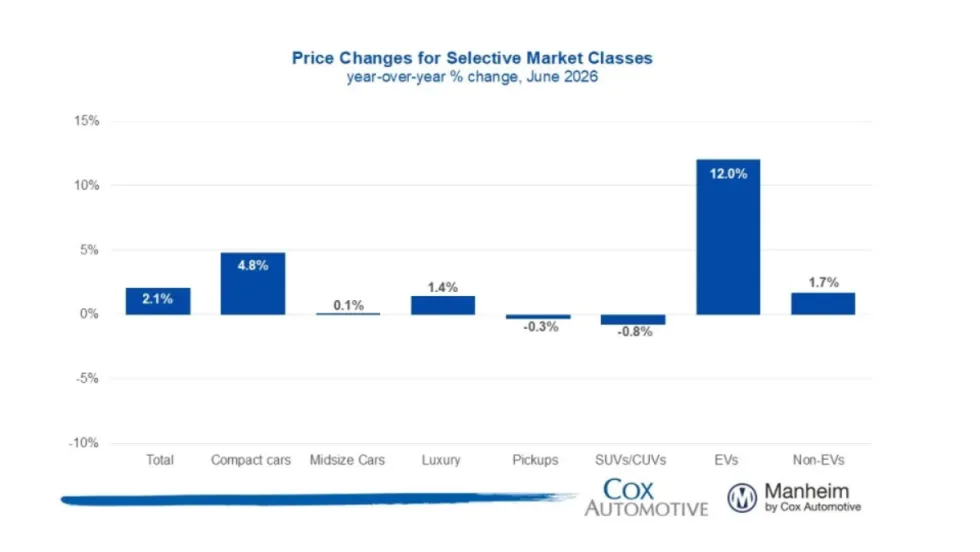
Manheim Index Shows Used-Vehicle Wholesale Prices Up 2.1% in June
The market is seeing stronger appreciation in older used vehicles this year, and the most affordable segments have been among the year’s best performers.
Read More →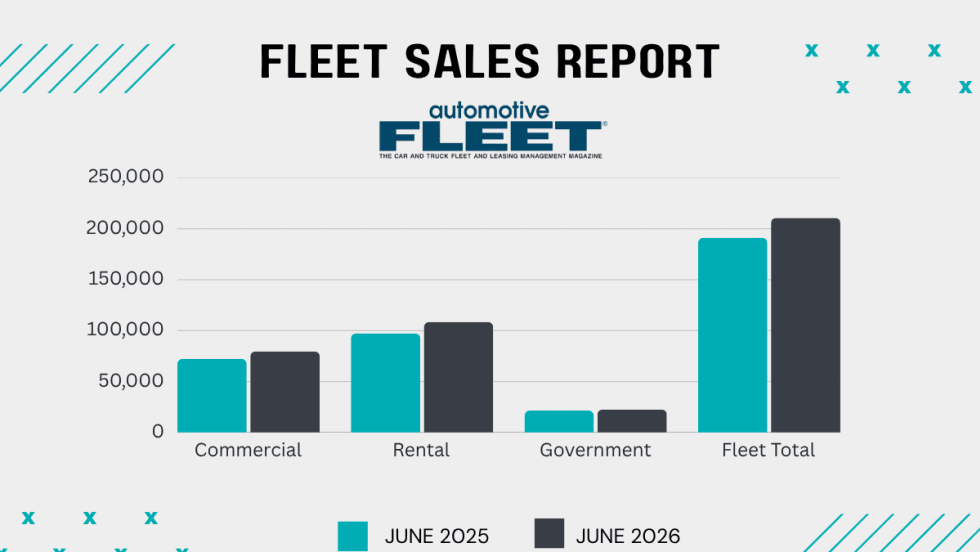
Commercial Fleet Sales Contribute To June, YTD Gains
The fleet sector has boosted its vehicle purchases at a reliable pace in the first half of this year compared with 1H 2025.
Read More →
Used Vehicle Prices Climb Higher As Sales Pace Slows
The higher prices at used retail reflect strong wholesale values earlier in the spring, particularly for older, more affordable vehicles.
Read More →
Wholesale Used Vehicle Market Sustains Moderate Rise In Values, Prices
Trends continue to normalize after a strong start to the year, as consumers contend with higher gas prices in the coming summer months.
Read More →
Commercial Fleet Sales Still Lead Sectors Despite May Mini Dip
The U.S. economy's continued growth and positive business investment are creating a favorable environment for fleet vehicle demand.
Read More →
How Connected Vehicle Data Is Lifting Fleet Resale Values
A vehicle health score could improve the value of fleet vehicles at remarketing. The path to a universal standard is forming, and fleets that understand the process early will be better positioned when it arrives.
Read More →