




Together for Safer Roads Guide Outlines Best Practices for Seat Belts
The guide includes a look at currently existing practices within fleets based on an Oct. 2023 survey, industry best practices, and actionable takeaways for fleets.

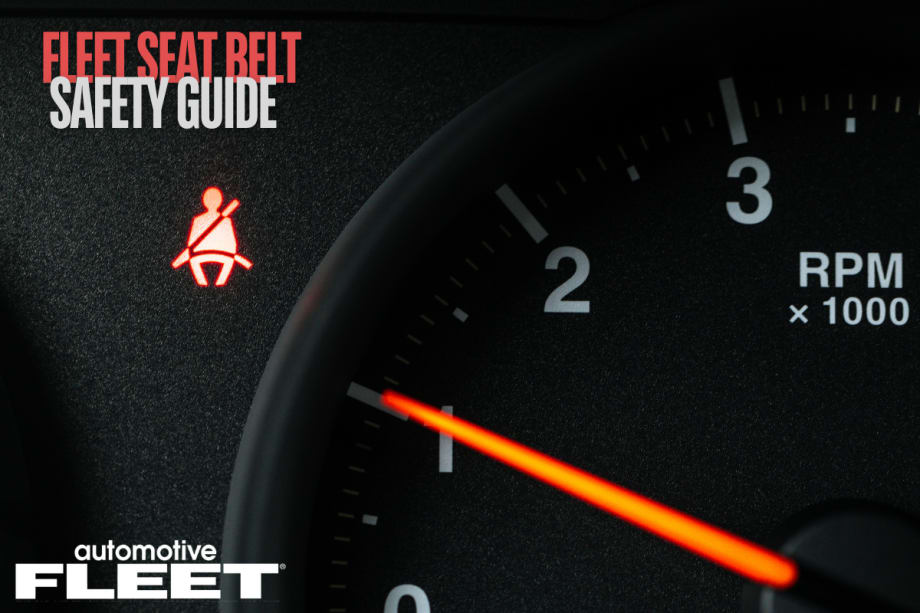
Among the actionable steps suggested in TSR's new guide is to utilize data analytics and telematics in a continuous cycle to measure and enhance seat belt compliance.
Photo: Automotive Fleet
A new guide from Together for Safer Roads (TSR) is designed to promote safety in fleet vehicles through seat belt use by establishing a seat belt utilization standard.
The guide, “Seat Belt Safety Standard Operating Procedures: How to create and maintain a culture of safety by promoting seat belt safety procedures”, is part of TSR’s Fleet Trucking Global Safety Standards Initiative. While it's not an official guide by a government entity, it's meant to establish a comprehensive framework for promoting seat belt safety within an organization, according to a disclaimer.
Why the Report Was Created
The authors pointed to Federal Motor Carrier Safety Administration data stating that an estimated 14% of commercial motor vehicle drivers reported they still didn’t wear seat belts in 2023.
The Standard Operating Procedures (SOP) are meant to act as a fleet-specific guide to help both public and private fleets establish best practices.
The guide's authors used feedback from real fleet drivers.
"By allowing for the input and experience of drivers to inform decision making in fleets, we can create environments that are best suited to enhance the adoption of effective, long-term seat belt safety practices...This report ultimately represents a commitment to the ethos that every life is valuable, and that every journey, no matter how short, deserves the safeguard of a securely fastened seat belt," the authors stated in the foreward.
Within each chapter, practices are categorized as currently existing practices, industry best practices, and easy to implement takeaways.
Currently existing practices were sourced from Together for Safer Road member fleet drivers during an Oct. 2023 workshop and subsequent field interviews.
The SOP contains six chapters:
Training for Seat Belt Compliance: Building a foundation of knowledge and cultivating a culture of safety through comprehensive training initiatives.
Seat Belt Software and Hardware Selection: Adopting the most reliable and effective technological solutions to bolster seat belt compliance and monitoring.
Purchasing and Evaluating Vehicle Seat Belt Safety Systems: Ensuring that the procurement of vehicles and their safety equipment is guided by informed, safety-focused decisions. This involves establishing clear criteria for seat belt safety features and assessing the safety records and seat belt technology of potential vehicle models to maintain compliance with seat belt safety regulations.
Seat Belt Utilization Enforcement: Creating mechanisms for compliance, while ensuring accountability and timely corrective actions.
Communication for Seat Belt Safety Awareness: Establishing clear channels and protocols for disseminating safety information, collecting feedback, and fostering dialogue.
Documentation of Seat Belt Safety Compliance: Ensuring meticulous record-keeping, accessibility, and regular updates to all seat belt safety-related documents.
Helping Fleets Establish Seat Belt Safety Goals
The SOP contains actionable steps to help fleets establish standard practices and safety goals. Some of the goals outlined include:
Consider adopting a seat belt safety approach as a distinct, but also a specific element of, a larger, overarching, holistic safety culture.
Recognize and reward drivers who consistently exhibit safe behaviors, creating a more proactive safety culture.
Integrate ongoing education and training programs that are part of a comprehensive safety strategy.
Utilize data analytics and telematics in a continuous cycle to measure and enhance seat belt compliance with a systematic approach that includes not only the drivers and users, but also the system designers, and policy makers. This allows for real-time feedback and more targeted interventions when non-compliance patterns emerge.
The last point in particular is important, the authors noted, because measurement and evaluation of seat belt utilization ensures the effectiveness, efficiency, and impact of safety programs.
TSR encouraged SOP users to send feedback on the guide from within fleet organizations to help expand it as needed.
More Safety

What’s Next for Fleet? Safety, AI & Industry Recognition | AF News Recap
Could your company's culture be encouraging distracted driving? This week, we're exploring how workplace expectations affect driver safety, what AI, EVs, and autonomous vehicles could mean for the future of fleet management, and how fleet professionals can strengthen their award nominations.
Read More →
Does Your Fleet's Culture Encourage Distracted Driving?
What happens when the people responsible for enforcing safety rules are the ones setting the wrong example? The answer may reveal why some of the biggest risks to fleet drivers have little to do with what's written in the employee handbook.
Read More →
Fleet Manager’s Ultimate Playbook: Navigating the New Standard in OEM Connectivity
Rising operating costs, driver safety concerns, and unplanned downtime are putting unprecedented pressure on modern fleets. Discover how fleet managers use embedded OEM connectivity and real-time vehicle data to cut TCO, prevent downtime, and protect drivers without aftermarket telematics hardware.
Read More →
From Driver Well-Being to EV Charging | AF News Recap
Mental health belongs in the fleet safety conversation. This week, we’re looking at five ways fleets can support employee well-being before a crisis, plus Holman’s expansion in Mexico, new one-day Fleet Forward passes, and why EV charging demand is outpacing infrastructure growth.
Read More →
Nexar-Nauto Merger Aims to Give Fleets Better Safety Intelligence Through Larger Driving Dataset
Stefan Heck tells Automotive Fleet that combining more than 10 billion miles of driving history with Nexar's AI models will give fleets deeper insights into driver risk and roadway conditions than either company could provide independently.
Read More →
Don't Wait for a Crisis: 5 Ways to Build Mental Health Into Your Fleet Safety Program
For Suicide Prevention Month, fleet and safety leaders have an opportunity to put mental health where it belongs: at the center of workplace safety.
Read More →
How Camera Data Can Strengthen a Fleet’s Insurance Renewal
Insights from a commercial insurance carrier and a broker show how fleets can turn video telematic data, driver coaching, and improved claims results into a stronger case at insurance renewal.
Read More →
The Safest Fleets Aren’t the Ones with the Most Technology
You’ve made the telematics investment. Here’s how to capture the other half of its value and build the safest fleet on the road.
Read More →
Hidden in Plain Sight: Fleet Compliance Risks
Fleet compliance isn't just about having policies — it's about consistently enforcing them. This practical guide reveals six hidden compliance risks common in public sector and shared fleet operations and outlines proven strategies to improve visibility, accountability, and audit readiness
Read More →
NETS Sets 2026 Fleet Safety Benchmark Conference for Indianapolis
The Sept. 15–17 program will feature fleet benchmarking data, case studies, emerging technologies, and implementation strategies while running alongside the NSC Safety Congress & Expo.
Read More →