





Keep Reading: Managing Payments in a Mixed Energy Fleet
WEX Rolls Out EV Fleet Management Solutions
WEX EV At-Home automates reporting and reimbursement for at-home charging, and WEX En Route is a payment system for public EV charging.
April 18, 2024
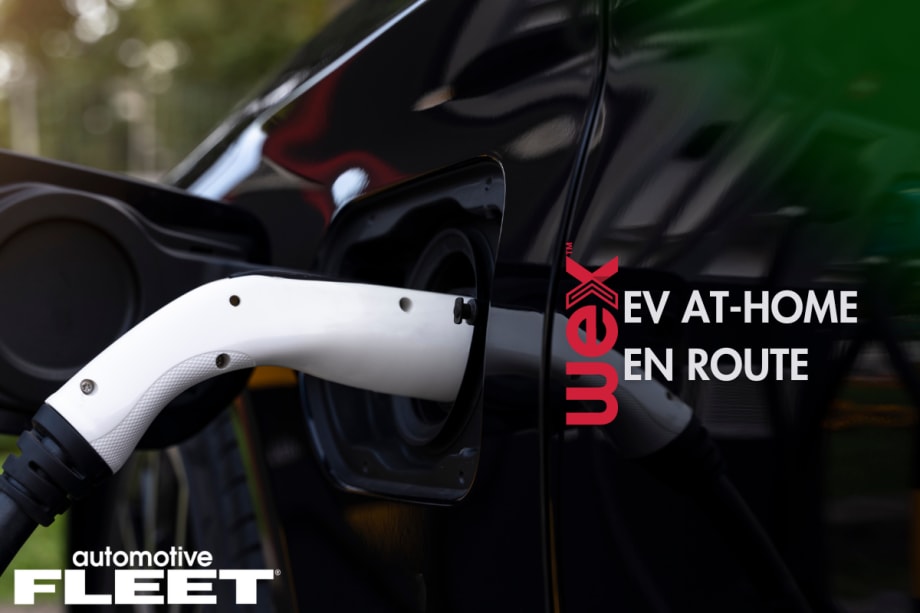
WEX combines EV charging insights, payments, and reimbursement functionality to simplify the cost of charging an EV at home. WEX En Route is an EV public charging payment and reporting system.
Photo: WEX/Automotive Fleet
3 min to read
WEX has announced general availability of two new offerings for commercial fleet managers with electric vehicles:
WEX EV At-Home, which automates reporting and reimbursement for any organization with EVs employees bring to their home to charge overnight
WEX En Route, a payment system for public EV charging
“WEX services approximately 600,000 commercial fleets globally representing an estimated 19.3 million vehicles as of the fourth quarter of 2023, with each commercial fleet manager juggling a unique set of variables. We continue to innovate to add to the breadth and depth of WEX’s commercial EV and mixed fleet solutions, allowing us to meet each customer where they are on their EV and mixed fleet journey,” WEX CEO and Chair Melissa Smith said.
Providing EV Insights and Reimbursing EV Home Charging Costs
WEX EV At-Home is an EV solution that combines EV charging insights, payments, and reimbursement functionality to simplify the cost of charging an EV at home.
WEX EV At-Home issues a direct reimbursement to the employee via the business’ line of credit and a complementary employee-facing mobile app making it possible to issue payment in near real-time based on the true utility cost of the charge, while transmitting line item charging metrics to the business.
Drivers can fully charge their work vehicles overnight for use the next day with insights into charging behavior and other fleet management metrics provided to the fleet manager.
Storing Valuable EV Dat and Processing Public Charging Payments
WEX EV At-Home joins WEX’s other commercial fleet payments products in the U.S., including WEX En Route for public EV charging.
Through WEX’s DriverDash app and RFID card, WEX En Route leverages WEX’s proprietary closed loop payments network to increase the security of each transaction and to transmit charging behavior, driver identification information, and vehicle mileage to the fleet manager.
WEX’s DriverDash app and RFID are accepted across the U.S. at ChargePoint-branded EV chargers and at ChargePoint’s roaming partner brands: EVConnect, EVGo, and FLO, with additional accepting merchants expected in the coming months.
These advancements enable both small and large businesses to incorporate EVs into their commercial fleets alongside existing traditionally fueled vehicles, promoting solutions for mixed fleets.
“There are few EV solutions that simplify charging for commercial drivers and allow fleet managers access to line item charging detail, vehicle performance, and unified billing regardless of brand — and even fewer regardless of charging location,” WEX SVP and GM of EV and Mobility Jay Collins said. “That WEX’s EV solutions accomplish this — while also integrating with metrics from traditional fuel vehicles across a single credit line, invoice, and backend software portal — is illustrative of WEX’s leadership and technical expertise in the commercial mixed fleet space.”
More Green Fleet
Sponsored•October 1, 2026
New Propane Autogas Program Offers Fleet Compensation
Qualified commercial fleets can receive $7,500 per eligible propane autogas vehicle and up to $10,000 for new refueling site prep. Learn how the program works and see whether your fleet qualifies.
Read More →
EV Charging Use Is Outpacing Infrastructure Growth
ChargePoint’s 2026 Charging Forward Report points to rising charger use, higher-powered charging, commercial vehicle electrification, and energy-management technology. Here’s what fleets should know.
Read More →
Merchants Fleet Reports 290M EV Miles as Fleets Navigate Changing Electrification Market
From millions in operating savings to hundreds of millions of EV miles, Merchants Fleet’s latest report reveals what’s working and what’s changing in fleet electrification.
Read More →
The EV Breakdown Nobody's Talking About: Why Most Electric Vehicle Roadside Calls Aren't Mechanical Failures
Here's why EV breakdowns are widely misunderstood.
Read More →
ChargePoint Now Available in Energy Pass
ChargePoint and additional planned charging network integrations were added to GM's Energy Pass.
Read More →

First Look: Slate Auto's Electric Fleet Pickup
Could an affordable, modular EV pickup make electrification more practical for fleets?
Read More →
Slate Debuts Colorful, Unique EV Models
A recent media and client event, studded with electric vehicles dressed up on platforms, planted a new position for the manufacturer in the wider EV market. Fleets will find cost-saving advantages.
Read More →
Slate Electric SUV, Pickup Switchable Model Aims For Light-Duty Fleets
Everything about this EV is counterintuitive and understated, making it stand out from the crowd.
Read More →
Inspiration Mobility Acquires Key Electrada Assets
Inspiration Mobility Group has acquired select assets of Electrada, adding the fleet electrification provider's team, technology, and charging infrastructure development capabilities to its energy management business.
Read More →