





More on Management Skills:The Best Fleet Management is Proactive not Reactive
10 Ways to Avoid Being Underrated by Management
Some senior managers don’t consider fleet a complicated or sophisticated profession. As a result, one of the biggest challenges facing fleet managers is getting management to recognize and acknowledge their corporate contribution.
July 31, 2023

To promote fleet's value to corporate leadership, effective fleet managers build relationships, utilize metrics, integreate strategy and tactics, establish partnerships, hone presentation skills and engage in industry groups.
Graphic: ar130405
4 min to read
How do fleet managers get management to recognize and acknowledge their contribution to the company. Most fleet managers aren’t high up in the corporate hierarchy and must rely on their immediate management to properly represent fleet’s viewpoint, which often doesn’t happen. The end result is that management underrates the contribution made by fleet managers.
Below are 10 ways to ensure management recognizes your contribution to the company’s bottom line:
1. Link Fleet to the Corporation's Overall Mission
Develop metrics to show how fleet is helping achieve the corporate mission and goals. Besides demonstrating expertise in fleet management, you must demonstrate an in-depth knowledge of your company’s product line/services, sales/marketing objectives, and the needs of user groups. You must implement fleet programs that contribute to the achievement of overall company goals and facilitate support to user groups to successfully meet their objectives.
2. Create a Network of Interdepartmental Allies
One strategy to elevate your stature with senior management is to expand and build new relationships within the company. Interdepartmental cooperation is an integral part of how management views a fleet manager. You must establish a relationship with every department touched by fleet to address their needs, keep them informed, and gain buy-in with fleet policy. The more people you know (and who know you) increases recognition of your work and how it benefits the company. While everyone agrees it is important to network within the fleet industry; it is also just as important to network within your company. Your ultimate goal is to be the in-house subject-matter expert with whom management consults when making major decisions.
3. Focus on the Internal Customer
A great fleet manager recognizes their primary goal is serving end-user departments and drivers. They establish a cooperative, working relationship with all internal departments associated with fleet operations and are proactive with their needs. Great fleet managers understand that the managers and drivers they support are key to their success. They are service savvy. They keep their sights set on the end-user and the board of directors, as well as everyone in between.
4. Implement Goal-Oriented Fleet Management
You must manage the fleet from a strategic level focused on achieving specific long-term objectives using metrics to benchmark actual (not presumed) progress. Become goal oriented in all aspects of fleet operations, especially driver productivity and safety, and strive to reduce not only hard costs, but also soft costs, such as downtime and fleet-induced impediments to employee productivity. Use metrics to benchmark progress to achieve these objectives. The challenge for today’s fleet managers is to continue to find ways to add value to their company and the bottom line.
5. Cultivate the Skillset to Turn Strategy into Tactics
It is one thing to enunciate fleet strategies for cost containment and productivity enhancement, it is another thing to achieve them. You must cultivate the critical skill of turning strategic goals into effective tactics to achieve these goals. You need to be more than just talk, you need to gain a reputation of producing results.
6. Metrics-Oriented, Measure Everything
Great fleet managers understand that what gets measured gets managed and hold themselves and team members to goals. They are results-oriented and understand metrics. These fleet managers drive for continuous improvement to achieve specific business results. For them, there is no such thing as the “status quo.”
7. Keep Management Informed on Fleet Performance
A corollary to being an excellent communicator is the understanding that most executives are not fleet management experts. When communicating with senior management, only provide data critical to making a decision. Keep reports jargon-free and formatted for quick review and comprehension.
8. Ability to Effectively Present to Senior Management
Great fleet managers have strong presentation skills, both in putting together effective reports and delivering them to keep upper management informed. If you wish to be respected within your corporation, this skill is a requirement in corporate business. If you can’t present or effectively report to senior management, your value will never be recognized by them.
9. Develop an Even Closer Partnership with Suppliers
Work with fleet suppliers to optimize their performance. Just as important, you must never stop learning. It is important to confer with suppliers to be on top of the latest products and services in the market. Many fleet managers make themselves inaccessible to prospective suppliers. By doing so, they are missing a wonderful opportunity to pick their brains to learn of new industry developments. You need to continually ask suppliers what they have seen in their client base that is successful. Could these practices be implemented in your fleet operation? If you are not continually learning about fleet management, about new products and services, it’s easy to become stale at what you do.
10. Involved with the Industry
A great fleet manager is connected to the industry at large. They become involved with industry associations, such as NAFA and Automotive Fleet & Leasing Association (AFLA). They read fleet industry publications. The more widely read and knowledgeable you are, the less the likelihood you might be seen as a “one-trick pony.” Be knowledgeable about the major trends in the overall auto industry.
Subscribe to Our Newsletter
More Operations
How to Manage Conflict for Your Fleet Operations
Conflict management is becoming a core leadership skill. Here are five strategies fleet leaders should know.
Read More →
Sponsored•June 1, 2026
Turning Connected Vehicle Data Into Decisions That Matter
Fleet leaders have more data than ever, but turning that data into clear, actionable decisions remains a challenge. This white paper shows how leading organizations are using connected vehicle data to improve safety, reduce costs, and optimize fleet performance. Learn how to turn insight into action across your fleet.
Read More →
Sponsored•June 1, 2026
Cameras, Safety and Insurance: From Reactive Claims to Real-time Prevention
Commercial auto remains one of the most challenging and costly lines of coverage for fleet operators and insurers alike. Learn more about how to effectively address these issues from Onur Aksan, Enterprise Business Development Executive, Geotab.
Read More →

Sponsored•May 29, 2026
Are You Tracking Your Fleet's True Total Cost of Ownership?
Bobit Business Media surveyed 190 fleet professionals and found that while most fleets are tracking costs, fragmented systems and data gaps are keeping true TCO visibility out of reach. With rising pressure to control spend in an increasingly volatile environment, the gap between what fleets think they know and what the data actually shows is wider than you might expect. See how your peers are managing costs today and where the industry still has room to improve.
Read More →
Sponsored•May 28, 2026
Turn Fleet Data Into Smarter Decisions
Fleet leaders have access to more operational data than ever, but disconnected systems and unclear metrics often slow decision-making instead of improving it. This article outlines five practical steps fleets can take to transform fragmented data into actionable insights that improve planning, safety, utilization, and long-term performance.
Read More →
Sponsored•May 15, 2026
Hybrids: Electrification Without the Challenges
For fleet managers, fuel is one of the biggest line items in the budget — and it's one hybrids can shrink without changing how your people work. Download the eBook to see the numbers, understand the technology, and get a step-by-step guide to making the switch.
Read More →
How NOV Uses Telematics to Improve Fleet Safety Across 160 Locations
James Victory of NOV discusses how the company manages fleet safety, maintenance, and telematics across more than 150 locations supporting oilfield operations throughout the U.S.
Read More →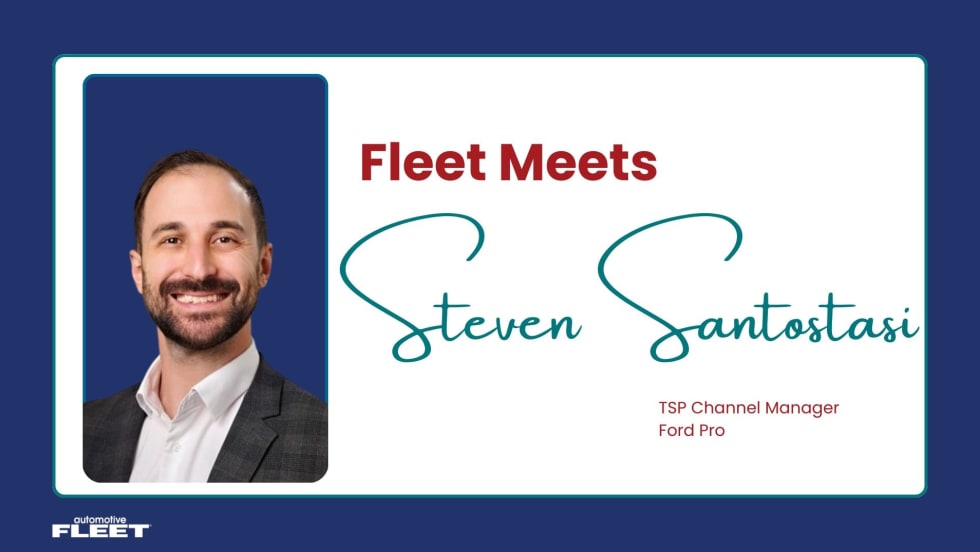
Fleet Meets: Steven Santostasi
This edition of the Fleet Meets series features Steven Santostasi, the current TSP channel manager for Ford Pro.
Read More →
Sponsored•May 13, 2026
Why Fleet Managers Are Replacing Departmental Vehicles with Shared Motor Pools
Departmentally assigned vehicles often create hidden costs through underutilization, poor visibility, and increased administrative burden. This white paper explores how shared motor pool strategies help fleets reduce costs, improve accountability, and optimize vehicle utilization.
Read More →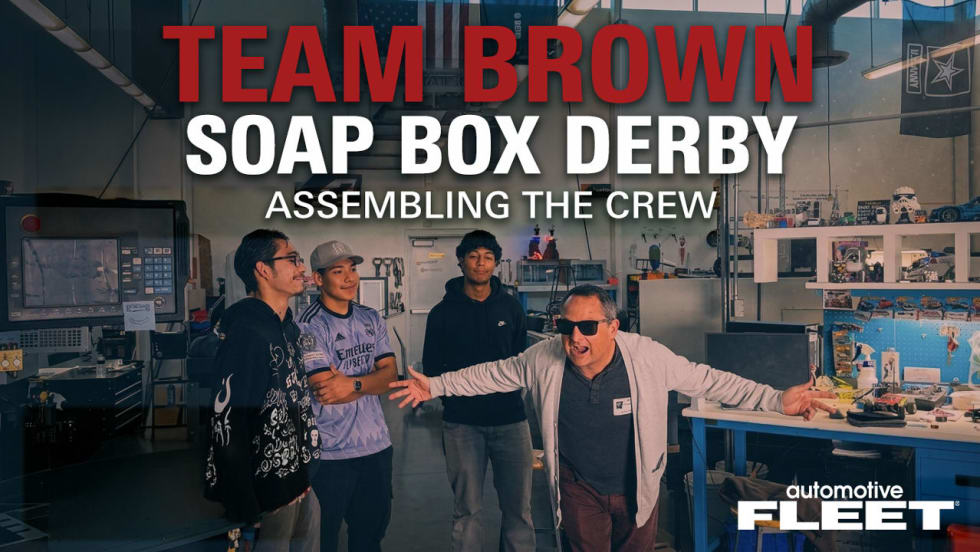
Soap Box Derby Challenge: Assembling the Crew
Meet Gabriel, Matthew, and Angel — the team helping bring this soap box derby build to life.
Read More →