




How to Reduce the Risk of Electric Vehicle Fires
While batteries can pose a risk and EV fires burn worse than ICE car fires, data shows EV fires are not nearly as common as recent headlines would suggest.

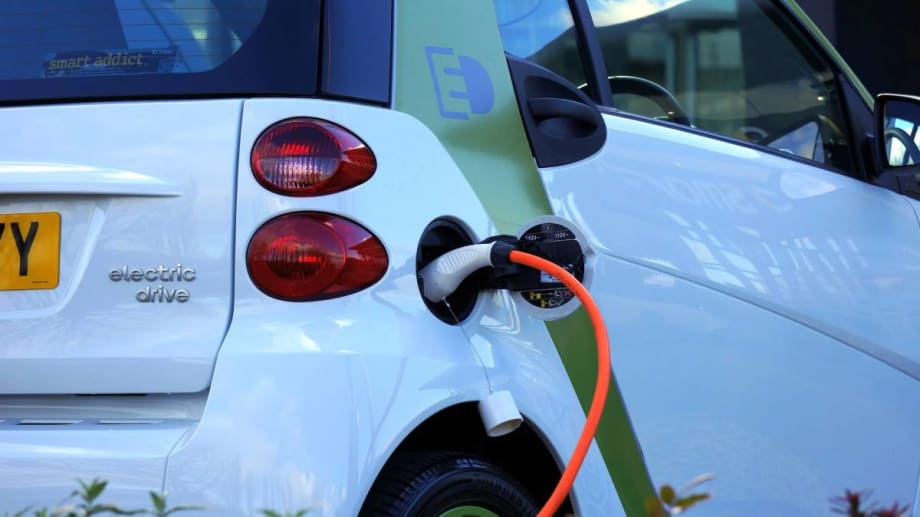
An EV’s battery performance and integrity can be affected by age, usage, and external impacts like a collision.
Photo: Pexels.com/Mike Bird
As more fleets move toward electrification, fleet operators face many challenges — from purchasing the right electric vehicles (EVs) to developing charging infrastructure to training technicians on EVs. As with traditional vehicles, safety is always a top priority.
EV fires caused by lithium-ion batteries are one factor that remains a safety concern for many fleet operators. However, the data shows that EV fires are not nearly as common as the many scary headlines in recent years would suggest.
In fact, EVs are about 0.3% likely to ignite as compared with a 1.05% chance for gas cars, according to the Bureau of Transportation Statistics (BTS) and the National Transportation Safety Board (NTSB).
To determine the rate of car fires by vehicle type, Auto Insurance EZ collected the latest data on car fires from the NTSB and calculated the rate of fires from sales data from the BTS. Hybrid vehicles ranked first for the most fires — 3,474 — per 100K sales. Gas vehicles came in second with approximately 1,530 fires, and EVs placed third, with only 25 fires per 100K electric vehicle sales.
However, while the prevalence of fires is lower in EVs as compared to hybrids and gas vehicles, the consequences can be far worse as these fires are particularly hard to stop.
Lithium-ion batteries are made up of thousands of cells, so the fire can rapidly spread among them. Experts also say EV fires burn at a higher temperature than gas fires and are more likely to reignite. Finally, unlike gas fires, lithium-ion battery fires don’t need outside oxygen to burn, which means they are harder to extinguish.
EV Maintenance and Reducing Risk
An EV’s battery performance and integrity can be affected by age, usage, and external impacts like a collision. Over time, battery cells degrade and become less efficient, which can cause them to discharge more quickly than normal or fail altogether. Degraded batteries can pose a significant safety risk to your drivers.
“The challenge with batteries is that one bad cell could create that thermal runaway that leads to a fire,” said Roei Ganzarski, CEO of Alitheon, maker of optical AI technology for counterfeit and gray market identification and traceability.
Fleet managers need to be diligent about proper maintenance for EVs and batteries.
“You want to make sure the people maintaining your EV know what they are doing when it comes to high voltage systems and batteries. Because it they get that wrong, or they use components that are not fit for an EV, it can be a problem,” Ganzarski said.
Electricity poses unique challenges. Each level of voltage used calls for different levels and qualities of cable and wire. Mechanics who are not experts in EVs can make mistakes. For example, they might replace an electric cable but may not understand that what they are putting in can’t meet the needs of the high voltage of the EV or the system temperature. That, in turn, creates a risk for a fire.
Overcharging a battery can take it to an extreme, which could lead to a battery being less stable and a potential for fire. That’s why it’s important that fleet managers make sure their drivers are charging cars correctly.
But it’s not just human error that fleets need to be cautious about. Counterfeit parts are also a problem, Ganzarski said. He points to cases in Europe where fake EV batteries have been found — they look like the real thing and bear a company logo, but they’re not authentic which can be dangerous.
Alitheon’s technology solution allows automakers and suppliers to authenticate and uniquely identify specific items such as EV batteries and other parts, eliminating the potential for counterfeits.
But what can fleets do to ensure their EV components are correct, legal, and real?
Ganzarski advises fleet managers doing their own maintenance to buy from the best sources. Purchase batteries from the battery manufacturer, not from some middleman. Buy cables or contactors from the auto supplier rather than buying online because they’re cheaper.
“It’s not like buying a cheaper oil filter and if you get it wrong, maybe you reduce the lifespan of the engine,” Ganzarski said. “If you get the wrong battery or contactor in your EV, you are risking your drivers’ health and life. Buy it new and correct.”
Whether it’s after a fender bender or as an EV begins to age, fleet managers must validate that authentic and correct parts are used during maintenance checks.
With proper maintenance, you’ll mitigate the risk of EV fires and boost safety for your drivers.
“For a fleet manager, an important message is: Don't be afraid of EV fires,” Ganzarski said. “Rather, what fleet managers need to be concerned about is where their electric cars are being maintained and that they know they are getting the correct parts for that car’s system.”
More Safety

What’s Next for Fleet? Safety, AI & Industry Recognition | AF News Recap
Could your company's culture be encouraging distracted driving? This week, we're exploring how workplace expectations affect driver safety, what AI, EVs, and autonomous vehicles could mean for the future of fleet management, and how fleet professionals can strengthen their award nominations.
Read More →
Does Your Fleet's Culture Encourage Distracted Driving?
What happens when the people responsible for enforcing safety rules are the ones setting the wrong example? The answer may reveal why some of the biggest risks to fleet drivers have little to do with what's written in the employee handbook.
Read More →
Fleet Manager’s Ultimate Playbook: Navigating the New Standard in OEM Connectivity
Rising operating costs, driver safety concerns, and unplanned downtime are putting unprecedented pressure on modern fleets. Discover how fleet managers use embedded OEM connectivity and real-time vehicle data to cut TCO, prevent downtime, and protect drivers without aftermarket telematics hardware.
Read More →
From Driver Well-Being to EV Charging | AF News Recap
Mental health belongs in the fleet safety conversation. This week, we’re looking at five ways fleets can support employee well-being before a crisis, plus Holman’s expansion in Mexico, new one-day Fleet Forward passes, and why EV charging demand is outpacing infrastructure growth.
Read More →
Nexar-Nauto Merger Aims to Give Fleets Better Safety Intelligence Through Larger Driving Dataset
Stefan Heck tells Automotive Fleet that combining more than 10 billion miles of driving history with Nexar's AI models will give fleets deeper insights into driver risk and roadway conditions than either company could provide independently.
Read More →
Don't Wait for a Crisis: 5 Ways to Build Mental Health Into Your Fleet Safety Program
For Suicide Prevention Month, fleet and safety leaders have an opportunity to put mental health where it belongs: at the center of workplace safety.
Read More →
How Camera Data Can Strengthen a Fleet’s Insurance Renewal
Insights from a commercial insurance carrier and a broker show how fleets can turn video telematic data, driver coaching, and improved claims results into a stronger case at insurance renewal.
Read More →
The Safest Fleets Aren’t the Ones with the Most Technology
You’ve made the telematics investment. Here’s how to capture the other half of its value and build the safest fleet on the road.
Read More →
Hidden in Plain Sight: Fleet Compliance Risks
Fleet compliance isn't just about having policies — it's about consistently enforcing them. This practical guide reveals six hidden compliance risks common in public sector and shared fleet operations and outlines proven strategies to improve visibility, accountability, and audit readiness
Read More →
NETS Sets 2026 Fleet Safety Benchmark Conference for Indianapolis
The Sept. 15–17 program will feature fleet benchmarking data, case studies, emerging technologies, and implementation strategies while running alongside the NSC Safety Congress & Expo.
Read More →