





More News:Economic State of Remarketing
The Digital-, Data- and EV-Driven Trends to Watch in Remarketing
CAR 2023: Two experts share the latest insights and observations on how digital processes and data are revamping the resale of used vehicles.
June 27, 2023
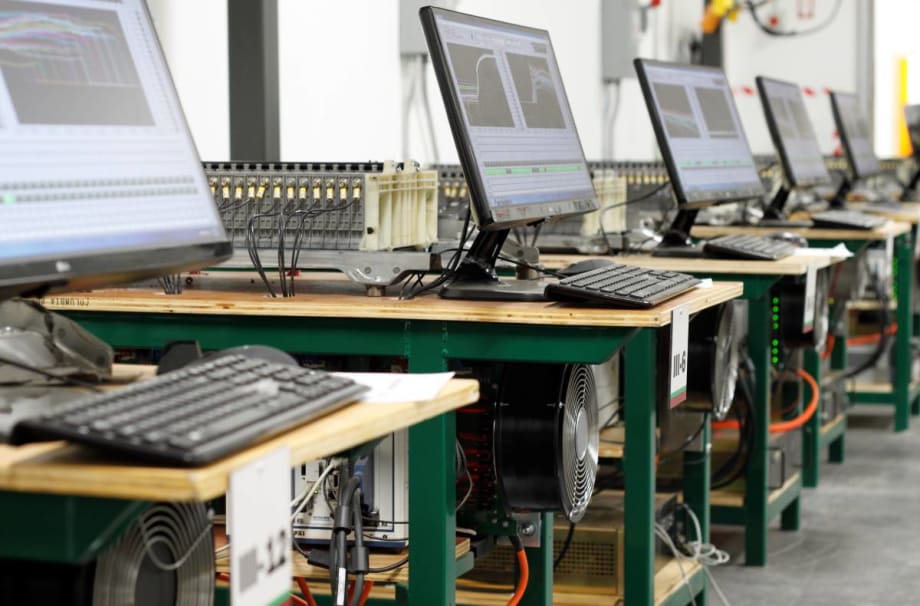
New technologies will ease the process of repairing and replacing batteries. By focusing on the full cycle of an EV battery, research companies such as Spiers New Technologies can identify components to reuse, remanufacturer, or recycle.
Photo: Spiers New Technologies
7 min to read
While remarketers seek a revenue and volume rebound from the pandemic and supply chain doldrums, they should not expect the processes and tools used by consignors and auctions to return to a pre-2020 scenario.
The last few years have sped up the digitizing of the wholesale vehicle market as remarketers now must keep pace with the latest technology in many aspects of operations.
Two experts listed some of the key innovations defining industry trends during a session March 30 at the Conference of Automotive Remarketing:
Zach Hallowell, vice president for Manheim Digital Marketplace and RMS Automotive, directs and coordinates the overall domestic and global operational activities for digital channels.
Peter Grupposo, senior vice president of sales for Cox Automotive Inc., oversees the commercial sales, dealer sales, and market insights teams for Manheim and NextGear Capital.
The overriding question: What do the top trends in the remarketing industry mean for consignors and auctions?
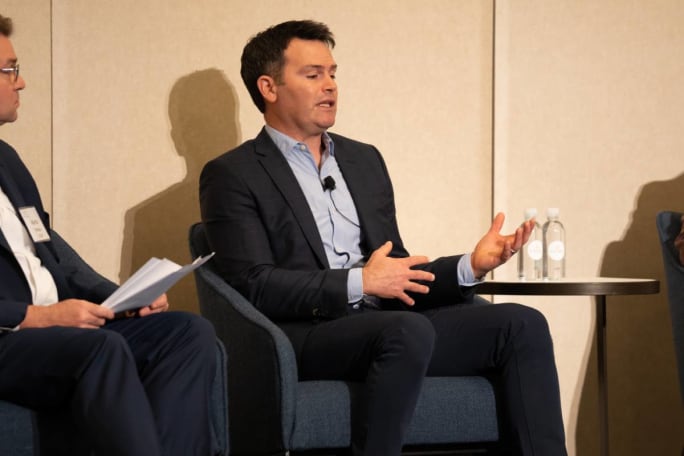
Zach Hallowell, vice president for Manheim Digital Marketplace and RMS Automotive, explained how AI can streamline the process of vehicle condition reports by automatically detecting damages or assessing a vehicle in a variety of different ways, such as tire tread depth and the quality of equipment on vehicle.
Photo: Ross Stewart / Stewart Digital Media
Vehicle Markets and Supply Streams
The panelists started off with a summary of the state of the wholesale vehicle marketplace:
The wholesale market is returning to a new normal, with strong spring activity showing signs of depreciation coming back, Hallowell said. More commercial vehicles are starting to flow through to the auctions again. The big change is that COVID accelerated digital adoption and buying, and it’s creating a new balance in vehicle acquisition.
During the last three years, 8.5 million vehicles went unproduced, which will create a gap on the buying side that will be felt for the next 10-15 years in different cycles, Grupposo said. “There's still a lot of unknowns, and some knowns that are concerning the dealers. We’ll probably see a cautiously optimistic buying group, but I think they will be a little bit more reactive in the next few months. It's starting to feel a little bit like before the pandemic.”
Dealers now want to see vehicles in person, since they represent a lot of risk for a buyer, Grupposo said. For example, it may be out of warranty, may have higher mileage, which makes assessments critical and requires investing in condition reports. There will be more focus on wanting to either see the car or a significantly improved condition reporting process. “We do a lot of surveys of buyer preference, and we see about 20% of our dealers are uncomfortable buying digitally. That corresponds to what we're seeing in purchasing behavior. I don't think we're ever predicting 100% digital sales.”
However, Hallowell pointed out that prior digital holdouts are now adapting, even if they are not fans of online transactions. The scarcity of inventory has forced many dealers to get creative while uncomfortable. “I think anytime we can have the end user in remarketing take a crash course on catching up to all the innovation and technology, it's a good thing for us. We're also starting to see there's a bigger engagement from independent buyers on using data tools that help them acquire price inventory, and no longer just carry the book in their back pockets.”
Another trend is greater transport distances for vehicles being bought and sold. The distance buyers are willing to transport cars had increased to an average of 450 miles during peak pandemic, and while that has declined to 400 miles, supply constraints are keeping the mileage above pre-pandemic levels.
Use of Digital Tools and Resources
Transactions need to improve beyond just AI, and eventually involve more real time data from auction sales to help the buyer make decisions. The process will be continual and always evolving.
Dealers are going further down into their vehicle inventory to target different customers bases, which require more information. This is happening as buyers have started using bots based on algorithms to search for specific vehicles and buy them via digital transactions.
More independent dealers are adopting digital tools allowing them to become more data driven. To meet that demand, sellers need to make sure to feed vehicle inventory directly to them.
The industry is developing tools that help consigners get cars into an optimal zone for purchasing. More dealers are using silent simulcast lanes, indicating they want to get more of a pulse on the market.
Digital tools will allow for more personal experience for dealers and buyers, since those tools can route available wholesale vehicles to customers based on buying and search history and preferences. That eases the job of browsing through hundreds of potential vehicles online.
Most companies in the U.S. retain large volumes of data but are challenged in managing it. Products and services that can organize that information into actionable insights will help clients absorb it and make better decisions. This can factor into such simple questions as whether a seller will get ROI from replacing a broken windshield; will paying $300 for one boost the value of the sale enough to cover the cost?
Digital resources can connect retail and wholesale markets more closely now. Wholesale is often the leading indicator for retail. That data analysis and tracking can help answer such buyer questions as: What is the equity position in the off-lease portfolios across OEMs? How likely will these vehicles come back to auction? Or will they be pushed upstream in the market? Such a level of insight can make buyers more confident, in addition to providing the big picture on the number and types of models heading into the market.
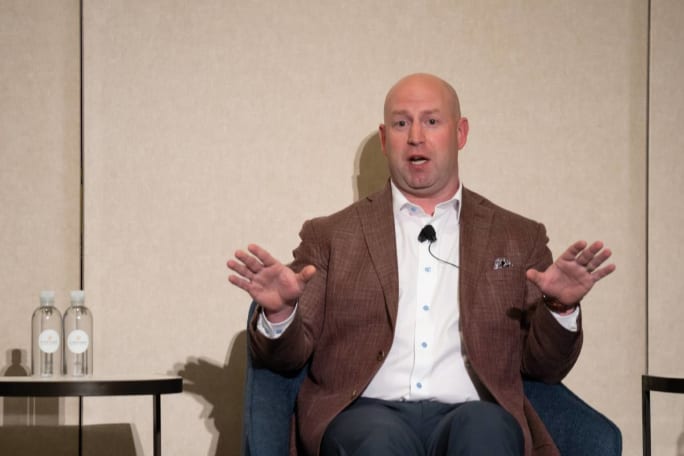
Peter Grupposo, senior vice president of sales for Cox Automotive Inc., said auction operations should prepare for the influx of repossessed and/or turned over electric vehicles as more fleets acquire them. The big challenge is to install or find enough chargers that can be sourced with power to handle EVs moving through the auction.
Photo: Ross Stewart / Stewart Digital Media
AI Advantages in Transactions
AI will become an larger factor in risk modeling and pricing insurance products. By including the history of a dealer, their return rate, and types of vehicles they purchase, an AI-driven insurance analysis can yield a fair, risk-based price based on the data.
Likewise, AI can streamline the process of vehicle condition reports by
automatically detecting damages or assessing a vehicle in a variety of different ways, such as tire tread depth and the quality of equipment on vehicle. “We are at the beginning of a journey that's taking longer than everyone expected,” Hallowell said. “It’s a hard problem to solve in bringing automation to the process of what is an inherently subjective interpretation of a vehicle. . . I believe that we will get there, but we will not do it in the timeframe everyone originally thought we would.”
AI can speed up and clarify a buyer’s search results since it rapidly gains “muscle memory” of seeing pictures in a specific order in certain ways. That helps buyers know very quickly what they are looking for. Scaled over millions of interactions, the AI process saves time, provides insights, and brings consistency to what was once a far more manual process.
Emerging Electric Vehicles
EVs are not a fad and will not just go away. The OEMs are investing heavily in EV and battery production to accommodate expected demand in coming years.
Auction operations should prepare for the influx of repossessed and/or turned over electric vehicles as more fleets acquire them, Grupposo said. The big challenge is to install or find enough chargers that can be sourced with power to handle EVs moving through the auction. EV charging times should fit with the typical turnaround times. Auction managers should figure out how fast they will need to charge the EVs, and whether to fully charge a vehicle.
Fleets and auctions are advised to experiment with EVs and deploy them. The reconditioning, maintenance, and fueling of EVs all vary from those of ICE vehicles, requiring operations to adjust workflows and turnover times. “It's not just the battery,” Hallowell said. “It's a whole new interaction with a vehicle. It's exciting and creates other opportunities. How do you recharge a car? In the middle of an auction lot, you can't just bring a five-gallon tank of gas to fill it up.”
Make sure you have technicians and staff in place to knowledgeably handle electric vehicles and manage the inventory.
A major portion of the resale value of an EV depends on the quality and value of the battery. A battery could represent up to $10,000 of the value of an average EV being remarketed. Because the health of the battery has an outsized impact on the overall value, battery health scores are an essential tool. EVs with accurate battery scores likely will sell for a higher price. “Just by bringing that transparency, you're removing doubt and allowing the bidder to bid more because they know where that vehicle stands and that they won’t have a brick on their hands to replace.”
New technologies will ease the process of repairing and replacing batteries. By focusing on the full cycle of an EV battery, evaluators can find components to reuse, remanufacturer, or recycle. Hallowell said: “Replacing a full battery pack at $10,000 when the car may be only worth $6,000 poses a challenging financial situation. If you can replace a few cells on the battery, for $1,000, that's a whole different proposition.” With improved processes and data, remarketers could be empowered to make better cost decisions.
In planning for charging infrastructure, auctions and dealers need to think three years out, Grupposo said. What are the future needs of clients? What portion of your vehicle volume or fleet will be EVs? Where will you put the chargers? What investments should an operation make on equipment, electric units, power sources, and facility space? “Invest now.”
Subscribe to Our Newsletter
More Remarketing
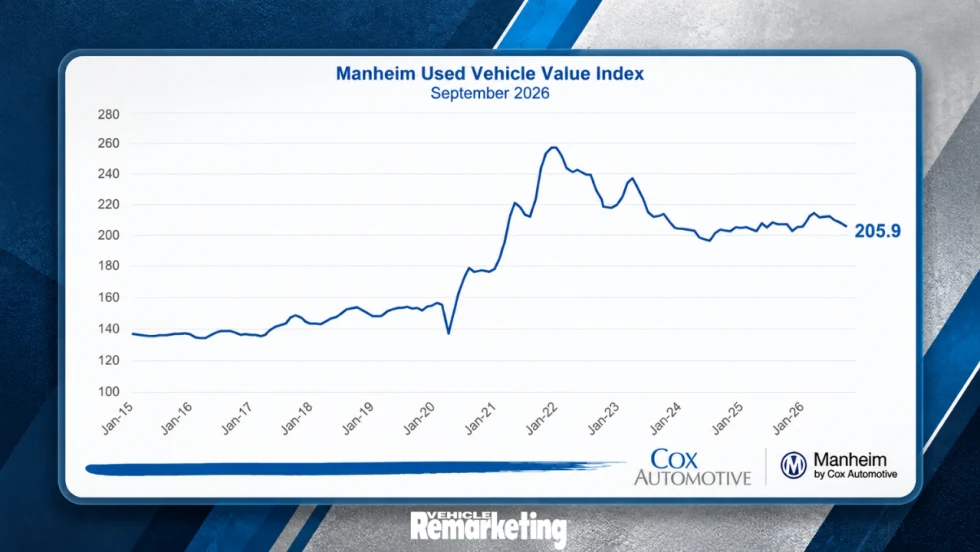
Wholesale Used-Vehicle Values Fall as Cox Automotive Cuts 2026 Forecast
Wholesale used-vehicle prices declined in September as depreciation accelerated, prompting Cox Automotive to lower its year-end forecast.
Read More →
FLD Promotes Three Executives in Leadership Changes
FLD has promoted three longtime executives, naming Gary Mott CEO, Richard Mallek president, and Ron Sanders managing partner.
Read More →
Ford Pro Launches Certified Pre-Owned Program for Commercial Vehicles
Ford Pro Advantage will offer certified pre-owned Class 1-7 commercial vehicles through more than 700 Ford Pro Commercial Vehicle Centers.
Read More →
Copart to Acquire ACV in $1.9 Billion Deal
The acquisition would expand Copart beyond its traditional salvage business into dealer-to-dealer wholesale remarketing while adding ACV’s vehicle data, inspection, and valuation technology.
Read More →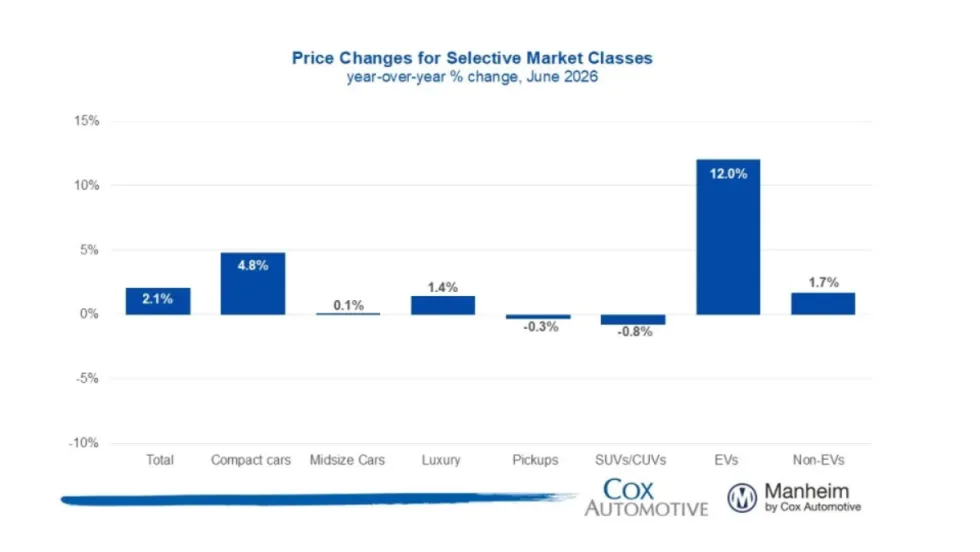
Manheim Index Shows Used-Vehicle Wholesale Prices Up 2.1% in June
The market is seeing stronger appreciation in older used vehicles this year, and the most affordable segments have been among the year’s best performers.
Read More →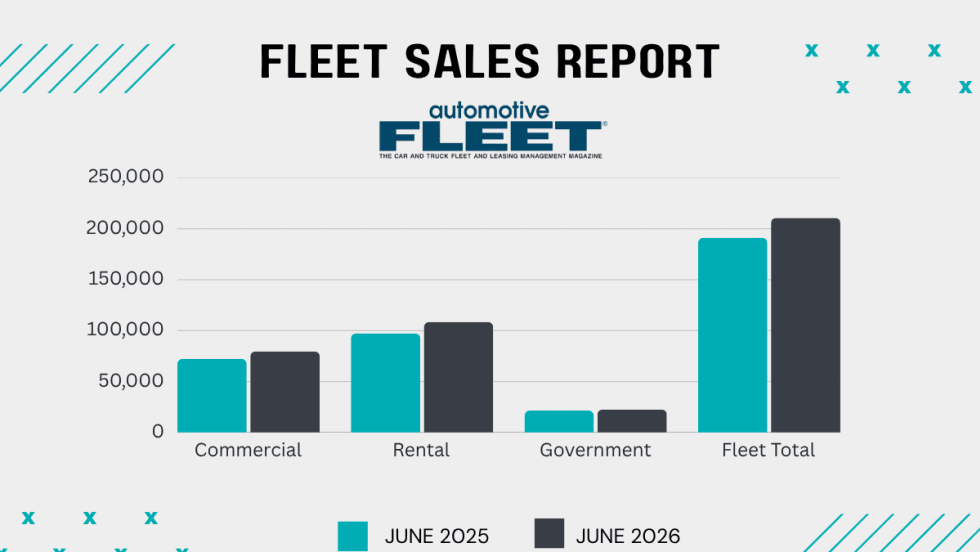
Commercial Fleet Sales Contribute To June, YTD Gains
The fleet sector has boosted its vehicle purchases at a reliable pace in the first half of this year compared with 1H 2025.
Read More →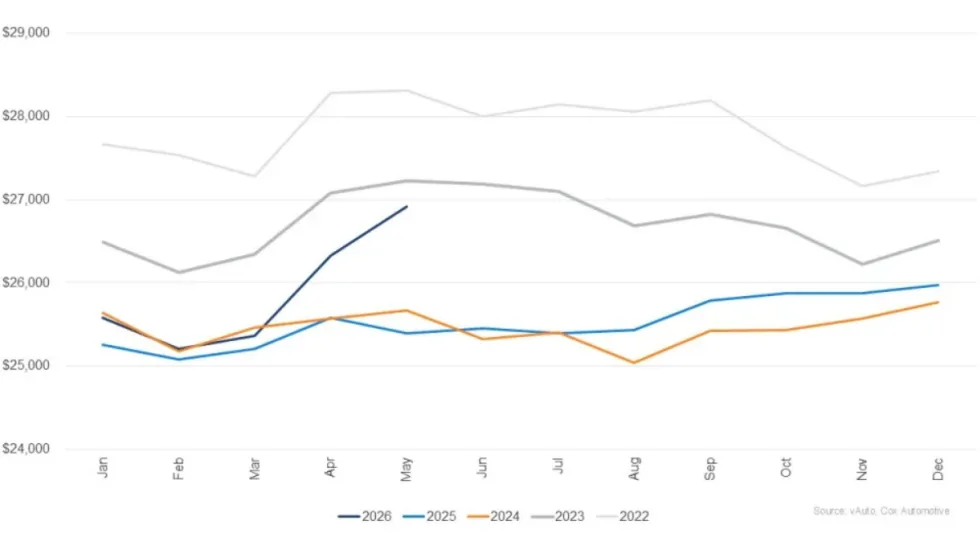
Used Vehicle Prices Climb Higher As Sales Pace Slows
The higher prices at used retail reflect strong wholesale values earlier in the spring, particularly for older, more affordable vehicles.
Read More →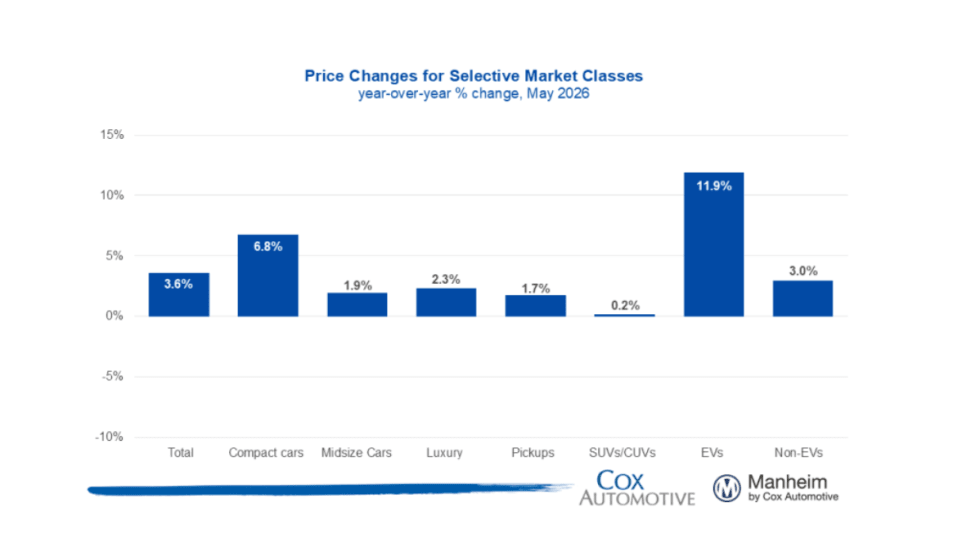
Wholesale Used Vehicle Market Sustains Moderate Rise In Values, Prices
Trends continue to normalize after a strong start to the year, as consumers contend with higher gas prices in the coming summer months.
Read More →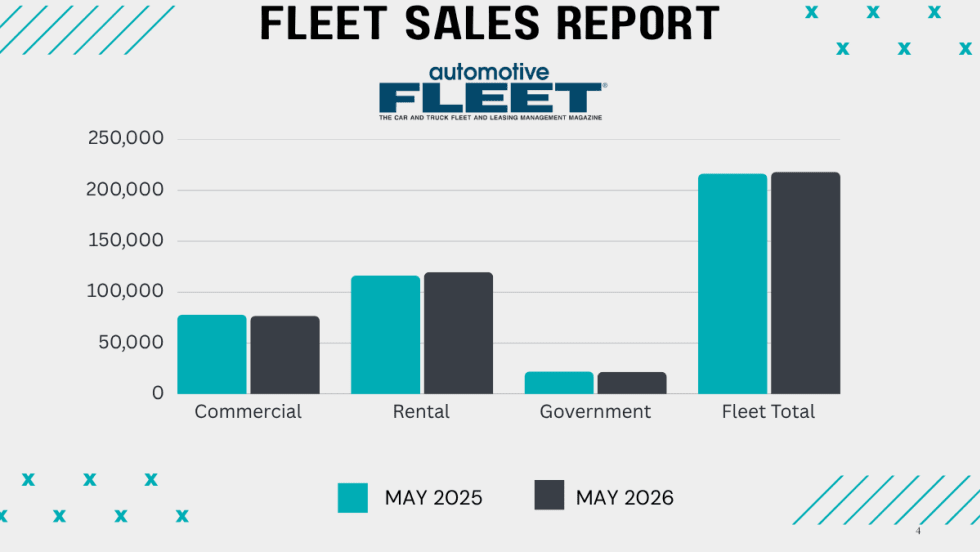
Commercial Fleet Sales Still Lead Sectors Despite May Mini Dip
The U.S. economy's continued growth and positive business investment are creating a favorable environment for fleet vehicle demand.
Read More →
How Connected Vehicle Data Is Lifting Fleet Resale Values
A vehicle health score could improve the value of fleet vehicles at remarketing. The path to a universal standard is forming, and fleets that understand the process early will be better positioned when it arrives.
Read More →